Marine Life I've Encountered Underwater
Photos and descriptions of marine life encountered during dives. Behavior, habitats, and interesting facts.

Longfin grouper
The longfin grouper is a small reef predator with a light "honey" colour and a dense pattern of dark hexagonal or rounded spots on the head, body and fins. On the upper body the pattern looks more like a network; lower down the spots are fewer and less distinct. It is usually sluggish and often "sits" on the bottom resting on its long, fleshy pectoral fins; it feeds on small fish, crustaceans and worms.
Epinephelus quoyanus
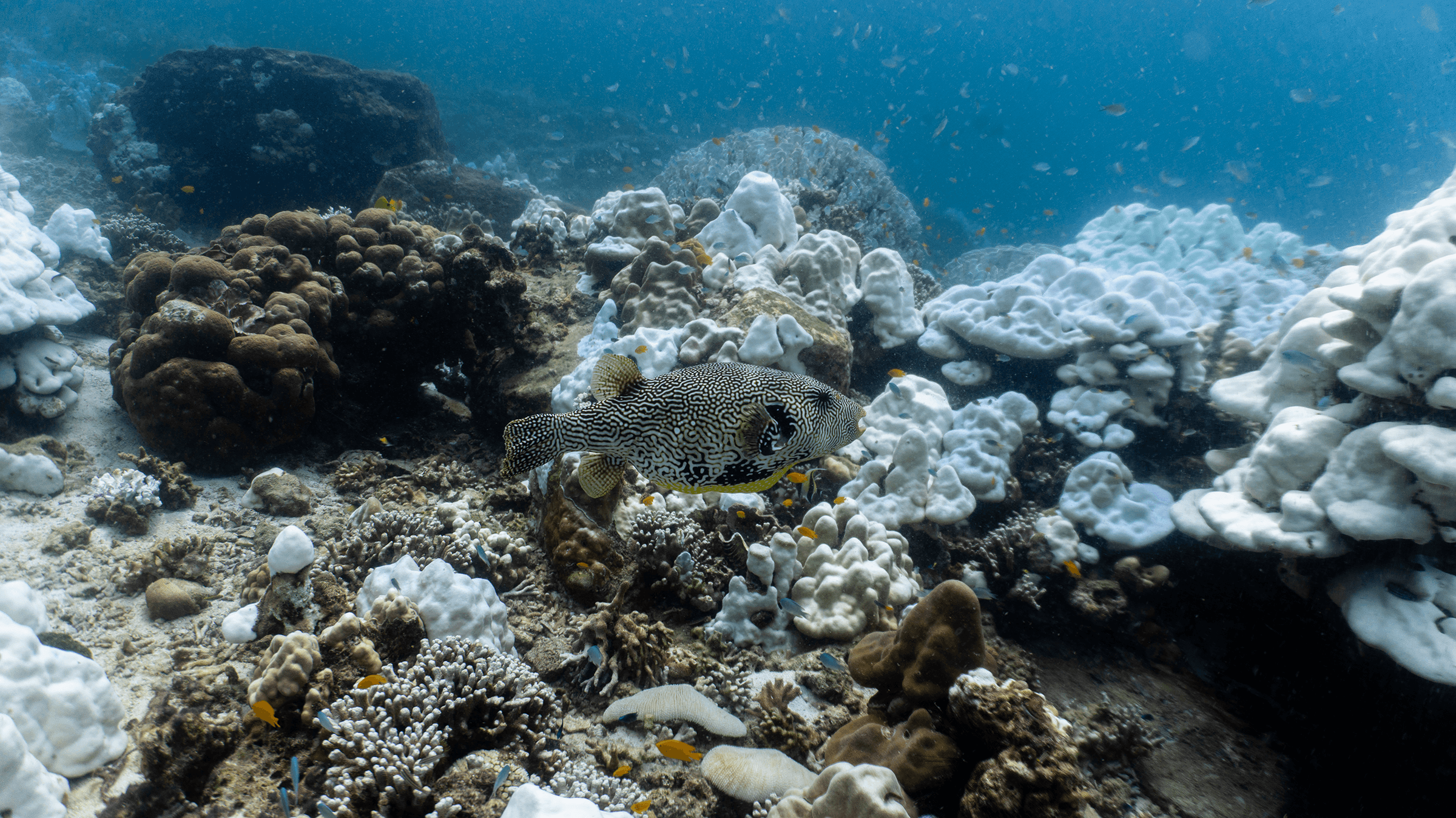
Map pufferfish
The map pufferfish (also known as the scribbled puffer) is a large pufferfish with a "map-like" or maze-like pattern of light wavy lines on a grey to greenish-brown background. The skin has no scales but small skin spines. The teeth are fused into a strong "beak" used to crush hard prey (molluscs and crustaceans). When threatened it inflates to look larger; its tissues may contain tetrodotoxin.
Arothron mappa
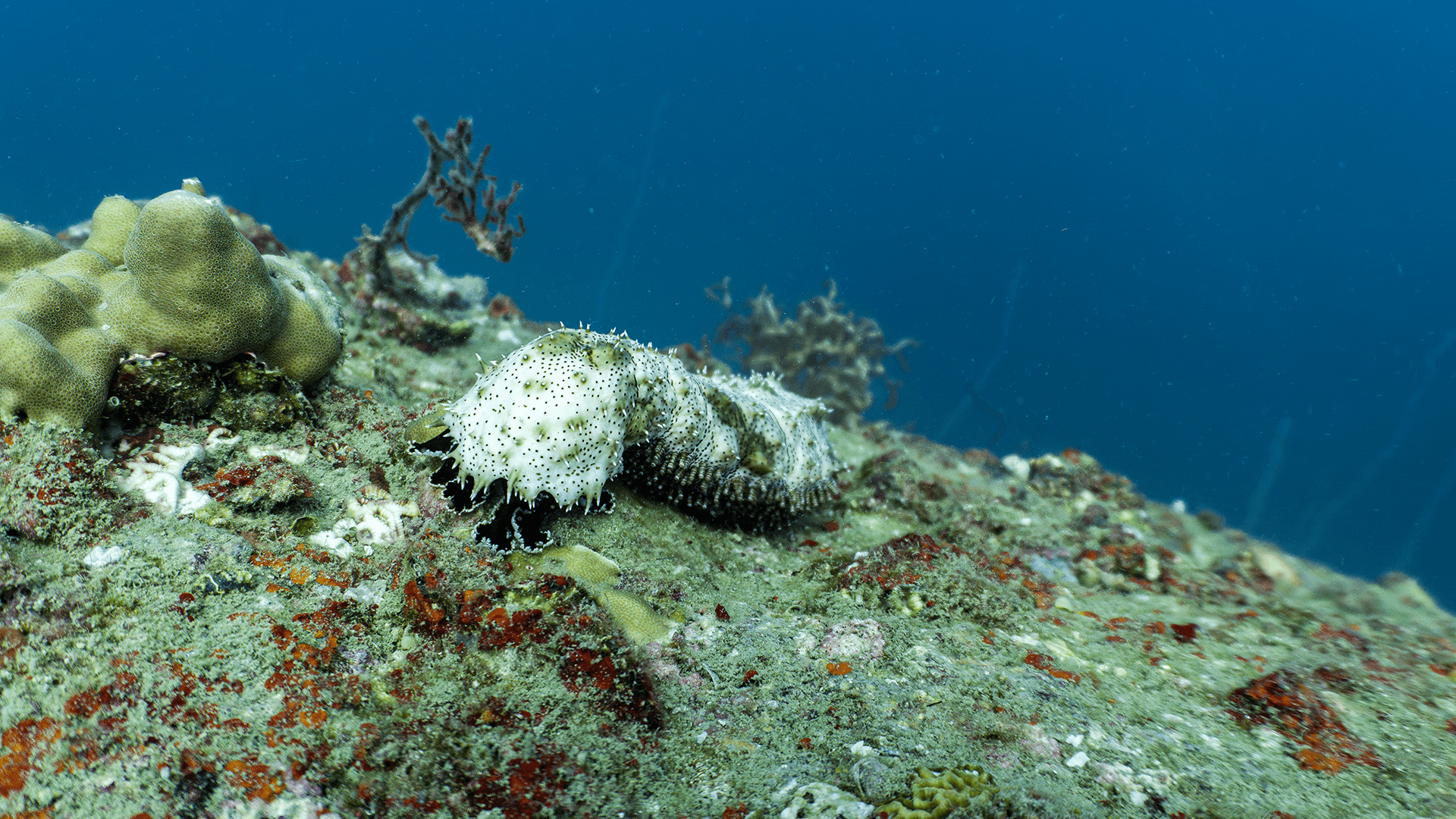
Marbled sea cucumber
The marbled sea cucumber (Pearsonothuria graeffei) is a bottom-dwelling holothurian of the tropical Indo-Pacific. The body is elongated and cylindrical, with light (creamy or greyish-brown) colour and many dark dots and patches forming a "marbled" pattern; low papillae are visible on the skin. It feeds by sifting the surface layer of sediment and extracting organic matter (detritus). Under strong stress it may release sticky threads (Cuvierian tubules) that contain toxic substances.
Pearsonothuria graeffei
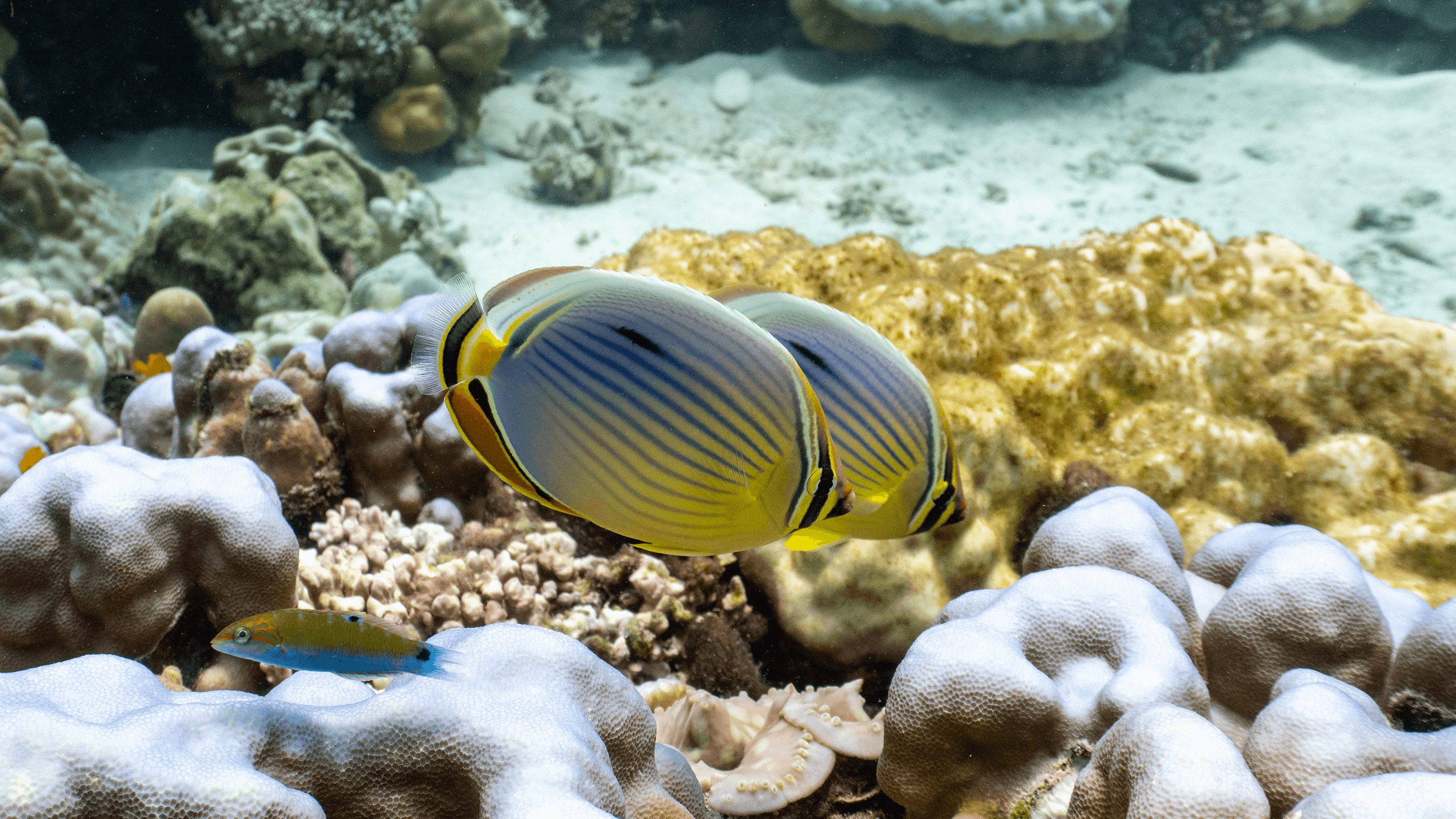
Melon butterflyfish
The melon butterflyfish is a reef butterflyfish of the Indian Ocean, usually up to 15 cm. The body is strongly flattened; main colour is light yellow to yellowish with thin oblique bluish-blue lines on the sides. It has dark bands: one through the eye ("mask"), a broad band just behind the head and a dark area at the tail base. Adults are often seen in pairs and feed mainly on hard coral polyps.
Chaetodon trifasciatus
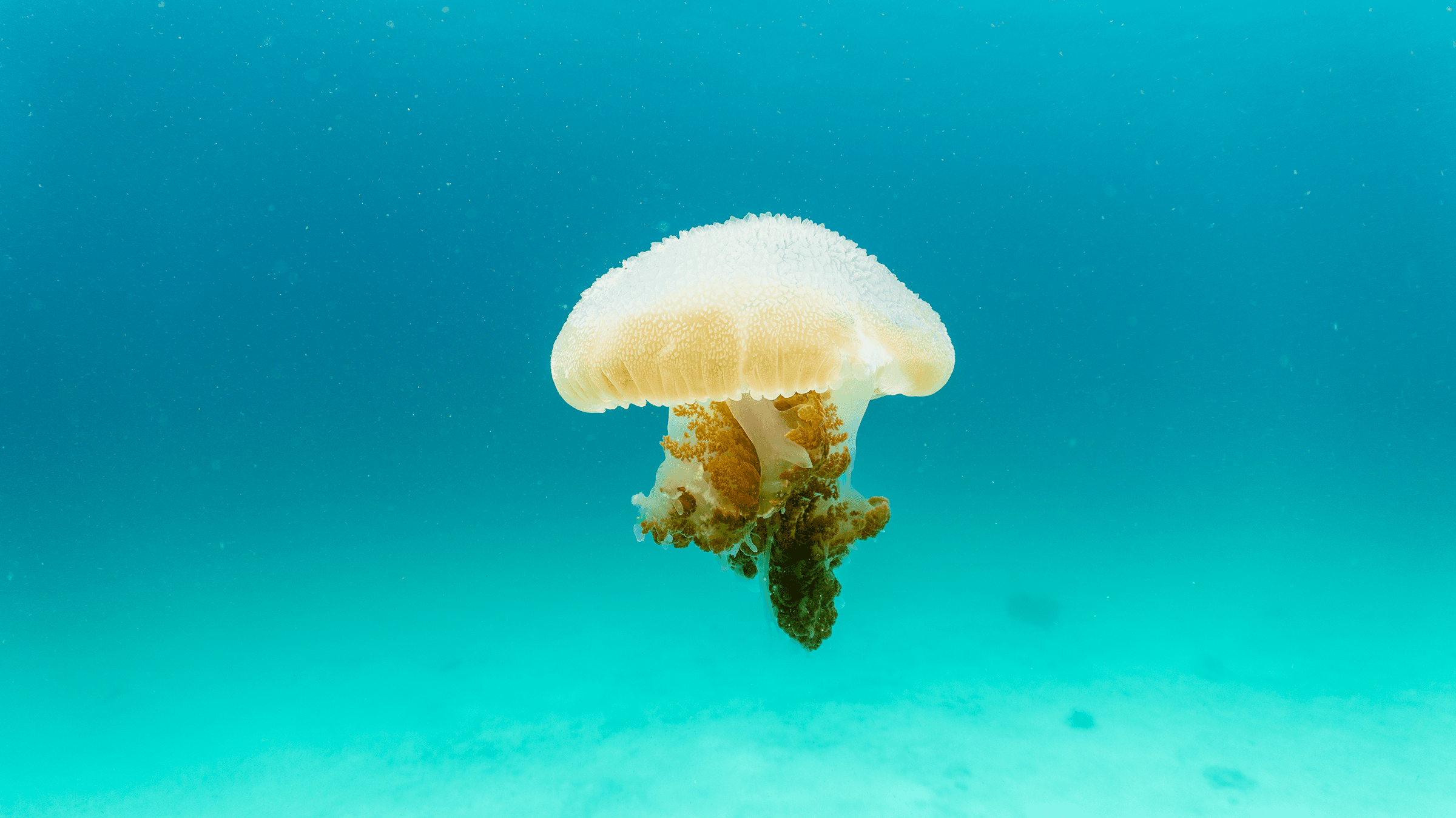
Mosaic jellyfish
The mosaic jellyfish (also known as jelly blubber or blue blubber jellyfish) is a rhizostome scyphozoan jellyfish common in coastal waters (shallow bays and estuaries). The bell is dome-shaped, usually 30–35 cm in diameter, and colour ranges from milky white and cream to bluish; the surface may be finely granular and the overall pattern looks "mosaic-like". There are no long marginal tentacles; instead, under the bell there are large oral arms and eight short, thick, fringed mouth arms. It feeds on plankton and small organic particles by filtering water; it sometimes forms large blooms.
Catostylus mosaicus
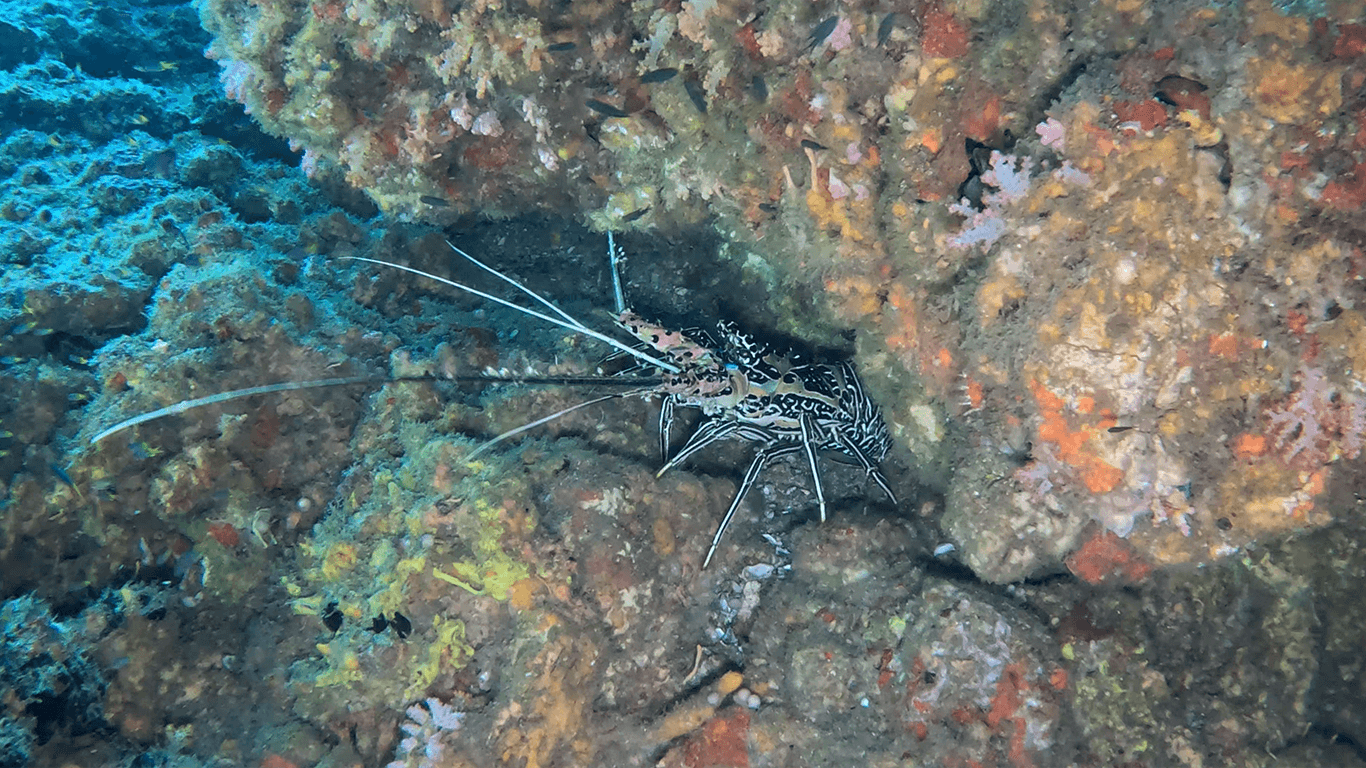
Painted spiny lobster
The painted spiny lobster (also known as the blue-spotted or multicoloured lobster) is a spiny lobster that lives on coral reefs in the Indo-Pacific. By day it hides in crevices and under reef overhangs and is mainly active at night. It grows to 40 cm in length but is usually seen at about 30 cm. Coloration is white, pink and black with horizontal bands and a net-like pattern; the legs are dark with white bands and the long antennae are often whitish.
Panulirus versicolor
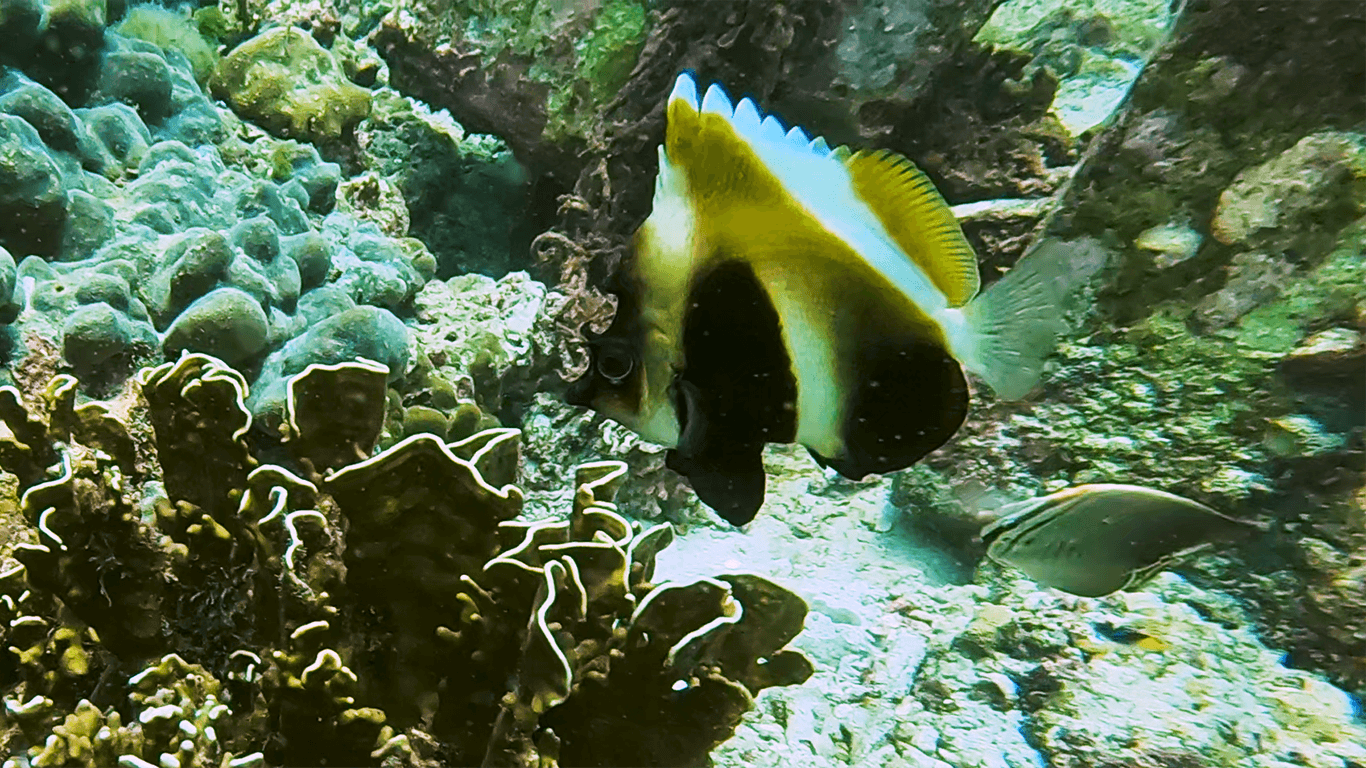
Phantom bannerfish
The phantom bannerfish is a reef fish of the family Chaetodontidae from the central Indo-Pacific. The body is deep and strongly flattened; the first dorsal ray is elongated into a "banner". Coloration is light with contrasting dark areas: a "mask" through the eye, a broad dark band behind the head and a dark patch or zone at the tail base; the upper body and back are often yellowish. It lives in coral-rich lagoons and on outer reef slopes, in pairs or groups (sometimes large schools in some areas), often on reef crests in the surge zone.
Heniochus pleurotaenia
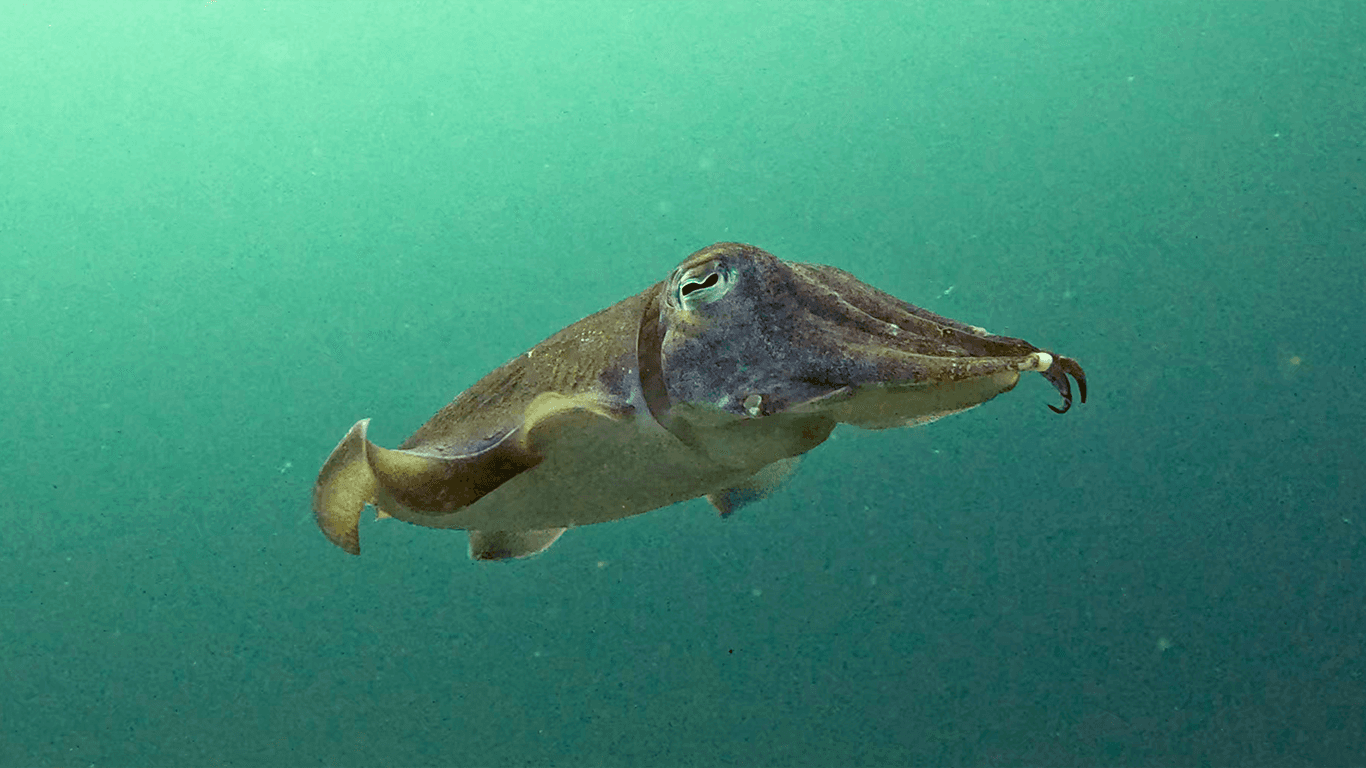
Pharaoh cuttlefish
The pharaoh cuttlefish is a large cuttlefish from the Sepia pharaonis group, found in the warm waters of the Indo-Pacific. Mantle length reaches about 42 cm and weight up to 5 kg. Like other cuttlefish, it has a well-developed nervous system and complex behaviour: it uses jet propulsion (including quick backward bursts), releases ink and changes colour and skin pattern instantly using chromatophores; it can also change the "texture" of its body surface with skin papillae for camouflage.
Sepia pharaonis
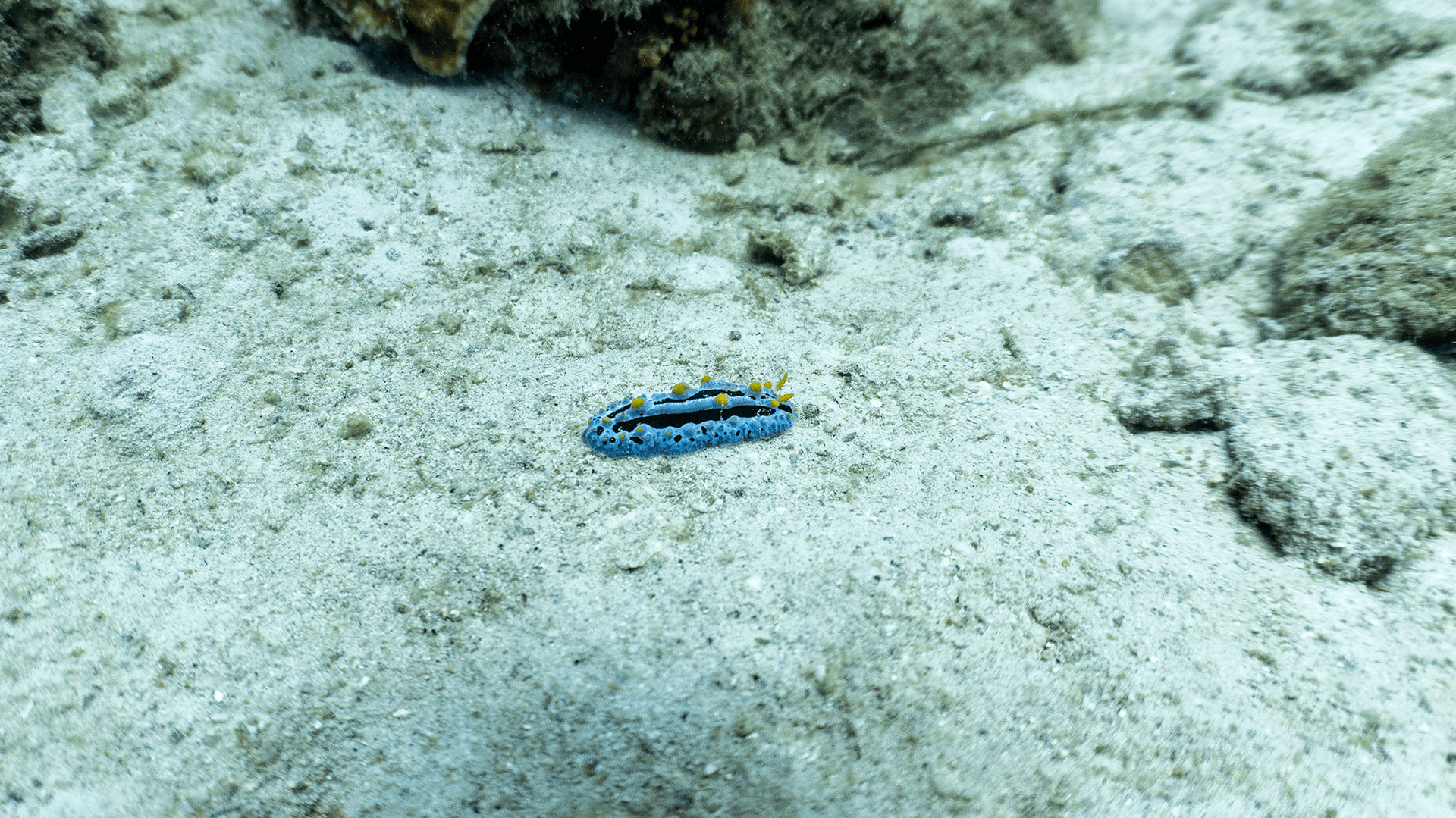
Phyllidia coelestis
Phyllidia coelestis is a nudibranch (sea slug) of the family Phyllidiidae. The body is oval, up to 6 cm. Coloration is grey-blue with three longitudinal black lines: two on the sides and one in the centre that forms a characteristic Y-shaped pattern in front of the rhinophores. The back is covered with bright yellow tubercles; the rhinophores are usually yellow. By day it crawls actively over the reef and feeds on sponges; the colour is warning coloration, and many phyllidiids are toxic to predators.
Phyllidia coelestis