Mosaic jellyfish
Home/Marine Life/Mosaic jellyfish
- Name / Latin
- Mosaic jellyfish — Catostylus mosaicus
- Brief description
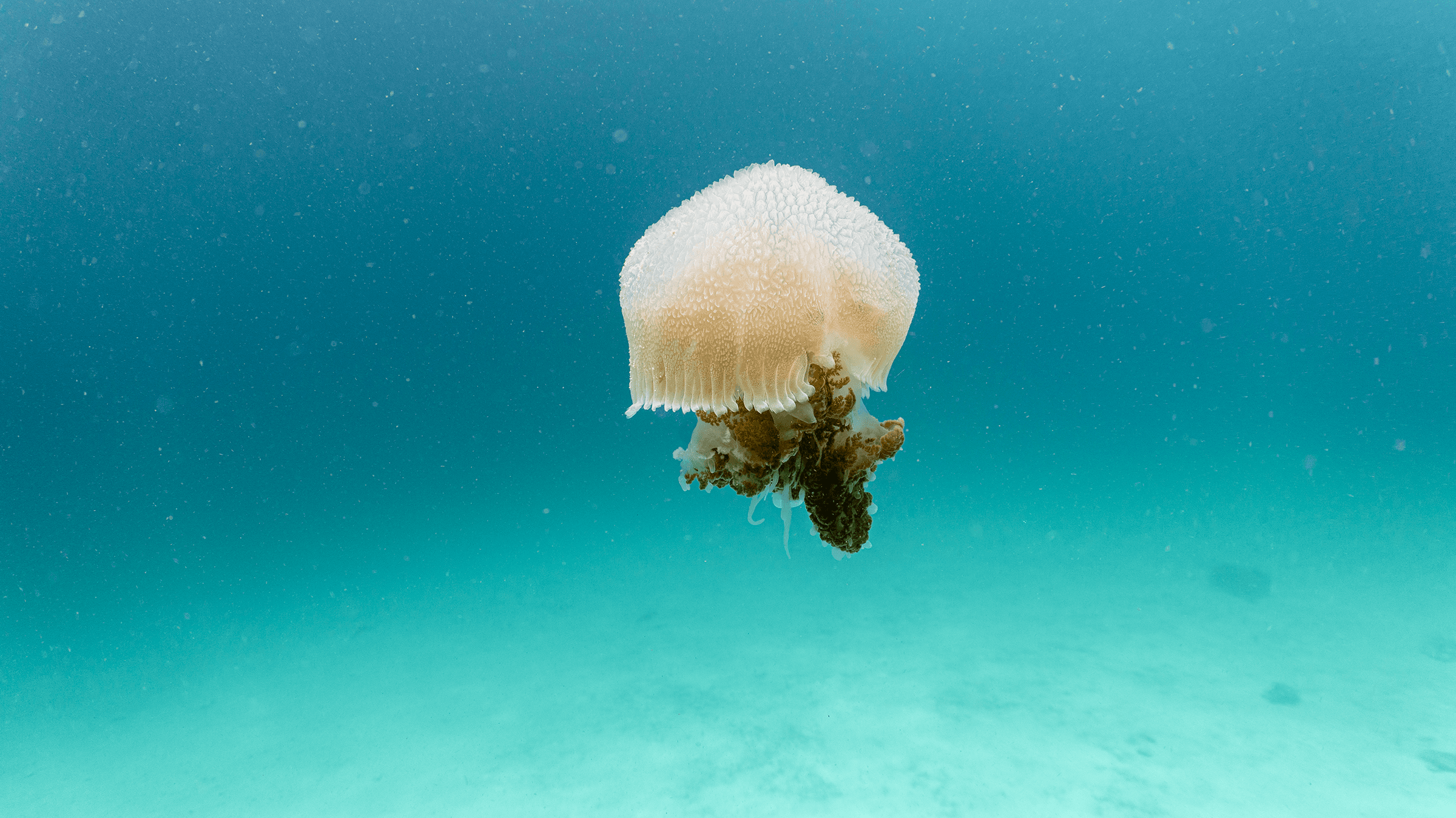
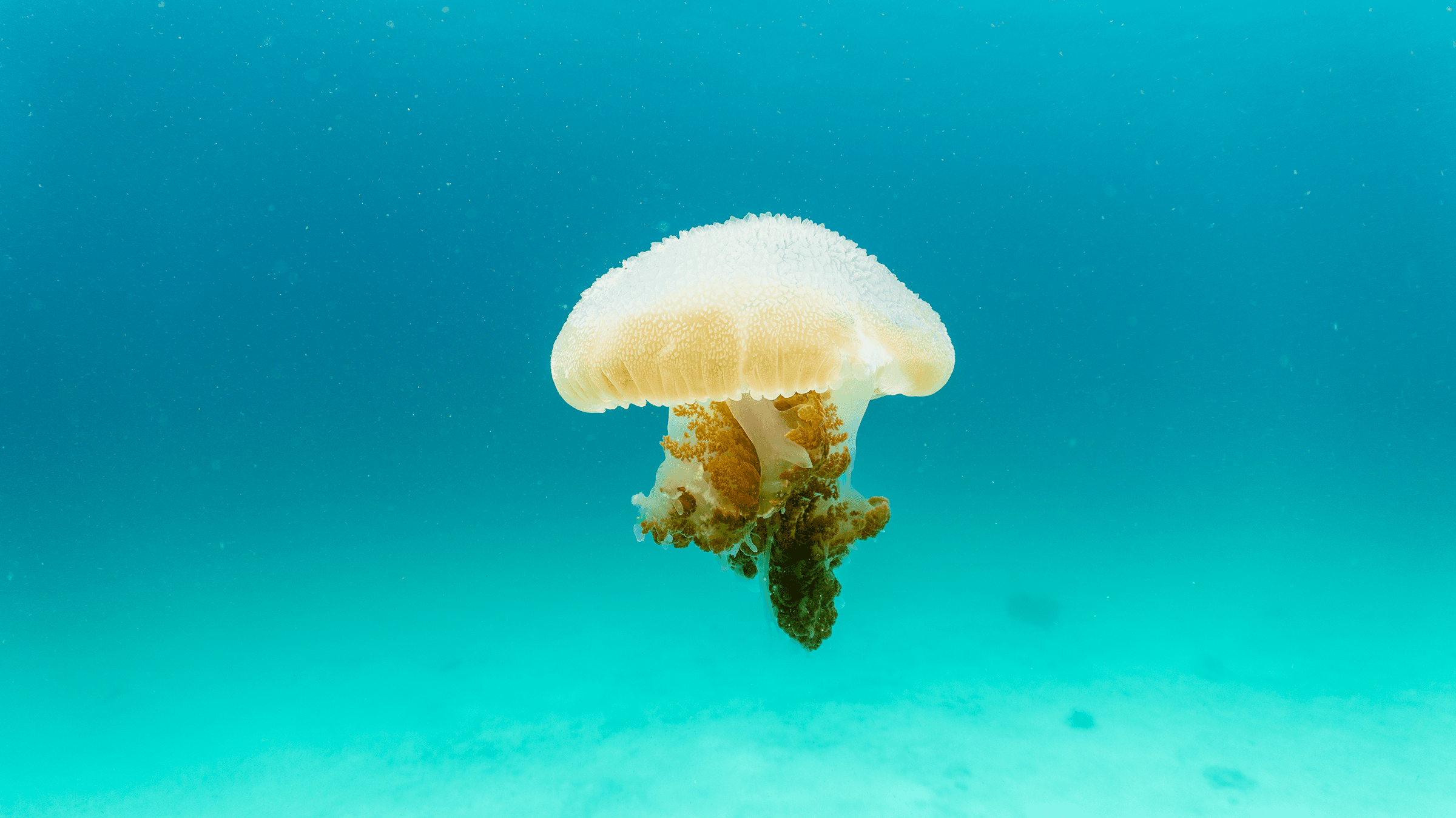
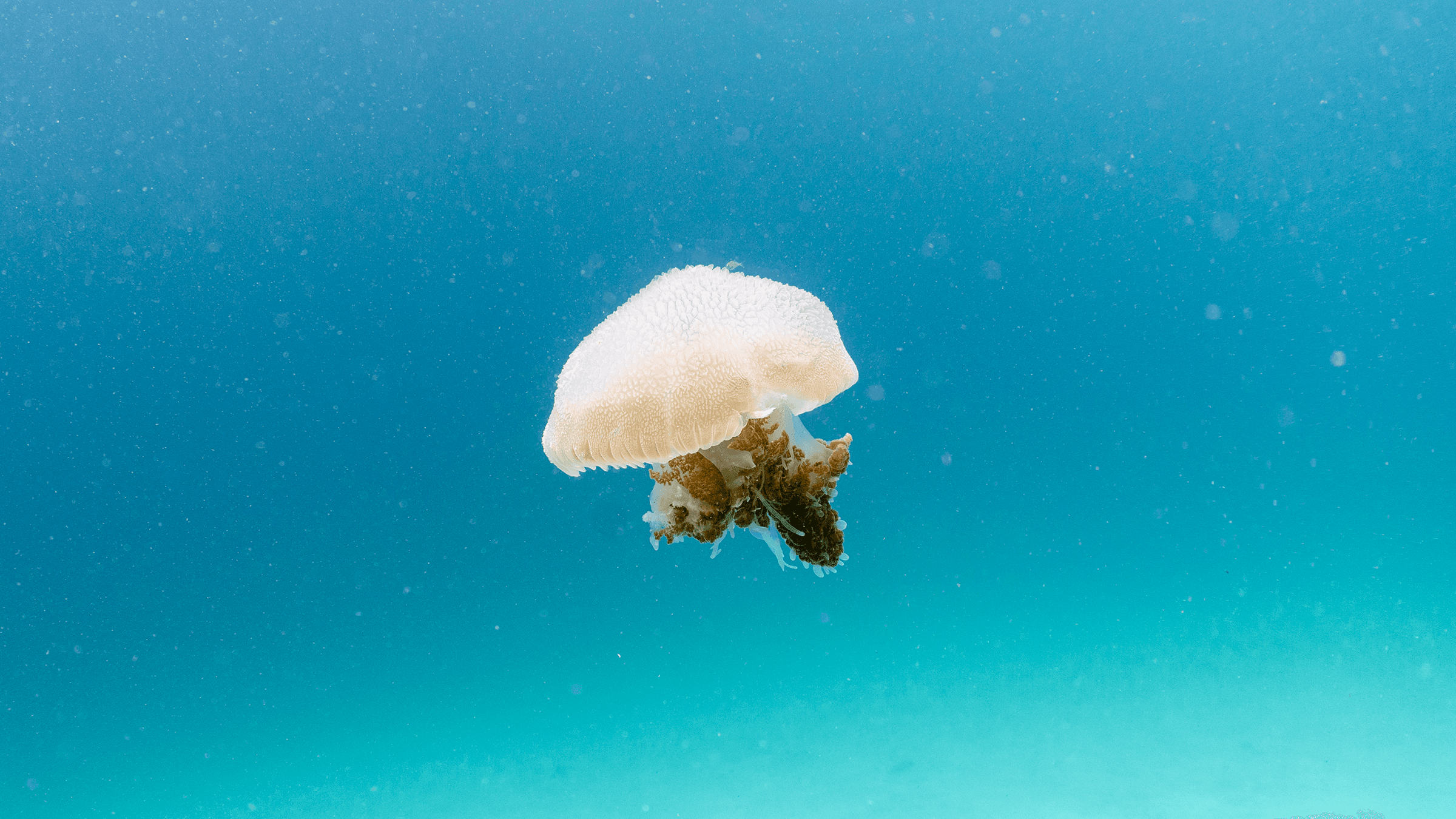
- The mosaic jellyfish (also known as jelly blubber or blue blubber jellyfish) is a rhizostome scyphozoan jellyfish common in coastal waters (shallow bays and estuaries). The bell is dome-shaped, usually 30–35 cm in diameter, and colour ranges from milky white and cream to bluish; the surface may be finely granular and the overall pattern looks "mosaic-like". There are no long marginal tentacles; instead, under the bell there are large oral arms and eight short, thick, fringed mouth arms. It feeds on plankton and small organic particles by filtering water; it sometimes forms large blooms.
- Size:
- up to 45 cm in diameter
- Depth:
- 0–30 m
- Habitat:
- Indian Ocean, Pacific Ocean
- Family:
- Catostylidae
- Type:
- Jellyfish
- Activity:
- Diurnal
- Conservation status:
- Not Evaluated (NE) — species has not been assessed by IUCN
The mosaic jellyfish has a dome-shaped body up to 35 cm in diameter. Its colour varies from whitish-blue to cream, with a pattern like a mosaic or cellular design on the bell. The tentacles are short and fringed, forming a fan-like shape under the bell.
It lives in the warm waters of the Indo-Pacific, especially off Australia, Japan and India. It inhabits shallow lagoons and outer reef slopes at depths of 2 to 55 metres.
It feeds on plankton, small fish and crustaceans. The mosaic jellyfish filters water with its tentacles to capture food.
It is not especially dangerous to humans, although contact with its tentacles can cause skin irritation or a mild sting. Its venom is not deadly and in most cases causes only mild symptoms.
The mosaic jellyfish is an important part of coral reef ecosystems, as it is involved in feeding and the movement of nutrients.