Map pufferfish
Home/Marine Life/Map pufferfish
- Name / Latin
- Map pufferfish — Arothron mappa
- Brief description
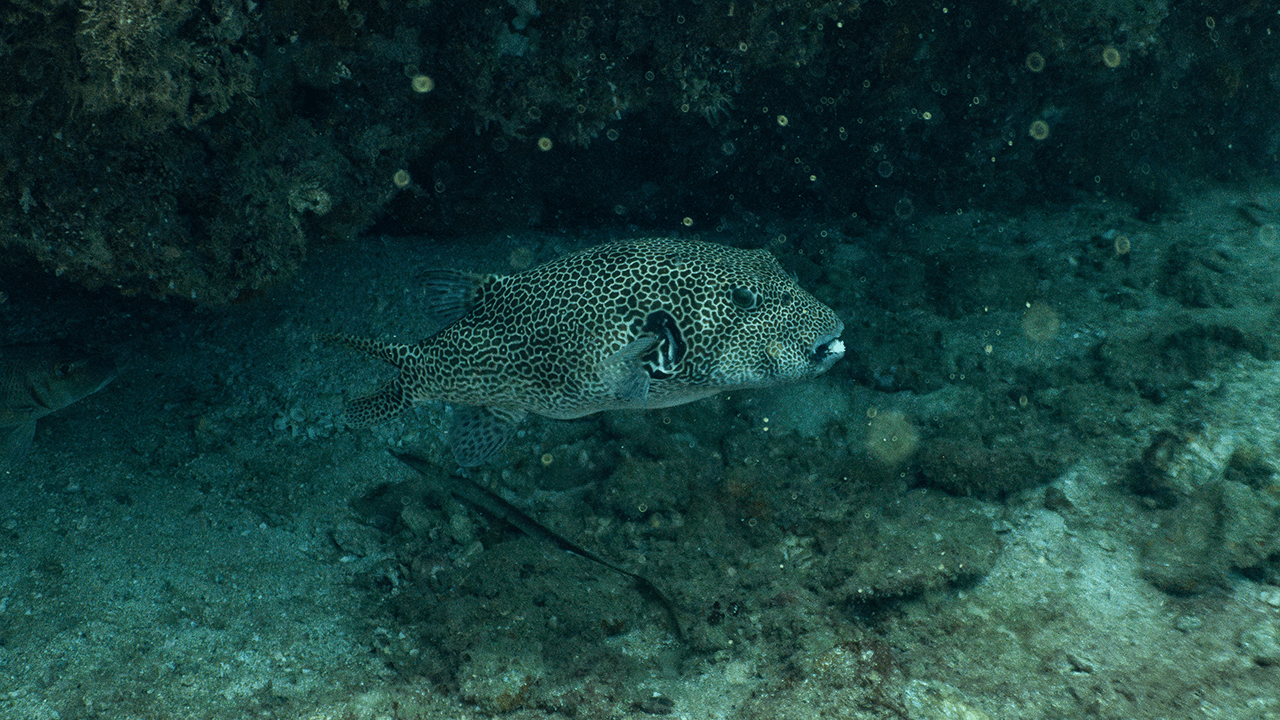
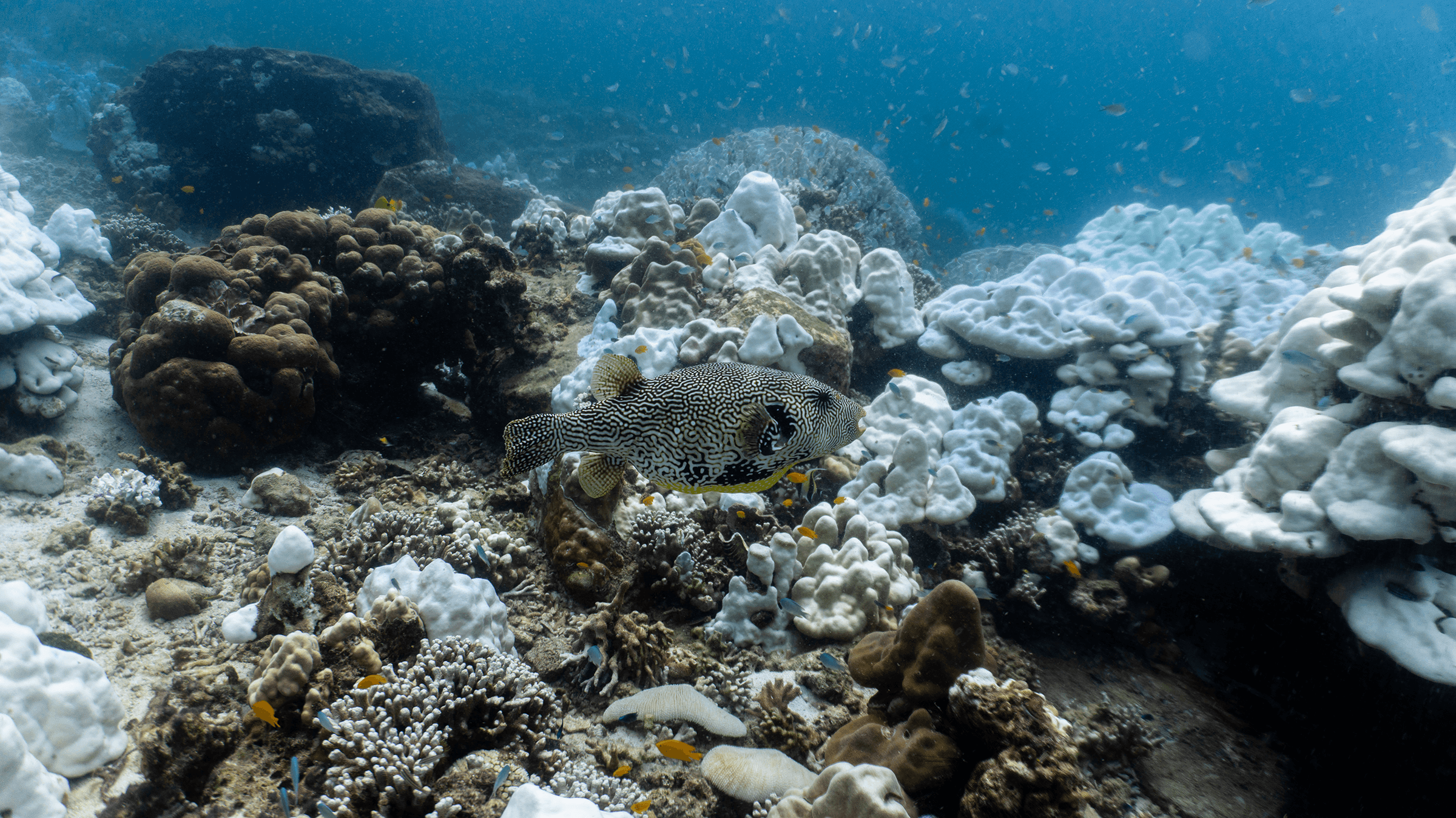
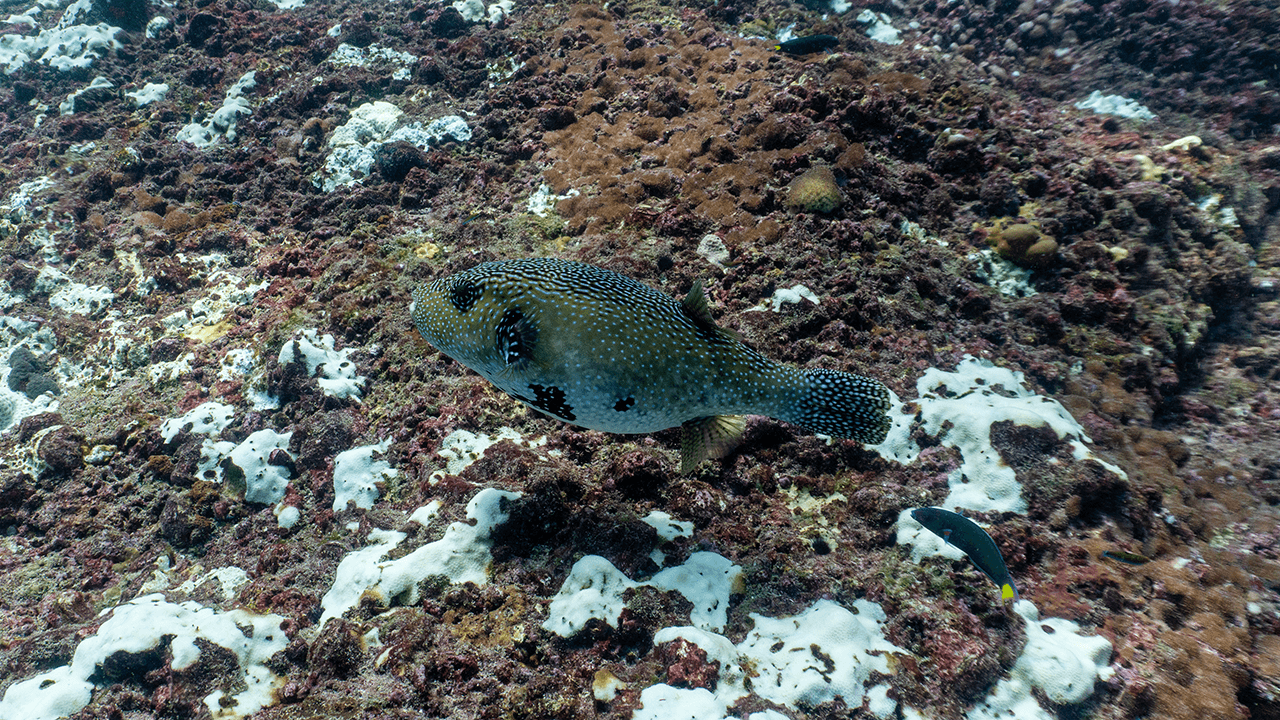
- The map pufferfish (also known as the scribbled puffer) is a large pufferfish with a "map-like" or maze-like pattern of light wavy lines on a grey to greenish-brown background. The skin has no scales but small skin spines. The teeth are fused into a strong "beak" used to crush hard prey (molluscs and crustaceans). When threatened it inflates to look larger; its tissues may contain tetrodotoxin.
- Size:
- up to 65 cm
- Depth:
- 4–30 m
- Habitat:
- Indo-Pacific region
- Family:
- Tetraodontidae
- Type:
- Fish
- Activity:
- Diurnal, usually solitary
- Conservation status:
- Least Concern (LC) — not threatened with extinction according to IUCN assessment
The map pufferfish has a large body with a characteristic maze- or mosaic-like pattern that gives it its name. Body colour varies from green to grey-brown, and the light lines that form the pattern cover the whole body. The head is large with a typical mouth adapted for crushing hard objects such as coral and mollusc shells.
The map pufferfish lives in the warm waters of the Indo-Pacific, including the coastal waters of Thailand, Indonesia and the Philippines. It prefers coral reefs and sandy lagoons at depths down to 30 metres.
It feeds mainly on hard-shelled invertebrates such as molluscs, crabs and sea urchins. It uses its powerful jaws to crush shells and coral.
Like many pufferfish, the map pufferfish can be dangerous to humans because its tissues may contain tetrodotoxin. This poison is deadly if the fish is eaten. However, when met underwater it is not a threat as it is not aggressive.
The toxin in the map pufferfish can paralyse the nervous system and cause death if the fish is eaten without proper preparation.
In Japan, pufferfish are considered a delicacy, but preparing them requires a special licence because of the risk.
When threatened, the pufferfish can inflate to look larger and deter predators.