Montenegro 2026. Herceg Novi
Gave Montenegro diving a second chance
Home/Blog/Montenegro 2026. Herceg Novi
Last year I already came to dive in Montenegro — it was early May, literally the first outings of the season at the dive centers, and I didn't particularly enjoy it. But Montenegro is still one of the most convenient diving locations near Serbia, so I decided to give it a second chance. This time I planned to dive only in Herceg Novi, and in June.
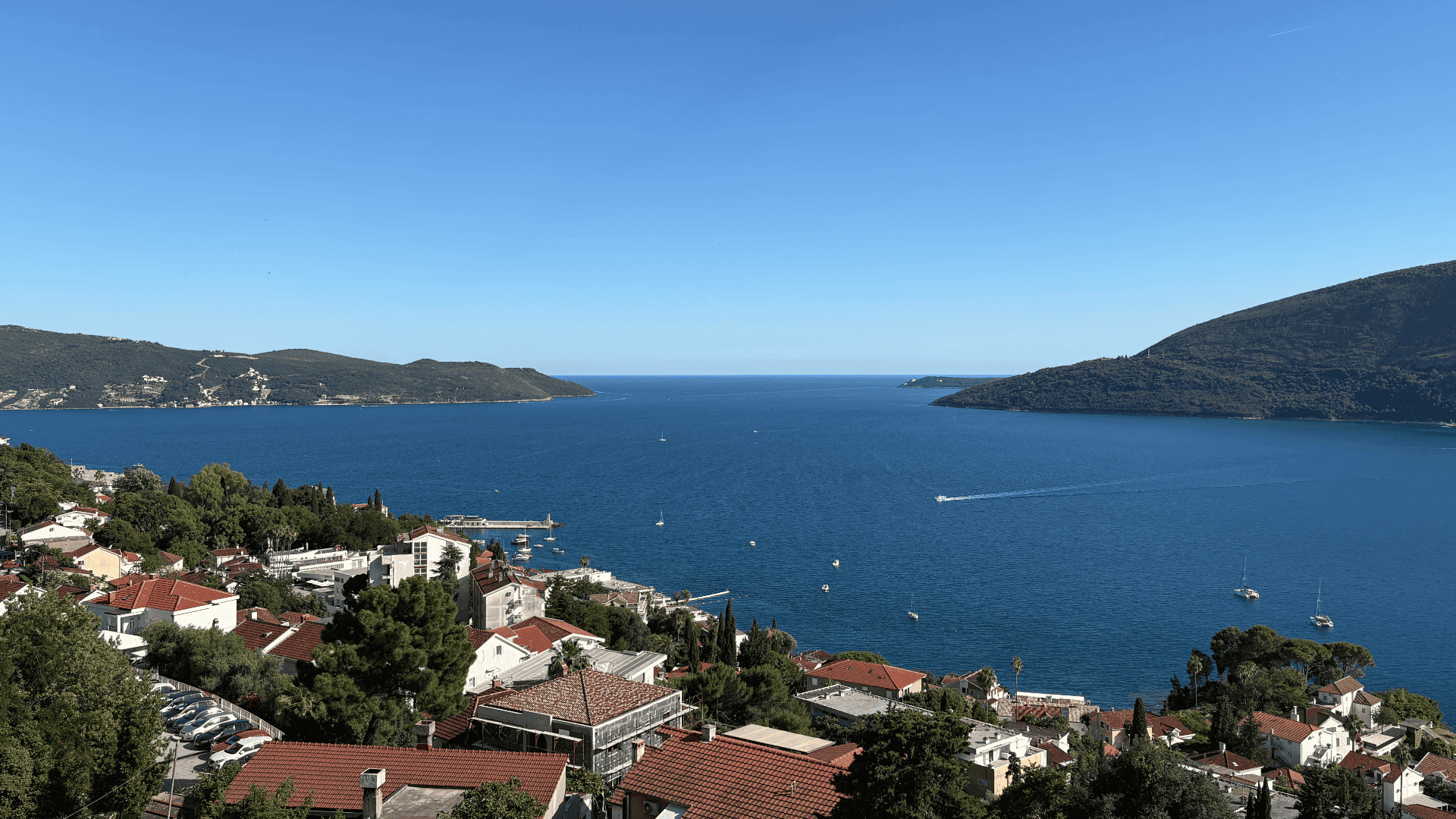
I was worried that June would already be tourist season and it would be very crowded and busy. But Montenegro is not my beloved Phuket, so talking about crowding when it comes to diving here is a clear exaggeration. Our group had four people, one of whom was the instructor.
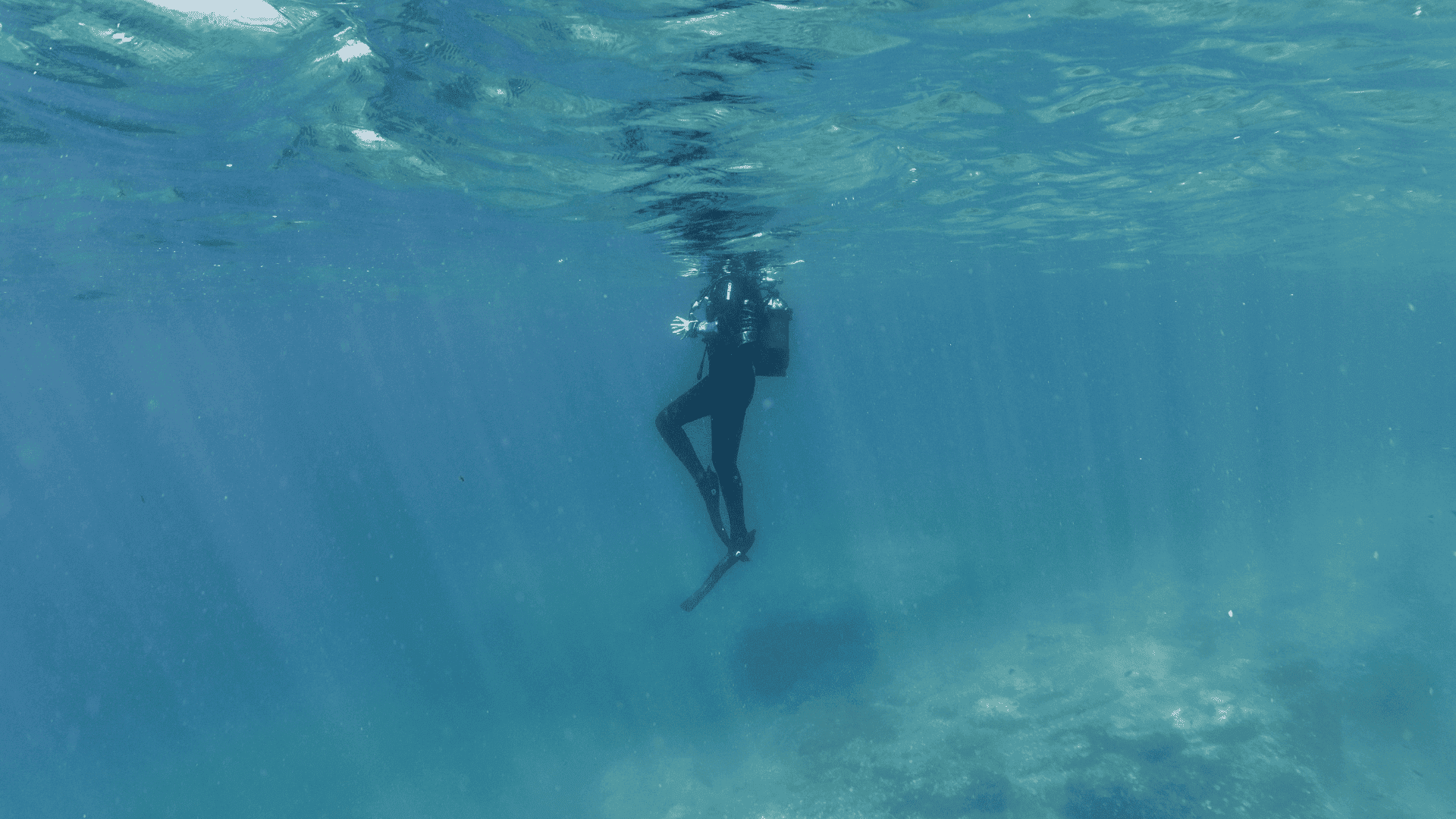
Of all the dive sites I wanted to visit this time, there were the "Sunken patrol boat PBR 512" and the "Submarine tunnel." But the sunken boat was off the table — it sits at 25–30 meters, and we had a girl with us who had just received her Open Water certificate, which didn't allow her to go to that depth. "If the guys don't go tomorrow, then we'll dive it. Today we'll go explore a place called Jakubić Cave," said the instructor.
Day 1. Jakubić Cave (Cave + Grotto)
The "Jakubić Cave" dive site is in the Luštica peninsula area, near the entrance to the Bay of Kotor — a place where several caves and grottos sit close together. Thirty minutes from Herceg Novi by motorboat.
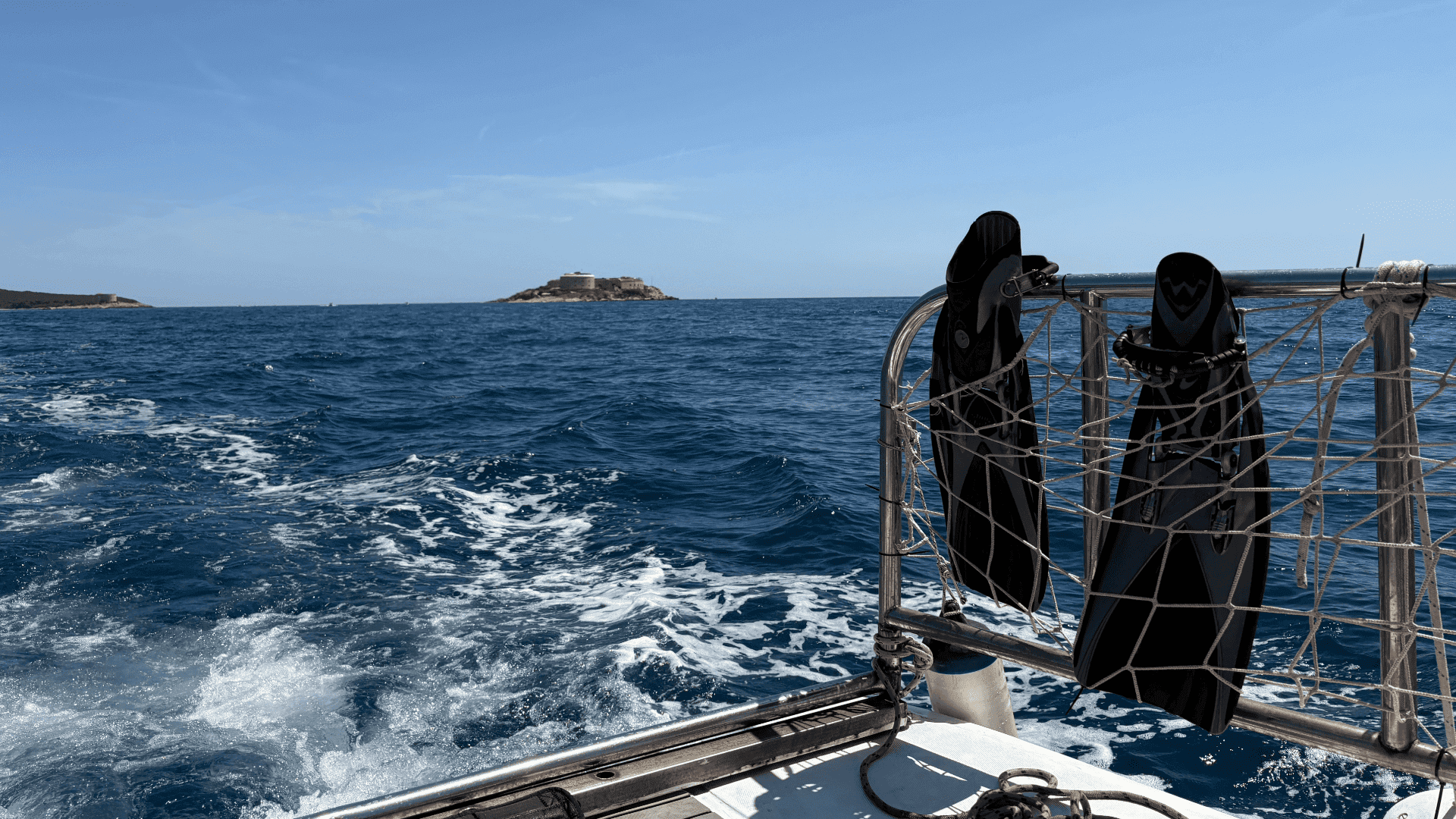
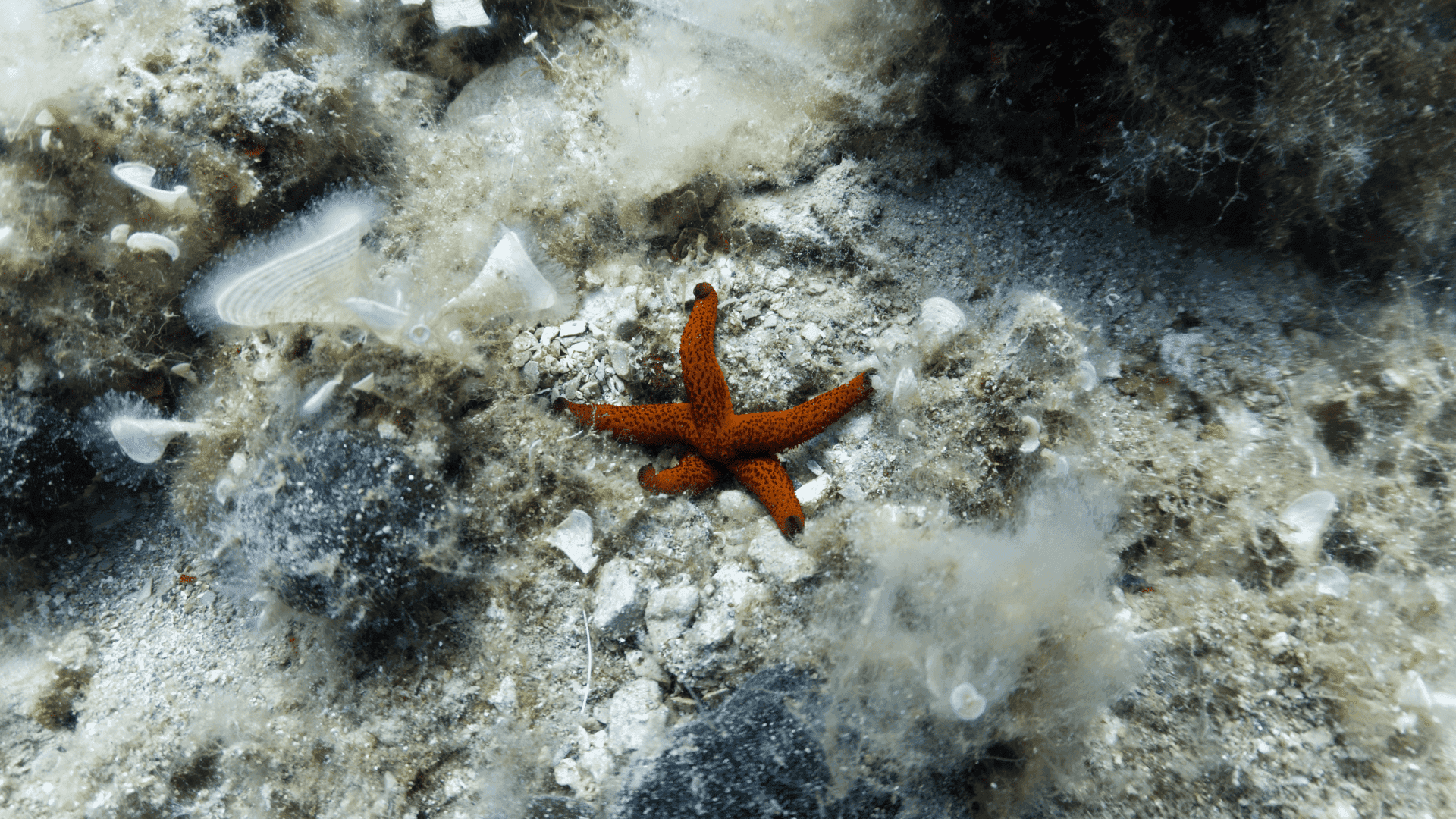
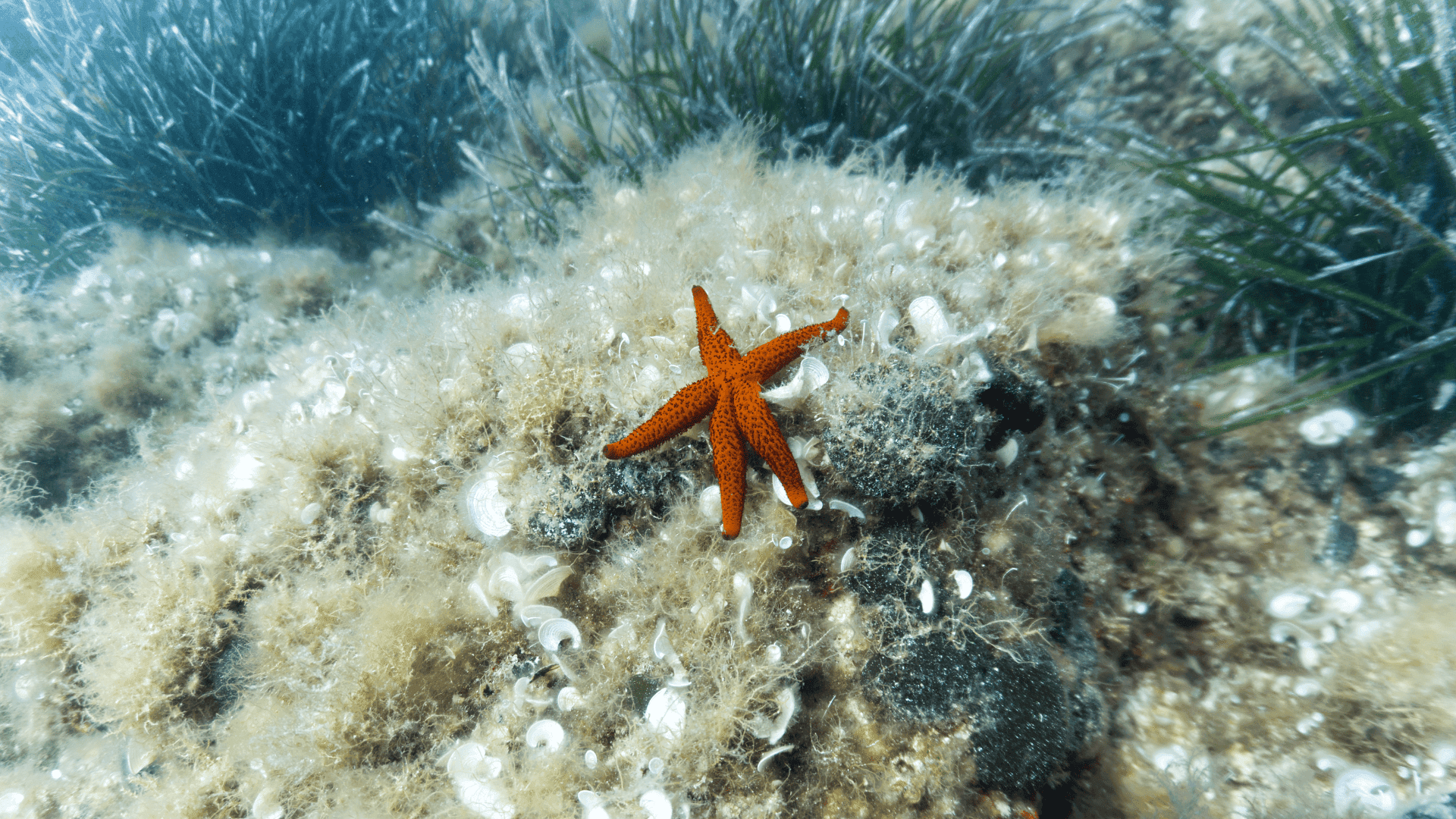
Average depths at the dive site are around 16–20 meters, so it's accessible for all certification levels. But some caves, because of the entrance location and length, are only available for AOW and above. Currents in this place are almost never observed in summer. Lobsters, crabs, moray eels, octopuses, starfish, and sea cucumbers live in the crevices. Underwater visibility is about 10 meters, with plenty of sandy particles.
The first dive was into several caves. The entrance to the first one was at 6–7 meters, the cave length — about 8 meters. At the same time, the cave is very narrow, so we went inside one at a time. It's hard to call this full-fledged cave diving, but of course local dive centers sell it that way — alas... Inside there's usually a lot of sponges, schools of fish, and bristle worms that resemble centipedes.
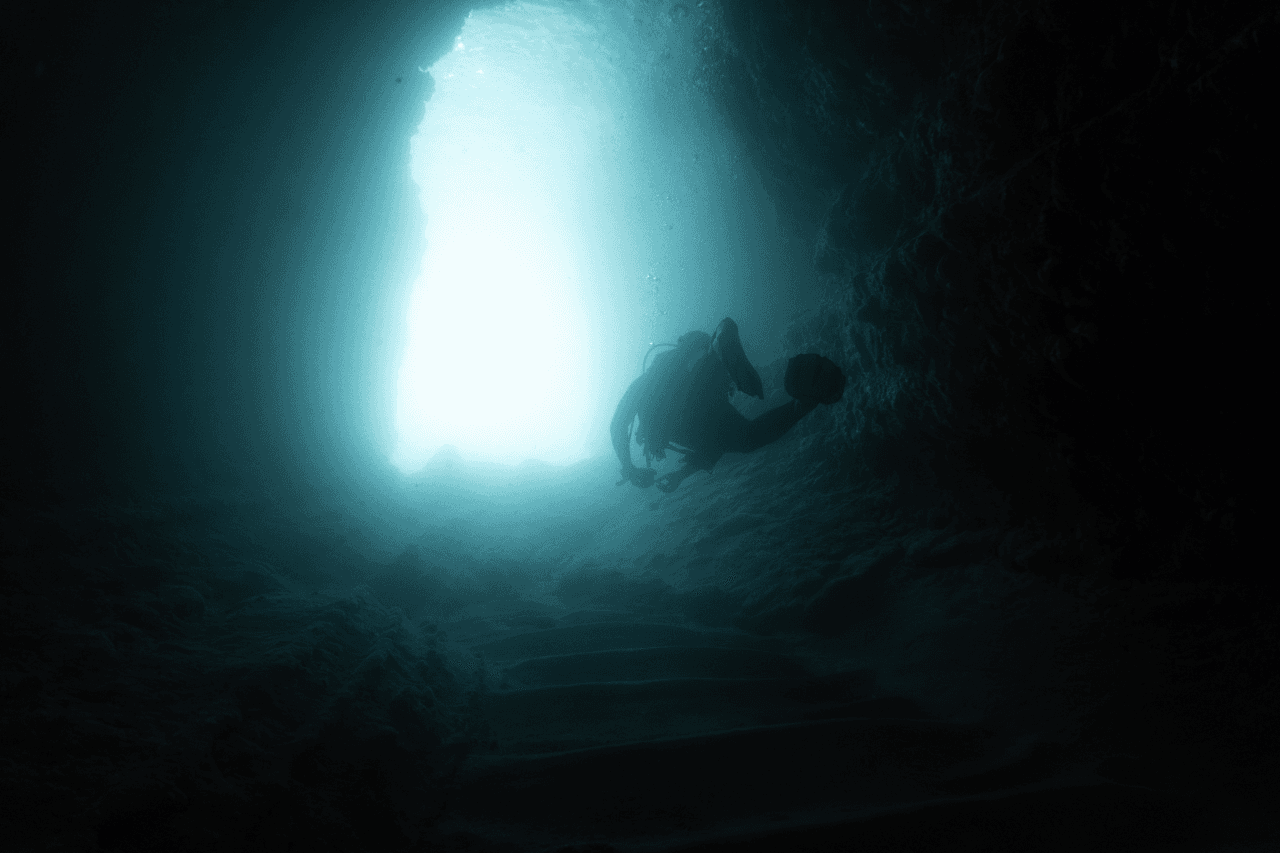
Into the second cave, despite it being bigger and in general you could have stayed in pairs, I went alone. The entrance was at 10–12 meters, the length — about 12 meters, which isn't available for OW, so the guys waited for me at the entrance while I swam off to explore it. I can't say the guys missed out on much, but I still feel a slight sense of elitism) I met a scorpionfish there and beautiful lighting at the cave exit.
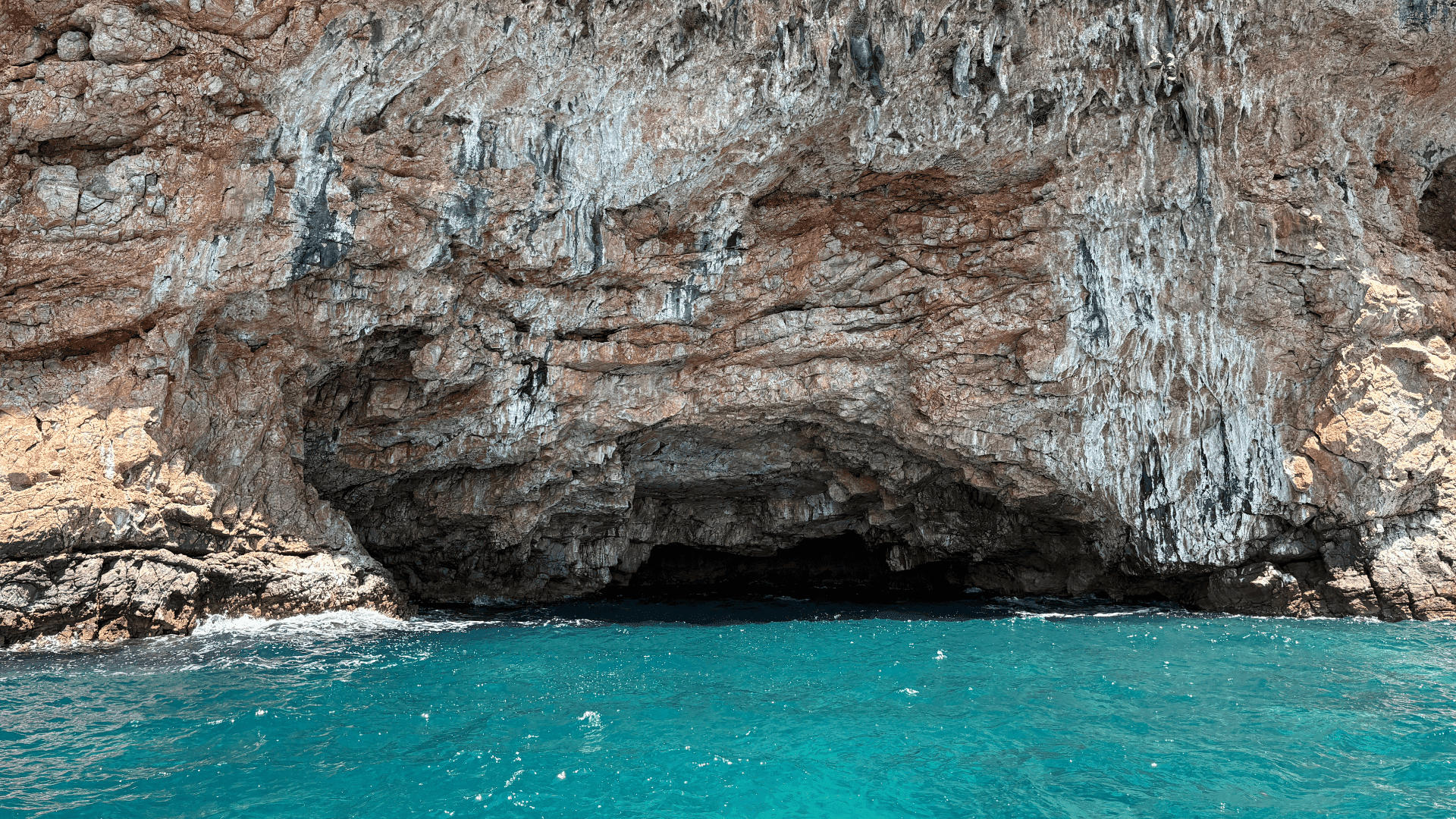
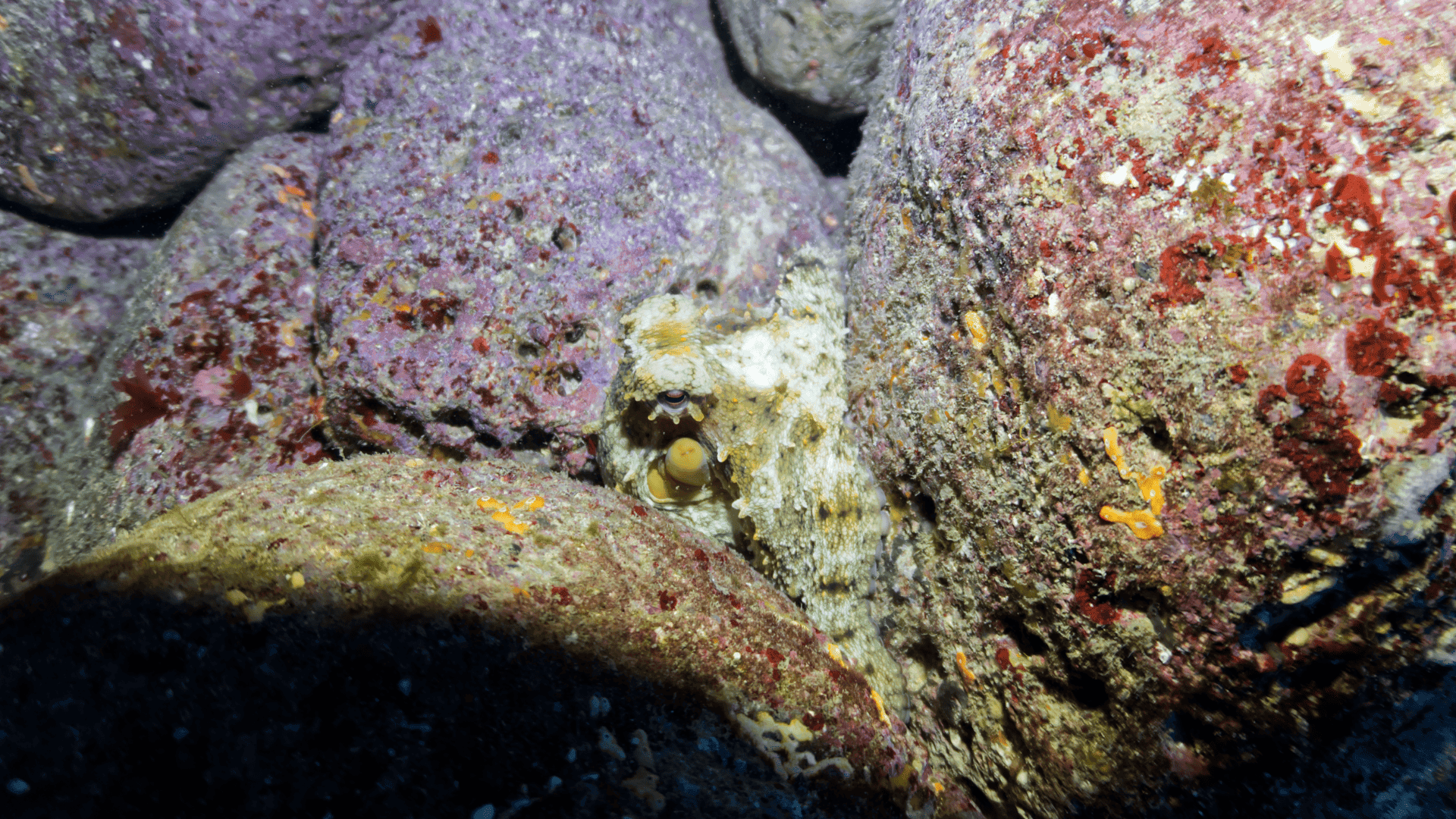
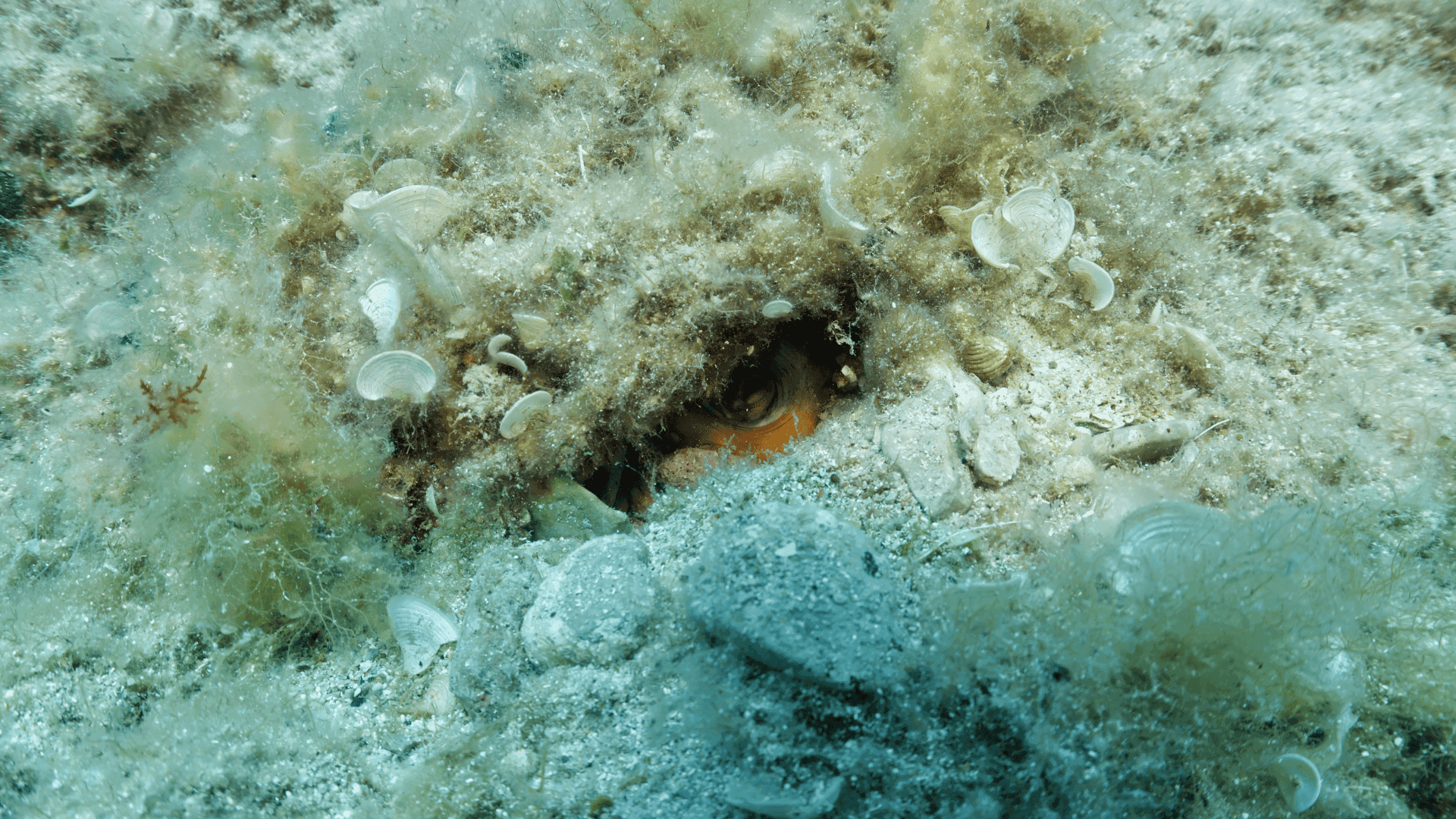
The second dive was about 100 meters from the first — a small bay with a large grotto. A relaxed, unhurried dive during which we met two octopuses. At the start we swam along the deep part of the bay at 18 meters, looked at the sandy bottom. We met a shy octopus hiding in a crevice, sternly peering out with one eye. After taking its photo, I swam on.
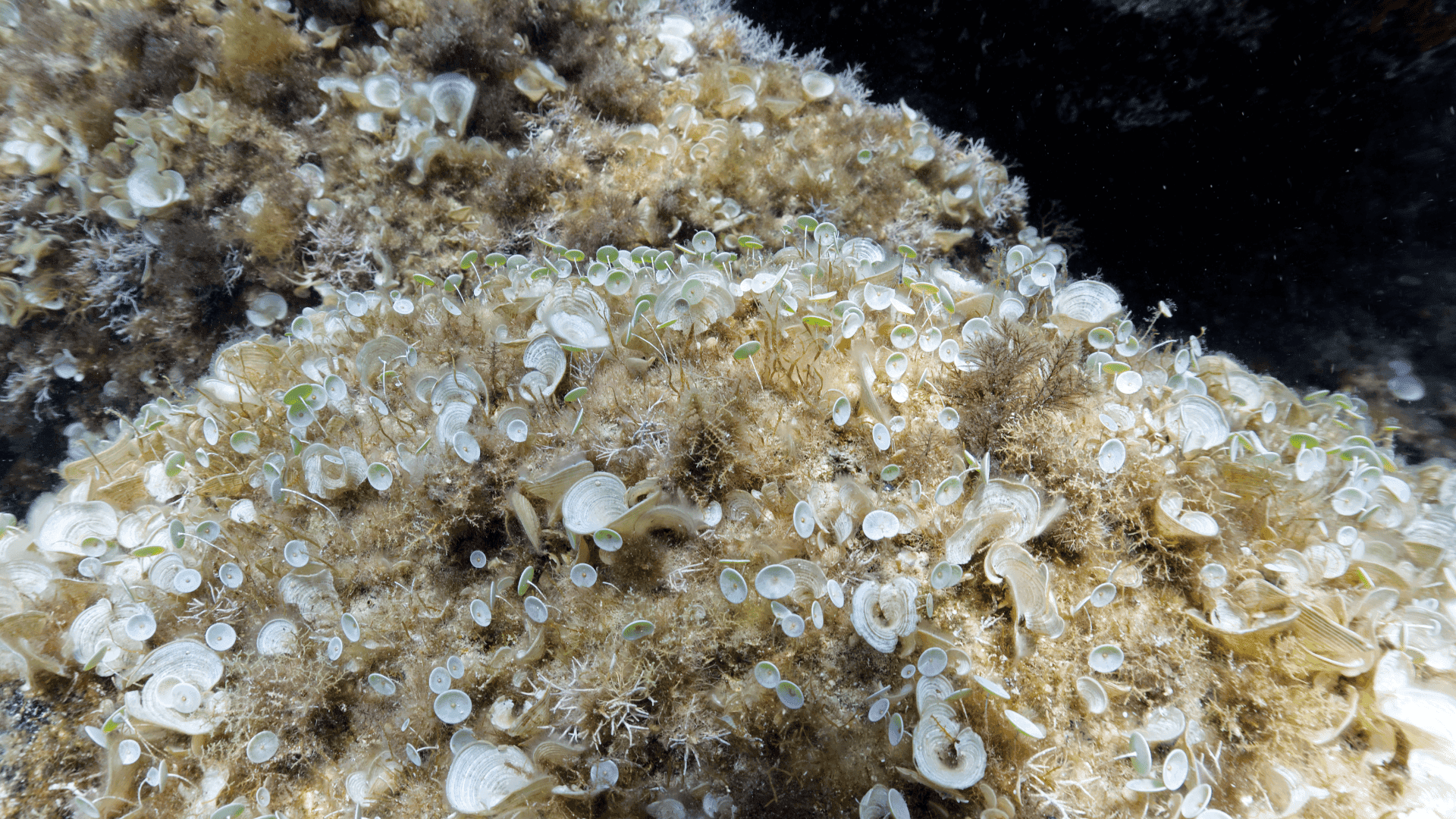
There were a lot of thermoclines that sometimes made you shiver a little from the cold — that's what this part of the dive site is remembered for. There was another thing that captivated me — algae everywhere that looked like mushrooms. These are "mermaid's wineglasses" or "mermaid's cups" (mermaid's wineglass/cup). Despite the fairly large size, each "little cup" is a single giant cell. That's how it is.
Then we headed into the grotto. The grotto entrance reminded me of Turtle Rock on Phi Phi, only a bit smaller and less populated. The huge boulders on the bottom and the waves crashing right overhead matched. A quite photogenic and atmospheric place.
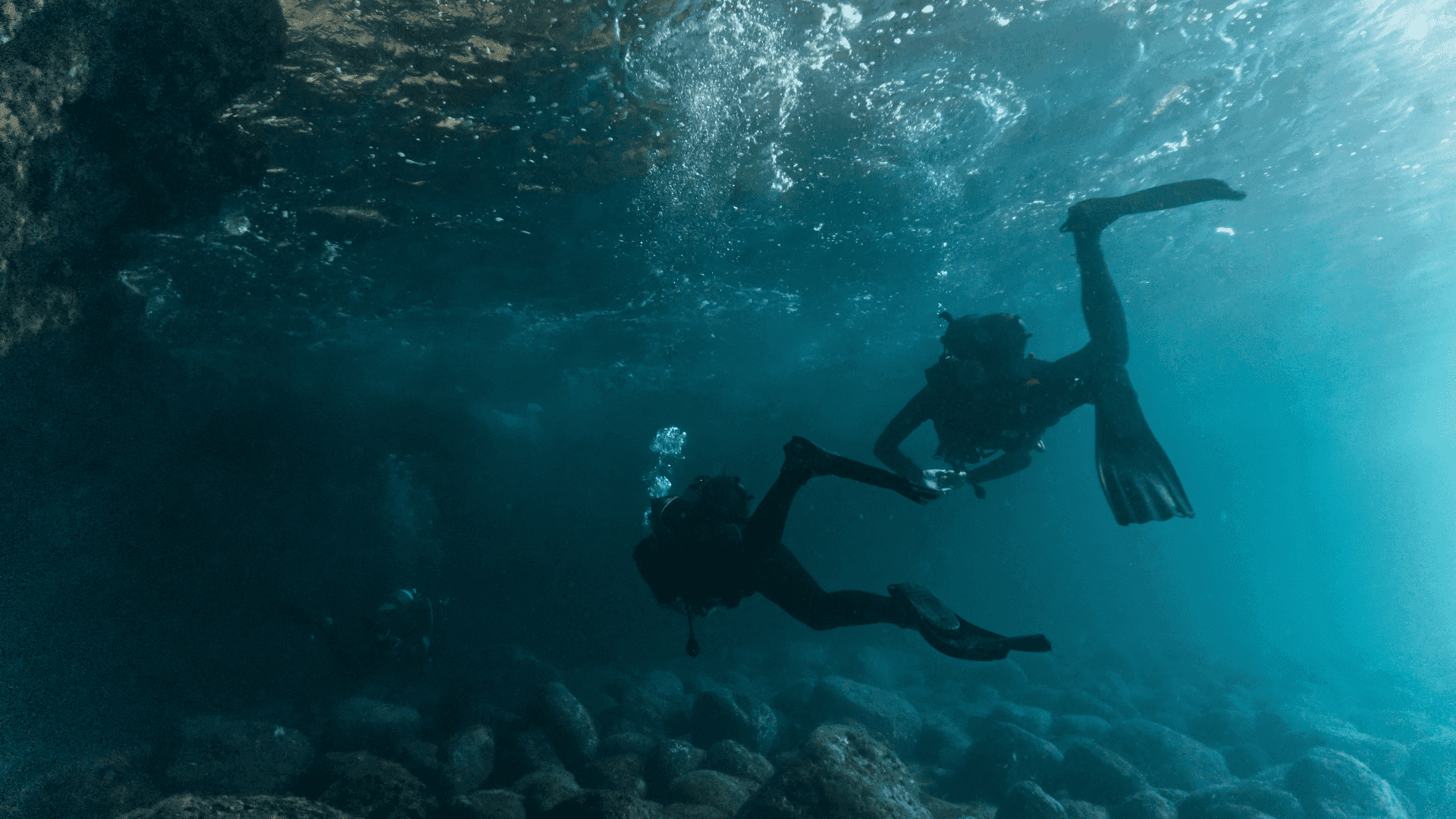
Inside the grotto I decided to fall behind the guys to film them from afar, but noticed they had frozen for a long time, looking at something intently. Swimming closer, I understood: it was a large octopus that wasn't shy at all and posed for everyone. After a few minutes it apparently got bored and started running away from us — so we headed for the exit.
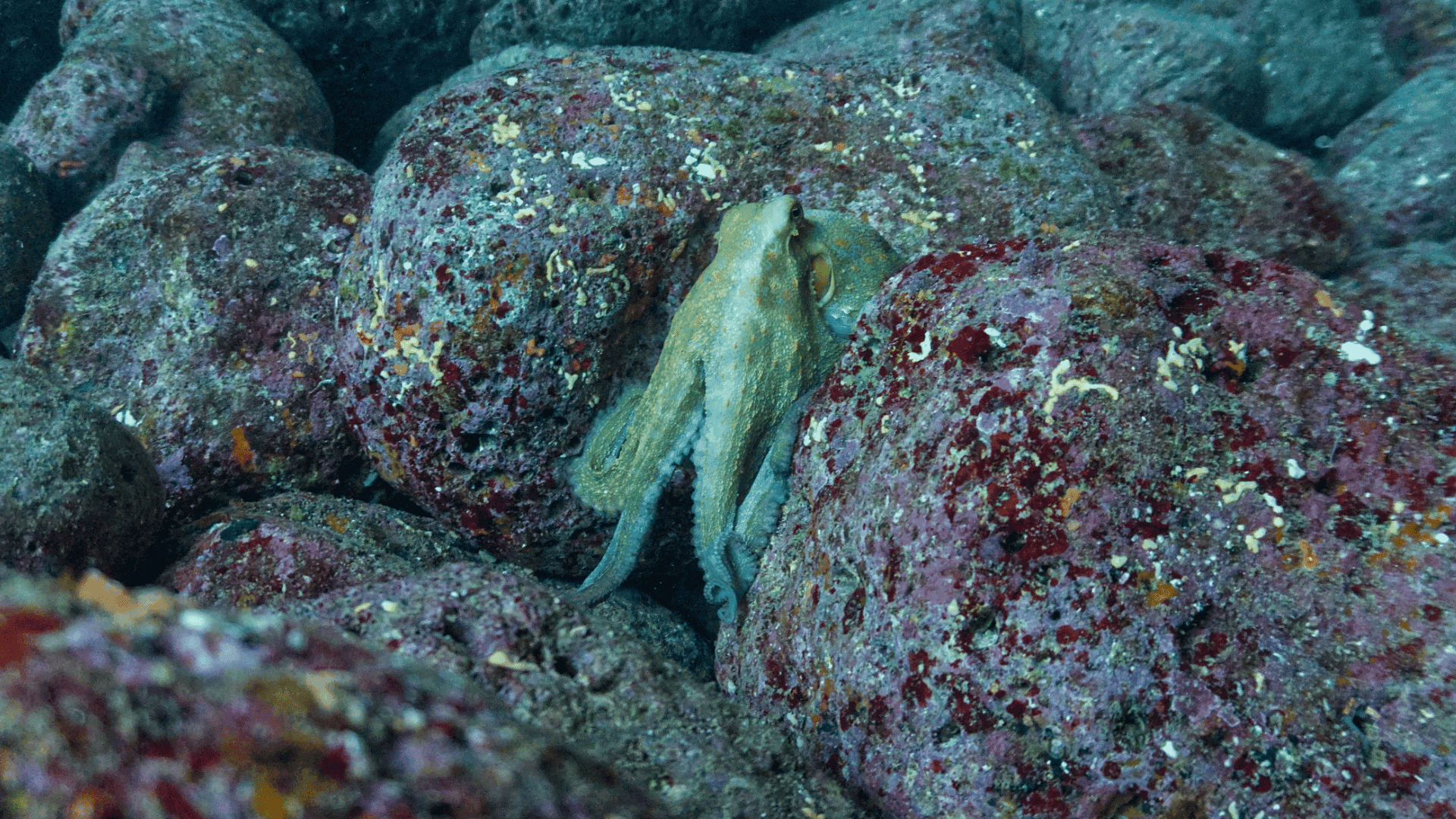
Overall the first day went fine. It was nice to get back underwater, swim in little caves, admire the octopuses and starfish strangely sprawled everywhere) And to remember that half-forgotten feeling of weightlessness.
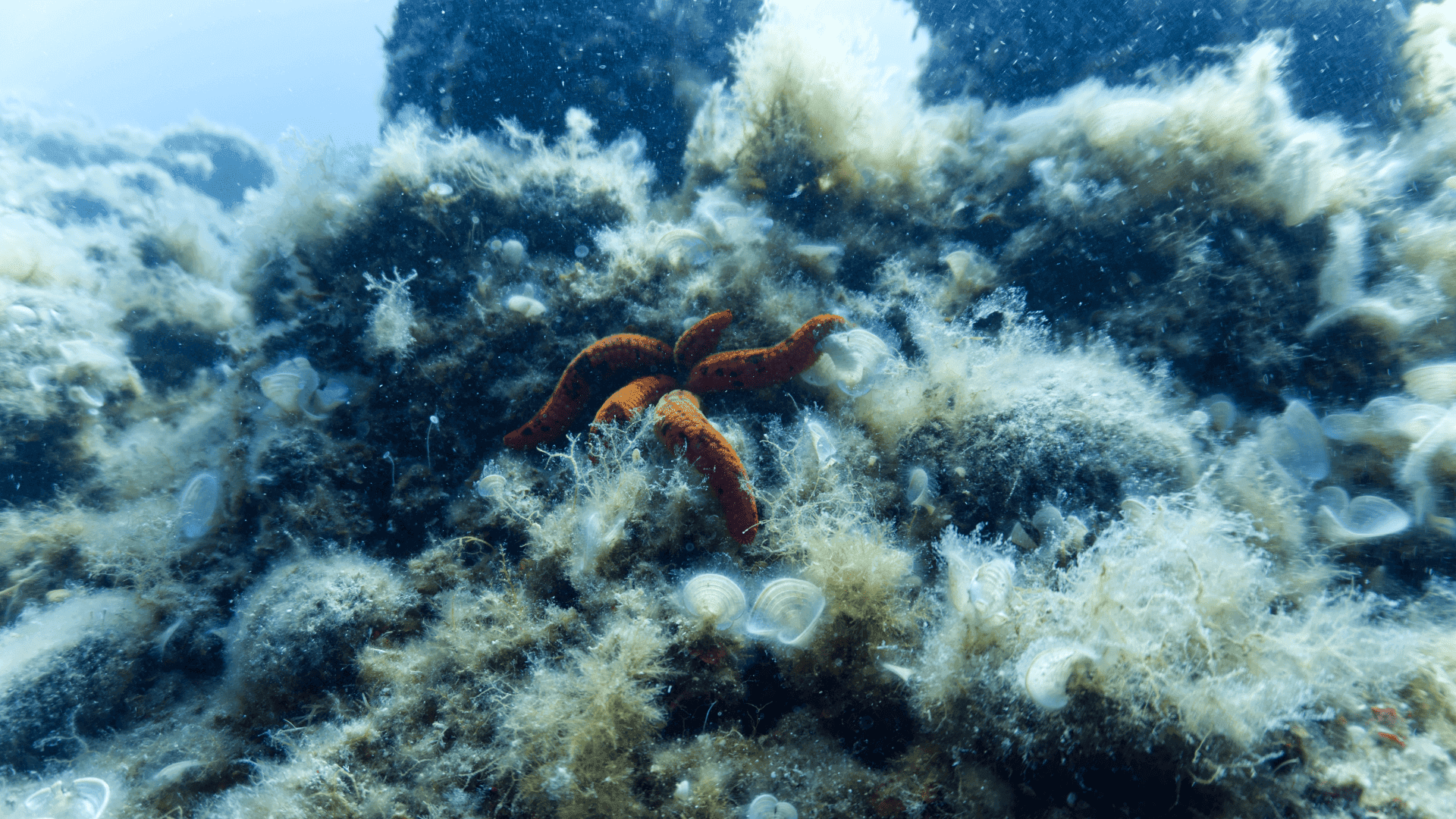
Day 2. Cape Kobila and the Submarine Tunnel
On the second day we gathered as the same group. We loaded the gear into the boat and decided we'd finish the day with the tunnel, and do the first dive at Cape Kobila.
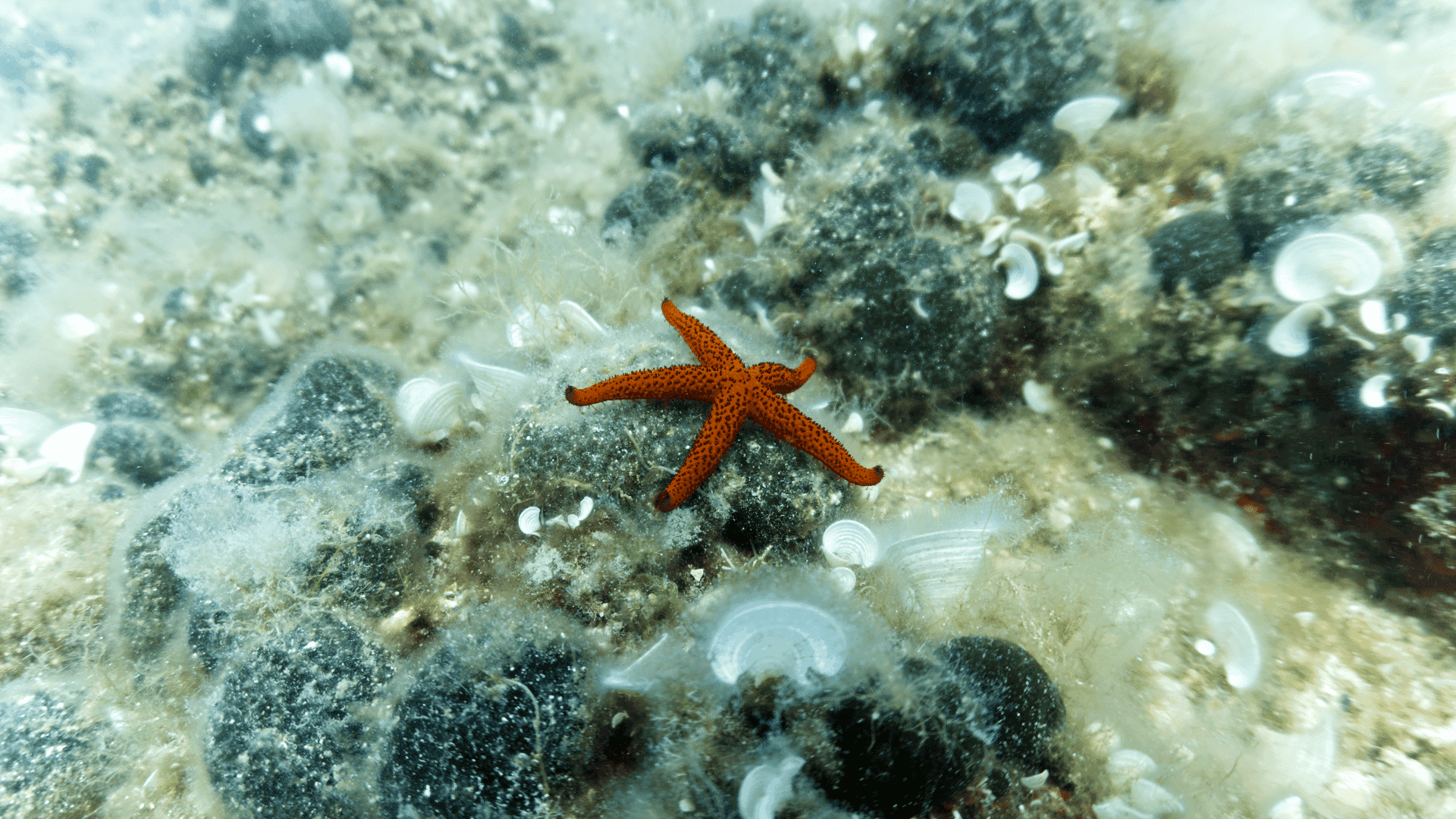
Cape Kobila — a dive site in the Bay of Kotor. It's a rocky cape with a gradual slope down to 40 meters. Suitable for dives of different levels: there's a shallow part for beginners and deeper sections for advanced divers. Because of the location, strong currents are sometimes encountered, but in summer it's usually calm. Wildlife: sponges, anemones, small fish (sea bream, wrasse), sometimes moray eels, octopuses, and lobsters in rock crevices.
When we arrived at the spot, there was one boat with a freediving lobster hunter. He pointed out where we'd better anchor, and we set off for the first dive.
Pretty quickly we found several lobsters that the previous boat had missed — long antennae sticking out of rock crevices. Can't say they were very scared when I swam closer to take photos.
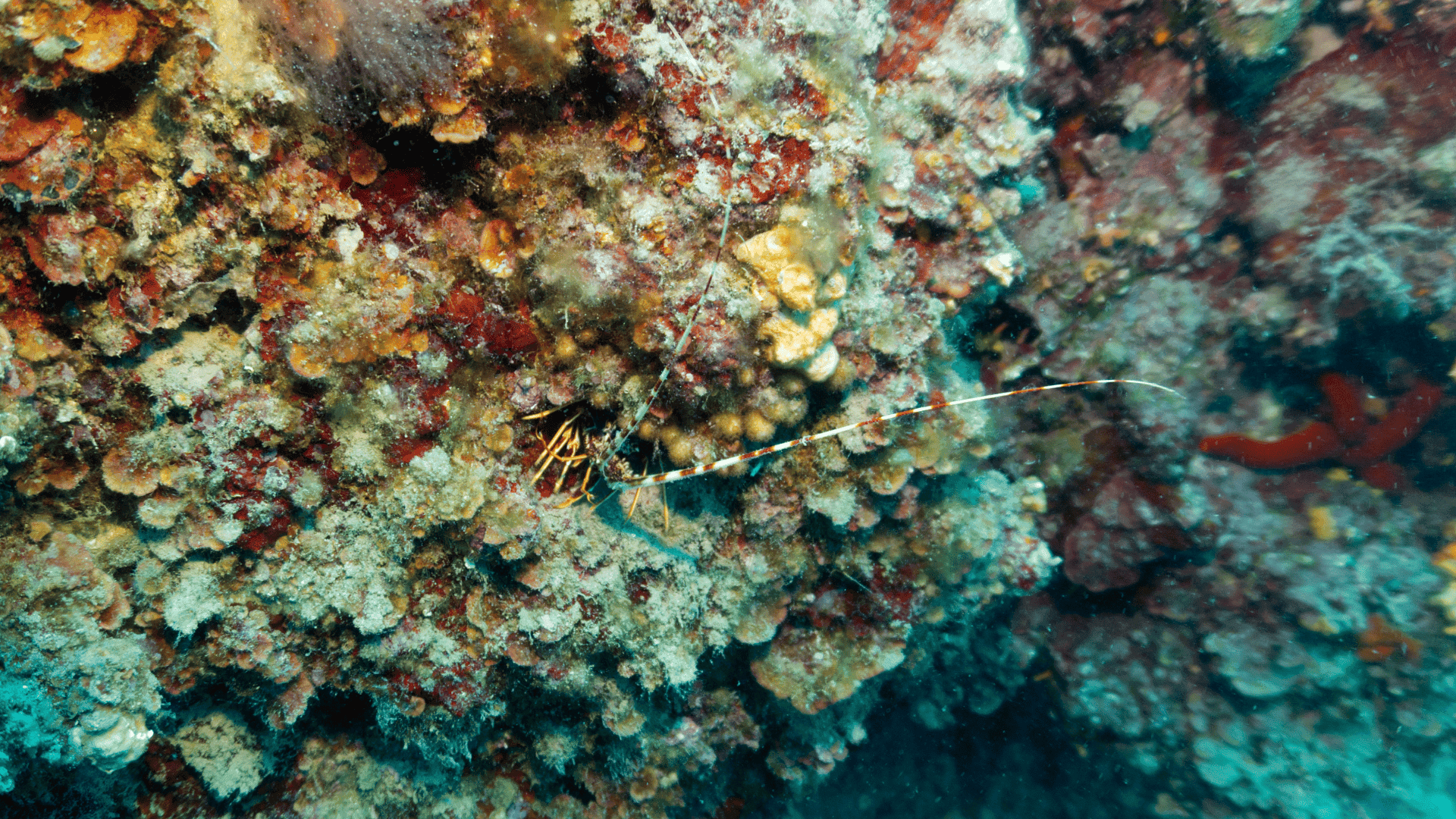
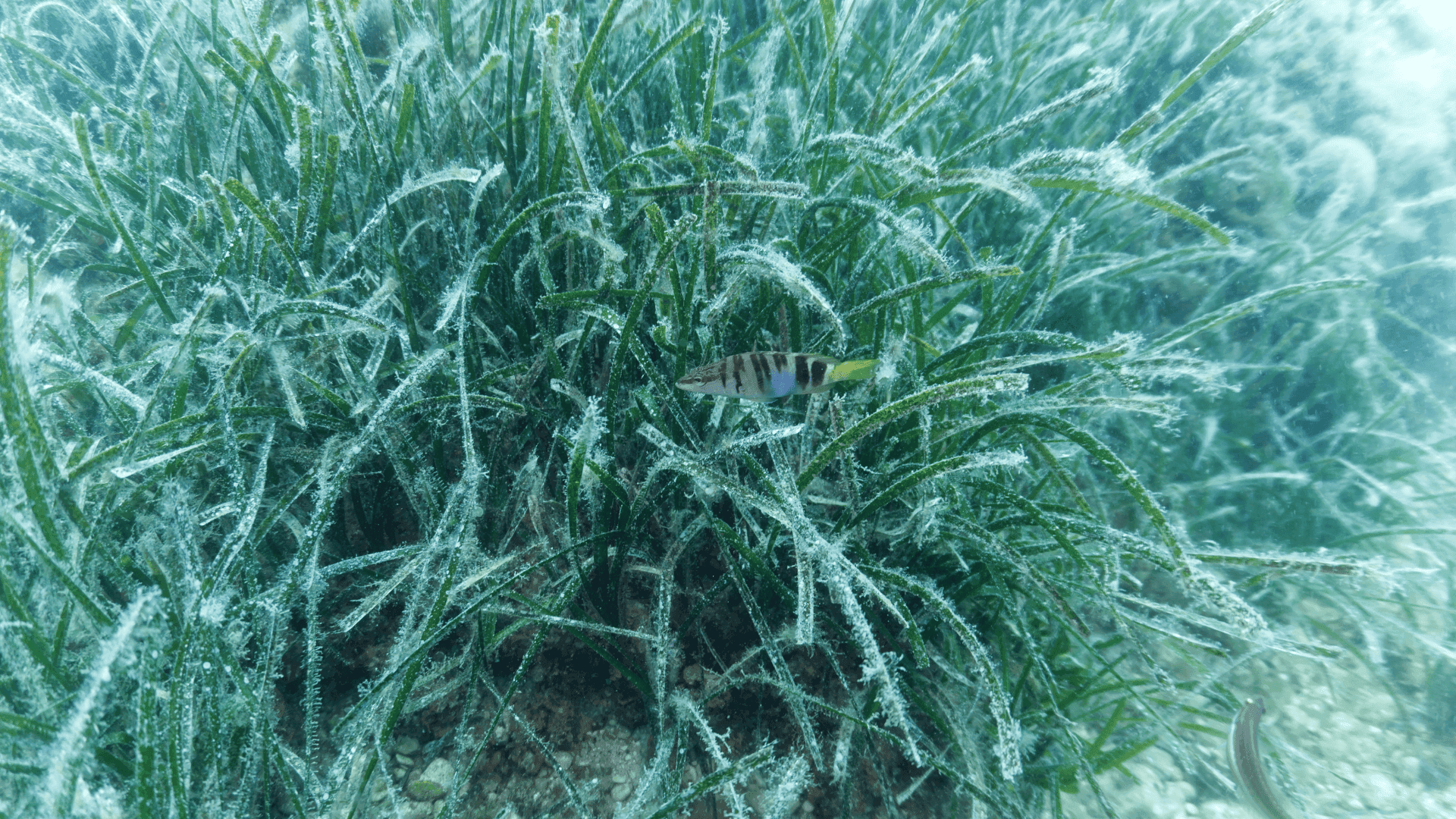
But overall the dive site is kind of... forgettable. Rocks, sandy bottom at depth, rare little fish around, lobsters (okay, I remembered those). In the shallow part an abundance of algae, like green meadows covered in grass. The same thermoclines again. Maybe the problem was that for the whole dive I was immersed (sorry for the tautology) in my own thoughts. Thinking about local diving and why everything happens the way it does.
Here's an example. I haven't mentioned this before — there's a rather strange feature for me: all boats drop anchor. Probably because there are no hard corals underwater and there's not much to damage, or maybe nobody just thought that permanent buoys would be much more humane toward the underwater world. In the end the boat drops anchor, at the start of the dive the instructor moves it and hooks it more securely to some rock, and at the end in reverse order: takes it off the rock but leaves it so the boat doesn't drift away immediately. In the end we lose time and break several "don't touch anything underwater" rules. But who cares...
Back to events on the surface. Then we crossed the bay and headed to the Submarine Tunnel located near the village of Rose, on the Luštica peninsula in the Bay of Kotor. It's a former military facility of the Yugoslav navy, where submarines used to be based.
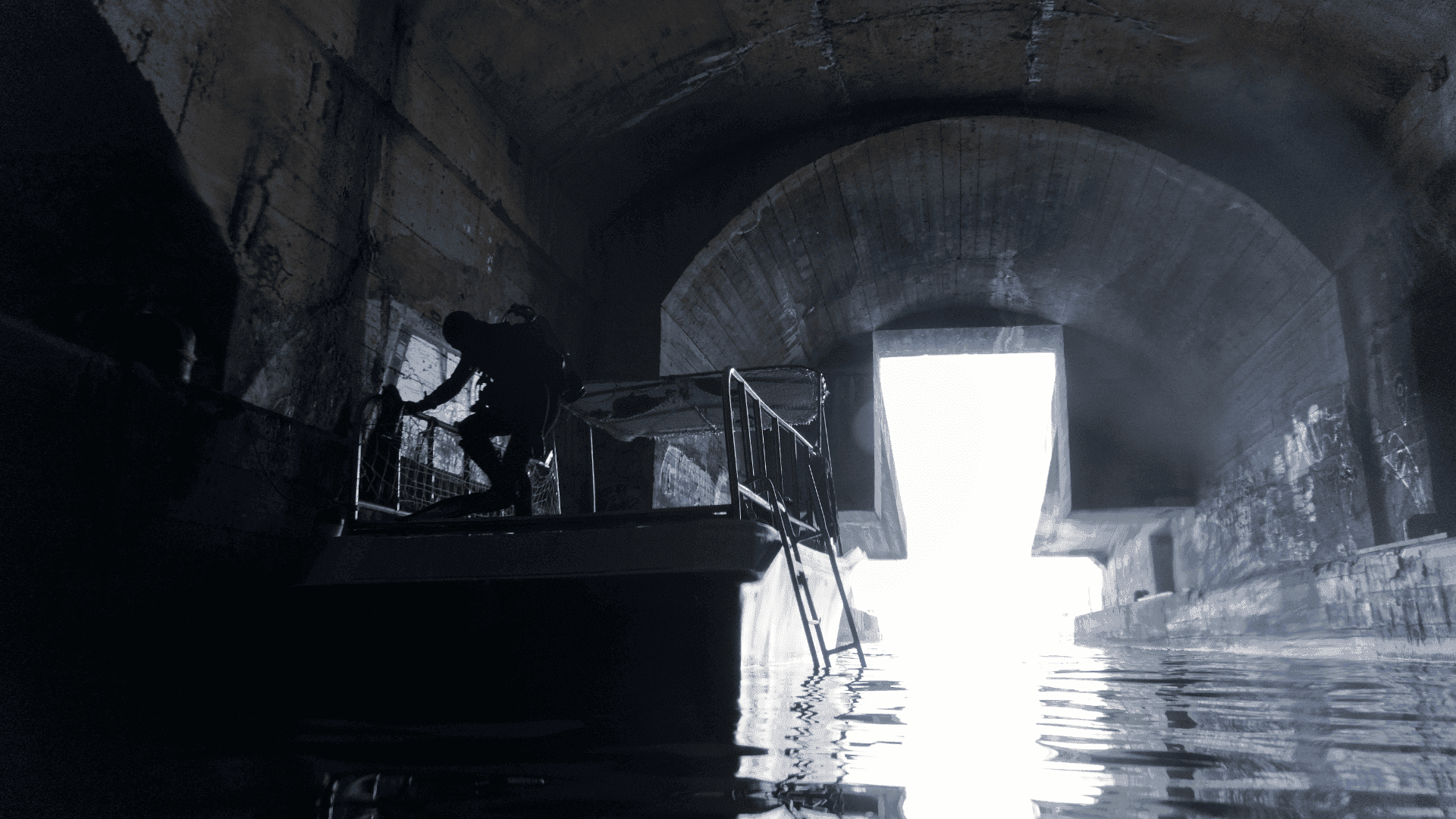
Construction of the base was started by the Austro-Hungarian Empire, continued by the Kingdom of Serbs, Croats and Slovenes, and the project was completed by Socialist Yugoslavia in the 1970s. The location wasn't chosen by chance — the Luštica peninsula shields the entrance to the Bay of Kotor, and the Austrians understood this too, building a system of fortresses here (including Fort Kobila, built in 1897).
There were three such submarine shelters in the Bay of Kotor, but only the tunnel at Rose has survived and is accessible for visits. Two submarines could hide in it at the same time. Next to the tunnel stood four diesel generators for charging submarine batteries, a fuel depot, and ventilation equipment.
The facility operated until the mid-1990s — until the end of the war in Yugoslavia, after which the base was abandoned.
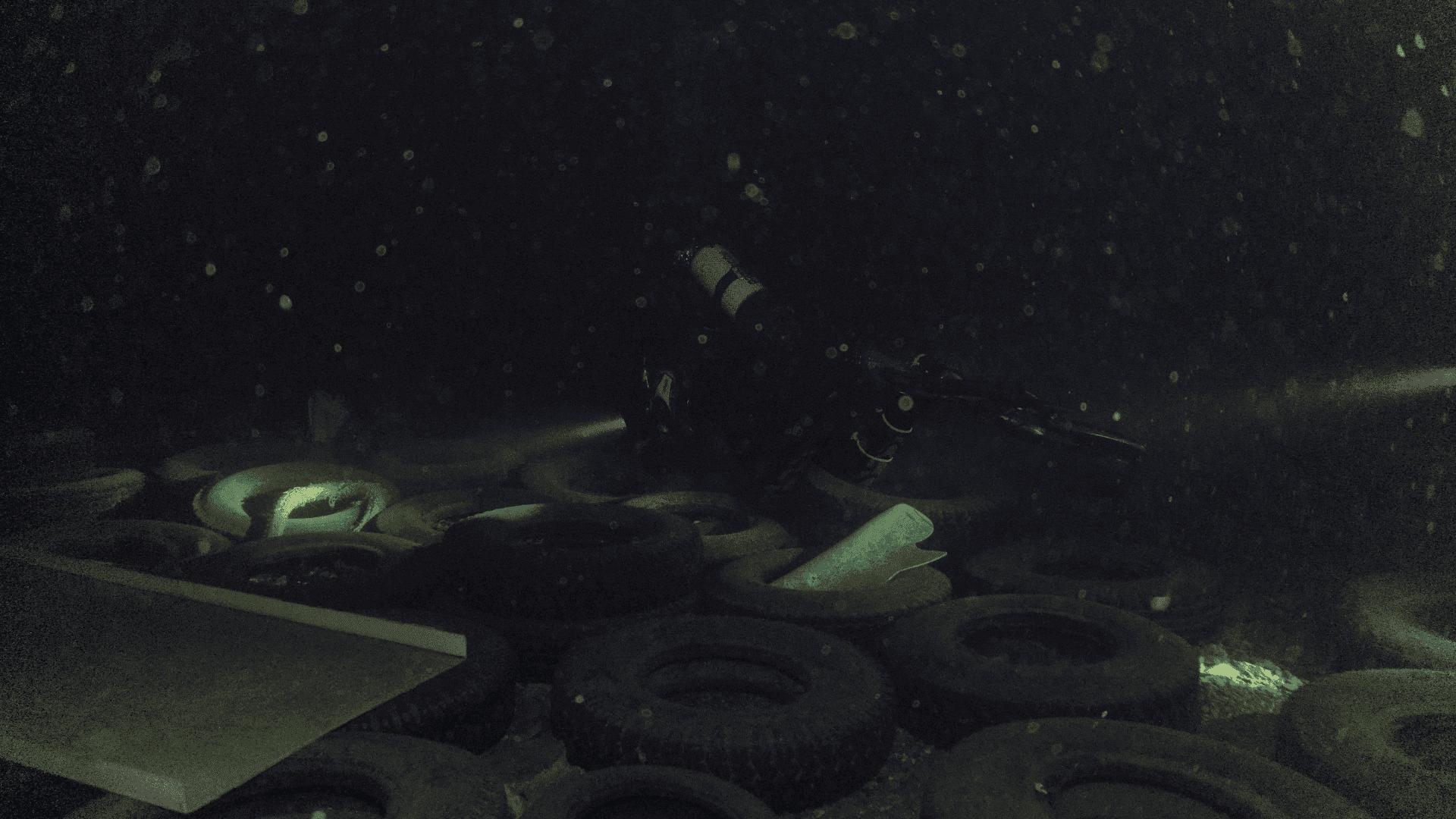
The tunnel is about 50 meters long, 7 meters wide, with a depth inside of 8 meters. The dive requires an underwater flashlight: it's very dark inside.
I didn't read much about this tunnel — didn't want to catch spoilers, but honestly, I probably should have. It's clear there are no submarines there now, but something in my head had formed the idea that inside there would be some special tools and equipment for submarines, not a bottom strewn with tires (which in general makes sense), and a pile of construction debris.
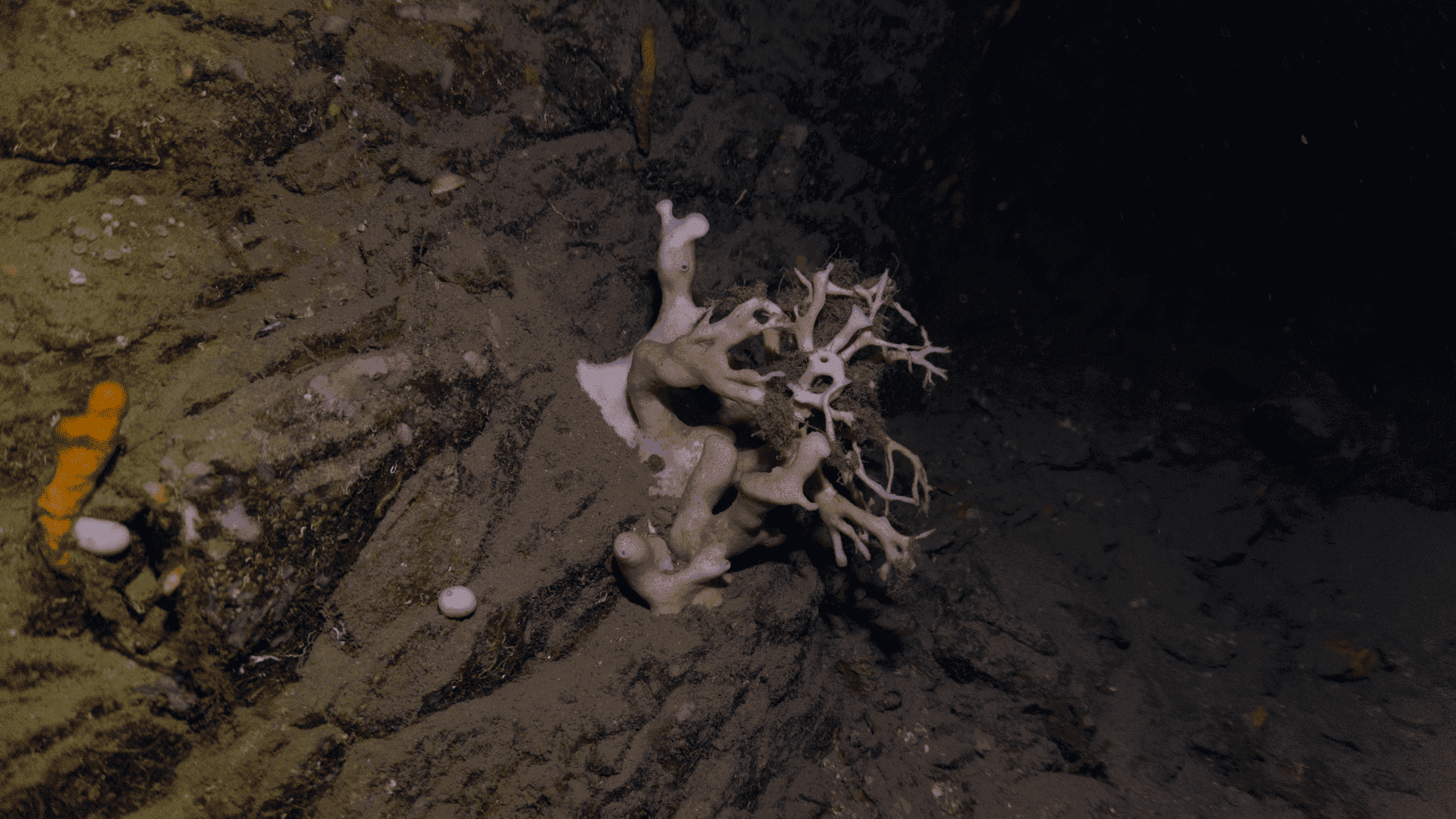
Though all of this had its own atmosphere. A kind of post-apocalypse hundreds of years after a catastrophe. Traces of some civilization everywhere, and on the stone walls of the caves — corals and worms, like alien creatures. Complete darkness in the tunnel, and only flashlight beams pick out these strange scenes.
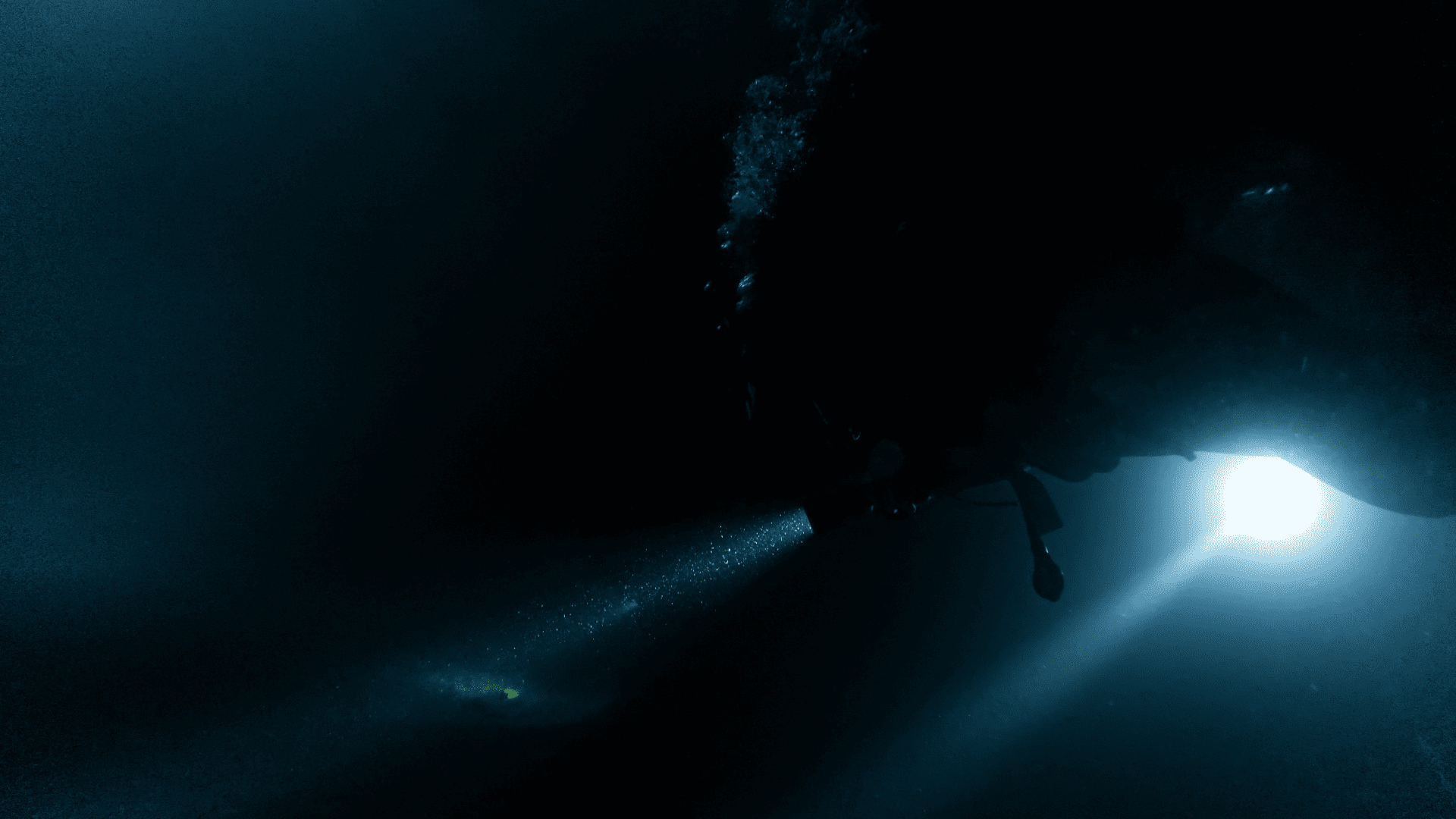
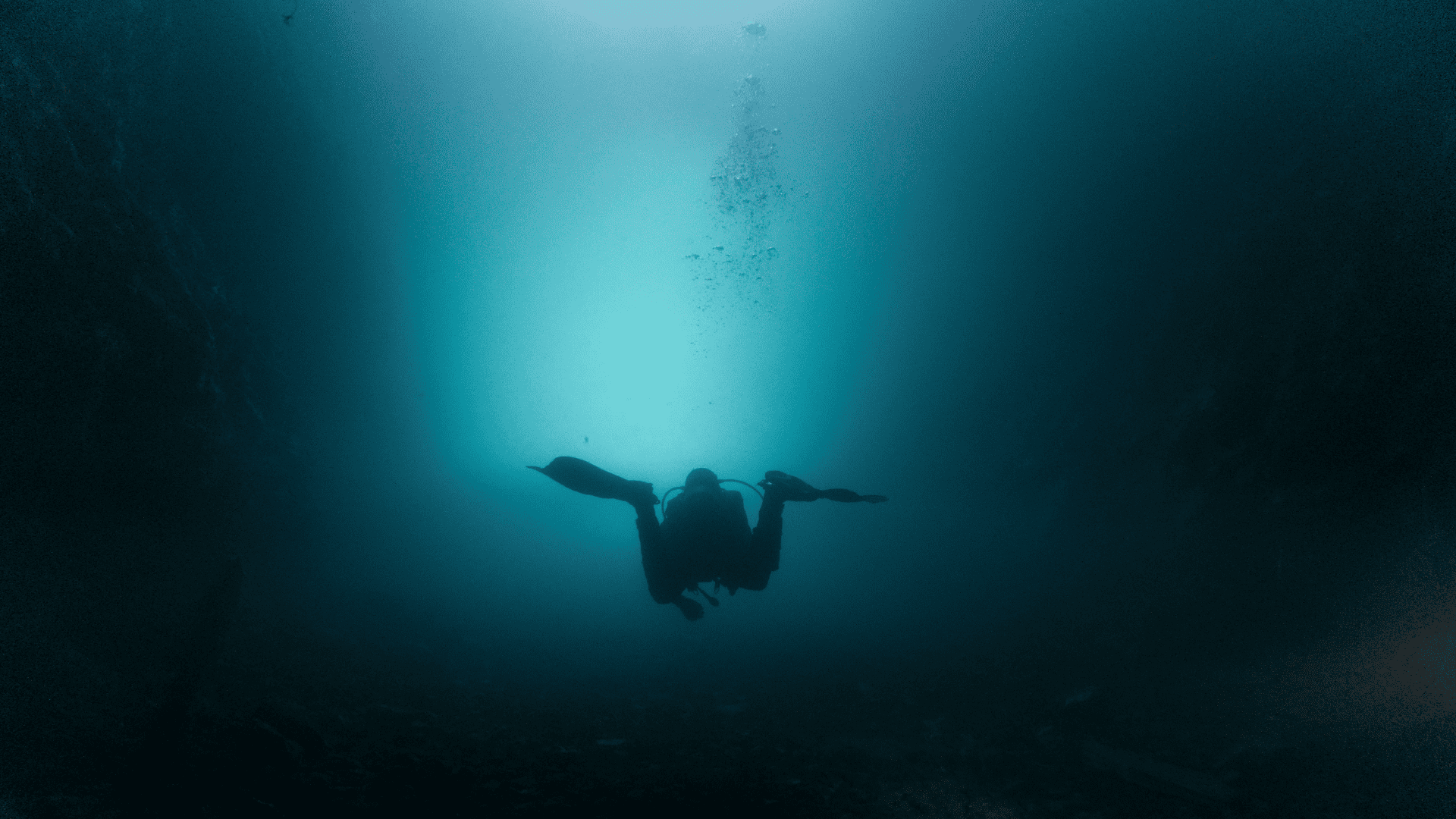
And what a strong contrast you feel when you swim out of the tunnel outside, where there's sun and life appears immediately. In the end I wouldn't say this is a must-see place worth building the whole trip around (though that's exactly what I did). But finishing this dive trip with metaphorical light at the end of the tunnel was symbolic.
Conclusions
Getting back underwater half a year after the trip to Egypt was pleasant, despite all the compromises Montenegro offers. But here's what I definitely understood from this trip:
- Diving in cold water doesn't work for me. 19–22 degrees at depth is uncomfortable. The temperature distracts from looking at the underwater world, and the dive itself can't last long because of the body's physiological response to cold water.
- A thick wetsuit ~~sucks~~ is uncomfortable. Well, at least a rental one. It's awkward to put on and take off, it fits poorly: squeezes too much in some places, too loose in others. Restricts movement both on the boat and underwater. Diving in shorts and lycra is much more comfortable. Thailand spoiled me)
- "Diving" isn't just the time you spend underwater, but all the time from when you arrive at the dive center in the morning until you leave. And in this Montenegro loses badly. It's clear there isn't the same flow of divers here as in Thailand or Egypt, or even Turkey, so you shouldn't expect the same level from local dive centers. But it's frustrating that the organization and conditions out of the water didn't let you fully enjoy a day at sea.
- When diving with new gear, always double-check everything a hundred times. After the Egypt trip I ordered a light for my camera, but only got to test it and the camera mounts on this trip — and I "suffered" from not bringing proper flashlight holders to attach it firmly to the camera, so it wobbled a bit. Turns out a heavy flashlight on top of the camera changes the whole buoyancy and it tries to flip upside down. And also — a big flashlight doesn't mean it'll last for 3 hours of diving, and it's actually a good idea to charge it every day... in short, it died at the worst possible moment. If Kostya is reading this, he's definitely cursing — he drilled these mistakes into me from the very start of training, and here I made such a stupid blunder.
- The lack of regular diving doesn't motivate you to sort through photos, edit videos, and write articles. Sad... Need to find new motivation. I still haven't edited all the videos from Egypt. Well, okay, I didn't realize this point right after the trip, but when I was writing this post.
- I probably won't go to Montenegro for diving again. The problem isn't that there's no diving there — there is, and it has its charms. It's just not the level of diving I want to get. Though who knows — last time I said the same thing =D
The end.