Egypt: Diving Safari to the North & Tiran
A week on a boat in the Red Sea
Home/Blog/Egypt: Diving Safari to the North & Tiran
Preface
While I was in Thailand, it felt like about a hundred people told me: “How come you haven’t dived in the Red Sea? You have to dive there.” And so, in my third year as a diver, I finally made it to a liveaboard in the Red Sea.
This trip had a code name: “Twenty Serbs and one Russian.” In reality there was also a guy from the Netherlands — so it wasn’t only because of me that the group sometimes switched to English. And later it turned out that more people understood Russian than I expected.
Day 1 — Hurghada
The flight from Belgrade was at 4 a.m., so a normal night sleep was impossible.
The trip itself was easy: there are direct flights from Belgrade to Hurghada. We landed at 9 a.m., and by 10 we were already on the boat.
Passport control in Egypt is its own fairy tale. Local “tour operators” offer to paste the visa for $30, or you can go stand in a huge line and do it for $25. The border officer only cared about the little paper you get after paying for the visa — he didn’t even look at me.
The safari was on the boat Queen Sherry. Compared to the boat from my Similan Islands liveaboard, this one was much bigger and more comfortable.
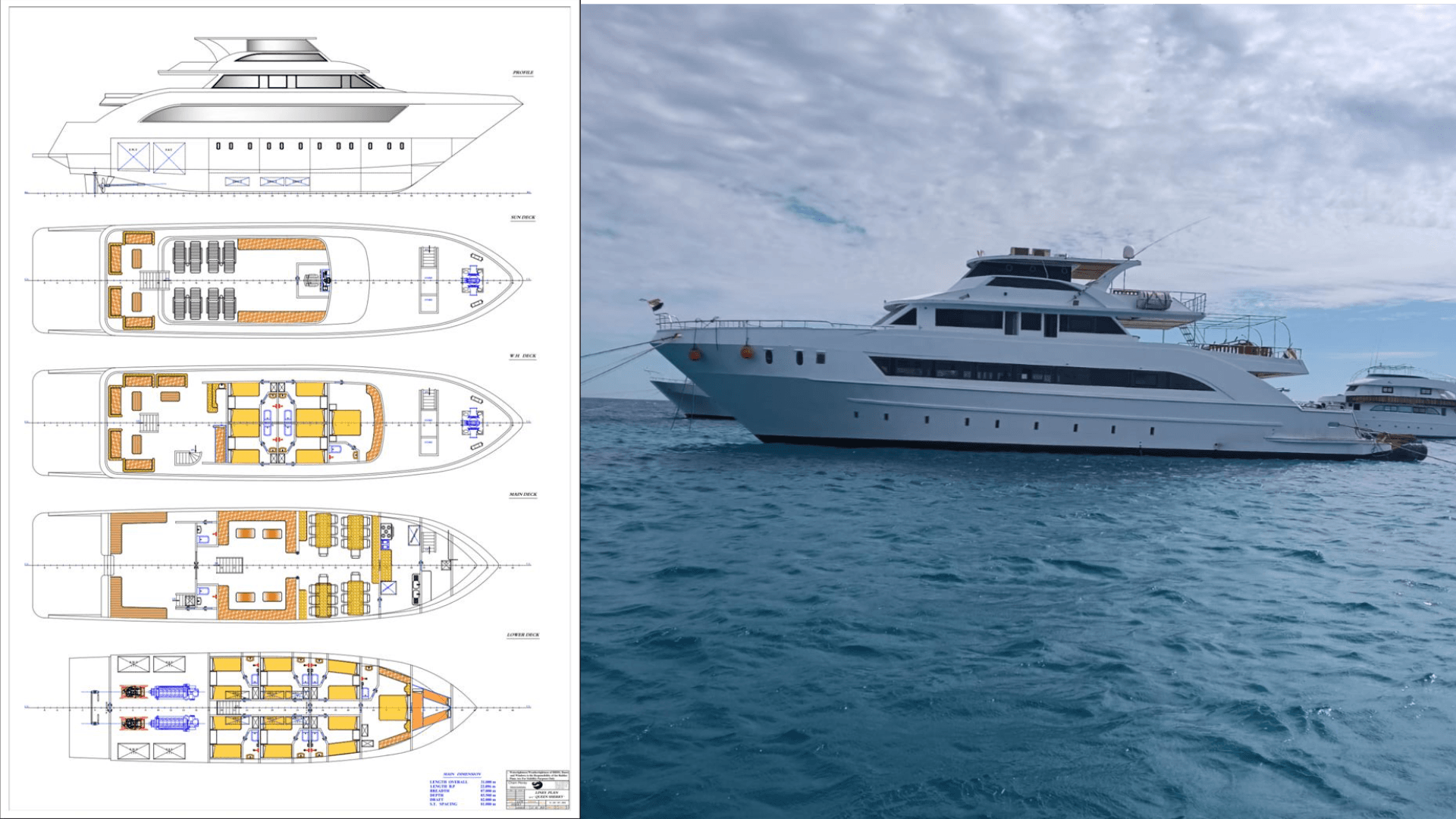
It’s a four-deck yacht. Cabins are on the lower and middle decks. The top deck has the sundeck and the captain’s bridge. And the first deck has the common area, dining room, and of course the dive gear area.
Day one was for resting and getting organized.
We checked in on the boat, assembled and checked our equipment, then went to town to buy missing things and just walk around.
Hurghada gave me mixed feelings. The city is very dusty, noisy, and a bit worn out. Traffic is crazy, and when you walk past shops you constantly hear: “Visit my shop with silk, perfumes, sweets, whatever.”
But our divemaster Ibrahim said something fast in Arabic, and people usually left us alone pretty quickly.
At the same time, you often see huge fences — and through a small gate you notice a clean, well-kept territory, or a modern new hotel. A real mix.
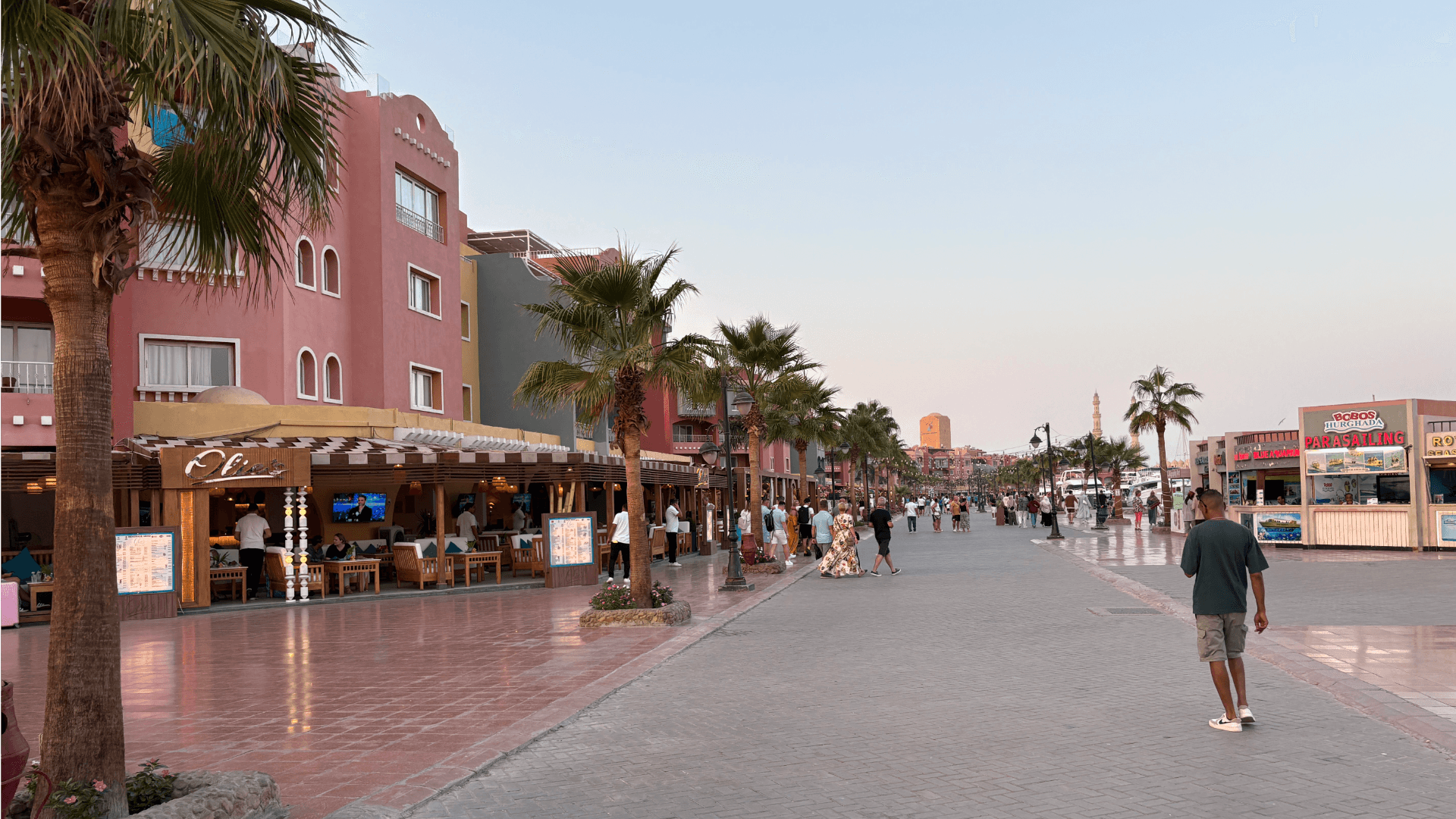
We finished our walk at the local marina with nice cafés and a view of the boats.
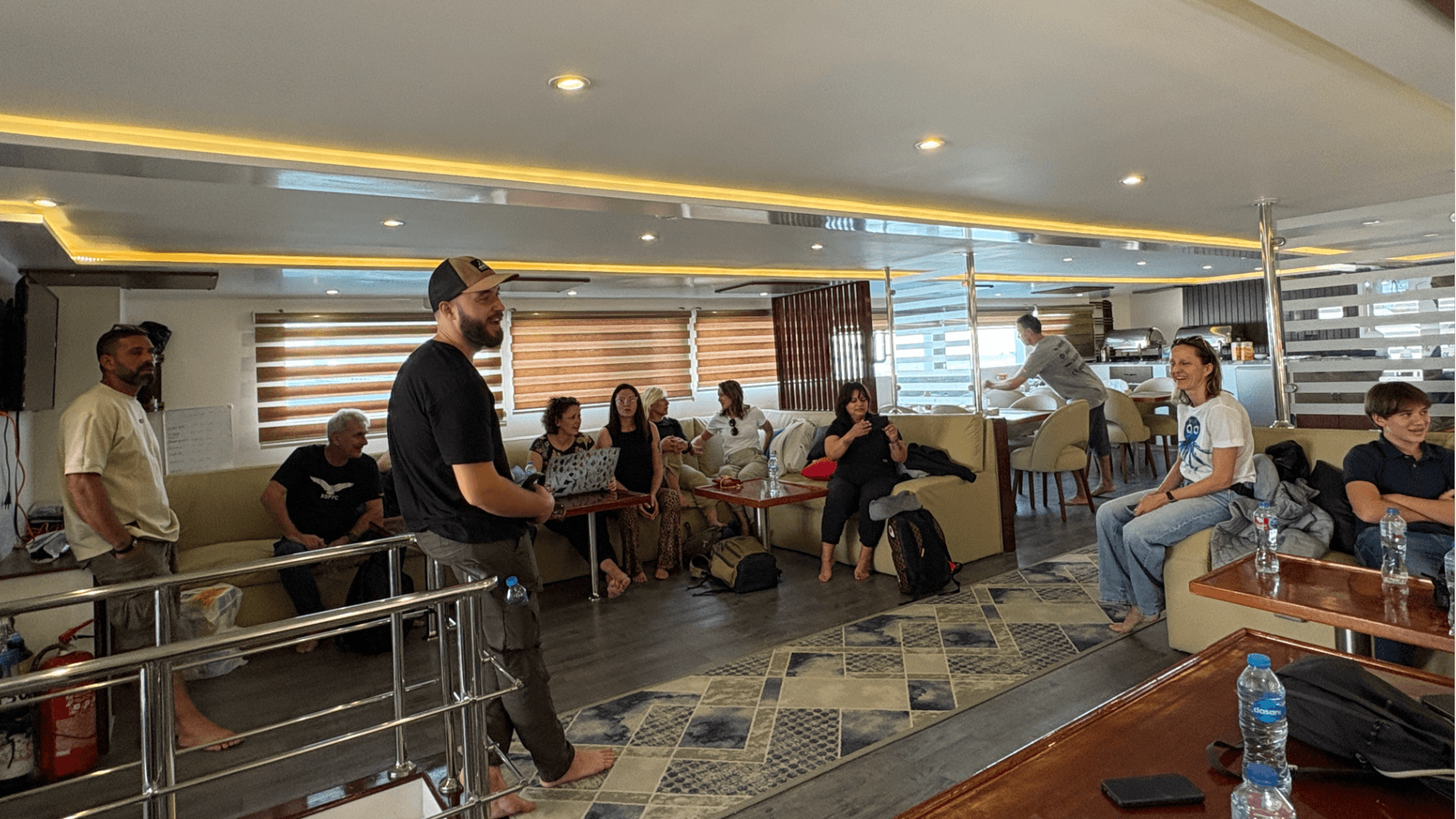
Then we returned to the boat, listened to a briefing about how the boat works, had dinner, and went to sleep. The day was way too long. I just wanted morning to come and finally start diving.
Day 2 — Finally diving
Today we woke up “late,” at 7:30. There was no morning dive because we were waiting for a permit from local authorities.
About 15 fully loaded boats were in the port, and all of them were checked by one person (great processes 👍🏻). The check was fairly quick though, so during breakfast our boat left the harbor. We were drinking morning coffee already in open sea.
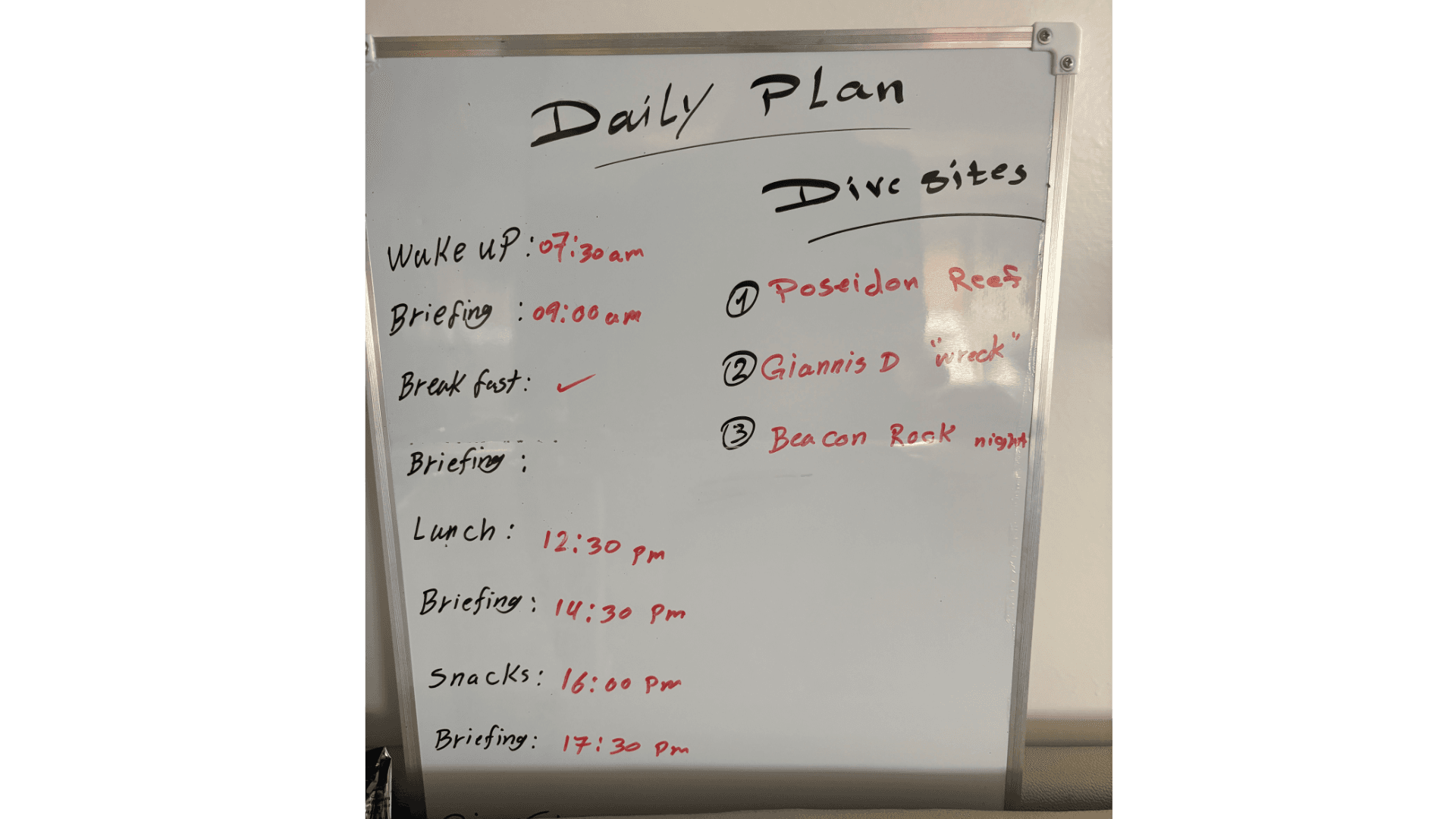
Three dives were planned today. The first one was Poseidon Reef, a couple of hours from Hurghada.
Dive 1 — Poseidon Reef
Poseidon Reef is a calm reef in the northern Red Sea, near Shaab El Erg and about 1.5 hours by dive boat from El Gouna and Hurghada.
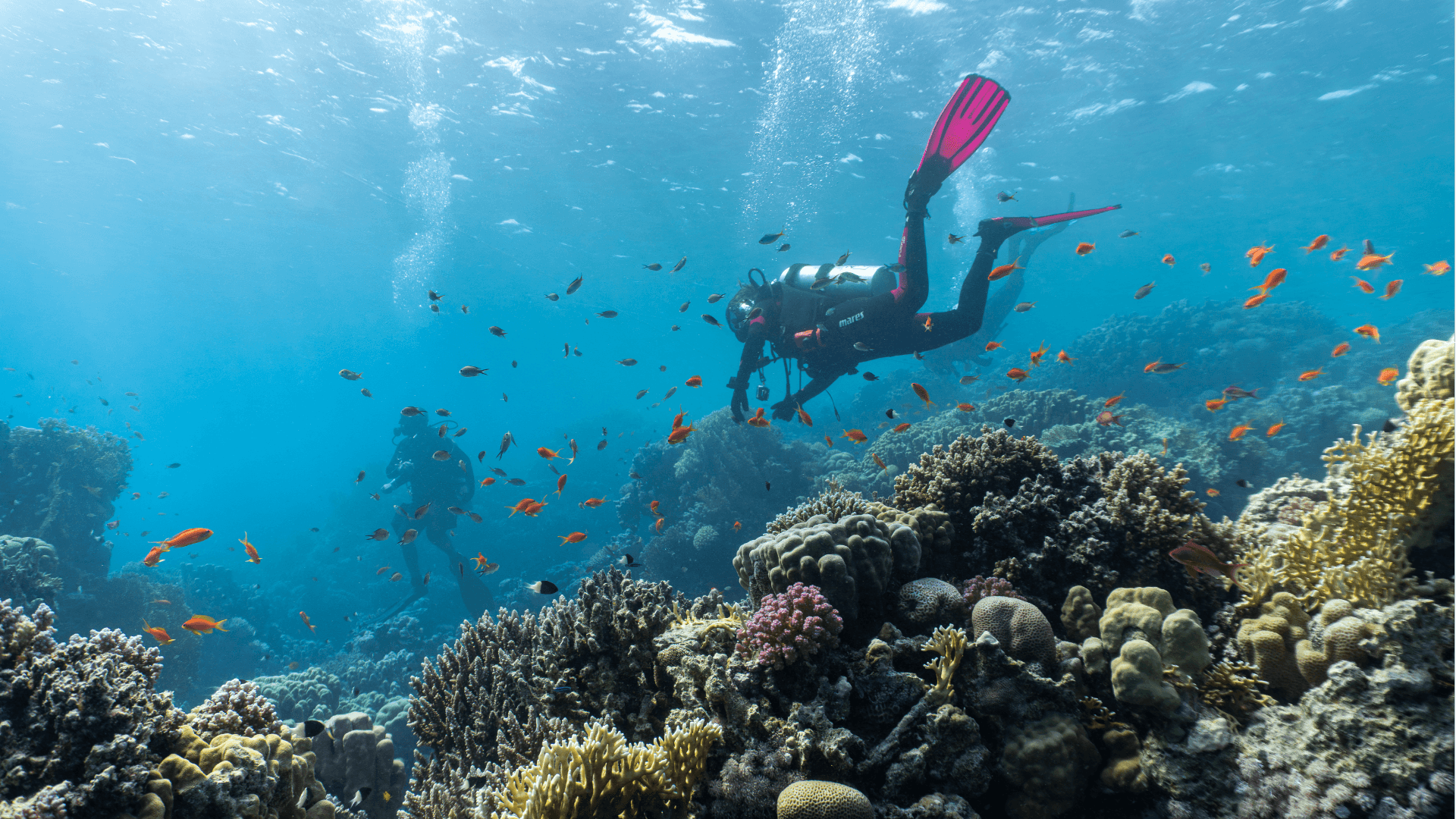
This site is great for relaxed “scenic” dives, check dives, and training. That’s why it’s often used as a classic warm-up dive on liveaboards.
The reef has a horseshoe shape, with sandy bottom between coral structures and separate pinnacles. Max depth is around 15 meters, which makes it accessible for any level, and also convenient for snorkeling and freediving.
Visibility is usually good — 20–30 meters. Currents are weak to moderate and depend a lot on wind and season. Marine life is typical for the northern Red Sea: lots of reef fish, groupers, morays, butterflyfish, lionfish. Sometimes you can see eagle rays, turtles, and bigger fish, especially on the outer side of the reef. But not this time…
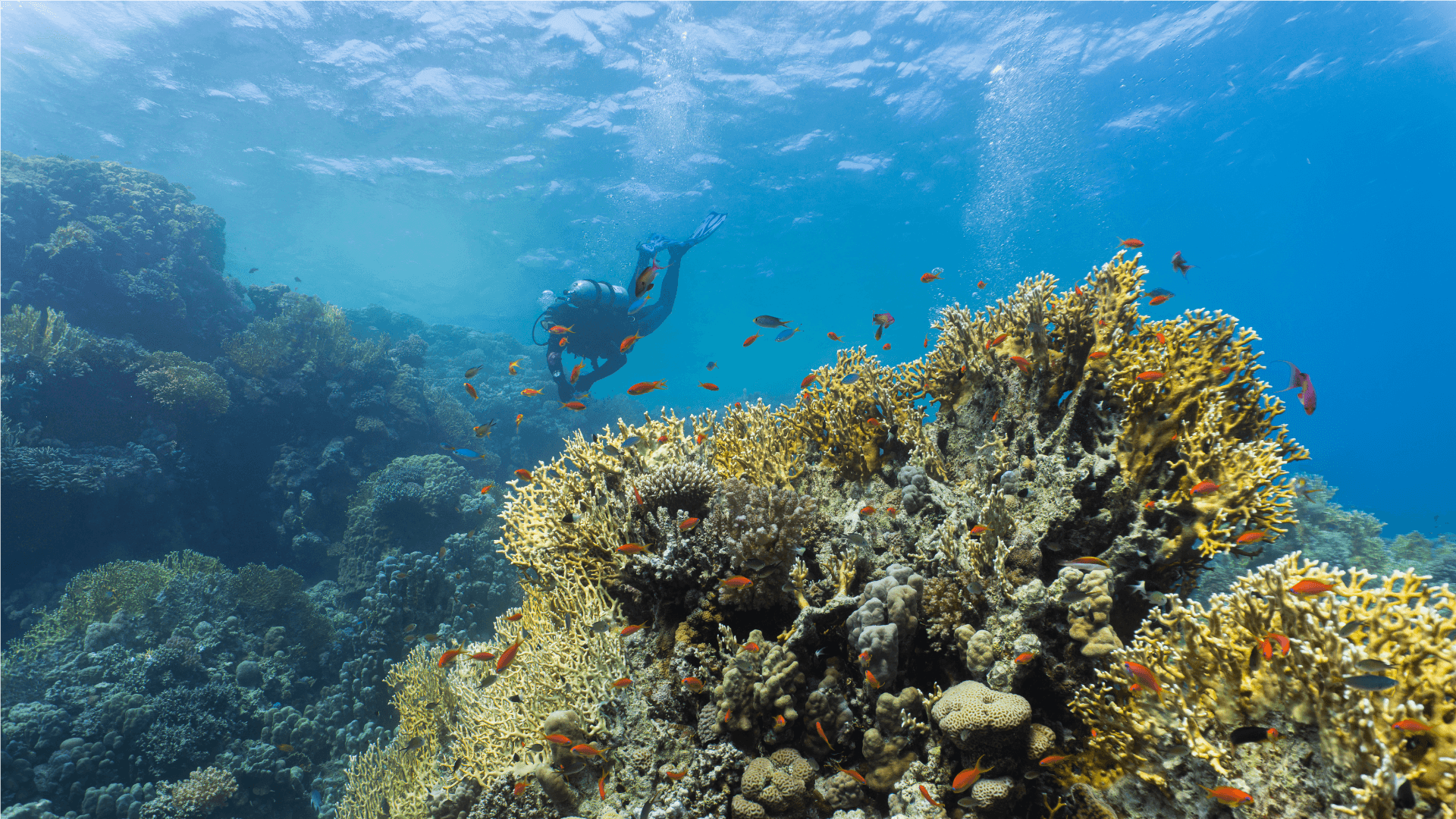
For me, this dive was a sharp contrast to my latest dives in Montenegro, Serbia, and Turkey.
The moment I jumped in and looked down, there was a huge reef full of life under me. After the “empty” dive sites in Turkey it felt like real paradise. Marine life is what I love most about diving. Great visibility (about 30 meters), living corals, soft light, and a group of like-minded people.
Our team was interesting: eight people — the guide, two instructors on vacation, me as an Assistant Instructor, a divemaster also on vacation, and three Rescue Divers with 200+ dives each. Not bad. One of the instructors dived in a dry suit, and the guide and I were the total opposite — shorts and thin jackets. The others wore long 5–6 mm suits. In short: by looking at us, it was hard to guess the water temperature =)
The most memorable things underwater: an almost one-meter whitespotted puffer, and a big Indian lionfish around 30 cm long. And of course endless small fish, like in a giant aquarium.
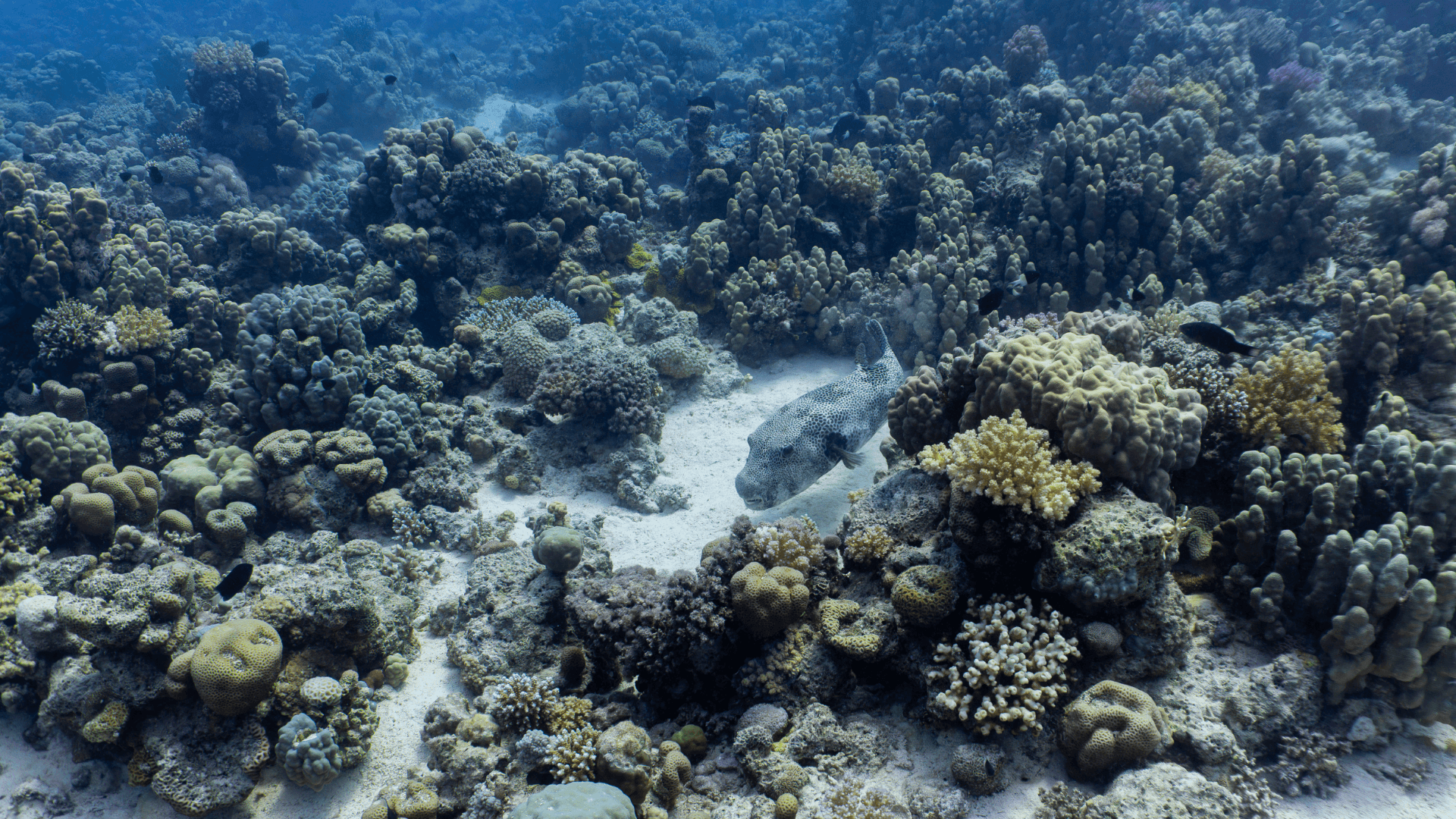
Result: 47 minutes underwater, max depth 15.5 m, and minus 100 bar of Nitrox.
Shaab El Erg
Shaab El Erg is a large horseshoe-shaped coral reef, several kilometers long, located between Hurghada and El Gouna.
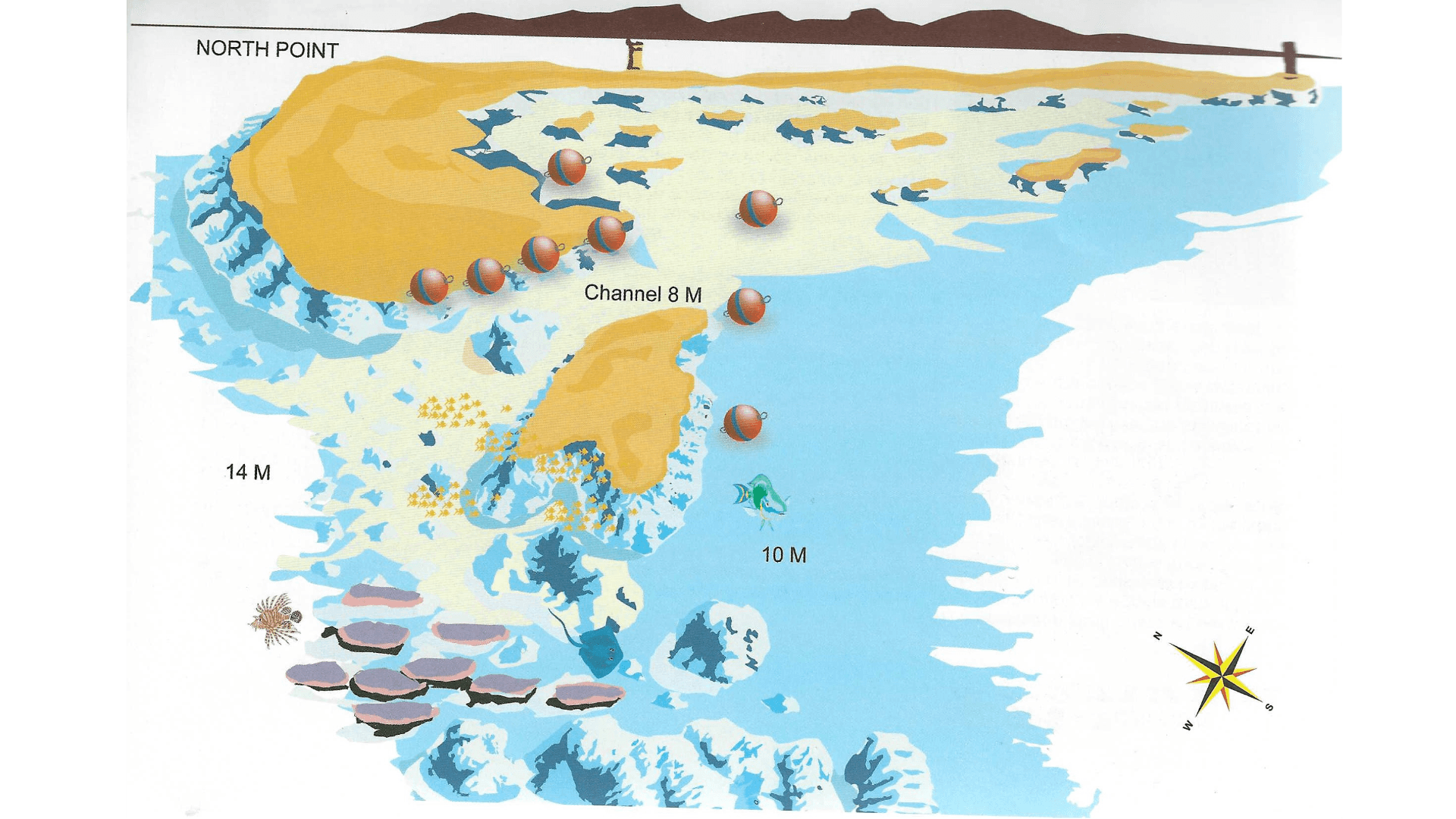
It’s popular among liveaboards as a place for night dives, and also as a location where new groups can “meet” the Red Sea in a relatively protected environment at the beginning of the trip.
The reef’s shape forms a big lagoon with channels and different sections. Even though the reef itself is in an open, unprotected area, the lagoon and some bays provide calmer conditions.
Conditions are usually stable: good visibility, weak to moderate current, and comfortable water temperature all year round.
Inside Shaab El Erg there are several sub-sites, each with its own features. The inner part is a protected lagoon with sandy bottom and shallow coral gardens. The outer side is more dramatic, with pinnacles and coral blocks.
Dive 2 — Shaab El Erg (Dolphin House)
Dolphin House is the most famous part of the reef and a favorite place to see dolphins. It’s located on the north end of Shaab El Erg and covers the channel between the lagoon and open sea.
Bottlenose dolphins regularly pass through this narrow channel, especially at sunrise and closer to sunset.
Besides dolphins, marine life is typical for the northern Red Sea: lots of reef fish, morays, rays, turtles. Sometimes you can see a Napoleon wrasse and other bigger fish, depending on season.
Depths are usually 5–18 meters, so the site is suitable for all certified divers.
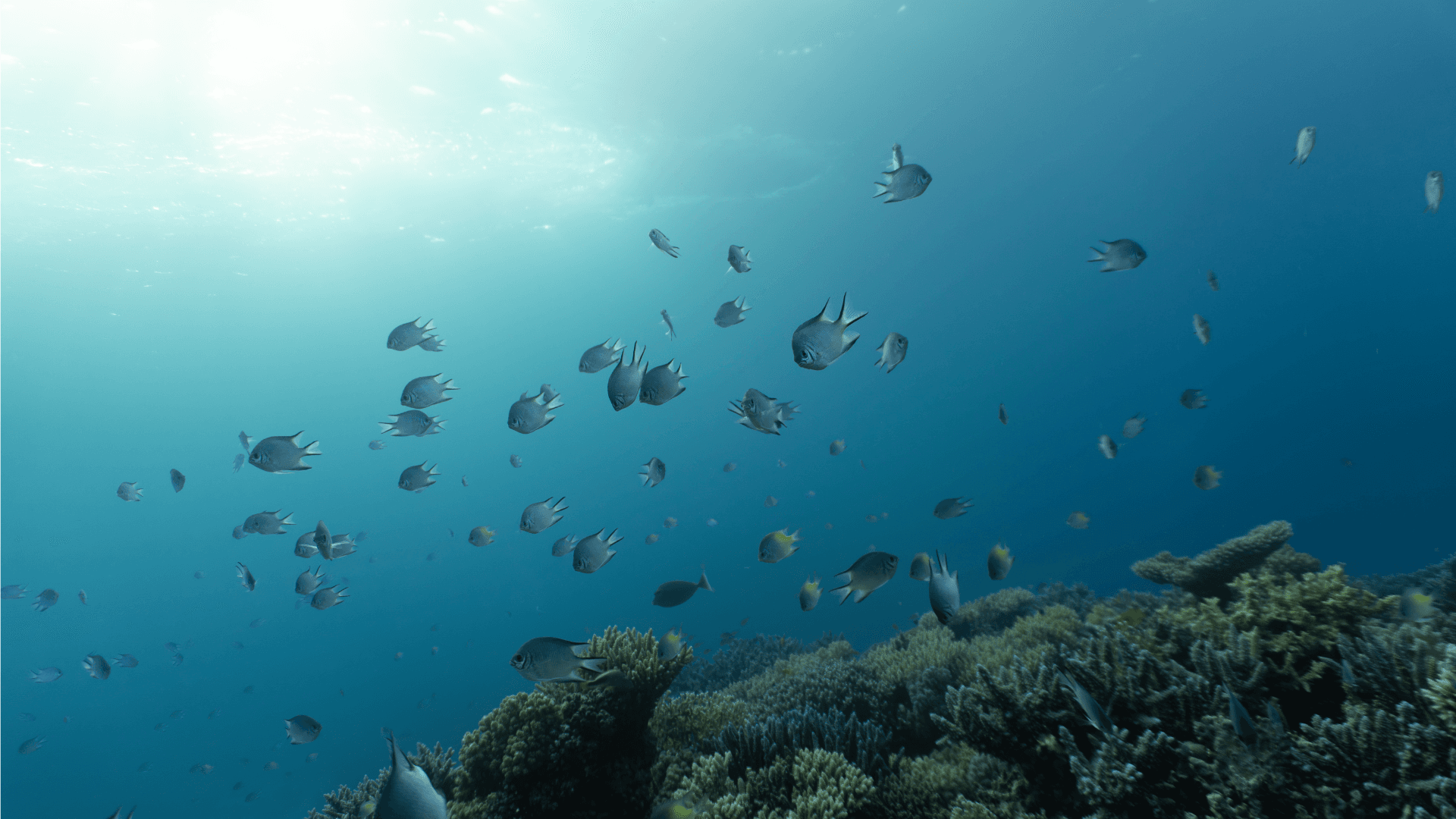
This dive started with a chain of small problems.
First, they decided to reshuffle groups, and my group was supposed to be only six people. But after we jumped in, we realized three guys didn’t go with the first group, so in the end we took them with us.
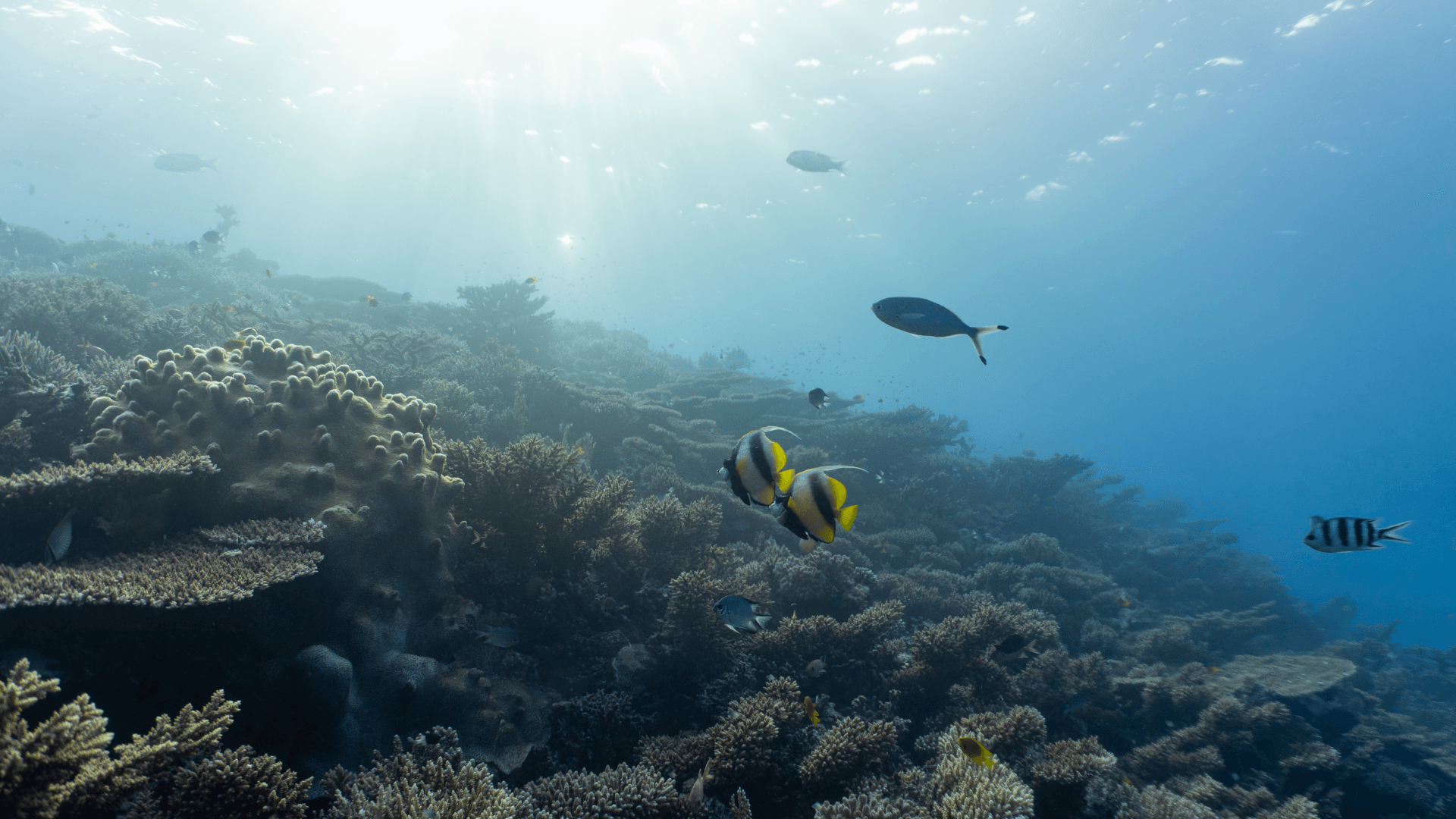
Underwater, an amazing reef opened in front of us, fully covered with corals. The light of the almost-sunset sun went through the clear water and outlined corals, fish, and diver silhouettes. Very beautiful and hypnotizing. At some point my eyes didn’t know where to look or where to point the camera.
After some time we met two divers from the first group. They were returning to the boat because the guy had a problem, and his girlfriend Elena (also a Serbian instructor) was helping him.
About ten minutes later we caught up with the whole first group, and for a while everyone mixed together. Everyone wanted to show someone else a special coral, a ray, a masked puffer, or something else.
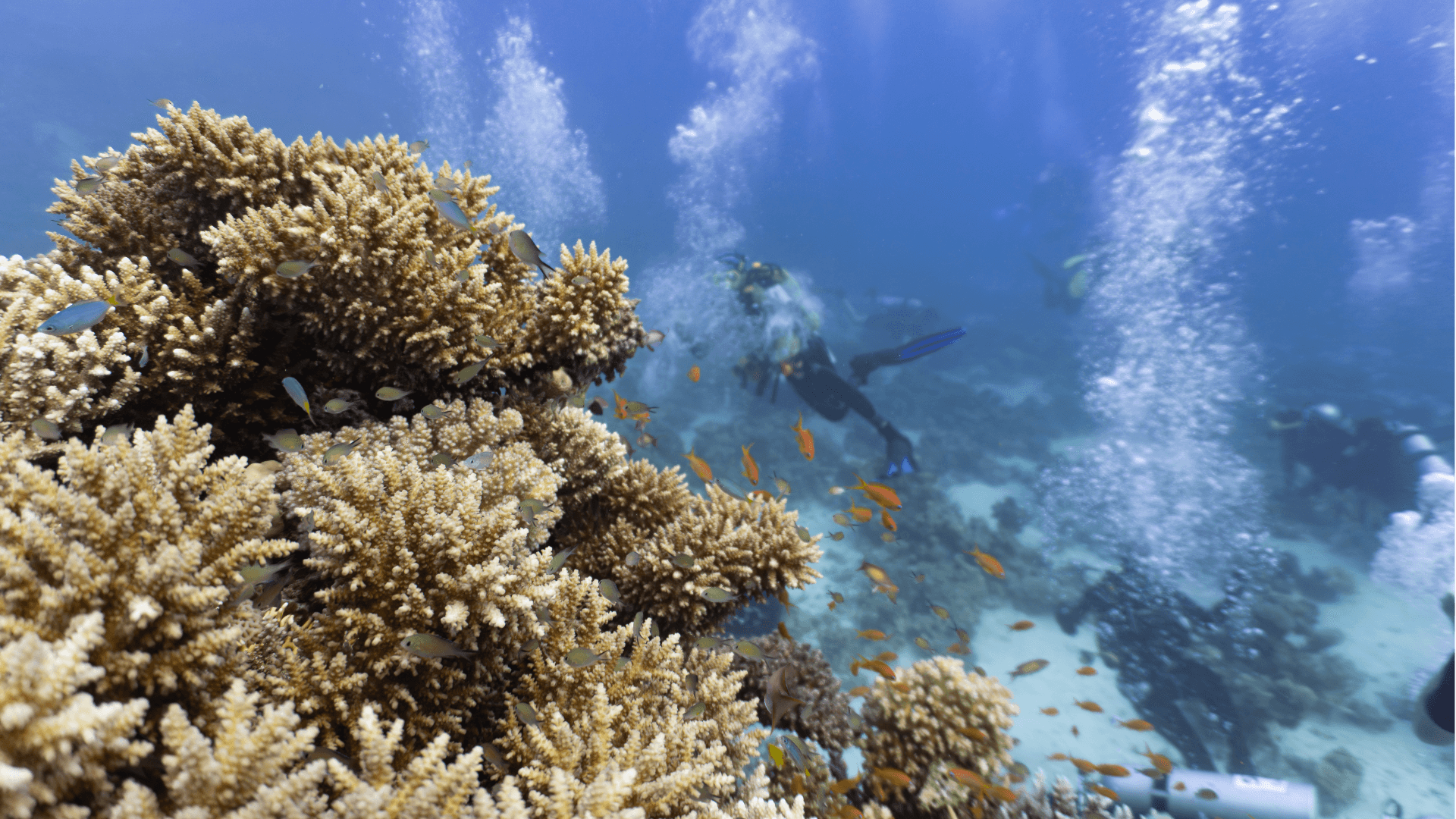
A few minutes later the groups separated again, and I realized a guy from our first dive joined us — while the three guys we picked up at the start had already swum away with the first group.
“Whatever. My buddy is here, and the rest is the guides’ job,” I thought.
Ten more minutes of beautiful views — and we met the first group again. Some people were preparing to surface, others were swimming back to the boat along the bottom. Our instructor checked the group and signaled the safety stop.
45 minutes underwater flew by. I didn’t even notice that I almost stopped breathing — I still had about 140 bar. I turned off the camera and, together with the instructor, deployed an SMB, because no one else in our group had one.
And then the circus began.
One guy got distracted by fish, lost depth control, and started going up. Another guy rushed to “save” him and also forgot about ascent rate. Daniela, the head of the Serbian dive club, returned and asked with signs what was happening, why we were going up, and how much air people had. Experienced divers showed 120–140 bar. Daniela swam to the guide to ask why we were not returning along the bottom, but surfacing. Meanwhile the guide tried to stabilize a girl who seemed to join the flashmob “air balloons flying out of the water.” After a short exchange, Daniela signaled part of the group to stay underwater. And I already had the SMB out. Luckily it was small, and I managed to pull it back down even fully inflated. During that, I noticed my buddy Branko had already surfaced, and Daniela was waving at him in surprise. By the gestures I could tell there were many Serbian swear words :)
In the end, seven of us remained — people from both groups — and Daniela signaled “follow me.” After a couple of minutes I looked back and realized we were actually only four.
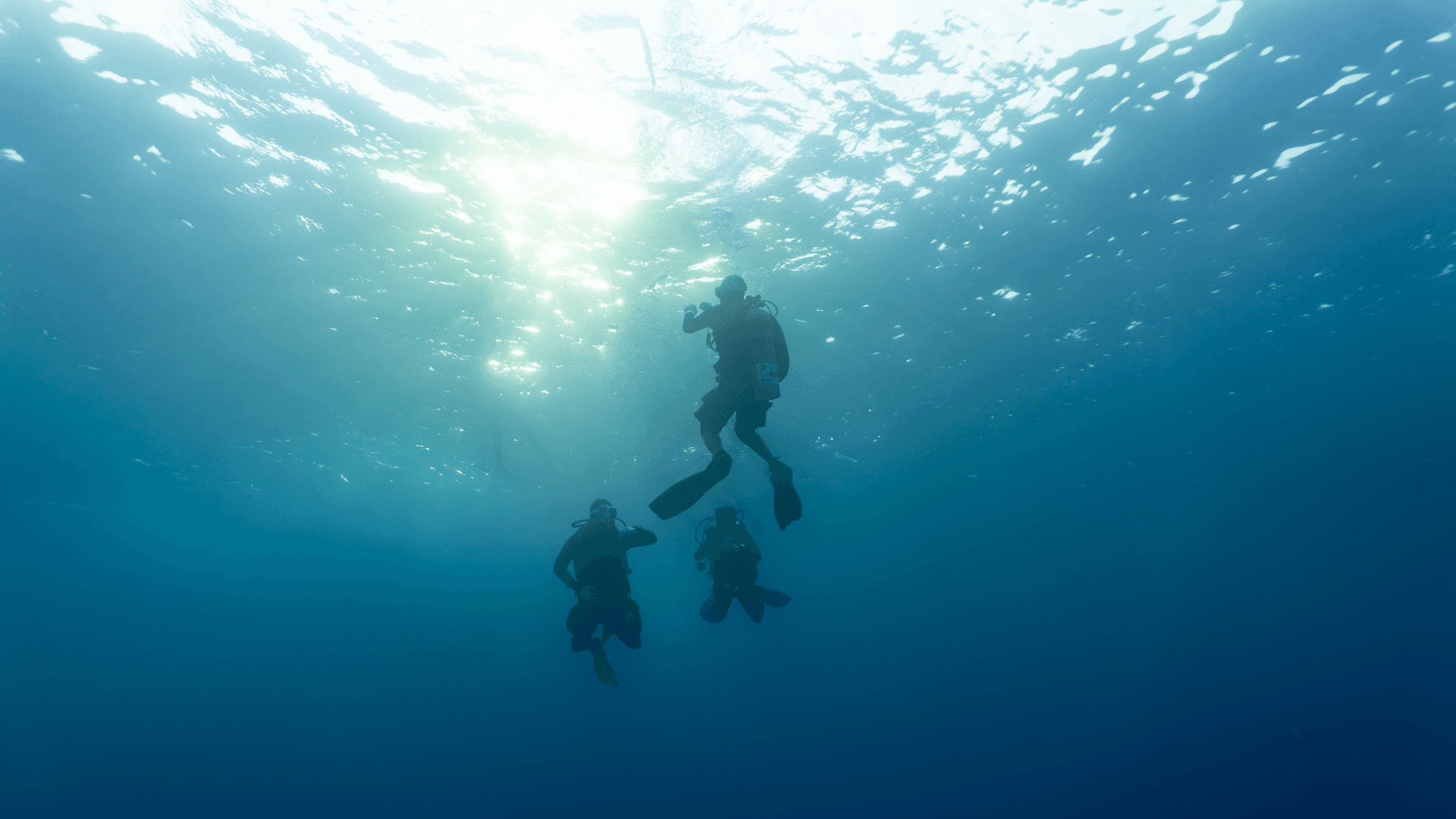
At that point Daniela clearly showed what she thought about the situation. But we saw the three who were behind had surfaced and were picked up by a zodiac. And we went to catch the first group. We reached them in a few minutes, but they were also preparing to surface — several people were close to 50 bar. Surprisingly, we met Elena again (the instructor girlfriend) who had escorted her boyfriend to the boat at the beginning. She asked our group’s air. We showed 80–90 bar. After a quick exchange with our instructor, she said she would lead us and signaled to follow her.
Ok. As Ilya likes to say: “If they offer you to stay underwater — stay underwater.”
After about 20 meters we realized we were only three: Daniela, me, and Elena, now the leader. The others surfaced with the main group. Later they said they simply didn’t understand what they were supposed to do.
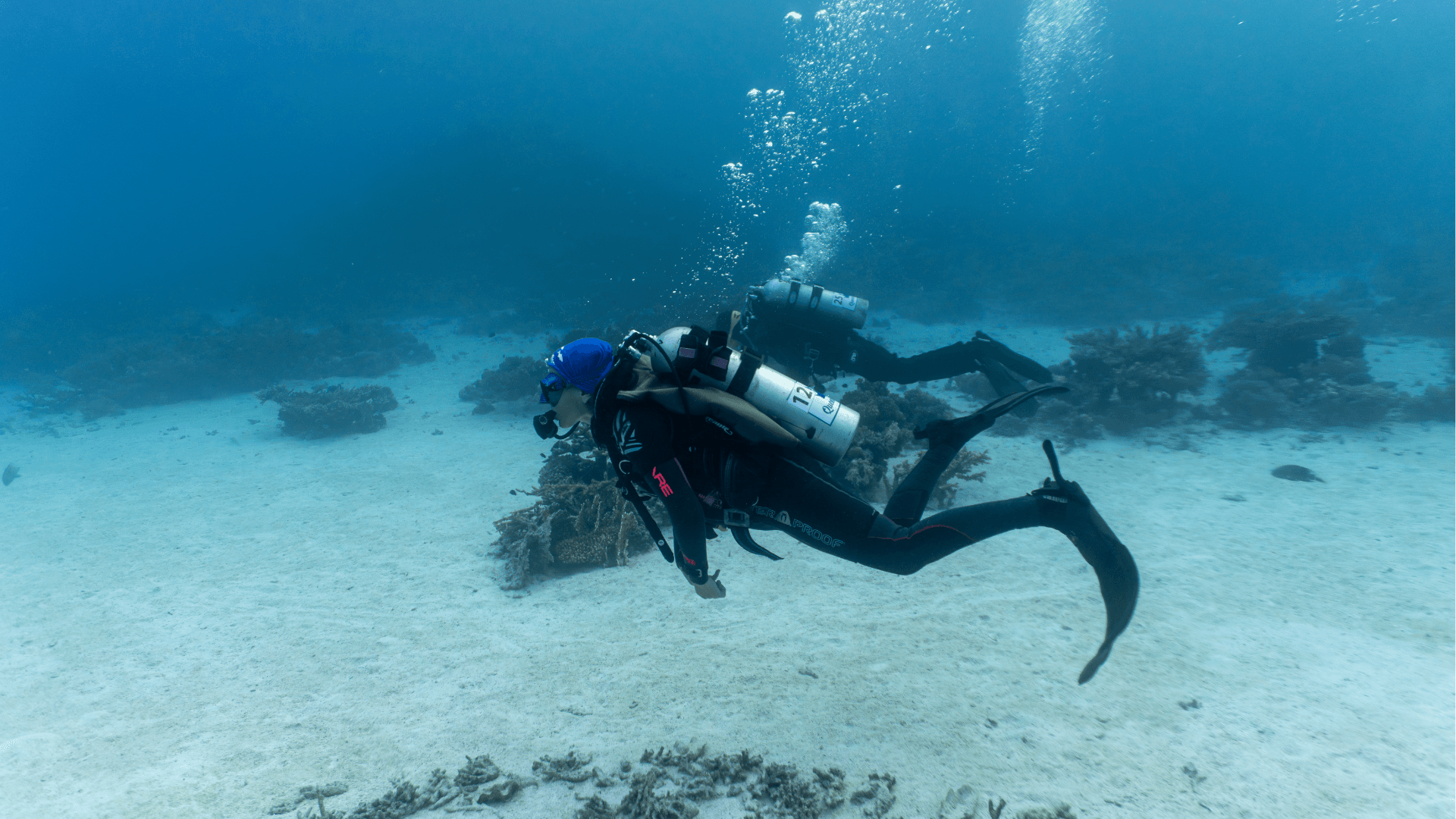
Fine. We had a plan and we followed it. We calmly reached the boat, enjoying corals on the way. We surfaced прямо into the sunset. Beautiful. And it was only the second dive of the trip.
Result: 75 minutes underwater (my new record), 50 bar left, max depth 18 m.
Dive 3 — Dolphin House (Night dive)
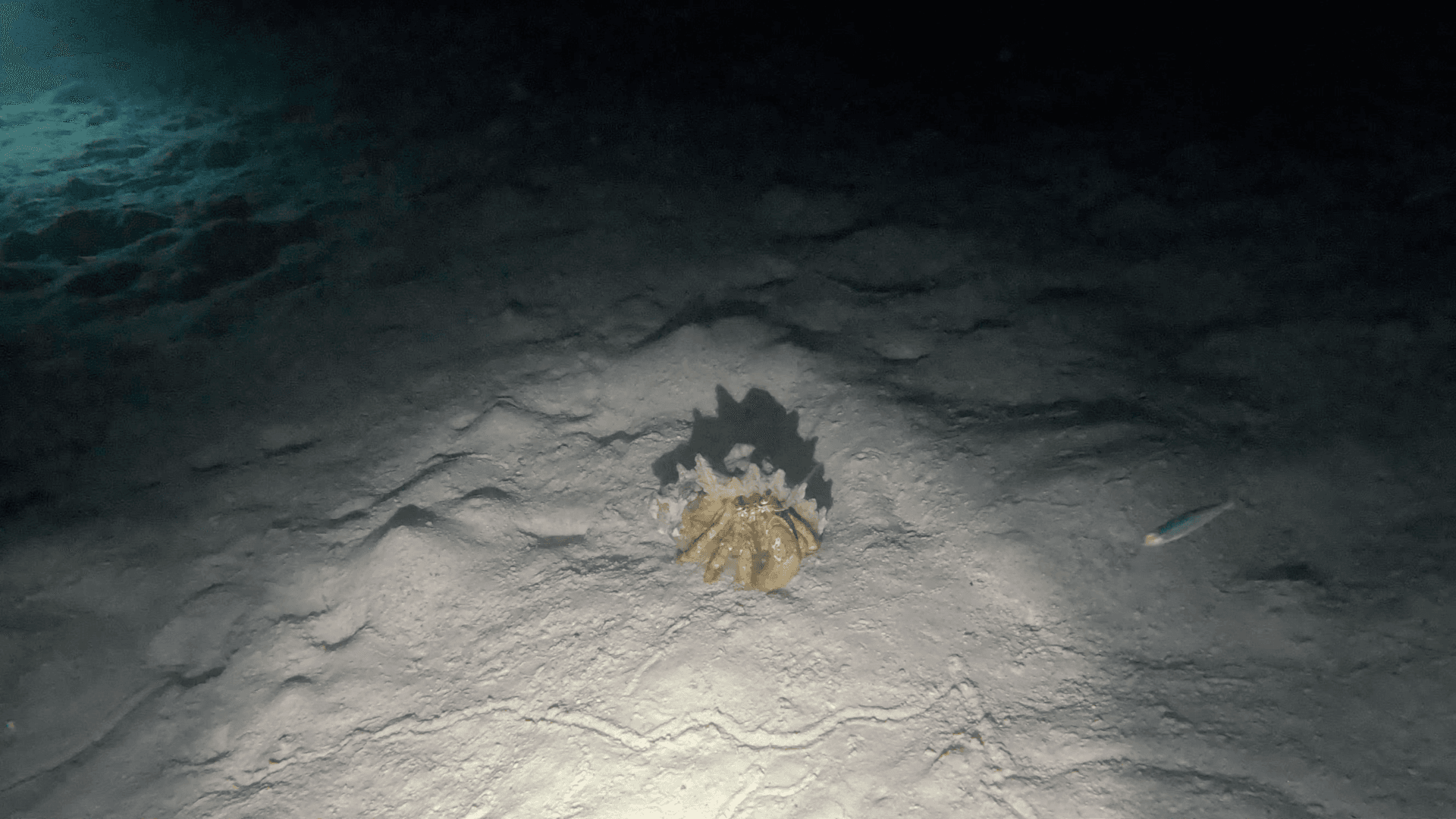
The night dive was on the same site.
From my previous night dives I expected visibility to be not great, so I took a GoPro instead of my main camera. And that was a mistake. The water was surprisingly clear and gave so many cinematic shots that next time I will definitely take the big camera — even if I still don’t have proper lights for it.
Even before entering the water we could watch a school of cornetfish hunting small fish in the light from the boat.
We jumped in. Without a torch it was total darkness, but the beams of light highlighted separate moments of underwater life.
During the dive we met a couple of spotted rays, unusual corals, and several stonefish. Crabs crawled on the bottom, and crowds of lionfish flew into the light. There was a moment when I almost ended up in this party. I went very close to the bottom to look at tiny shrimps on corals, my fins almost touched the sand. And the moment I moved up, five lionfish rushed into my torch beam and literally filled the space where I had been a second earlier.
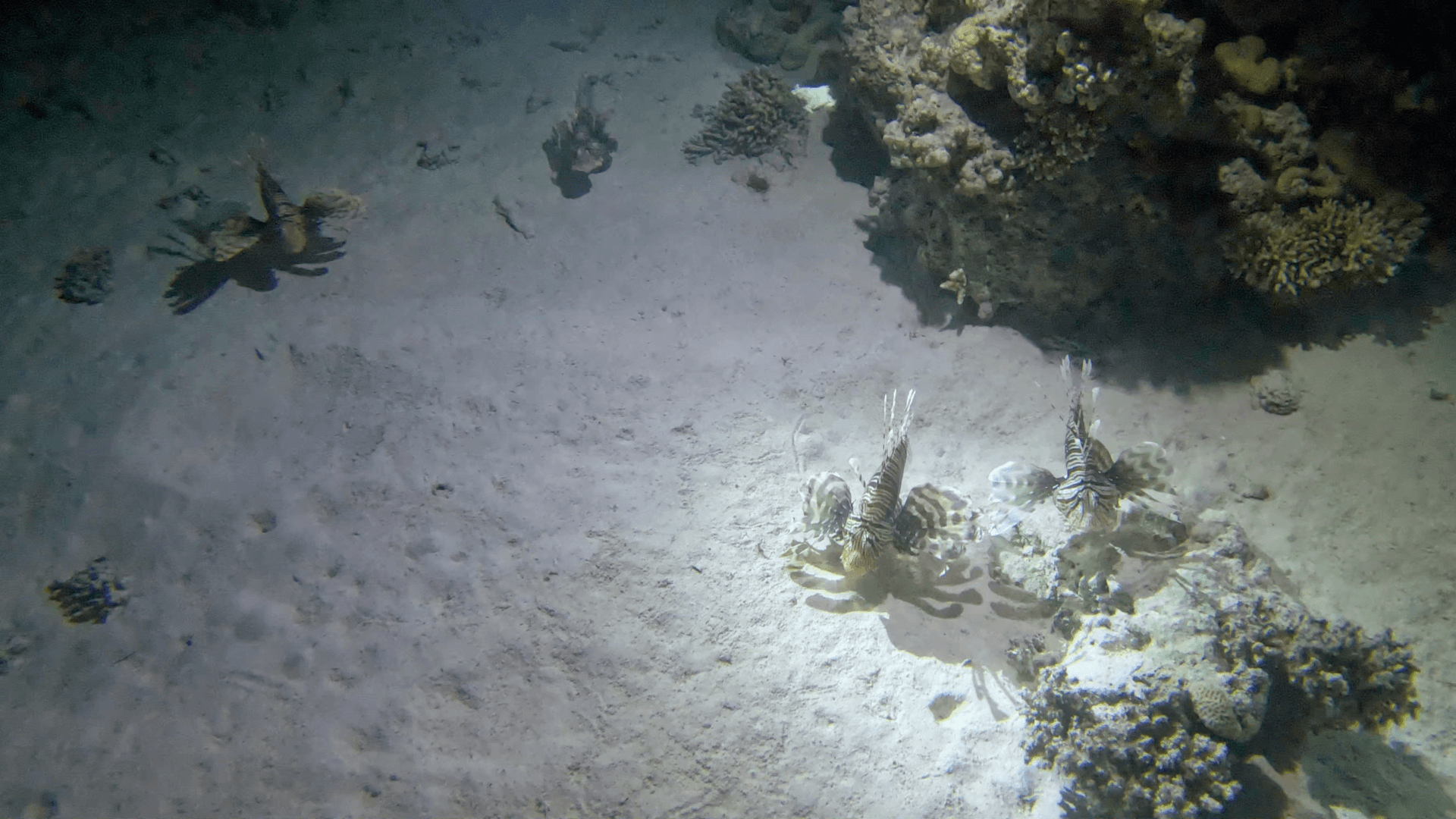
That would be a fail if they came closer and touched my legs with their “feathers”!
Result: 46 minutes underwater, max depth 13 m, minus 80 bar.
Day 3 — Why is it so beautiful?
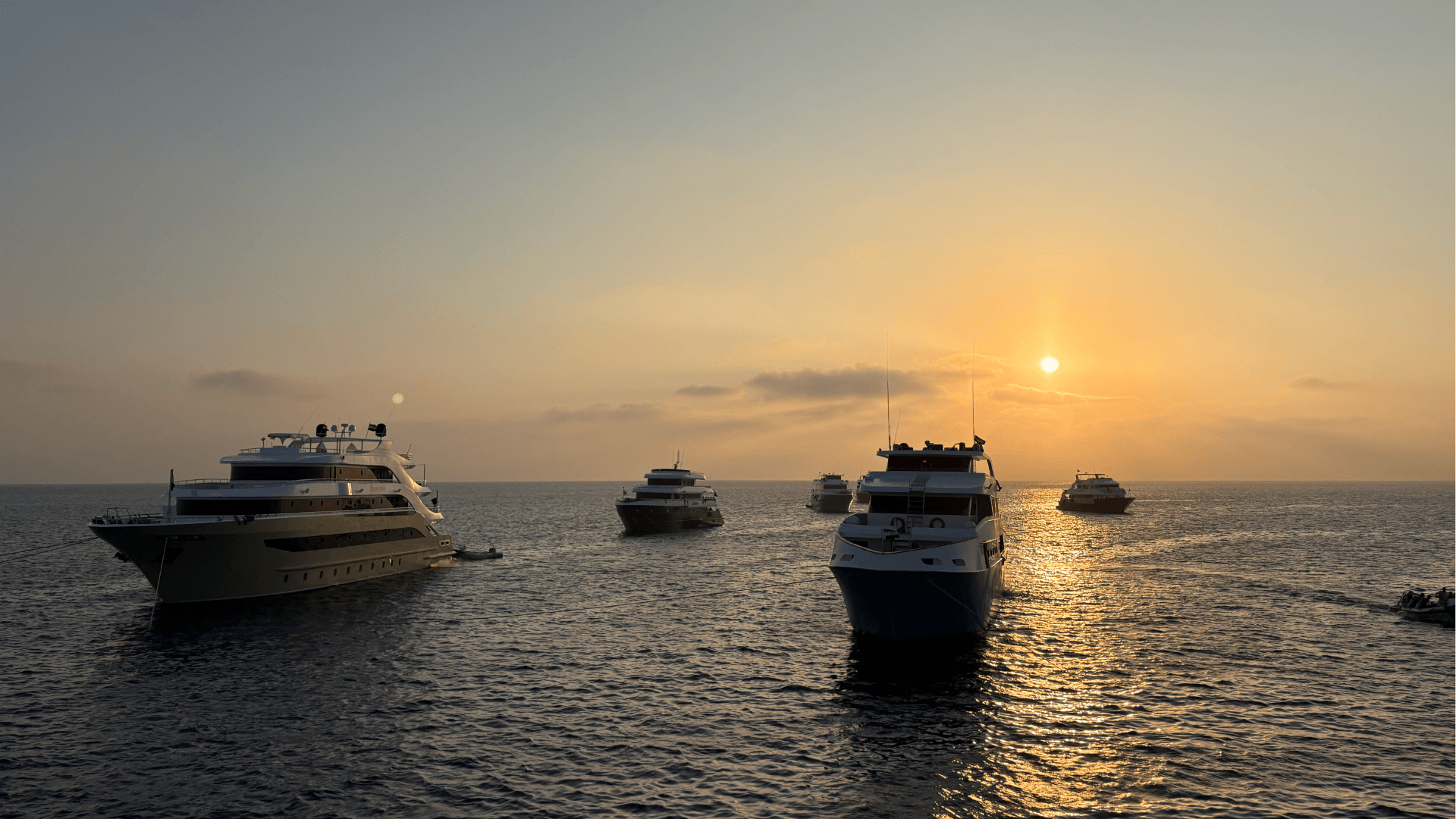
At 5 a.m. the boat left the mooring and went to the sunrise dive location. “If the captain is already awake, I guess I should wake up too,” I thought and went to the top deck, where a few other early birds were already there.
Coffee + cookies, lazy small talk, sunrise. And when the sun finally came up, the bell rang. Time for the briefing.
Dive 4 — Giannis D
The first dive of the day was the wreck Giannis D.
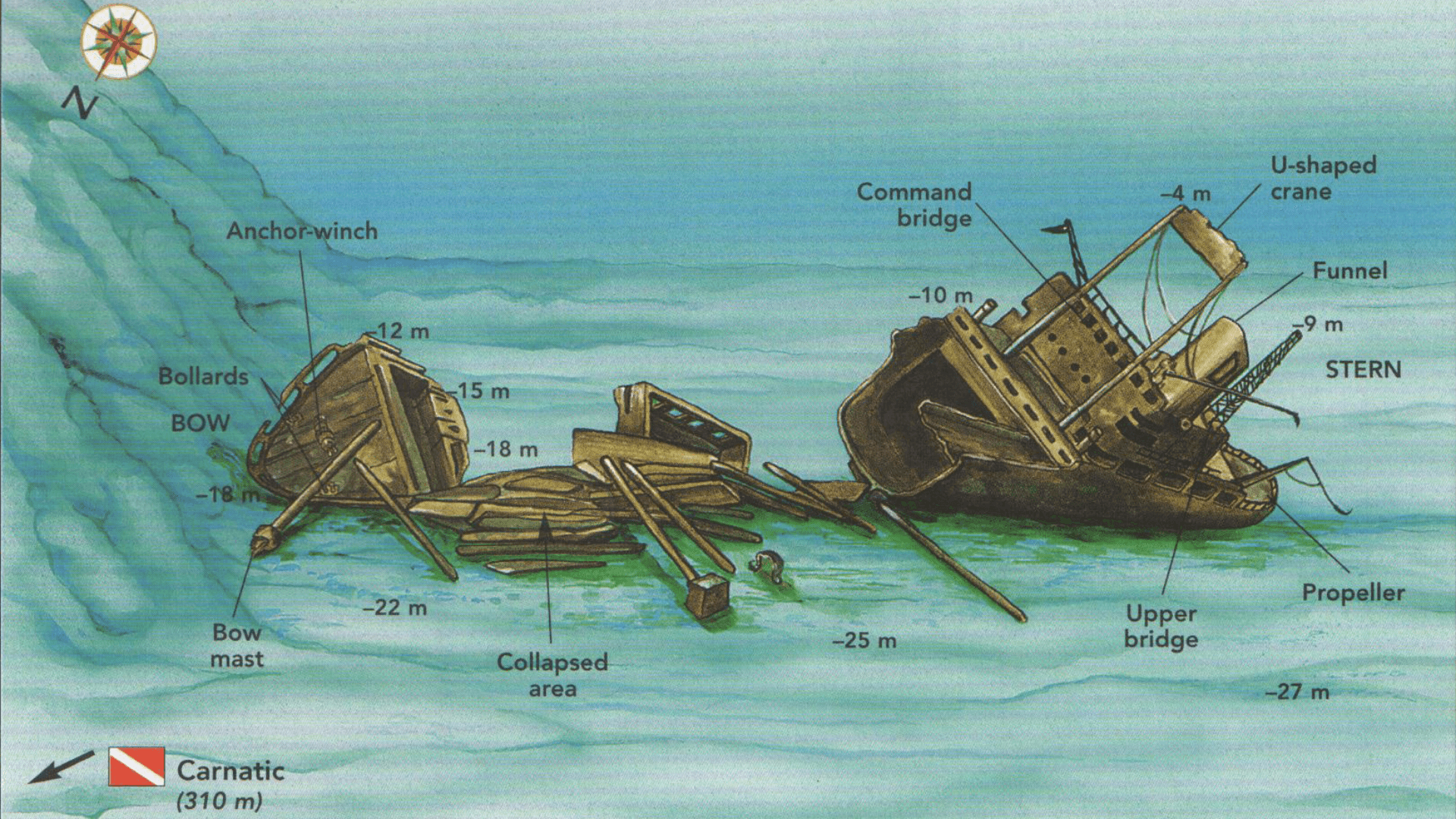
The ship lies on Shaʽb Abu Nuhas reef — one of the famous “ship graveyards” of this region. Several wrecks are located around the reef. The most popular: Kimon M, Marcus (“Wreck of the Tiles”), Carnatic, and Giannis D.
The cargo ship was built in Japan in 1969 under the name Shoyo Maru, later moved under a Greek flag and became Giannis D. In 1983 it hit the reef and sank. The hull broke and ended up on the port side, creating the famous tilted silhouette and very expressive relief.
Access to Giannis D is only by zodiacs. Liveaboards stop a few hundred meters away, and divers are delivered in small groups.
The site is usually recommended for Advanced divers (or equivalent experience), especially if penetration is planned.
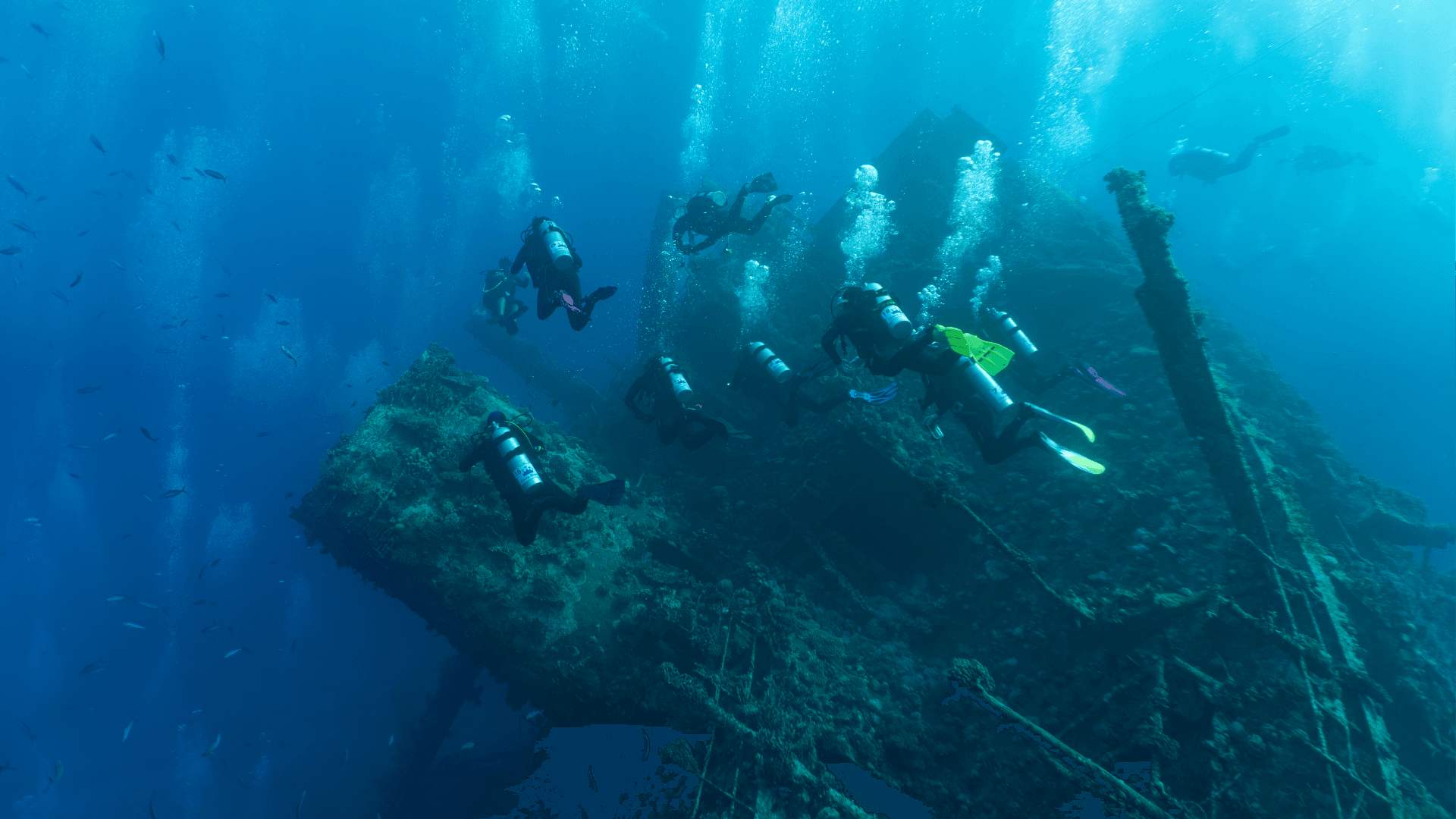
The wreck is split into several sections: bow, middle section, and stern. The top starts around 5 meters, and the deepest parts at the stern reach 28–30 meters.
The middle section is piles of metal and debris, covered with corals and small hideouts.
The bow has some coral cover, with the mast and anchor mechanisms clearly visible.
Over decades underwater, Giannis D became fully covered with corals and sponges and turned into a home for reef life. Schools of glassfish, groupers, angelfish, and barracudas stay around it.
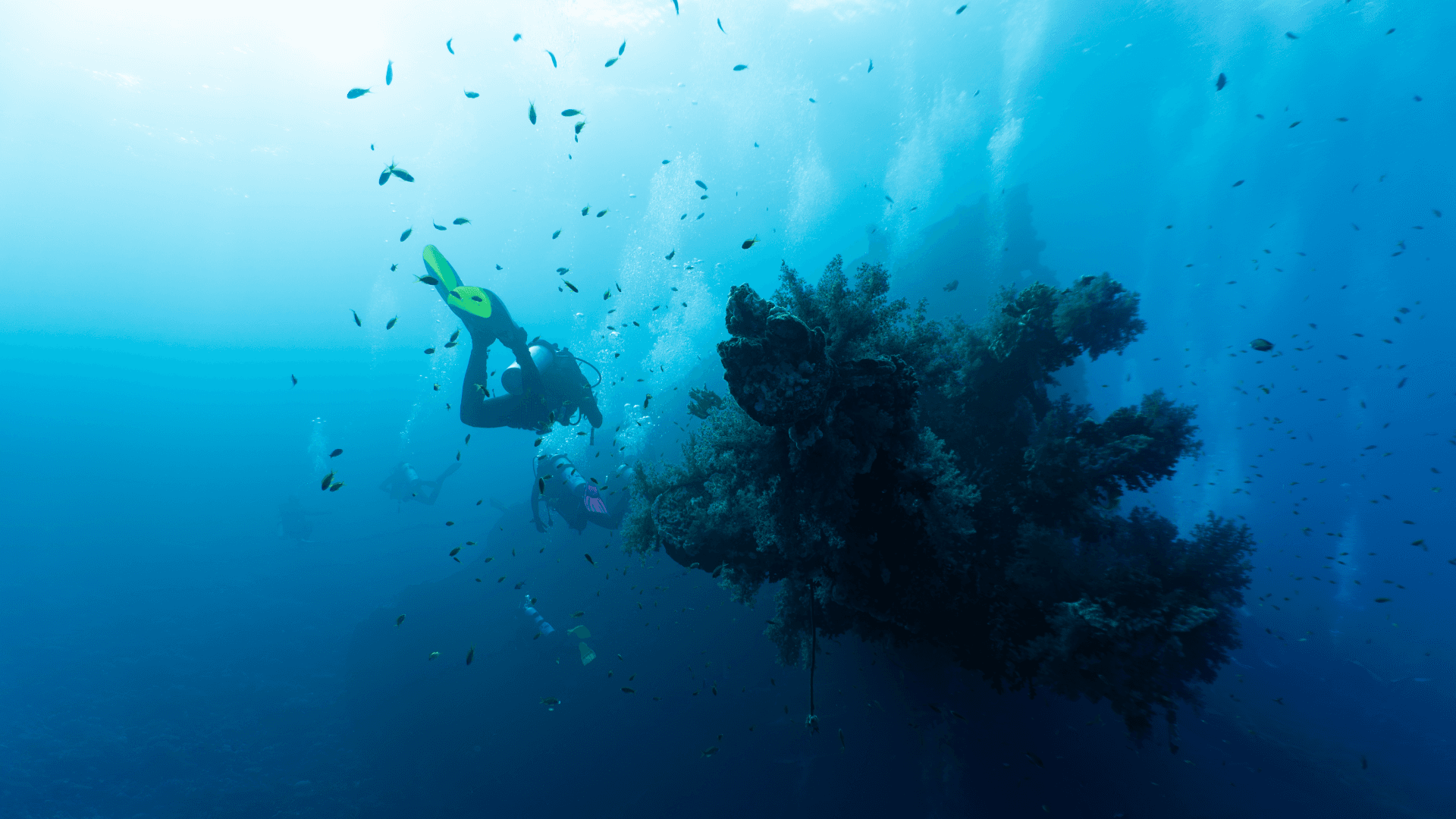
The stern and engine room are considered the most interesting part. The ship structure is easy to read, and inside spaces allow limited penetration.
The stern section stands on the bottom around 28 meters — vertical, but with a clear tilt. There are many entry and exit points.
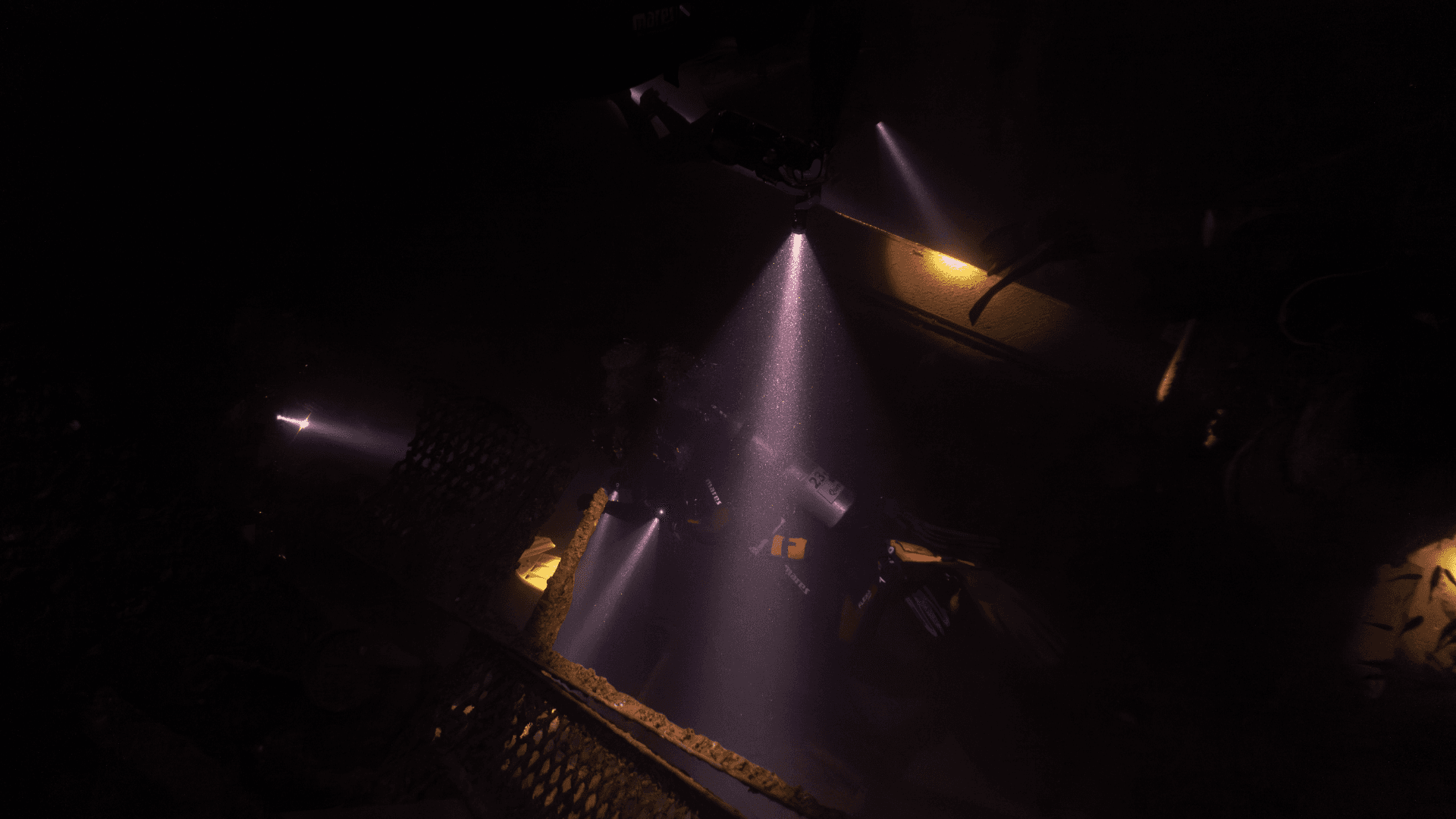
The engine room is big and spacious — dozens of divers can be inside at the same time, exploring what’s left.
As I wrote above, we used zodiacs because the main boats can’t come close — to avoid creating new wrecks 🙂 Backroll into the water and we descend without delay. And the ship appears right away.
It’s huge. With the great visibility you can immediately feel the scale. Around us: fish and bubbles from divers below. We gather as a group and swim to the entry point for penetration — into the engine room.
A narrow corridor with a tilt makes the interior look disorienting. You swim “up” along a corridor with a staircase that, by all feelings, should go down 🤯 That conflict between vision and balance can even cause a bit of seasickness. But excitement quickly replaced it, and I had no issues.
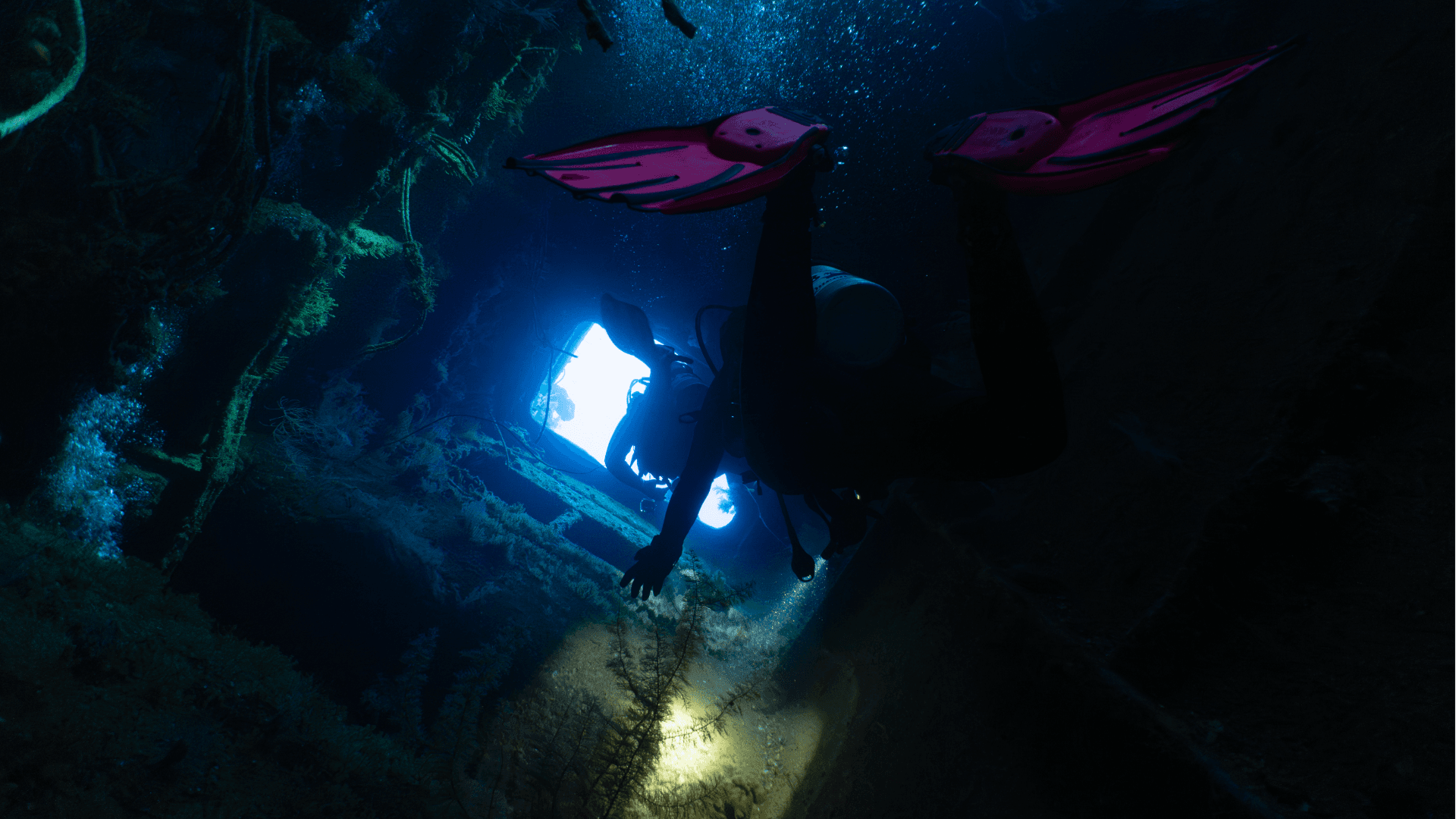
The engine room entry is a big hole in the wall. My group is already inside, and another group starts entering behind us. We coordinate and exit through another opening into a narrow corridor going up at about a 35° angle. At the exit, another instructor meets us and becomes the tail.
I come out of the corridor and even through masks I can see smiles and “wow” faces. Only 15 minutes into the first dive, it’s 8 a.m., and emotions are already overflowing.
Then we explore other parts of the wreck. We meet a group of 10–15 batfish, almost half a meter each, all in the soft morning sun.
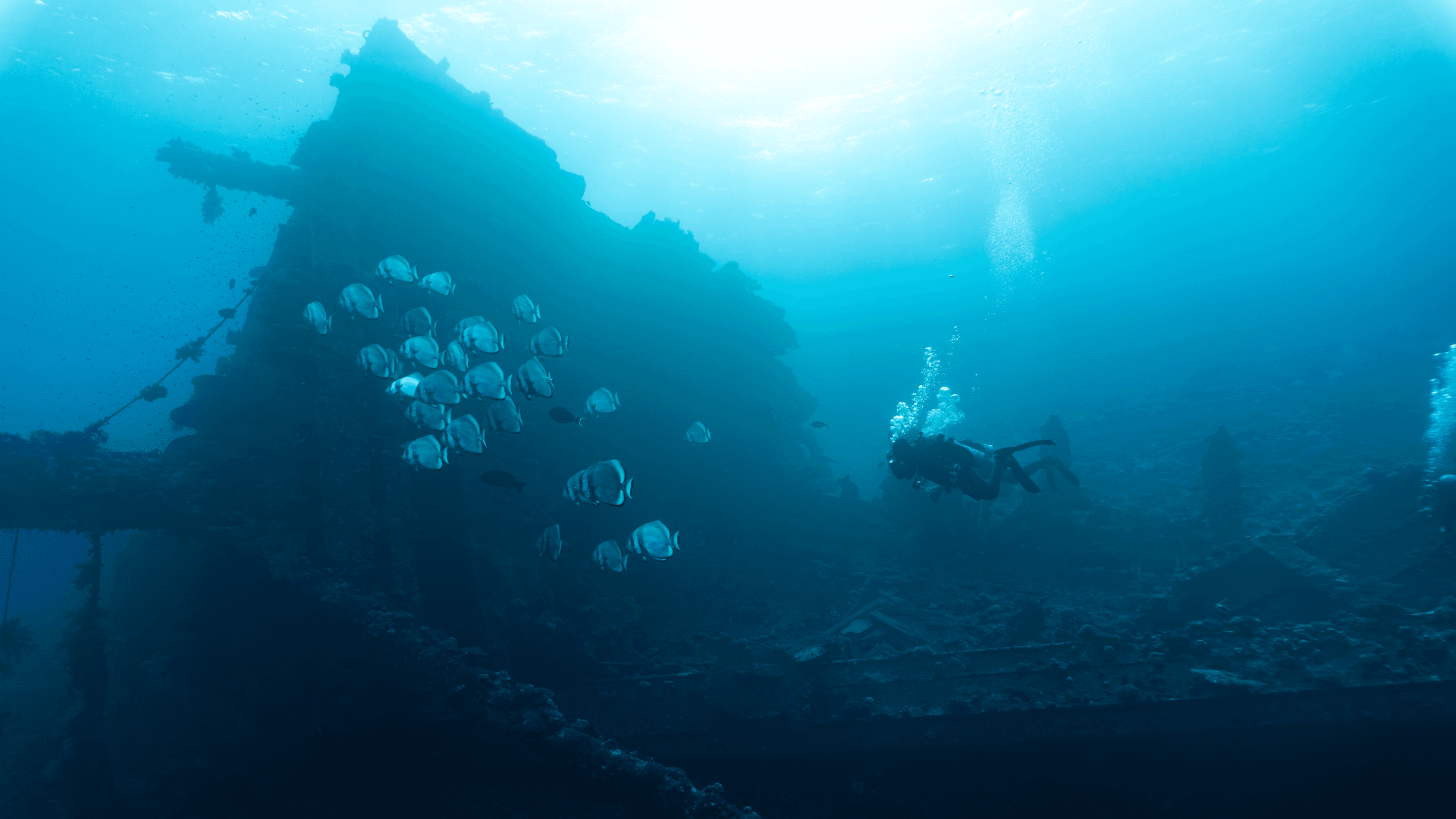
I swim a bit into the blue to look at the wreck from the side. Unreal. I even felt a little dizzy, so I quickly returned to the group and silently recited some poems to calm down.
We circle the whole ship and return to the start area. The guide signals the safety stop. Everyone gathers at the line and it becomes crowded. I don’t want to fight for space, so I exchange signs with Mustafa that I’m OK and stay a bit aside, filming.
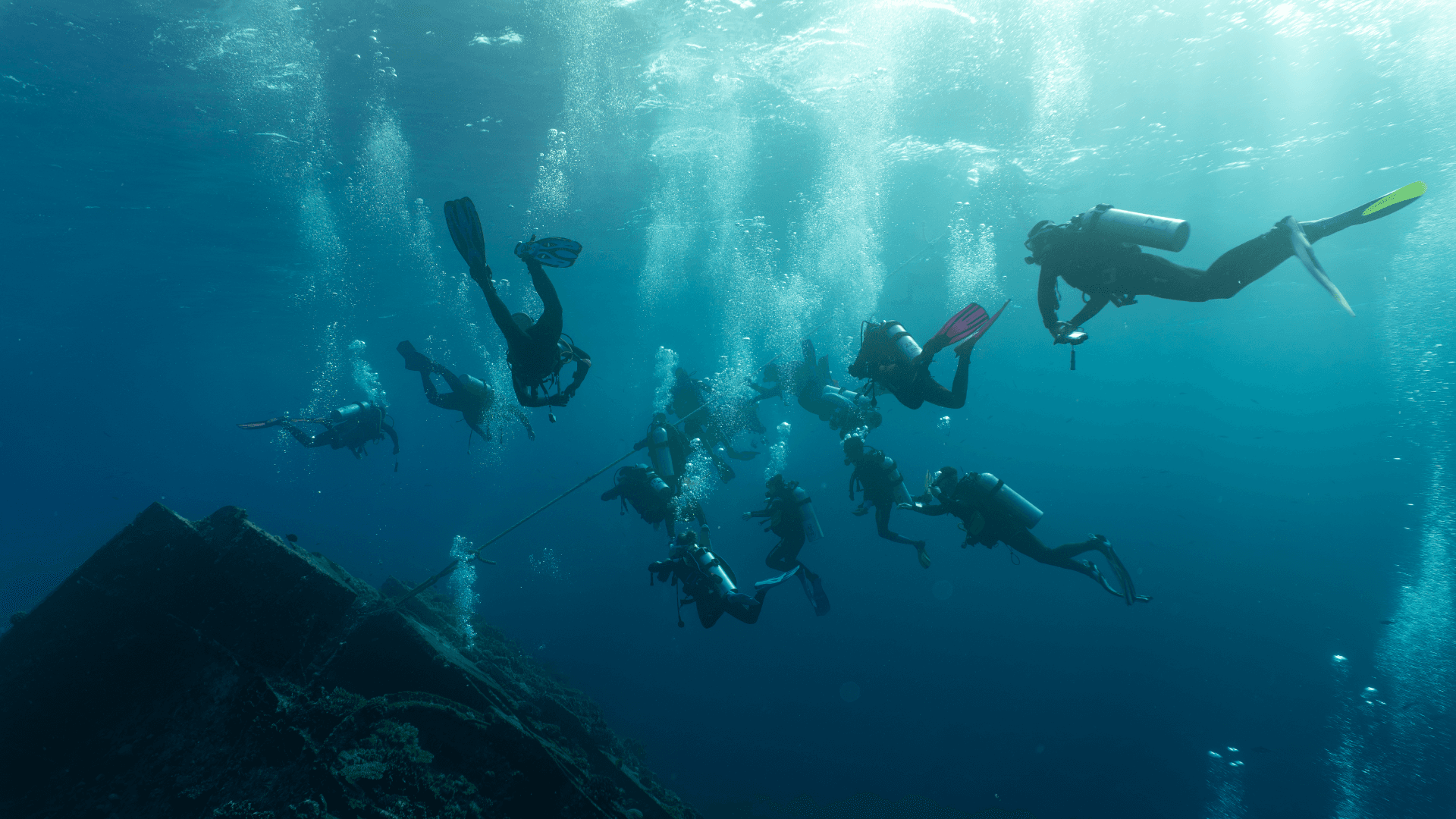
I notice another group nearby — it’s our second team. Funny: there are only two zodiacs. We reached the exit first, so they will have to wait.
We surface, get into the zodiacs, and return to the boat. Breakfast time and then a crossing. The guides say the next sites will be even more epic.
Result: 51 minutes underwater, max depth 21 m, minus 140 bar.
Dive 5 — Shark & Yolanda
We crossed the channel and arrived in Ras Mohamed National Park. The first site was Shark & Yolanda.
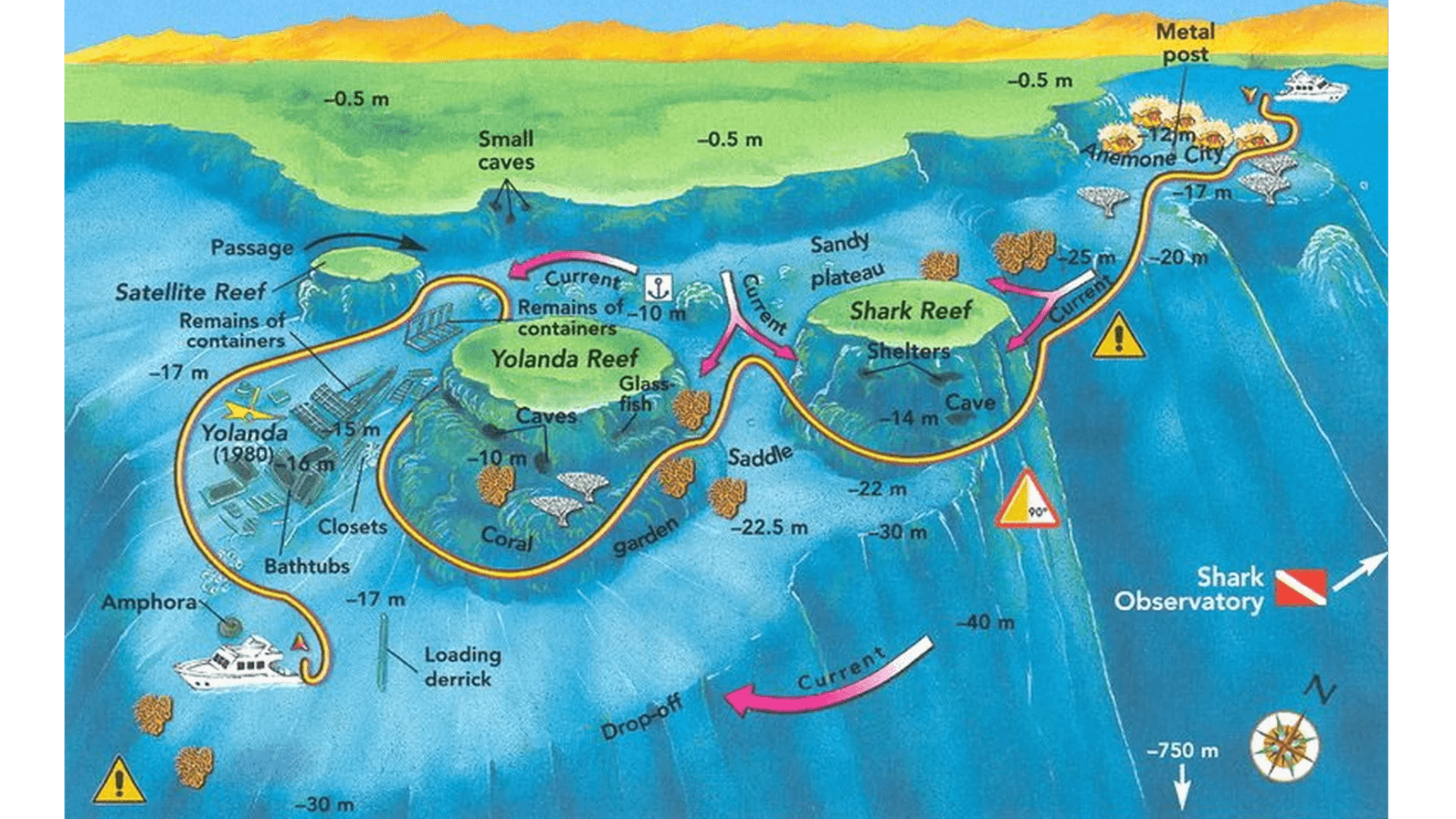
Shark & Yolanda Reef is considered the most famous dive spot in Ras Mohammed. It’s a complex of two neighboring reefs — Shark Reef and Yolanda Reef — usually combined into one long drift dive.
Shark Reef is a dramatic vertical wall that rises close to the surface and drops into the deep blue to about 750 meters. The reef literally grows out of the depths, creating a powerful contrast.
The dive usually starts at Shark Reef and goes with the current toward Yolanda Reef. It’s important to enter quickly; otherwise the current can push the group on the surface. The dive is a long drift and can feel like a roller coaster because current strength and direction change.
Yolanda Reef is named after the cargo ship Yolanda that sank here in 1980. The hull was later pushed off the reef by storms and now lies deeper, but part of the cargo stayed on the plateau. You can still see bathtubs, toilets, pipes, and other items that became part of the underwater landscape.
Depth is usually around 18–30 meters (depends on conditions and route). Because of the conditions, the site is more often recommended for Advanced divers and above.
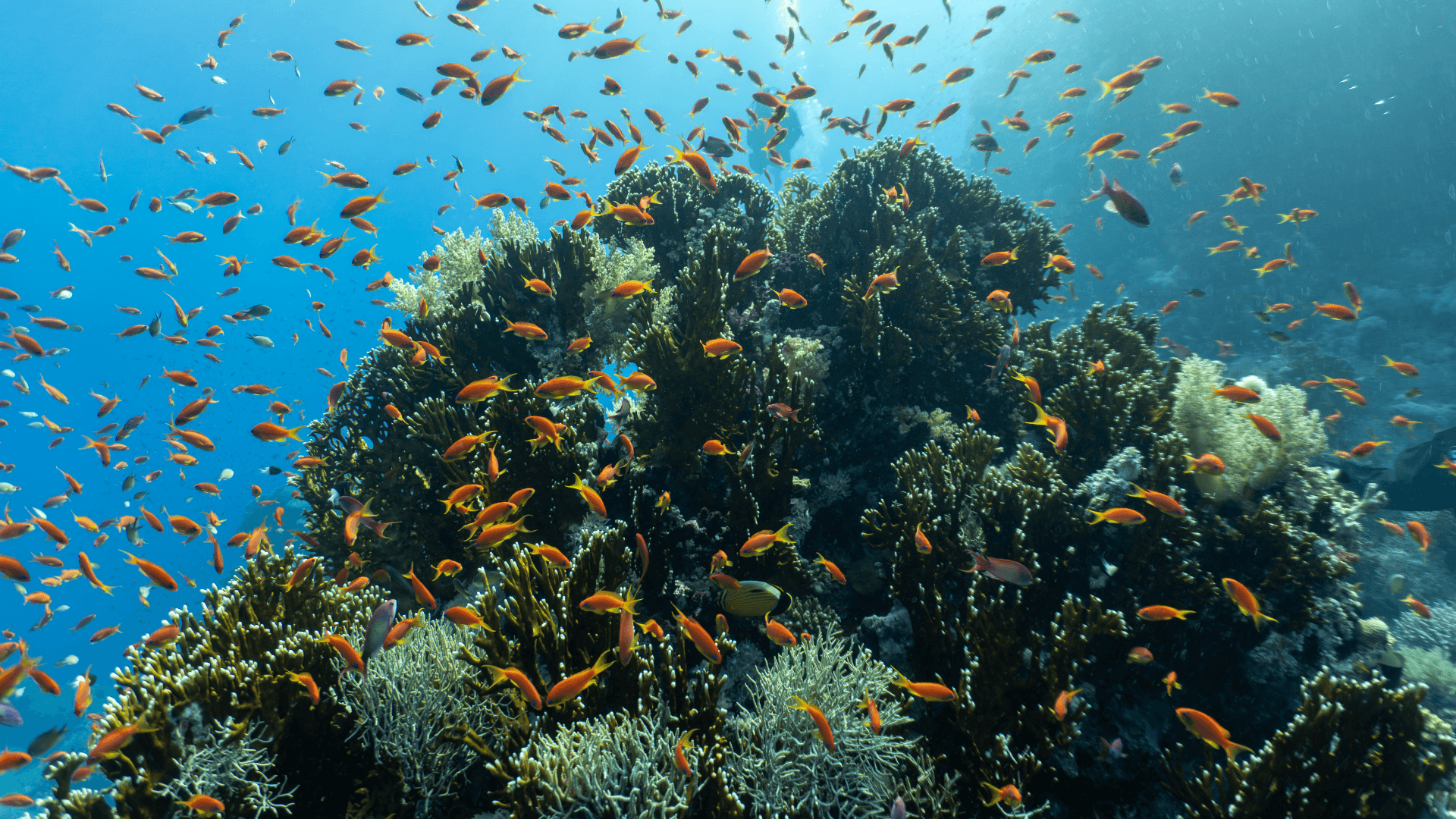
Underwater you can meet schools of barracudas, batfish, tuna, snappers, turtles, Napoleon wrasse, morays, stonefish, and sometimes reef sharks. In summer (especially July–August) currents often gather big fish around the reef.
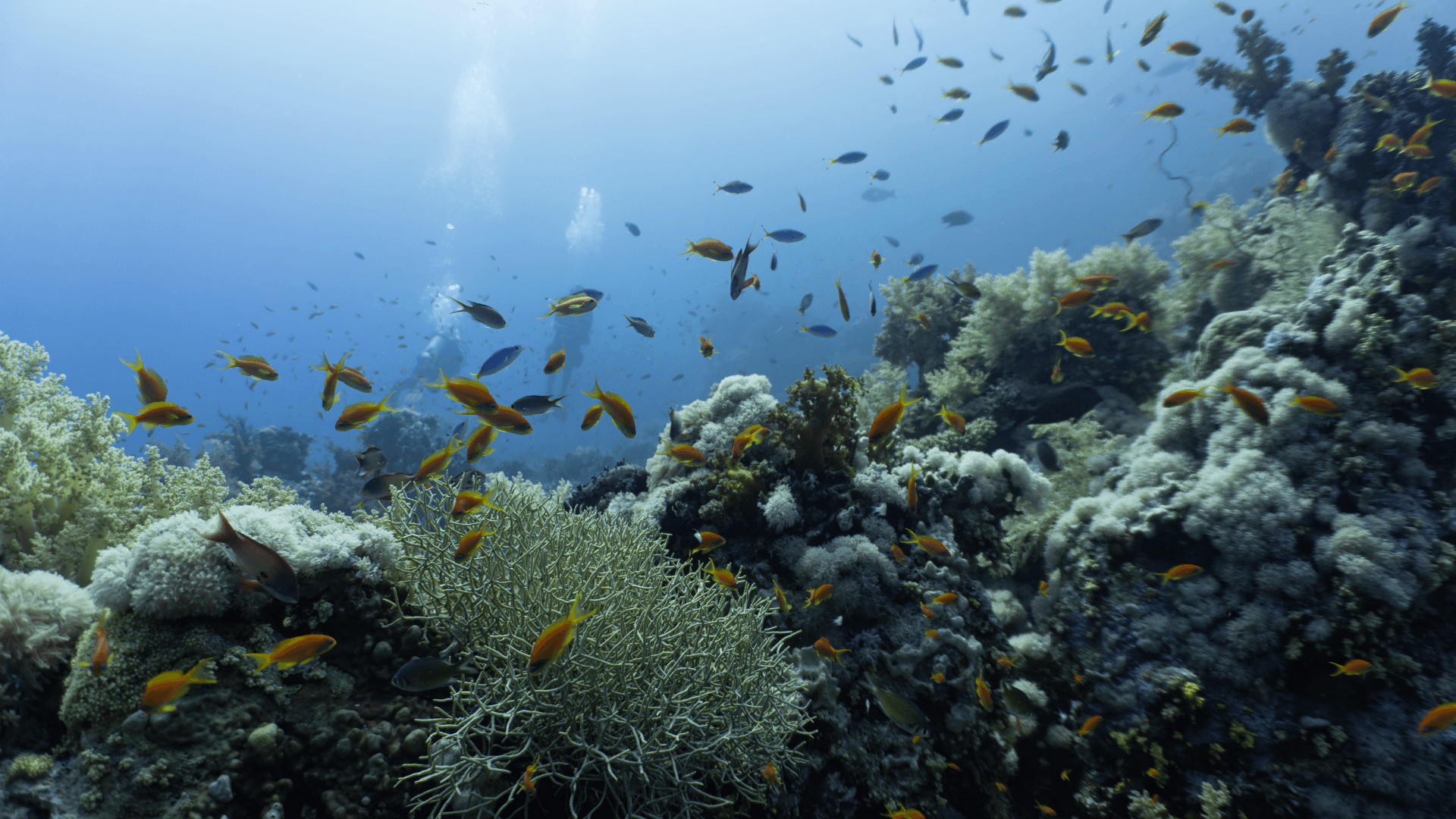
The dive started in the blue that goes down for hundreds of meters. Everyone immediately moved to the wall to have a visual reference. But even with it, you constantly feel the pull to go deeper — somewhere in the blue there should be mantas or sharks.
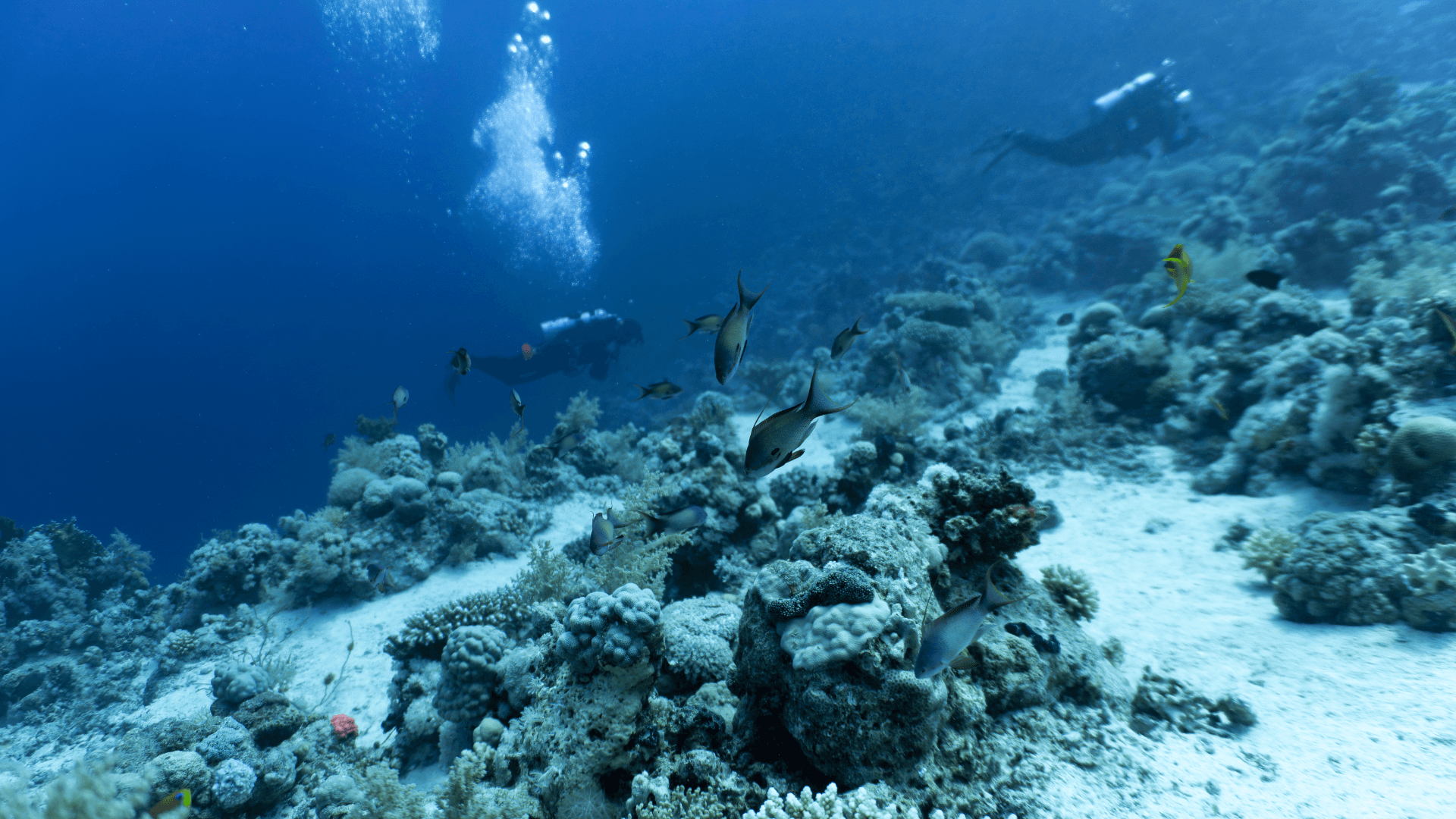
The group was warned, so nobody went below the planned max depth. But we also didn’t see any big animals. Realizing there’s not much “down there,” we slowly moved up to the brighter part, where corals and fish are more colorful.
I was jumping from one spot to another, trying to see and film everything. I probably cut in front of almost every person in the group, but I hope nobody is angry 🙂
In the middle of the dive we understood we had to change the route — we met a strong current. So we didn’t reach Yolanda Reef. Part of the group started the safety stop already after 37 minutes. Depth at the beginning + current “kicked out” some people quickly.
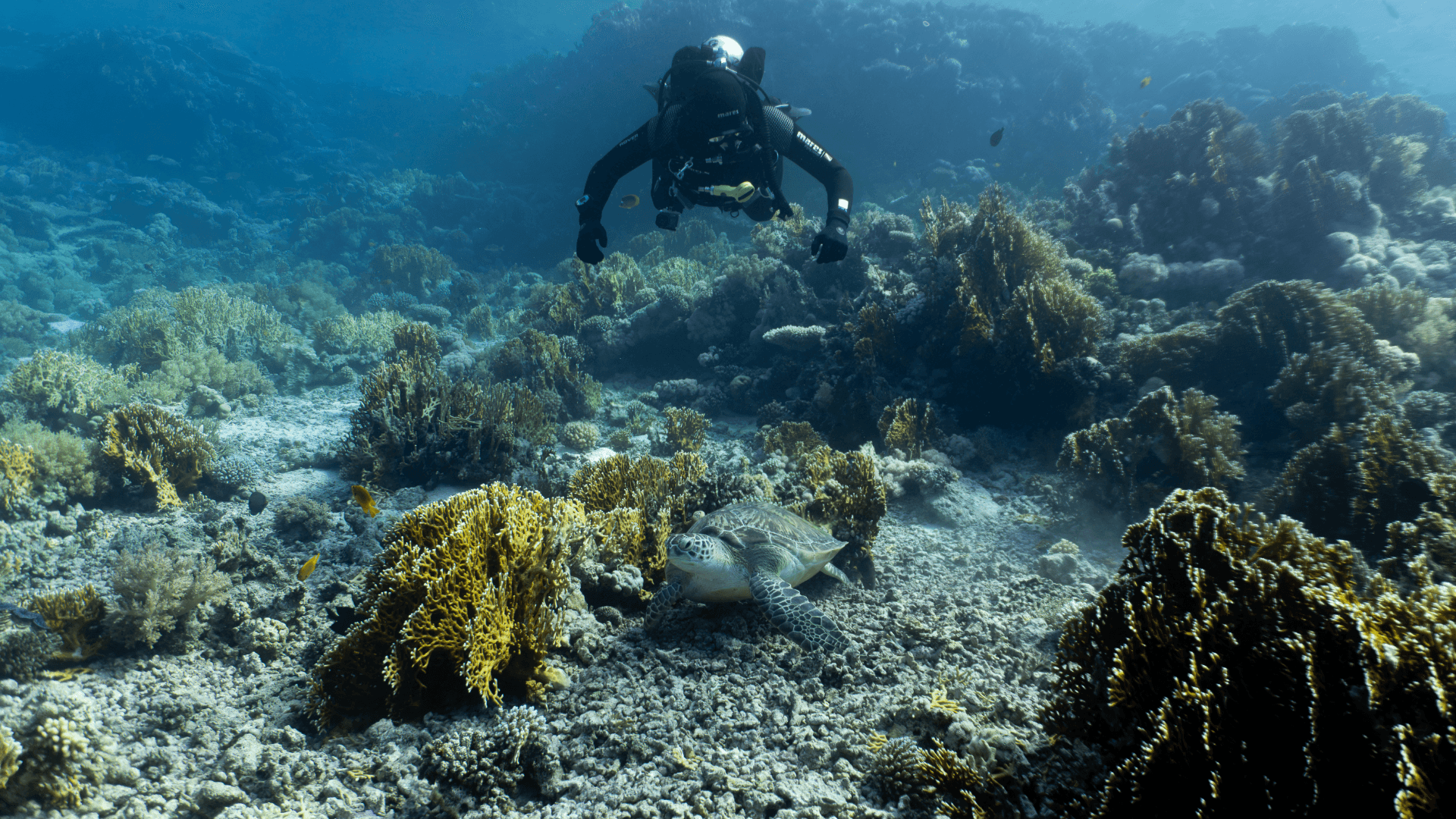
The remaining part of the group continued the drift and turned into the channel between two pinnacles, where we met a huge turtle. It posed a bit, then got bored and calmly swam up.
We looked at each other and decided it was time to surface too. We climbed into the zodiac and returned to the boat happy.
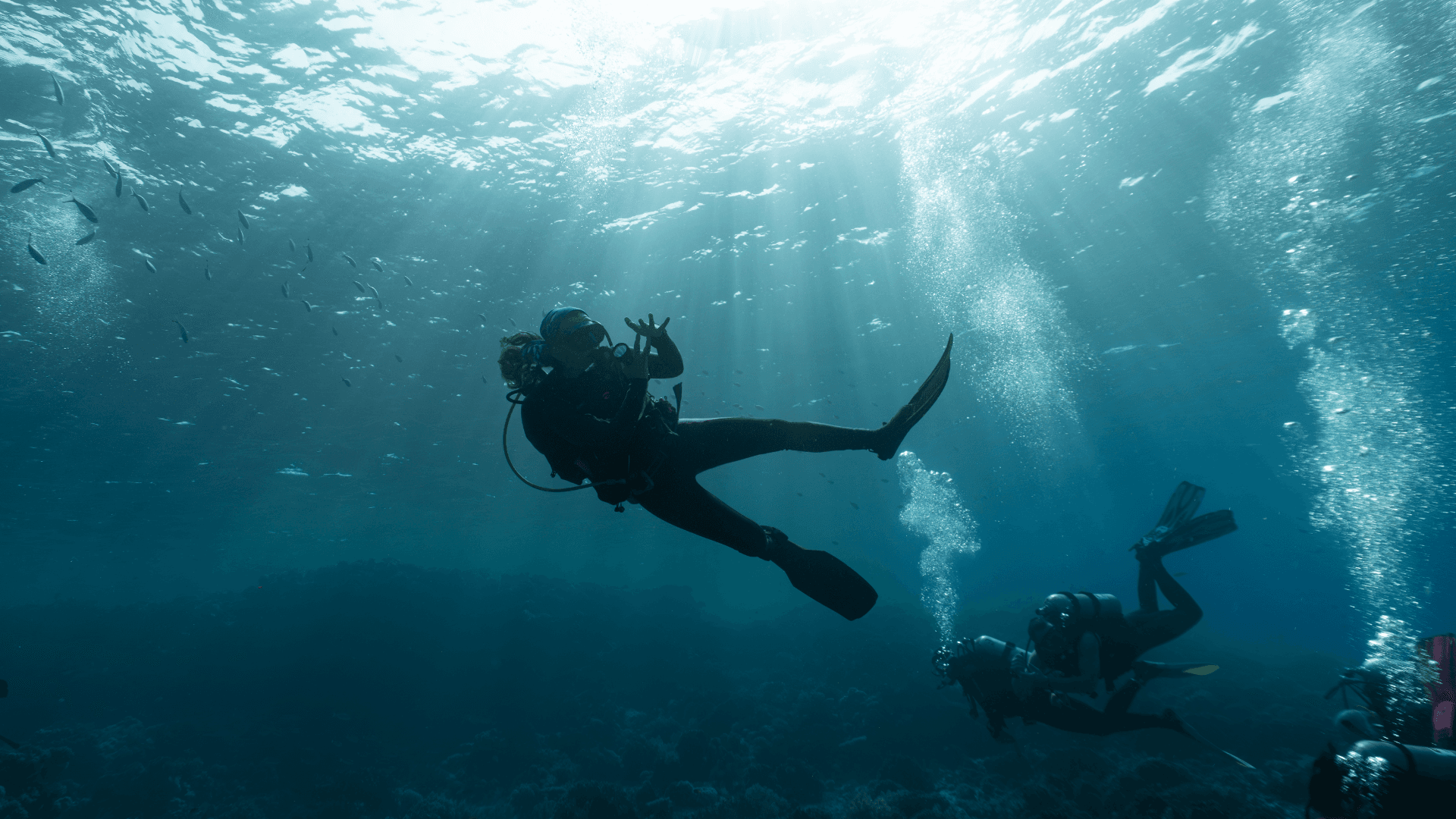
Result: 53 minutes underwater, max depth 29 m, minus 130 bar.
Then lunch and a long crossing to the last dive of the day.
Dive 6 — Gordon Reef (Strait of Tiran)
Pu-pu-pu… I think I was overloaded with impressions. Or maybe this dive just didn’t go the way I wanted. Let’s go in order.
The last dive today was planned at Gordon Reef in the Strait of Tiran.
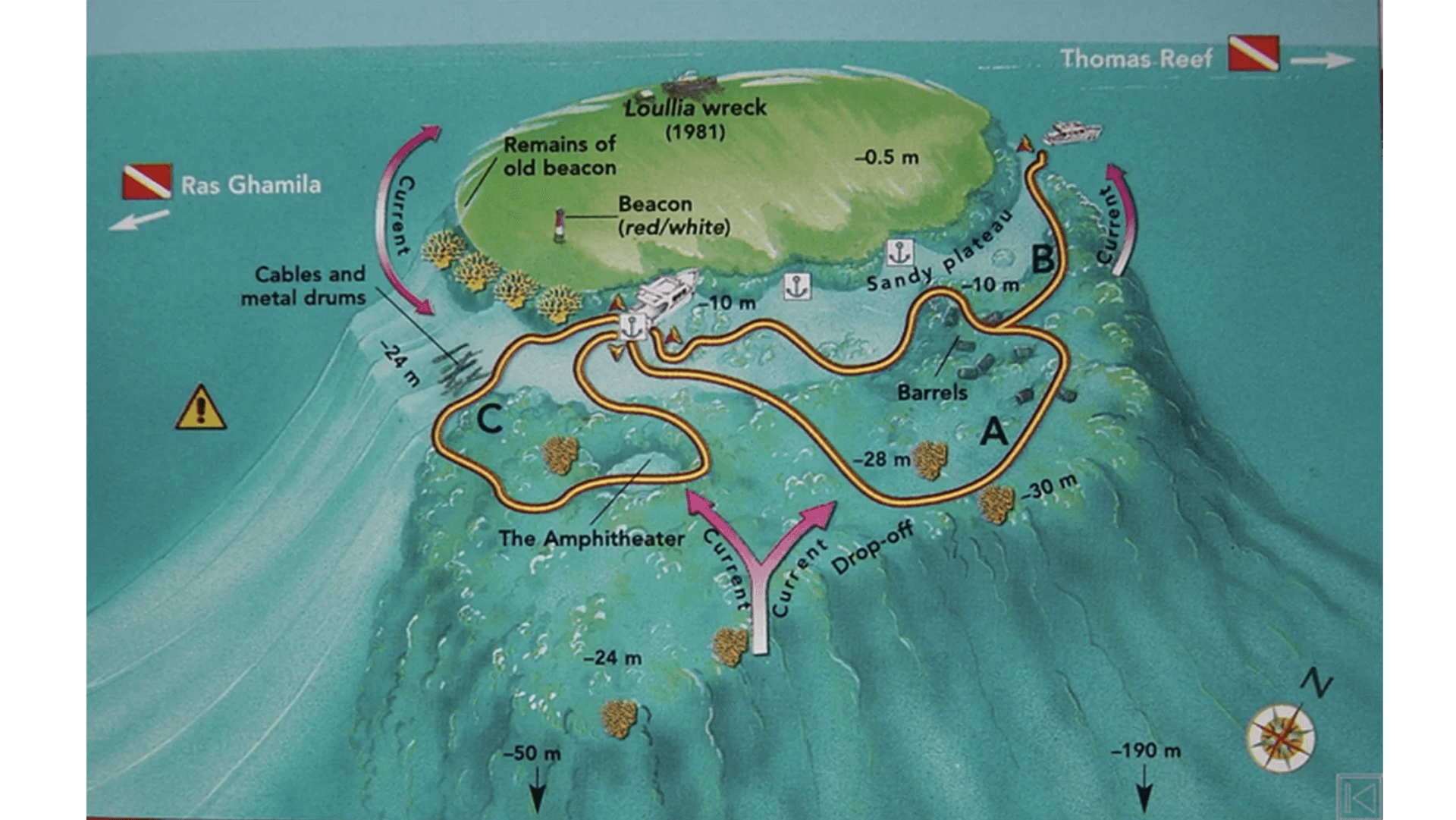
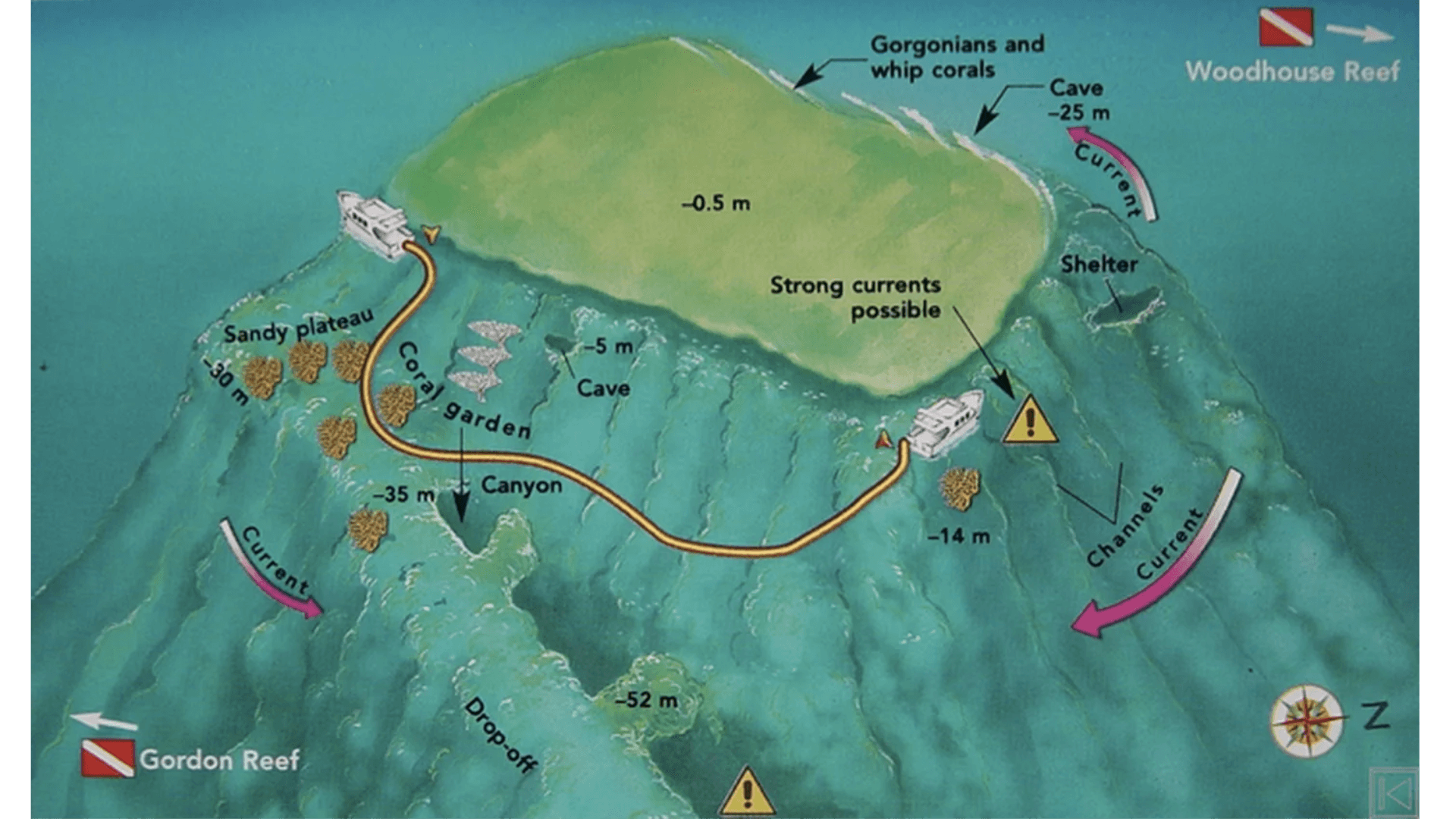
Gordon Reef lies between the Sinai Peninsula and Tiran Island and is the southernmost of four major reefs in this area. Together with Jackson, Woodhouse, and Thomas Reef, it forms one of the most famous drift-diving regions in the northern Red Sea.
The reef is easy to read and combines different landscapes: wide coral plateaus, sandy areas, and walls down to 30 meters. In the south there is a protected mooring area at about 8–10 meters — that’s where dives often start.
The route depends on conditions. In calm weather the dive goes along the plateau and coral gardens at 10–20 meters. With current, the dive shifts to the outer walls and becomes a proper drift.
One special feature of Gordon Reef is the wreck Louilla (a Panamanian cargo ship) that ran aground here in 1981. Most of the hull has been destroyed by storms, but some parts are still visible above the surface and work as a landmark.
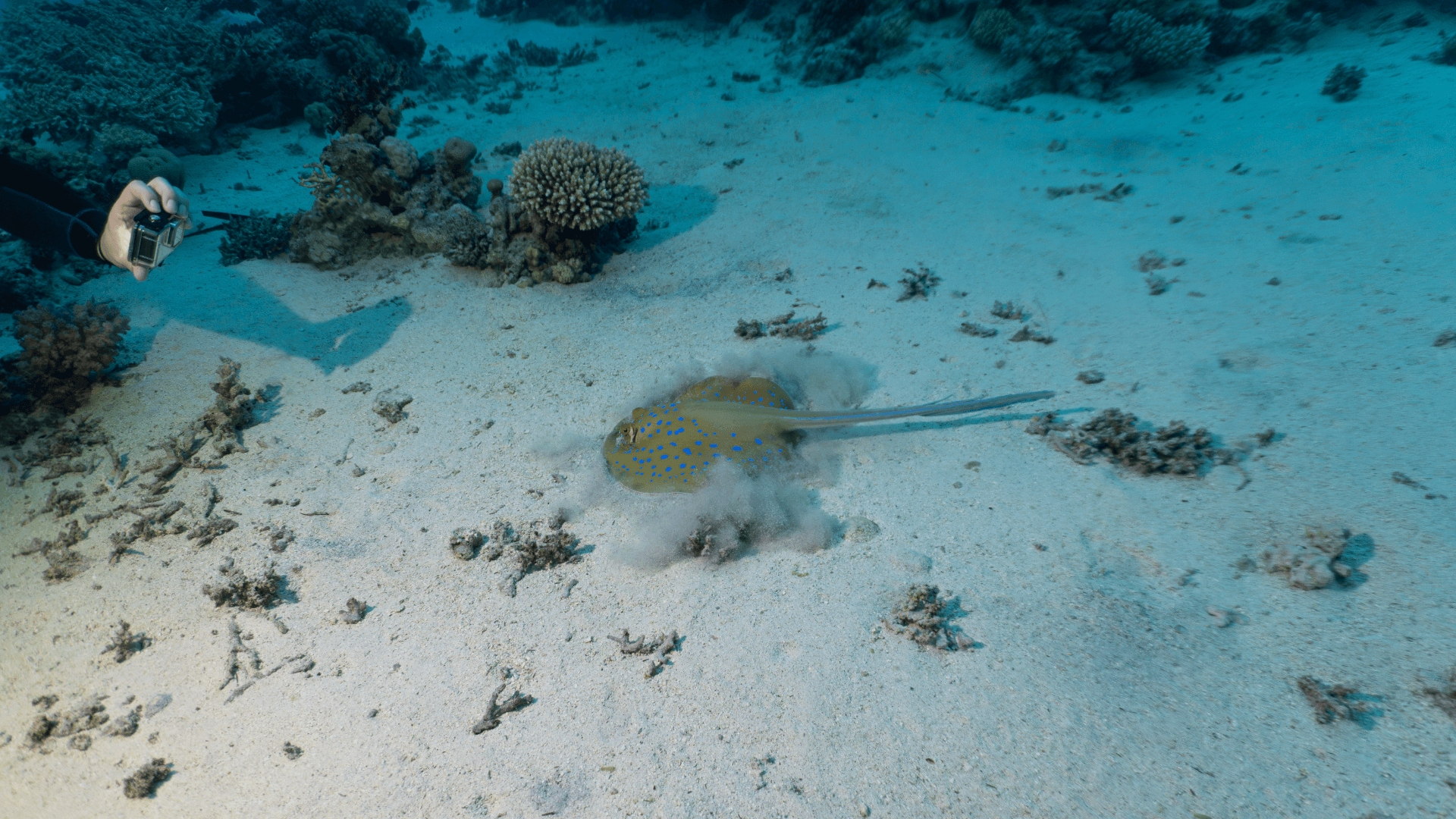
The reef has several zones. In the south plateau you can see metal barrels and cargo remains where octopuses, stonefish, and whitespotted morays often hide. In other conditions the route can go around the corner into the so-called amphitheater or “shark bowl” — a sandy depression where currents can bring big fish.
Gordon Reef works both as drift diving and as a moored dive, depending on route and conditions.
For me it was a sunset dive. We started in daylight and were supposed to finish in darkness. The plan sounded perfect: before twilight explore the edge of a drop-off going hundreds of meters down, then check the amphitheater hoping to see sharks, and in the dark go to the shallow sandy part to see night life and calmly return to the boat.
But from the start, something went wrong.
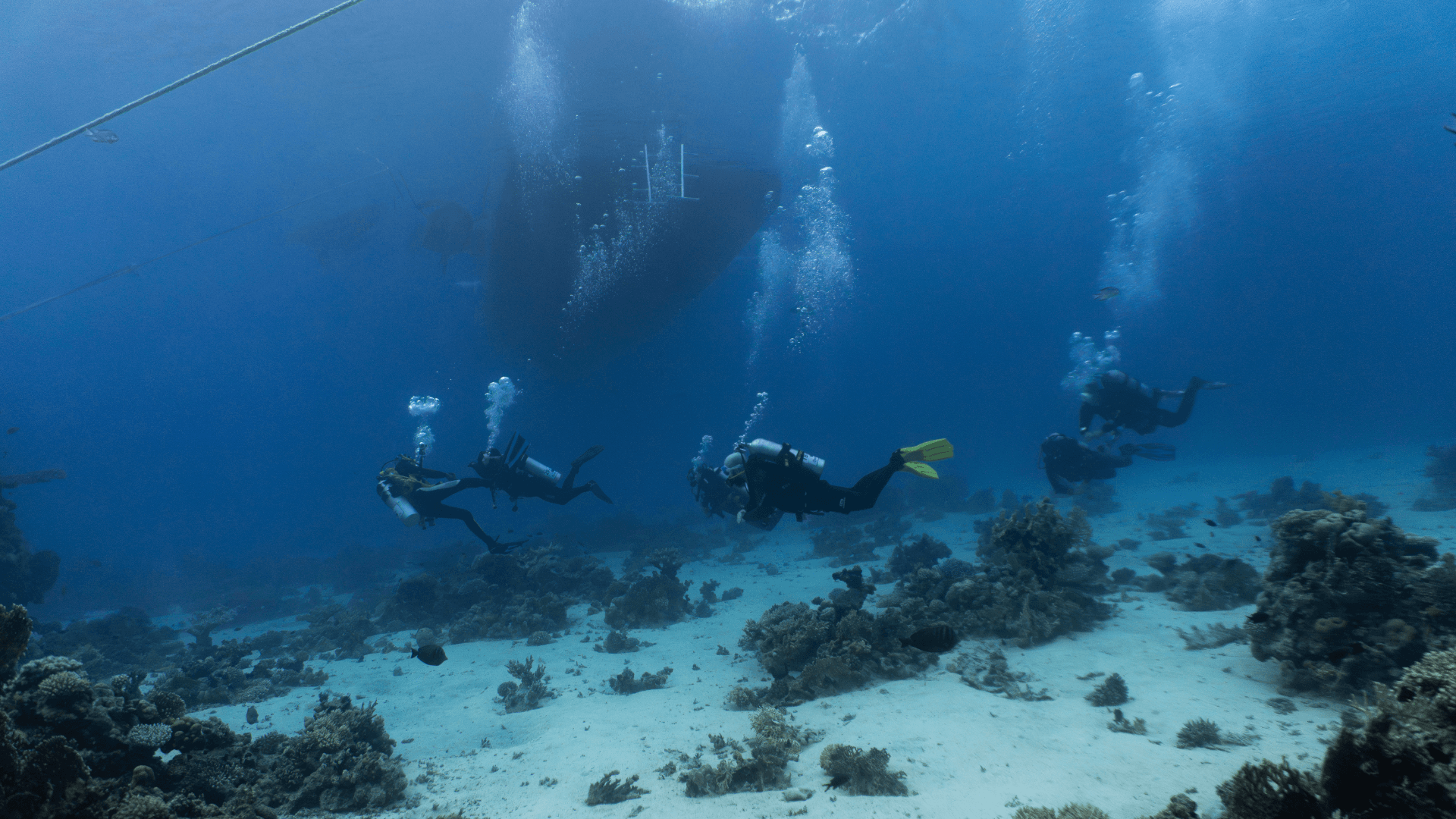
One guy immediately turned back — couldn’t equalize. Two girls couldn’t descend properly and kept popping up. In the end one managed, and the guide literally held the other by the arm, and only then we started moving. All of this took time, and the light was going away.
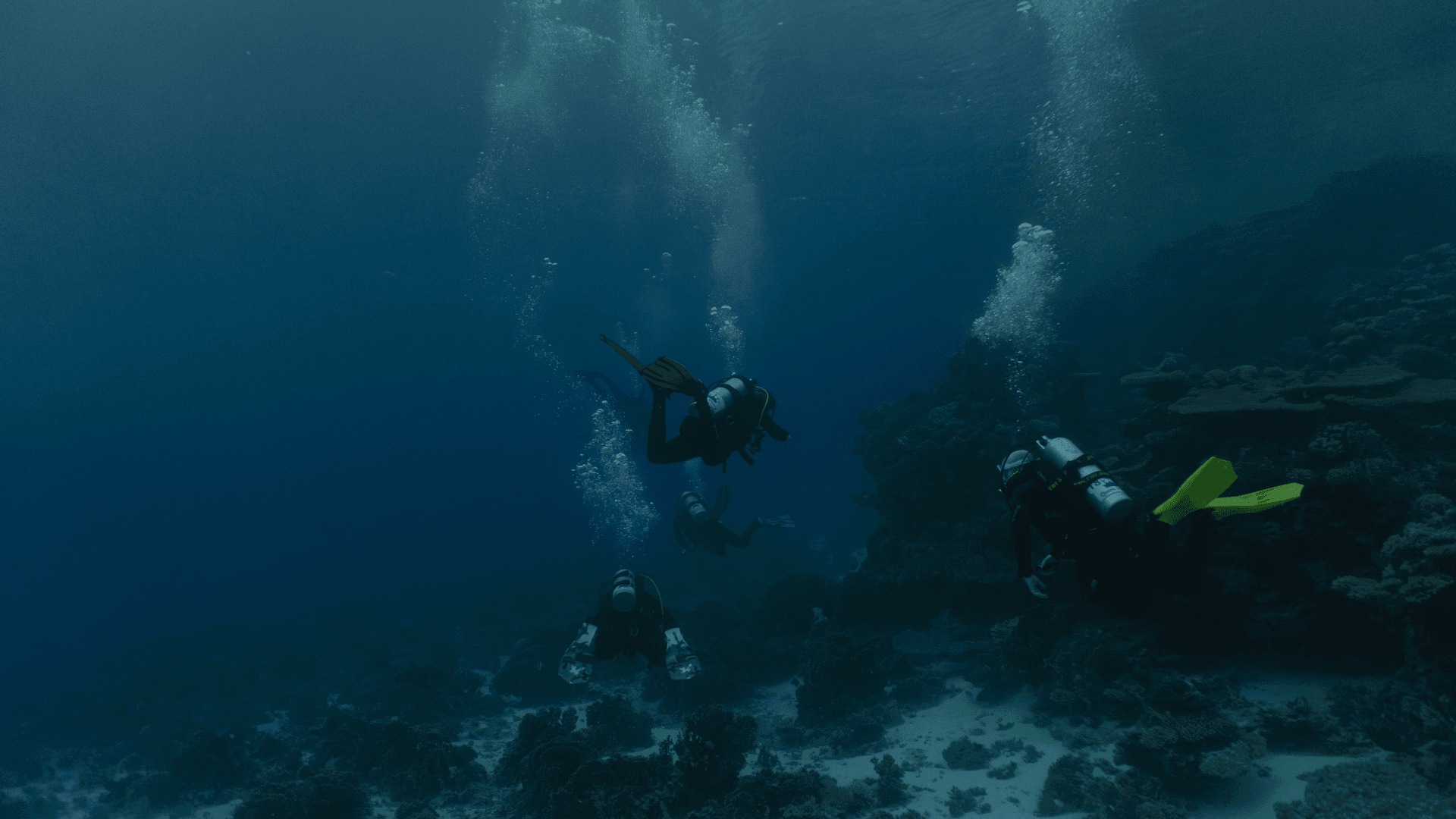
We reached the drop-off already in deep twilight. At the edge we got caught in a strong current and almost didn’t need to fin — we just flew along the wall. Luckily the current was parallel to the reef, not down.
Drifting in twilight, when you can’t really see or photograph anything, constantly trying not to crash into anyone, on the edge of a dark abyss where something big could theoretically appear… yeah, that’s energizing. But in the moment it felt like underwater horror.
I was also worried that we were drifting for too long and not reaching the sandy zone mentioned in the briefing. In the end, after finding a calmer area without current, we decided 45 minutes was enough and it was time to surface.
The guide understood that earlier. I realized we went the wrong way only after surfacing.
We were quite far from our boats. In the dark. Mmm… a new scene in the horror movie.
But ok, we are all professionals. We started shining torches and using whistles. After a few minutes two zodiacs came and delivered us back to the boat with a cold wind.
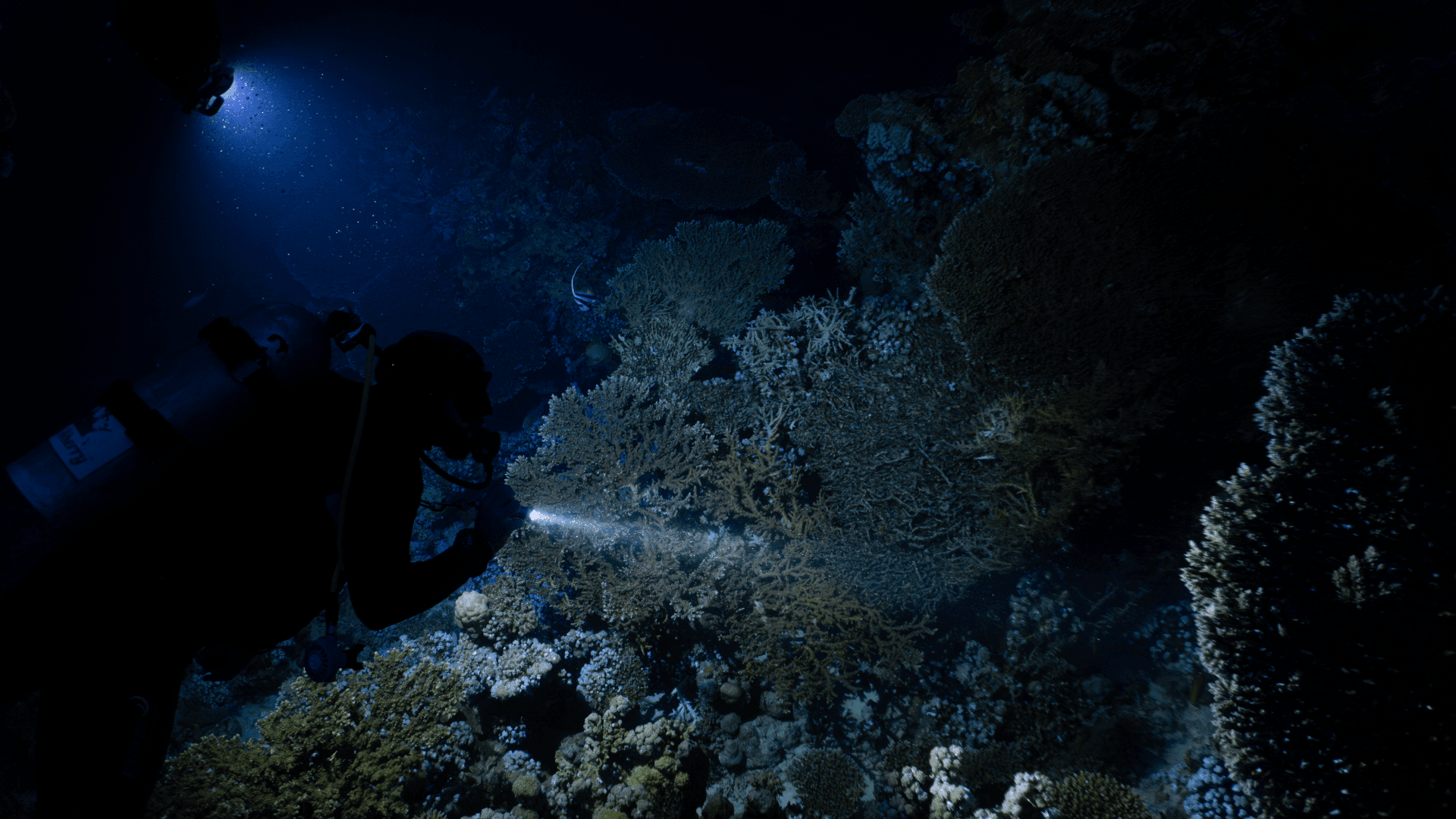
So the dive was intense — but not with the emotions I wanted.
Result: 48 minutes underwater, max depth 19 m, minus 100 bar.
Back to the boat: shower, dinner, tea on the top deck, and already at 9 p.m. we went to sleep. Because wake-up was set for 5:30.
Tomorrow there will be fewer crossings and more diving — from sunrise to sunset. Maybe then we will finally meet something big from the deep sea.
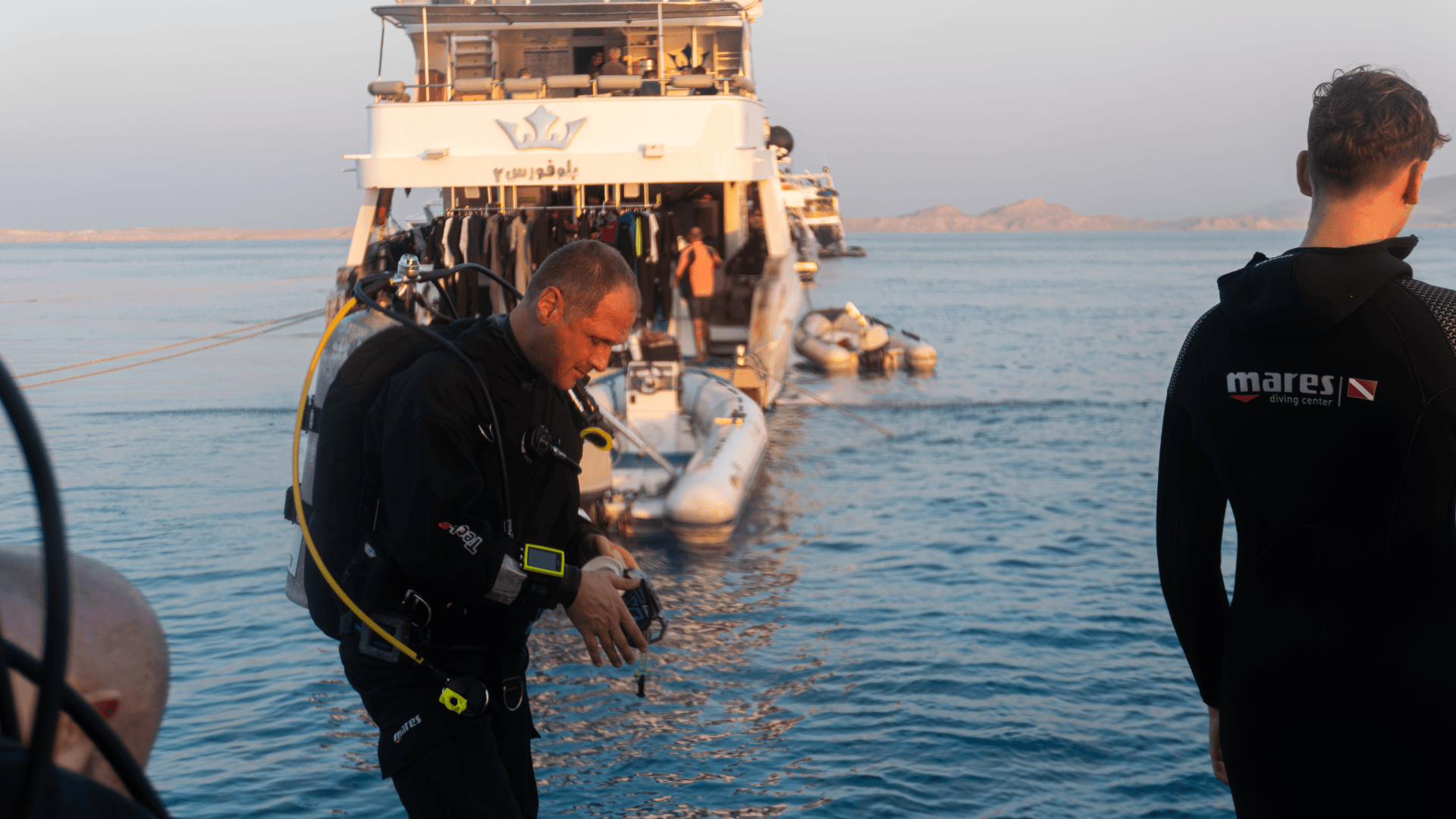
Day 4 — Hammerhead, dolphins, a huge ray
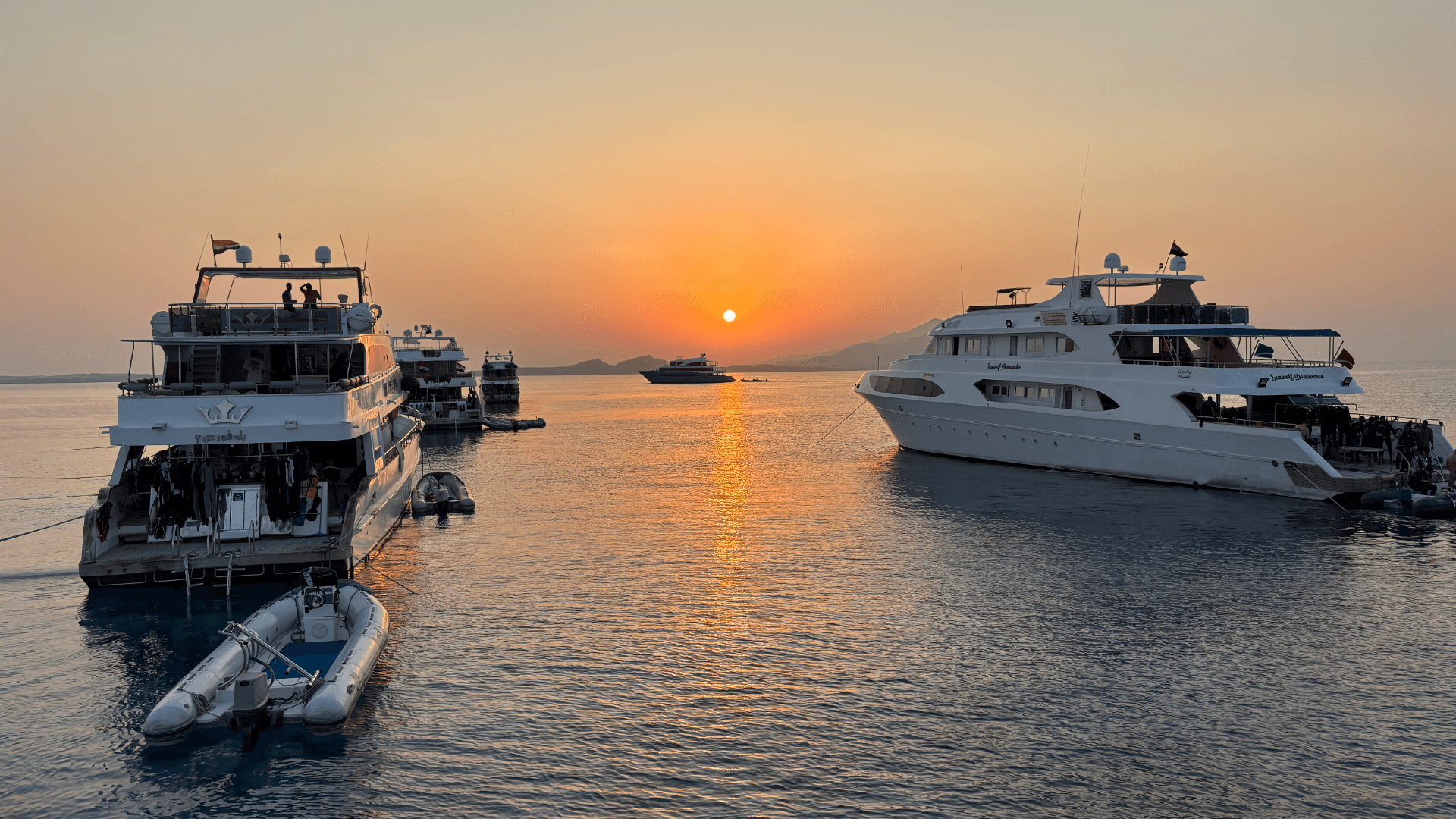
Today we didn’t sail anywhere in the morning, so wake-up was later — 6 a.m. Coffee in the sunrise, short briefing, and straight into the water.
Dive 7 — Thomas Reef
Thomas Reef is the smallest in area in the Strait of Tiran, but one of the most “relief-heavy” and technically interesting. It lies between Woodhouse Reef and Gordon Reef, closer to the center of the strait.
The reef is a narrow ridge stretching north–south, with two strong walls — east and west. Both sides drop almost vertically into the deep, forming impressive drop-offs. The plateau is minimal, so the dive feels more vertical and dynamic than on other Tiran reefs.
Depths start around 10–15 meters, and the walls quickly go beyond 30 meters. On the west side there is Thomas Canyon — a narrow canyon starting at about 20–22 meters. It’s often included in advanced routes but is not mandatory.
Dives on Thomas Reef are usually drifts. Current direction and strength depend on conditions in the strait and can change, especially at the north and south ends.
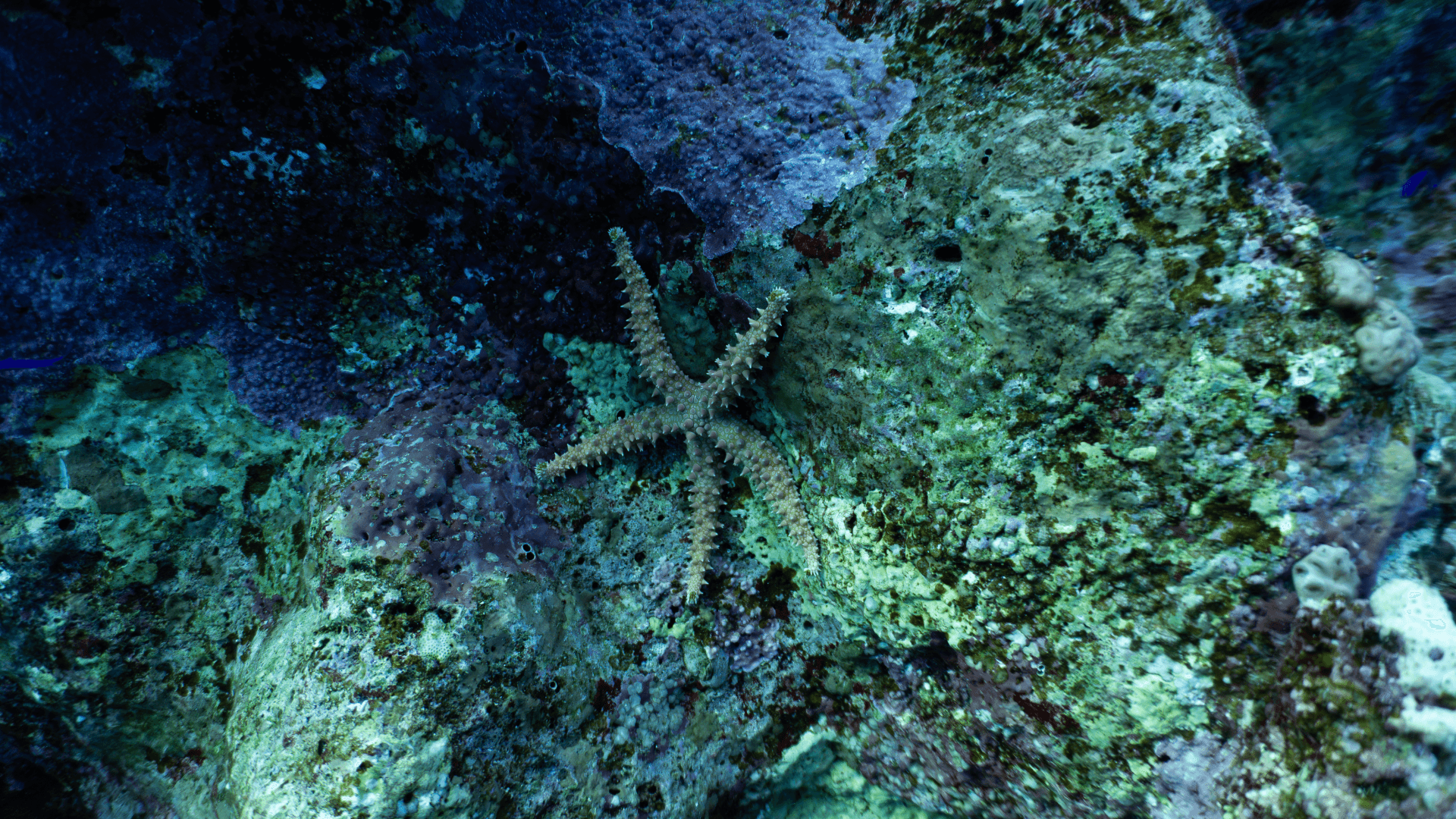
Marine life is typical for open Tiran: dense coral cover on the walls, schools of reef fish, barracudas, tuna, Napoleon wrasse. In good conditions you may see reef sharks, eagle rays, and other pelagics along the outer walls.
We jumped in and almost immediately started descending. Around 30 meters we met huge tuna — almost 2 meters long each. I got distracted and almost passed the planned max depth. Good thing my computer alarm was set 2 meters before the limit — I moved up in time.
Then we slowly came shallower and got caught in a strong but stable current. It carried us along the wall — we basically just flew and watched life boiling in the corals.
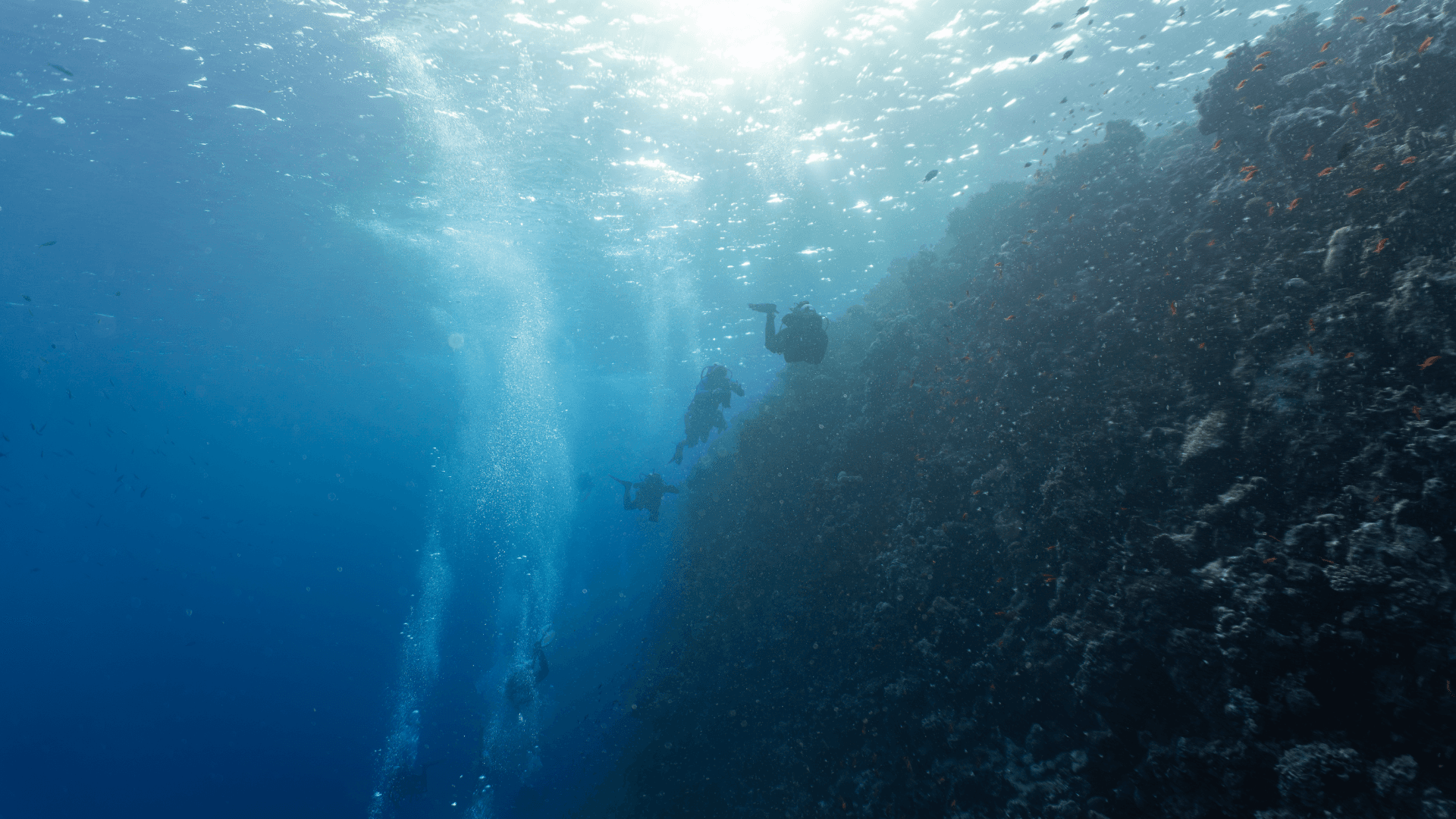
Drift diving is fun in its own way, but I still prefer a calm, relaxed style where you can stop, look around, and film. Also the light wasn’t great: because of particles in the water and the sun angle, the image was too white and contrasty.
Result: 46 minutes underwater, max depth 37 m, minus 120 bar.
Dive 8 — Jackson Reef (Front Side)
Jackson Reef is the northernmost and one of the most famous reefs in the Strait of Tiran. It stands at the entrance of the strait, closer to open sea, and current feels stronger here than on the other reefs.
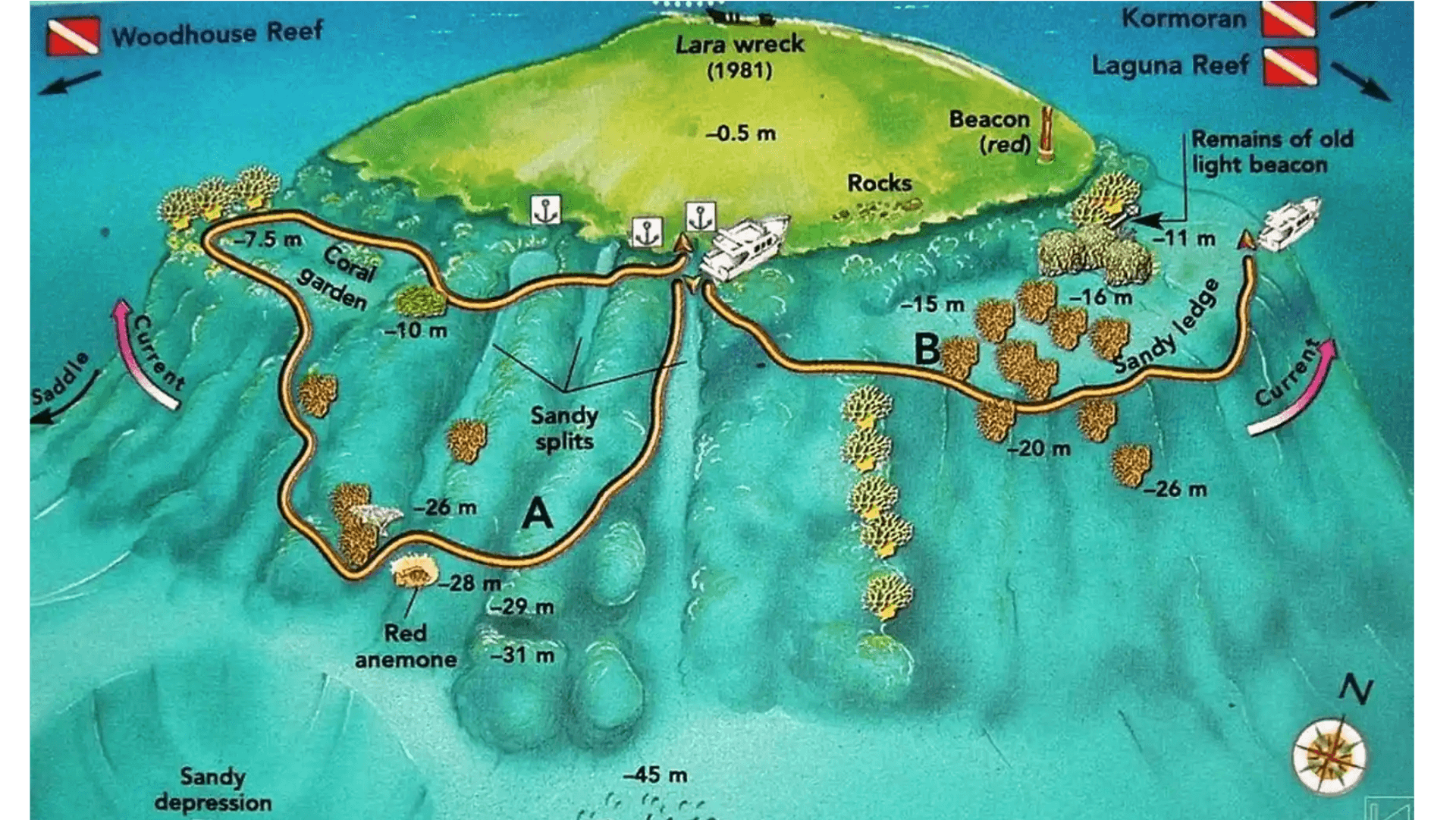
The reef is long, with steep walls and a strong drop-off, especially on the north and east sides. The plateau is narrow and ends quickly in vertical walls going deep.
Depth starts around 8–10 meters, and the walls quickly go beyond 30. Most dives here are drifts, so the site is usually recommended for Advanced divers.
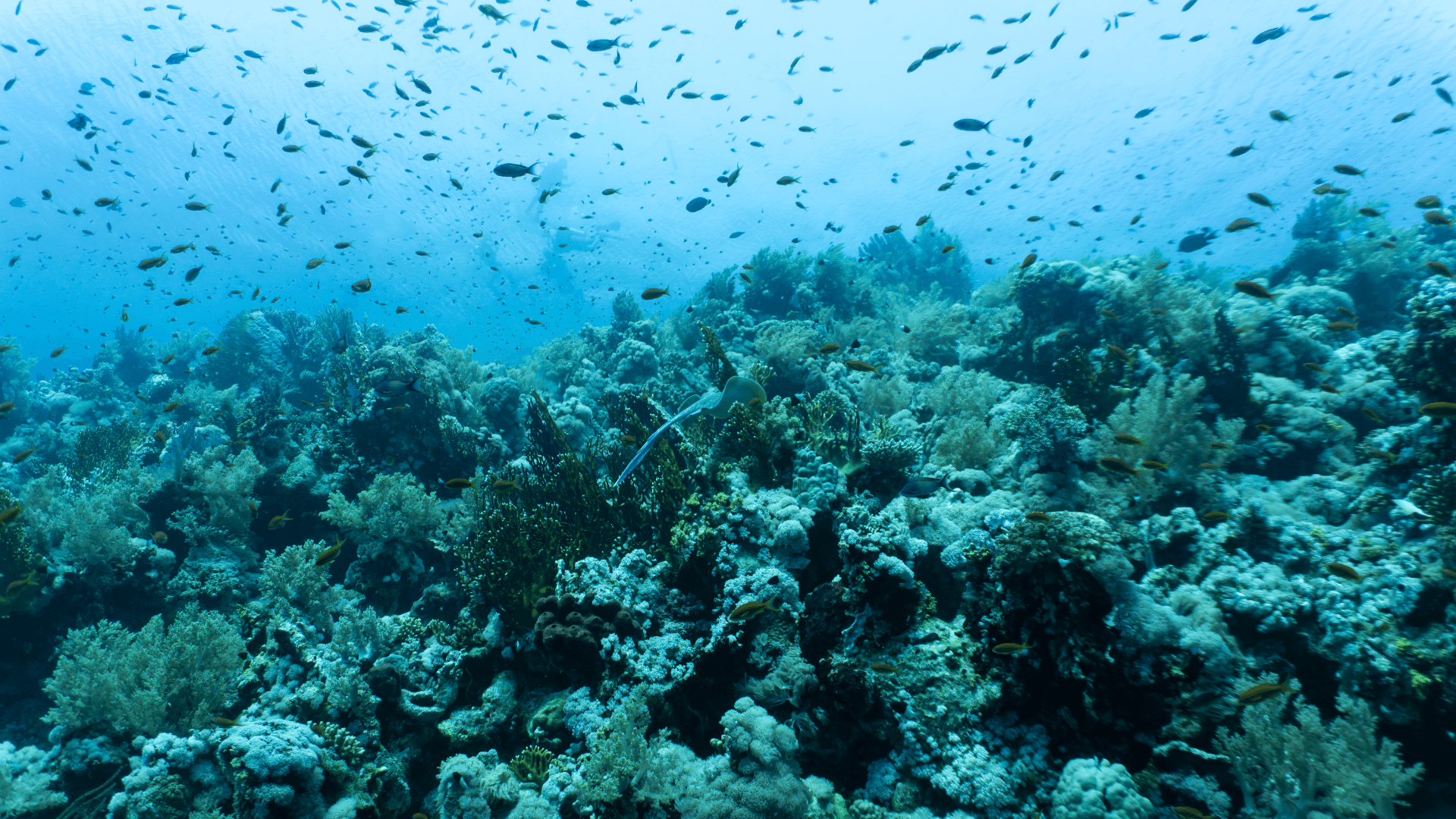
In terms of life, this reef is considered one of the richest in Tiran: barracudas, tuna, jacks, Napoleon wrasse, and dense schools of reef fish are almost guaranteed. On good days you can see eagle rays, reef sharks, and in season — hammerheads.
Before the dive, a small example of how careless people can be.
One instructor decided to “show off” and put fins on right before entering the water. He placed one fin on the edge — and it immediately flew into the sea. I was already in the water and saw the fin, caught by the current, going under the boat into the blue. Chasing it full speed was already pointless.
So he skipped this dive.
But the story didn’t end there. Underwater I noticed this fin not far from our guide. He caught it, gave it to me, and the whole dive I swam with someone else’s fin behind my back. With three fins, as it turned out, you don’t swim faster.
Later we found out it was the second fin he threw into the sea in эмоции. So yeah, sometimes we follow the rule “don’t throw anything into the sea” in a weird way.
Bonus: the day before, his son also lost a fin 🫠 (at least he didn’t throw it). The fins were almost the same size, so the recovered one helped the “sad instructor” continue diving — even in mismatched colors.
Now about the site. It was very beautiful. And this time I really enjoyed drifting. The current was not as fast as before, so it was easier to focus and look at the corals going down.
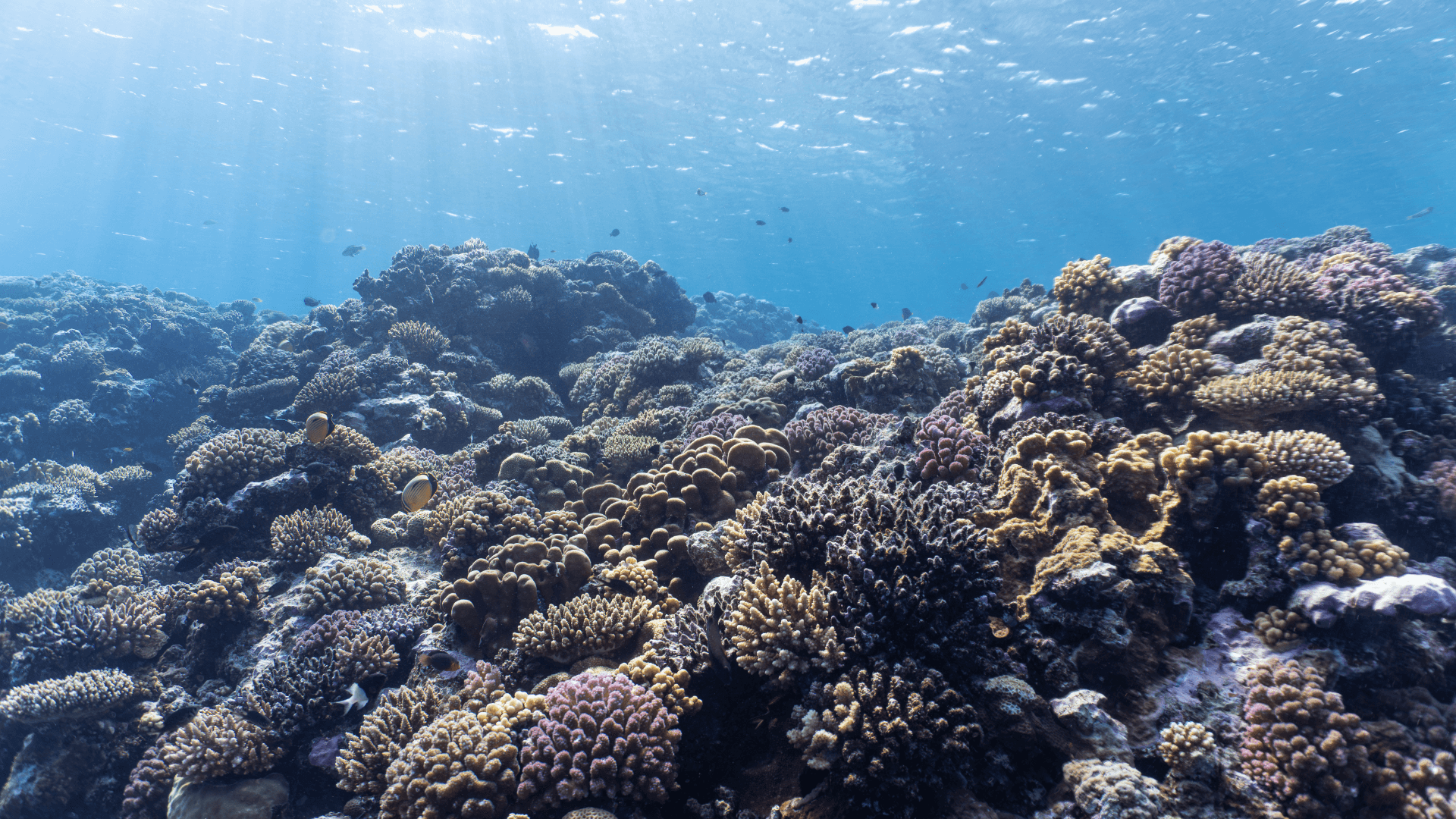
Now I understand why Jackson Reef is often listed among the best dive sites in the world and why Jacques Cousteau loved it.
With the current we flew 2–3 km in just 20 minutes.
But the real beauty started in the last 10 minutes, when we rose to 5 meters and shallower. Bright light, rich coral colors, fish — and equally bright smiles behind masks. Absolute beauty.
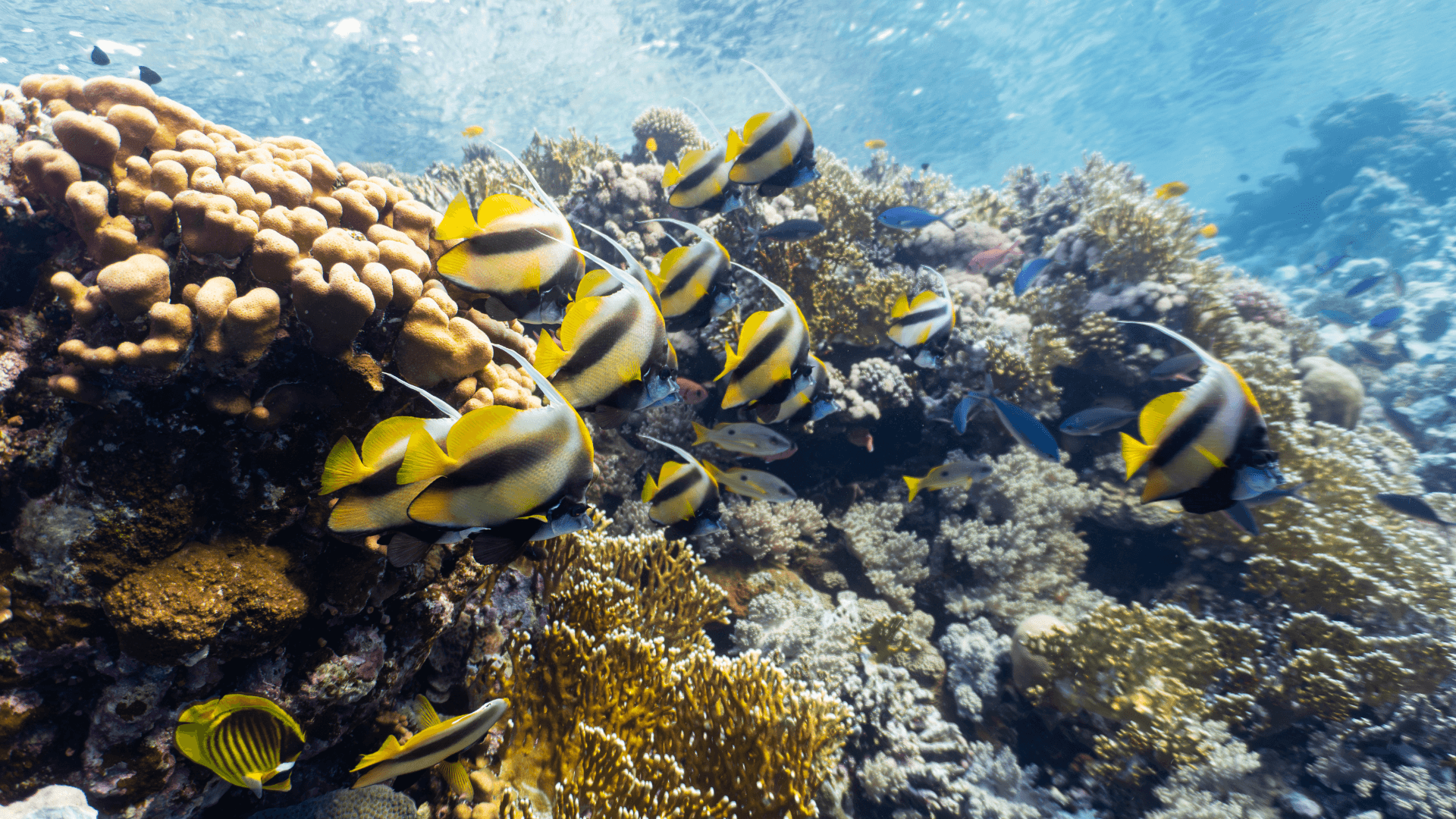
We even joked about doing the next “dive” as a two-hour one at 2 meters. But it’s good we didn’t — because on the next dive we met…
Result: 54 minutes underwater, max depth 29 m, minus 130 bar.
Dive 9 — Jackson Reef (Lara wreck)
Lara Wreck is the remains of the Cypriot cargo vessel Lara, which ran aground on Jackson Reef in the Strait of Tiran. Even though the wreck is often mentioned in site descriptions, it’s not considered a полноценный wreck dive — more like a historical and visual landmark than a separate site.
The ship was built in Germany in 1956 and originally named MV Nopal Trader. Over its life it changed owners and flags several times, until in the early 1980s it was registered in Cyprus. On December 4, 1982, the vessel passed through the Tiran Strait and ran aground on the north side of Jackson Reef.
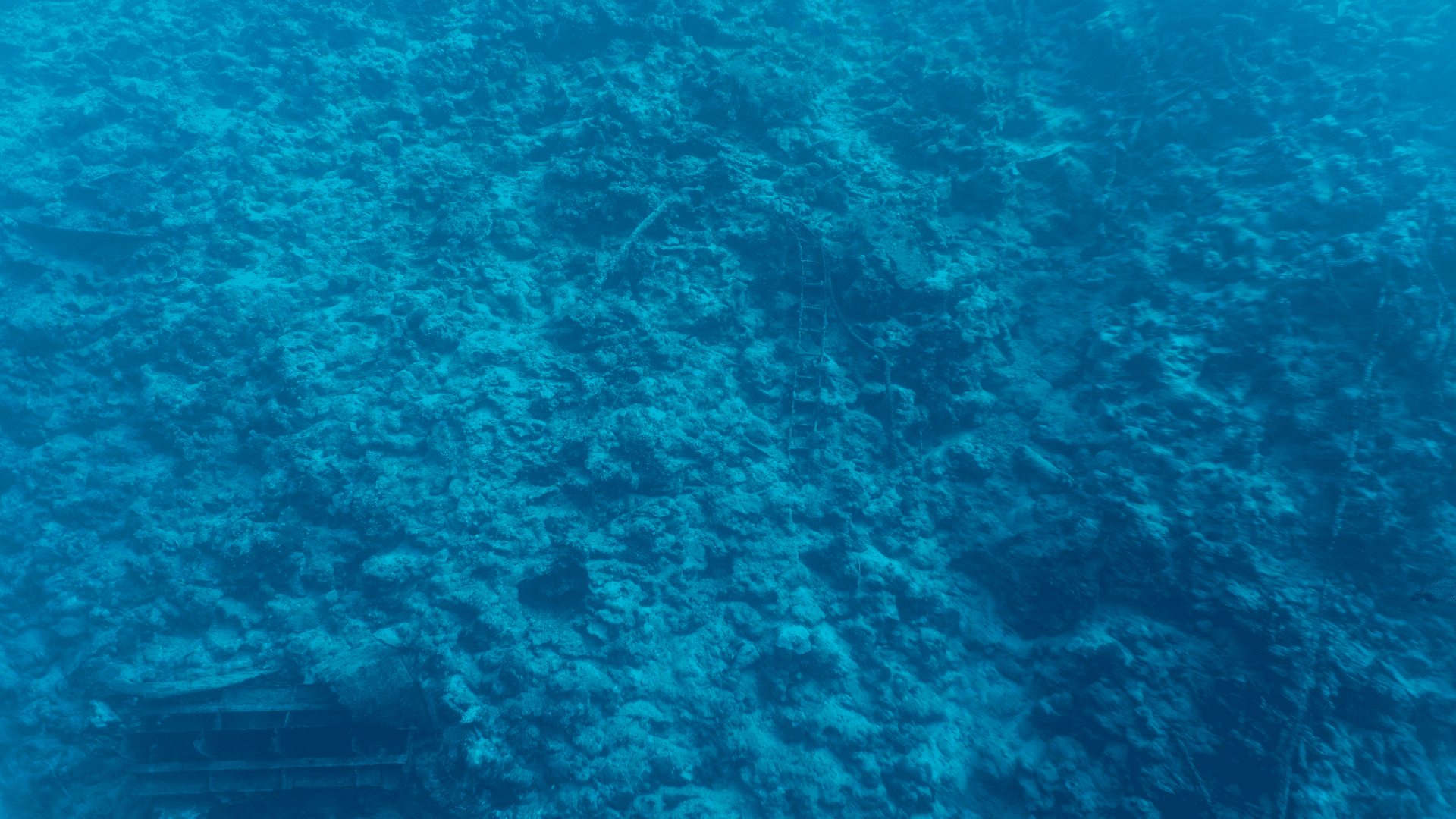
After the accident, the hull was heavily damaged, and over the next decades storms and corrosion разрушили most of the structure. The main debris in the surf zone and on the reef lies in very shallow water and is not very interesting for diving — it’s hard to access and there is no solid underwater structure anymore.
At the same time, some parts slipped down the slope into deeper water. The deeper remains are beyond recreational limits: you can find the mast around 48 meters, and below that there are pieces of superstructure, pipes, лестницы, the rudder, and a seven-blade propeller. These parts are only for technical divers and mixed-gas dives.
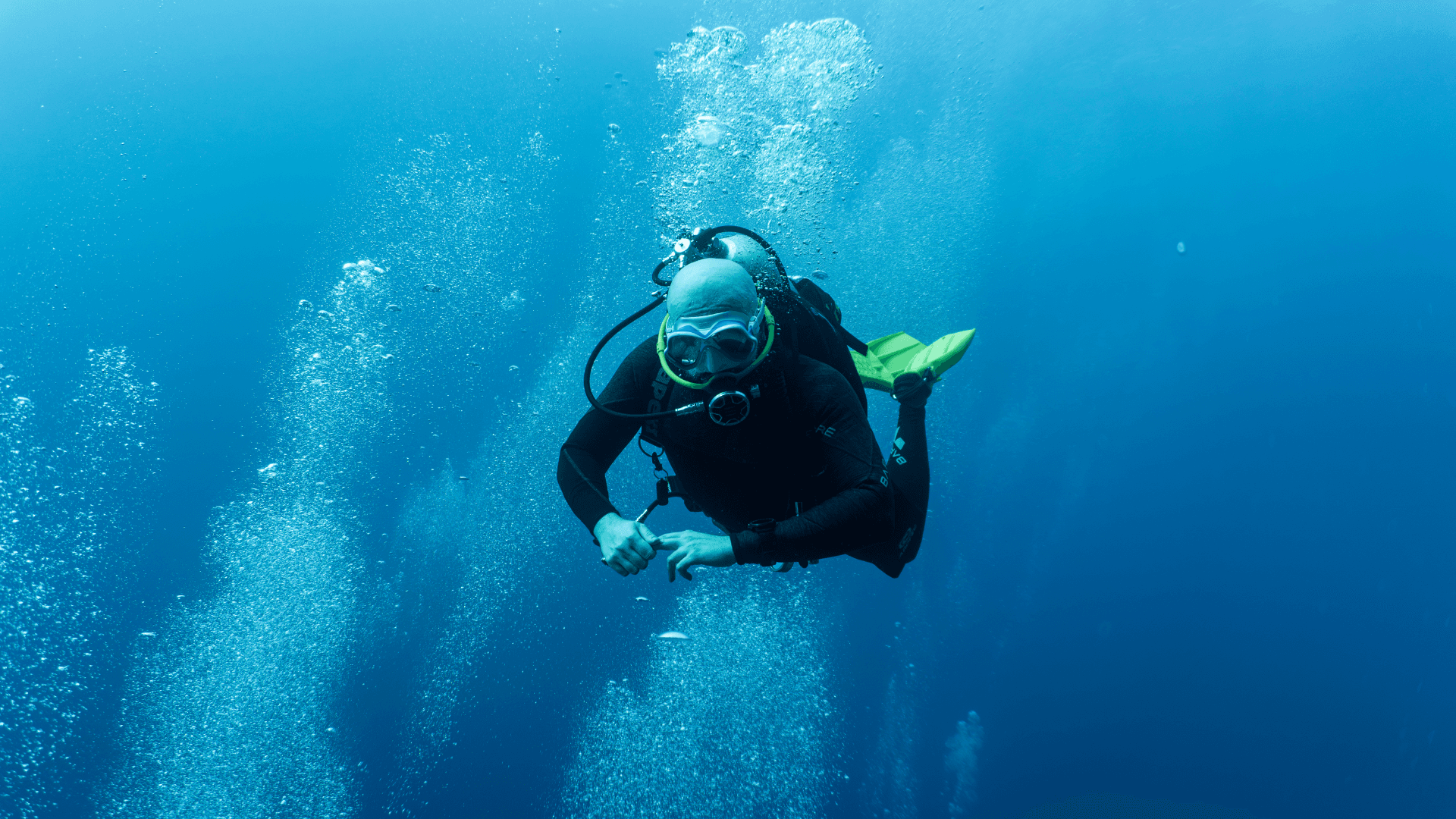
For regular dives on Jackson Reef, Lara is mostly a point on the map and part of the local story. Divers may pass near the area, but the main focus is always on the walls, currents, and open water.
The plan was to explore the opposite side of the reef and see the ship remains. But at the start we decided to go a bit deeper — and finally встретили big ones.
From the blue, a hammerhead slowly appeared!!!
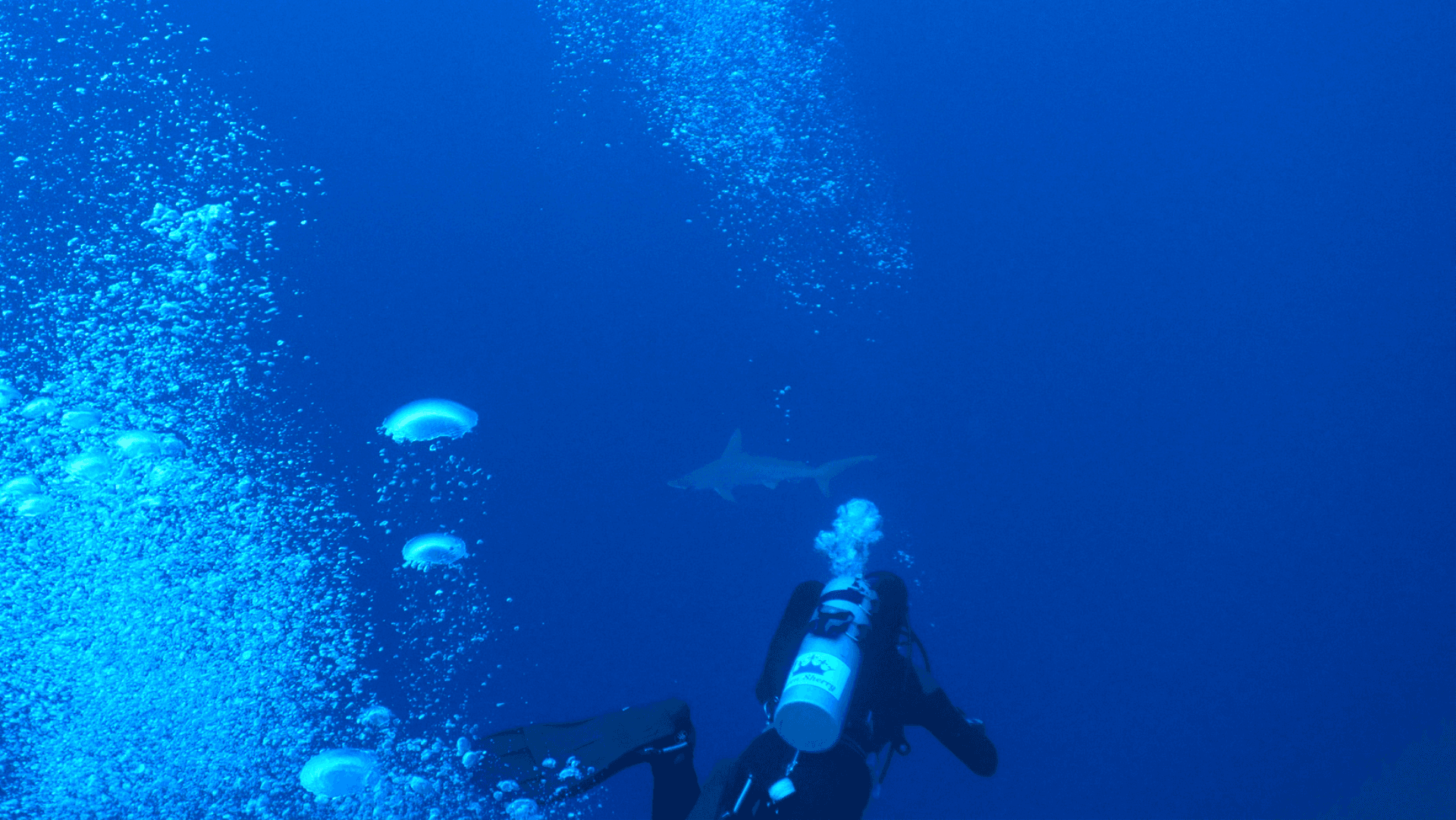
It didn’t come close, but it didn’t need to. The joy was absolute. So strong that for the rest of the dive the group mostly exchanged excited hand signals.
Because of this meeting, I barely remember the reef itself. I kept staring into the blue, hoping for another shark. But nope.
Probably from emotions, almost the whole group ended the dive after 35 minutes. I stayed with two instructors and we continued along the reef, finishing in the shallow area.
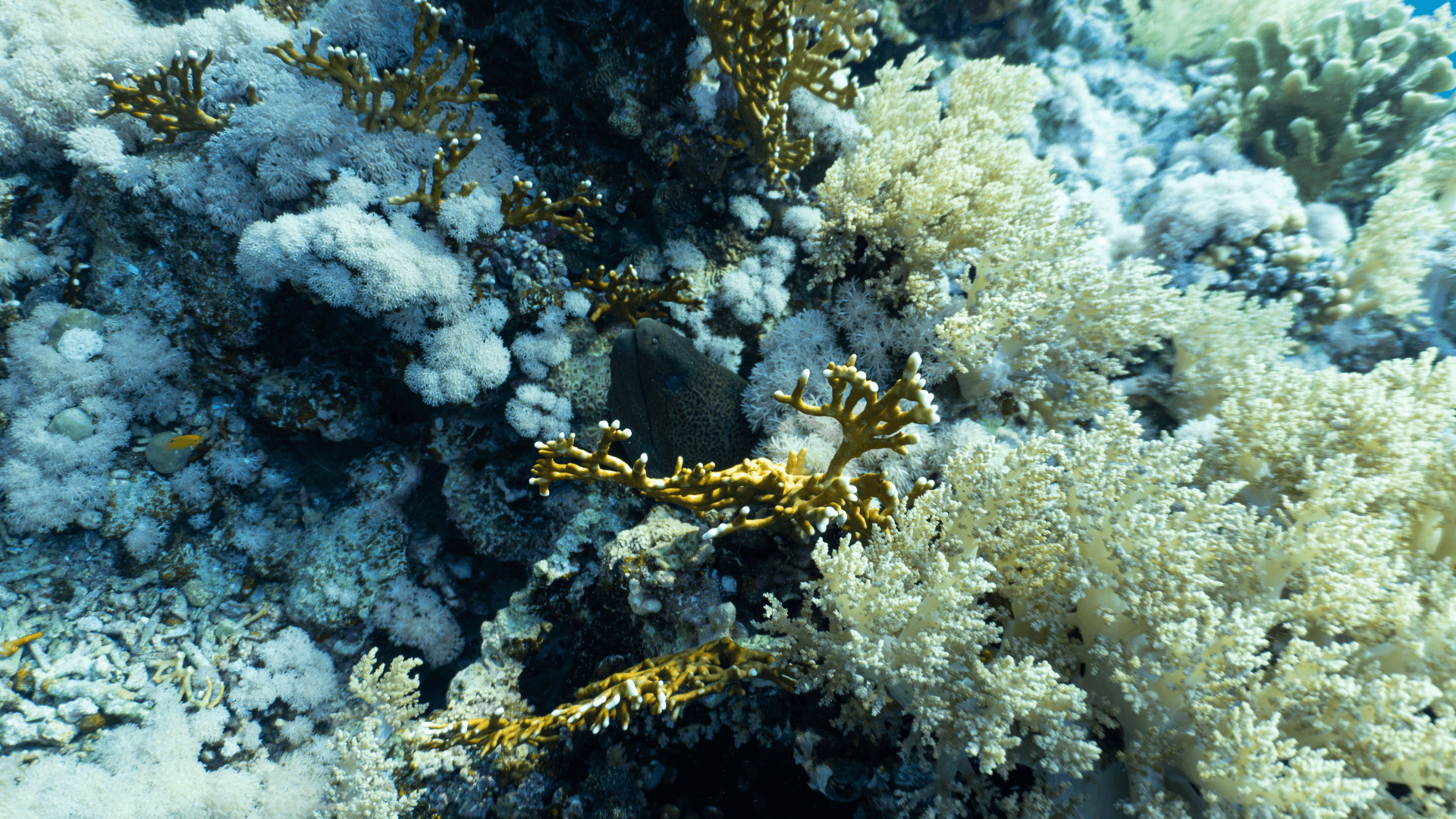
And there it was perfect again: sun rays, schools of colorful fish, bright corals. A very calm and beautiful ending.
Result: 50 minutes underwater, max depth 36 m, minus 160 bar.
Dive 10 — Temple (Night dive)
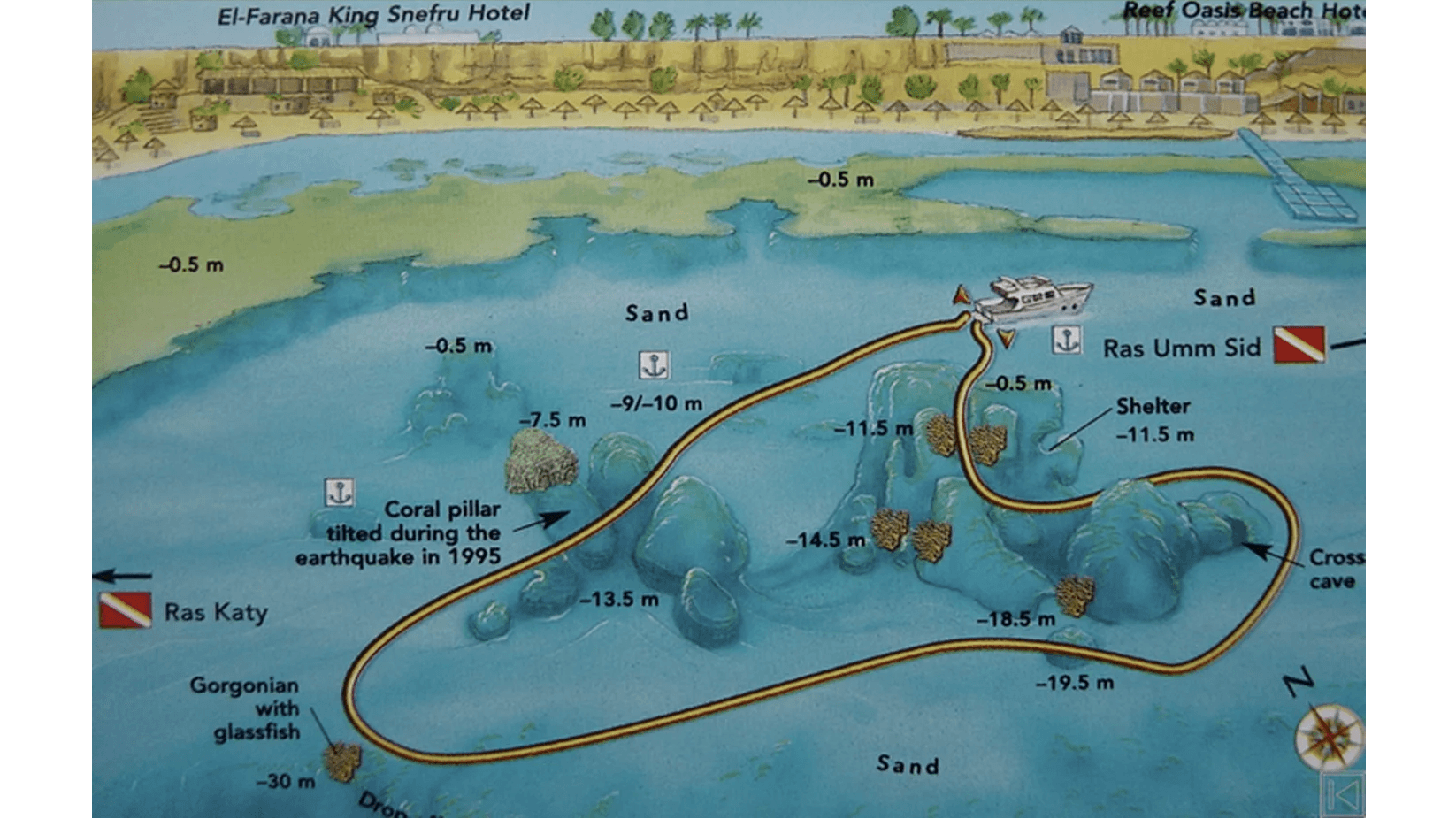
Temple is a classic dive site in Ras Mohammed, located near Shark & Yolanda. It got its name because of the reef shape: several massive coral blocks rise from the bottom almost to the surface, surrounded by smaller peaks — like an underwater temple.
The main relief is big coral formations on a sandy plateau. Depths are moderate — most of the dive is 10–20 meters, so Temple is accessible for many certified divers.
Conditions here are usually calmer than on the open walls of Ras Mohammed. Currents are weak to moderate, navigation is easy, and the relief is clear. Because of that, Temple works both for less experienced divers and for experienced ones, and it’s also often used for night dives.
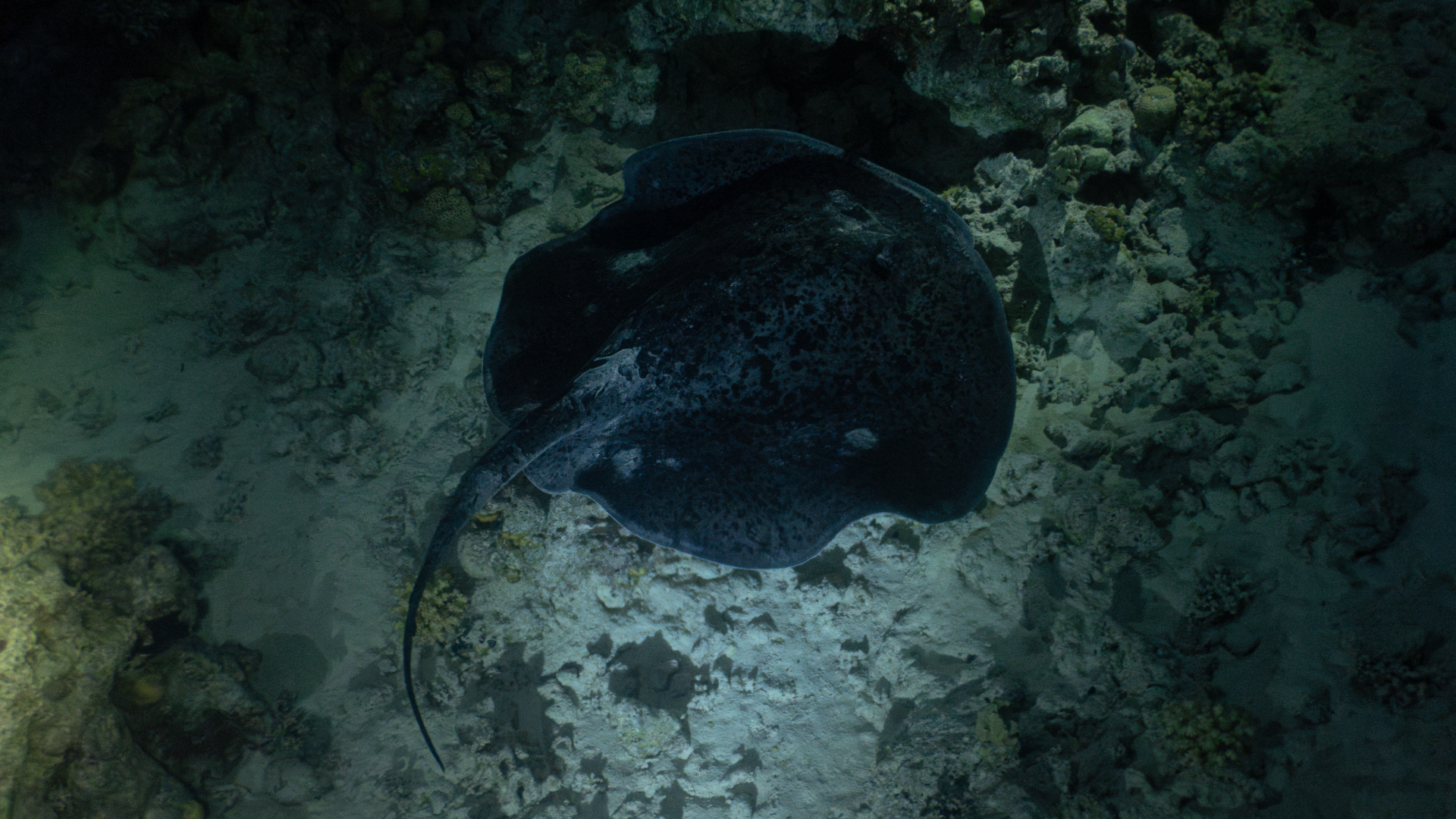
Marine life is diverse and typical for Ras Mohammed: lots of reef fish, morays, lionfish, scorpionfish, stonefish. Rays often лежат on sandy spots between blocks, and the coral structures are densely covered with soft and hard corals.
The night dive was насыщенный too.
We went as one big group. Since I didn’t buy proper lights for night filming, I agreed to dive as a pair with Nebojša — he had a powerful torch and should have lit the scene. But the torch was old and started failing already at depth. Ha.
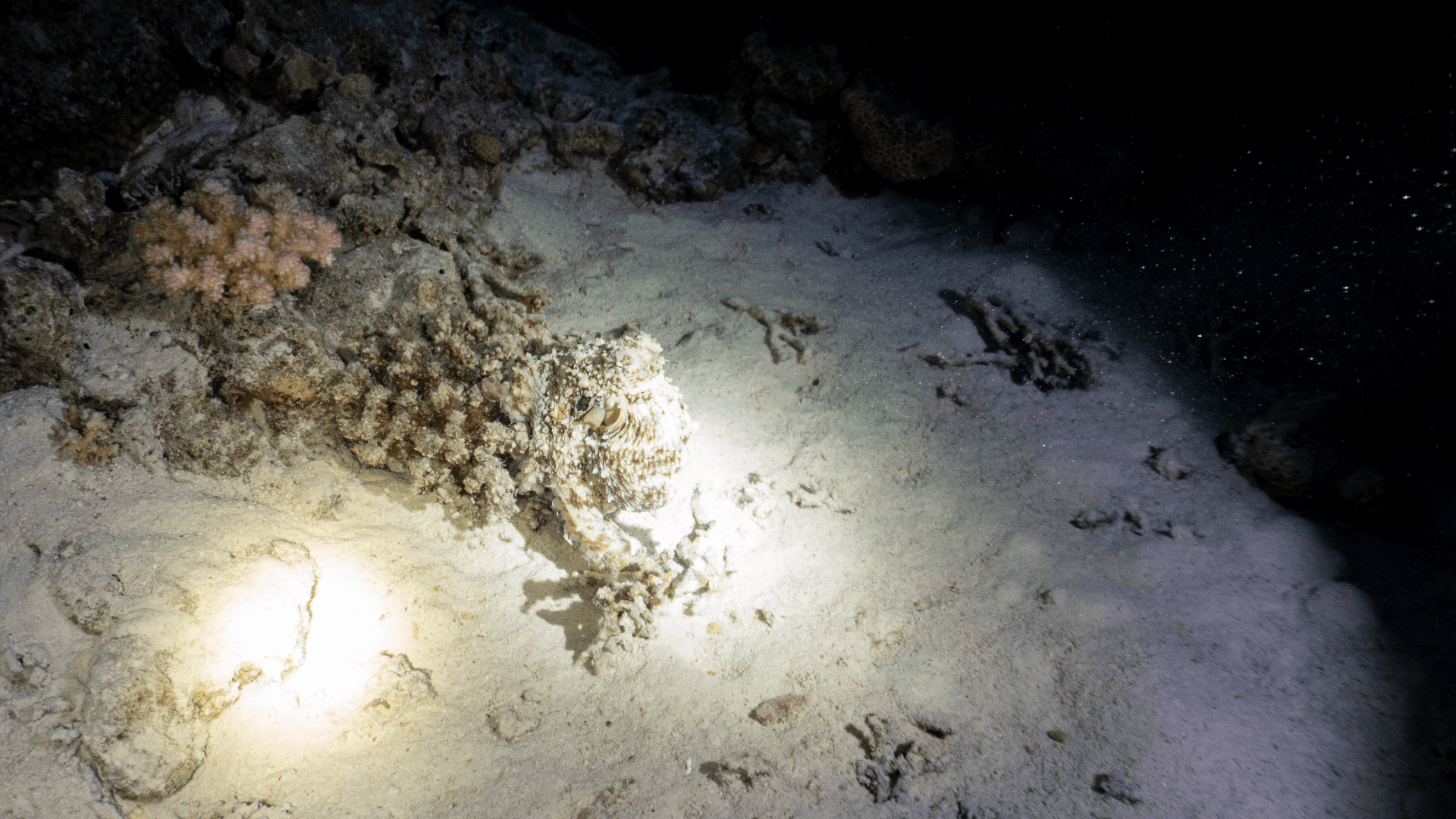
So most of the dive we used small torches that only lit small parts. But because the group was big, the общий light was enough to see and even film something.
We saw a Spanish dancer nudibranch, a huge ray, an octopus, and several lionfish. We got a little lost and stayed underwater 56 minutes instead of the planned 45.
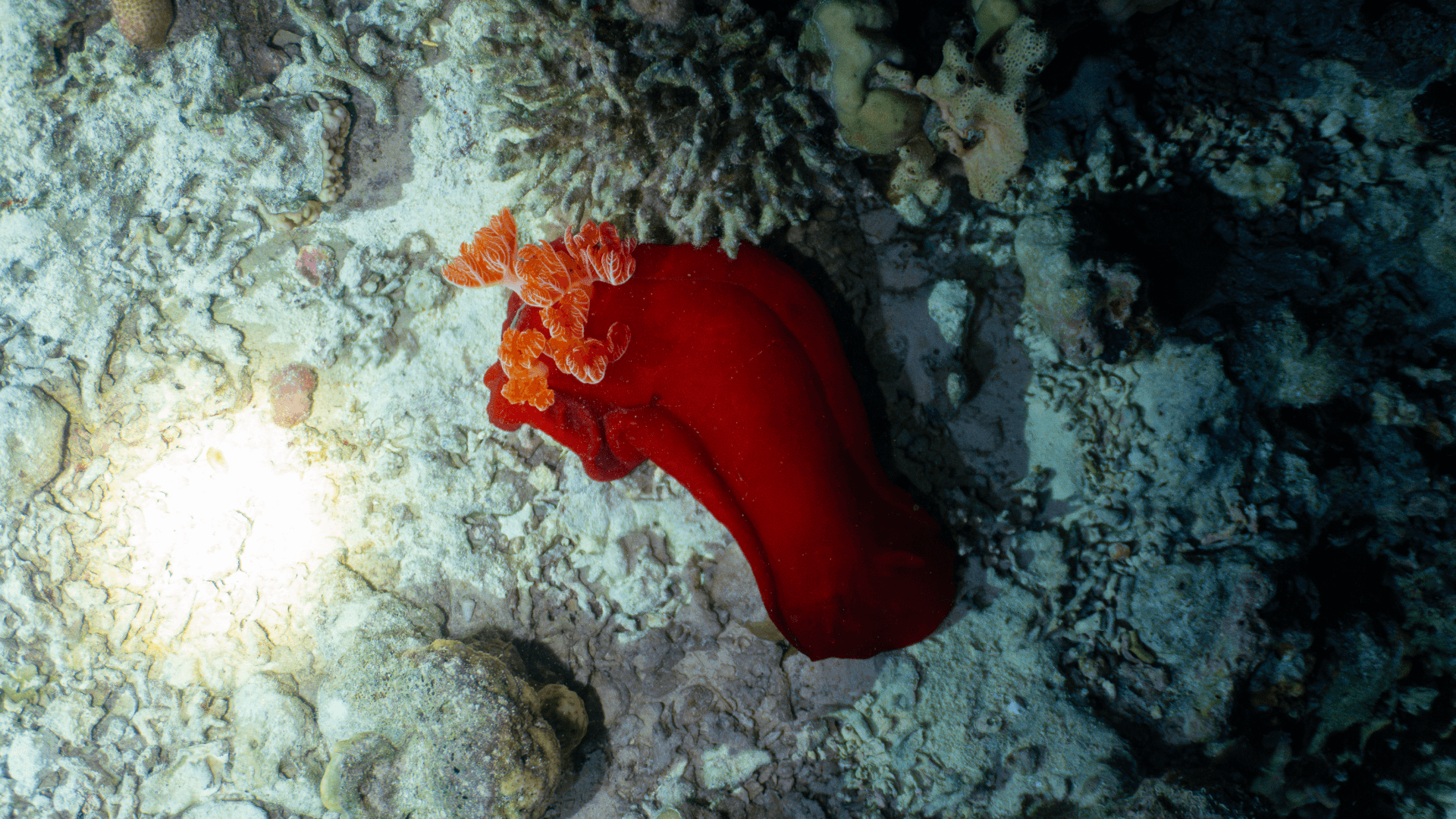
Result: 56 minutes underwater, max depth 19 m, minus 130 bar.
The day was full of impressions. Now: dinner, shower, sleep. Tomorrow снова wake-up at 6 a.m. and new adventures.
Day 5 — 300th dive & the main dive site of our safari
Dive 11 — Jackfish Alley
Jackfish Alley is located between Temple and Shark Reef and is often used as a “connecting route” between these sites. It’s a transition zone between a plateau and the Ras Mohammed walls, known for постоянное water movement and high fish concentration.
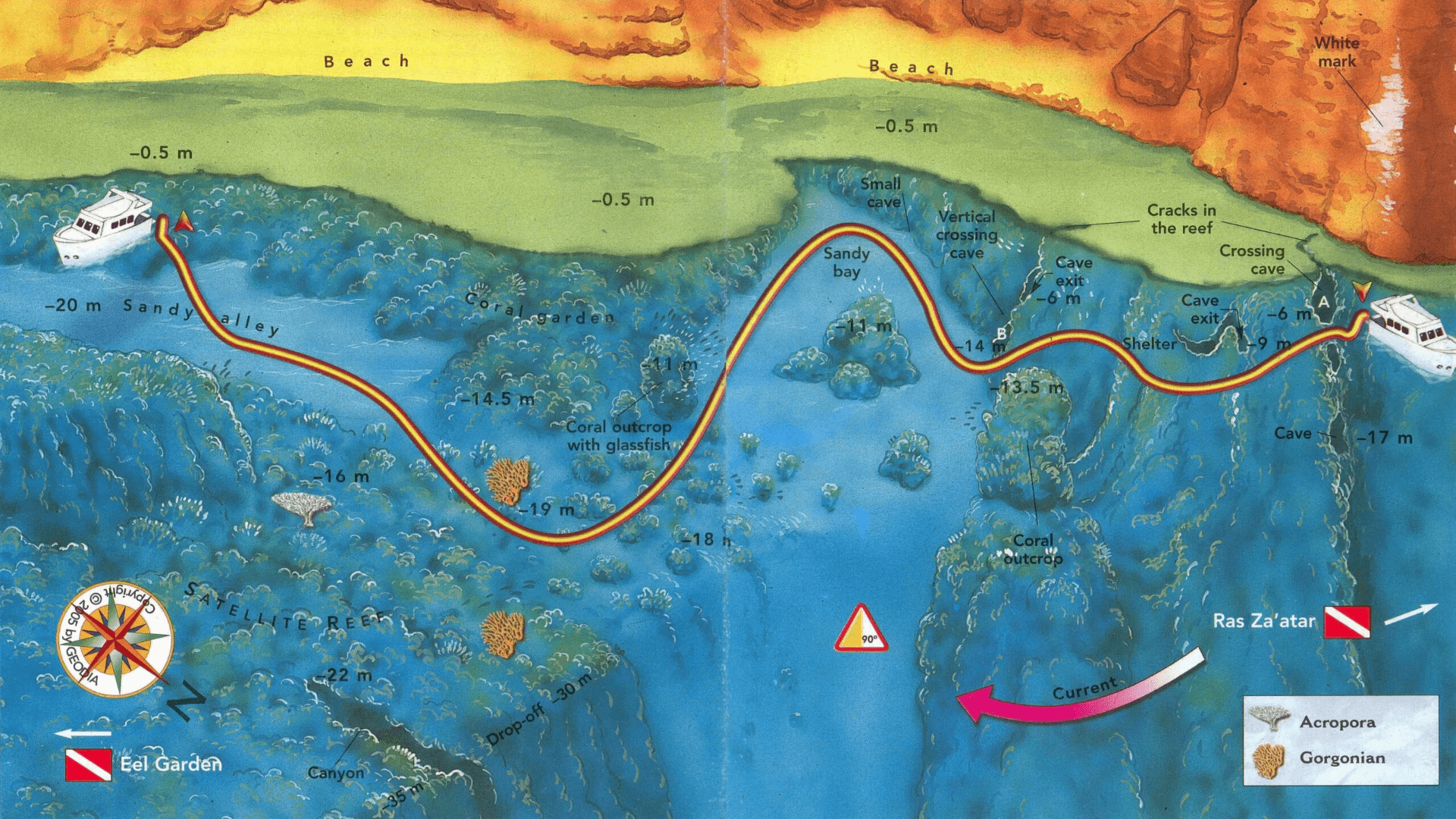
This dive feels like a route, not one exact point. It usually starts with a sandy channel and a coral slope that quickly leads to a wall with a clear drop-off. Depth is mostly 10–25 meters, but in good conditions you can take it deeper.
At the start there is often a shallow cave at about 5–6 meters that goes into the reef for several dozen meters. Light enters through cracks and openings and creates nice rays on the walls — a great атмосферный beginning.
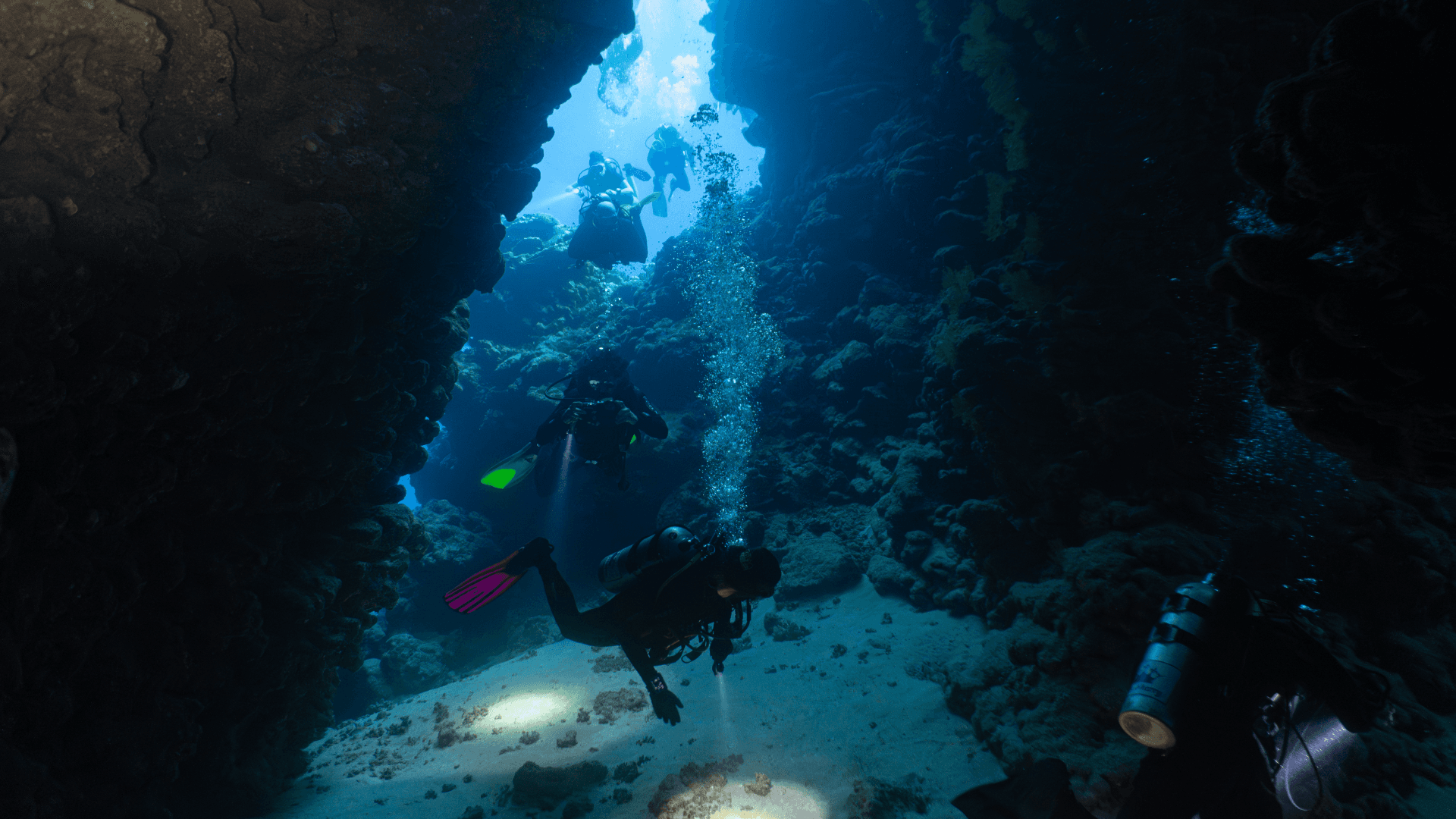
Then the route becomes more open. There is a sandy area around 8–10 meters where spotted rays are often seen. After that comes the “alley” — a wide channel with coral gardens (hard + soft corals).
Beyond the alley there is a sandy plateau that can lead to a satellite reef — small pinnacles about 50 meters away from the main reef, covered with soft corals and gorgonians. Currents often get stronger here and attract bigger fish.
The site got its name because schools of jacks часто gather here in current. Besides them, you regularly see barracudas, tuna, snappers, and other active reef fish. Along the wall you can see morays, lionfish, and Napoleon wrasse. In good conditions you may meet whitetip reef sharks.
This morning dive was my 300th open-water dive. Sadly, number magic didn’t work. The dive was nice, but no big “wow.”
There was one moment when other divers were strangely worried when I swam about three meters close to a barracuda, and then they said: “You are crazy man!” I remembered how we swam inside a school of barracudas at Phi Phi, so I didn’t really understand the panic. Mohammed (our guide) said everything was fine and I did it correctly: no sudden moves, approaching from the side, not from the front.
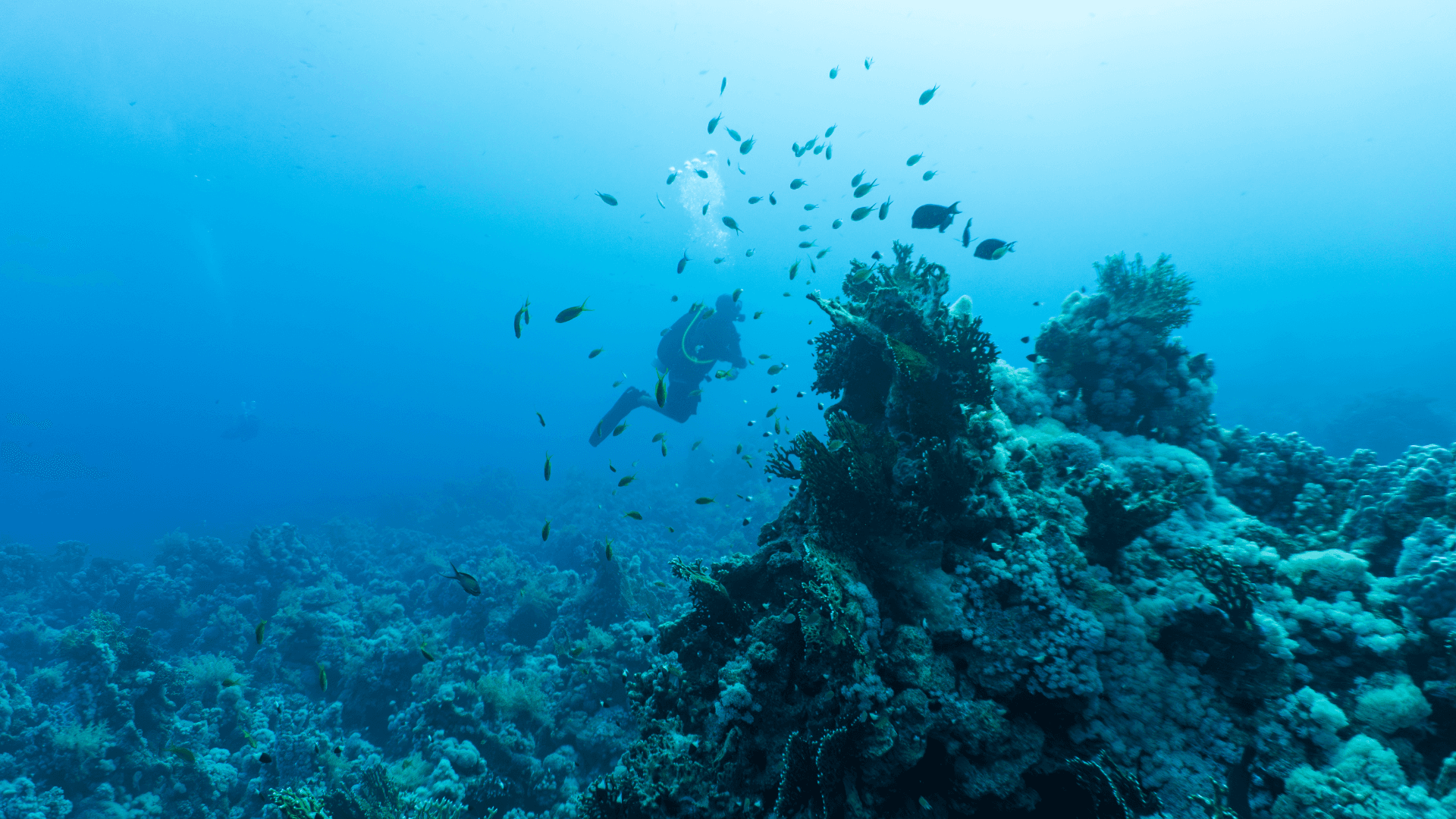
In the middle of the dive I suddenly realized that it’s actually time for breakfast, and until the end I only thought about food.
Then we also caught a thermocline. In Thailand, a drop from 30 to 28 already felt cold. Here it was from 27 to 24. Freezing. So for the next three hours I walked in a hoodie.
Result: 55 minutes underwater, max depth 23 m, minus 140 bar.
Dive 12 — SS Thistlegorm (Outside)
The second and third dives today were planned at the wreck Thistlegorm.
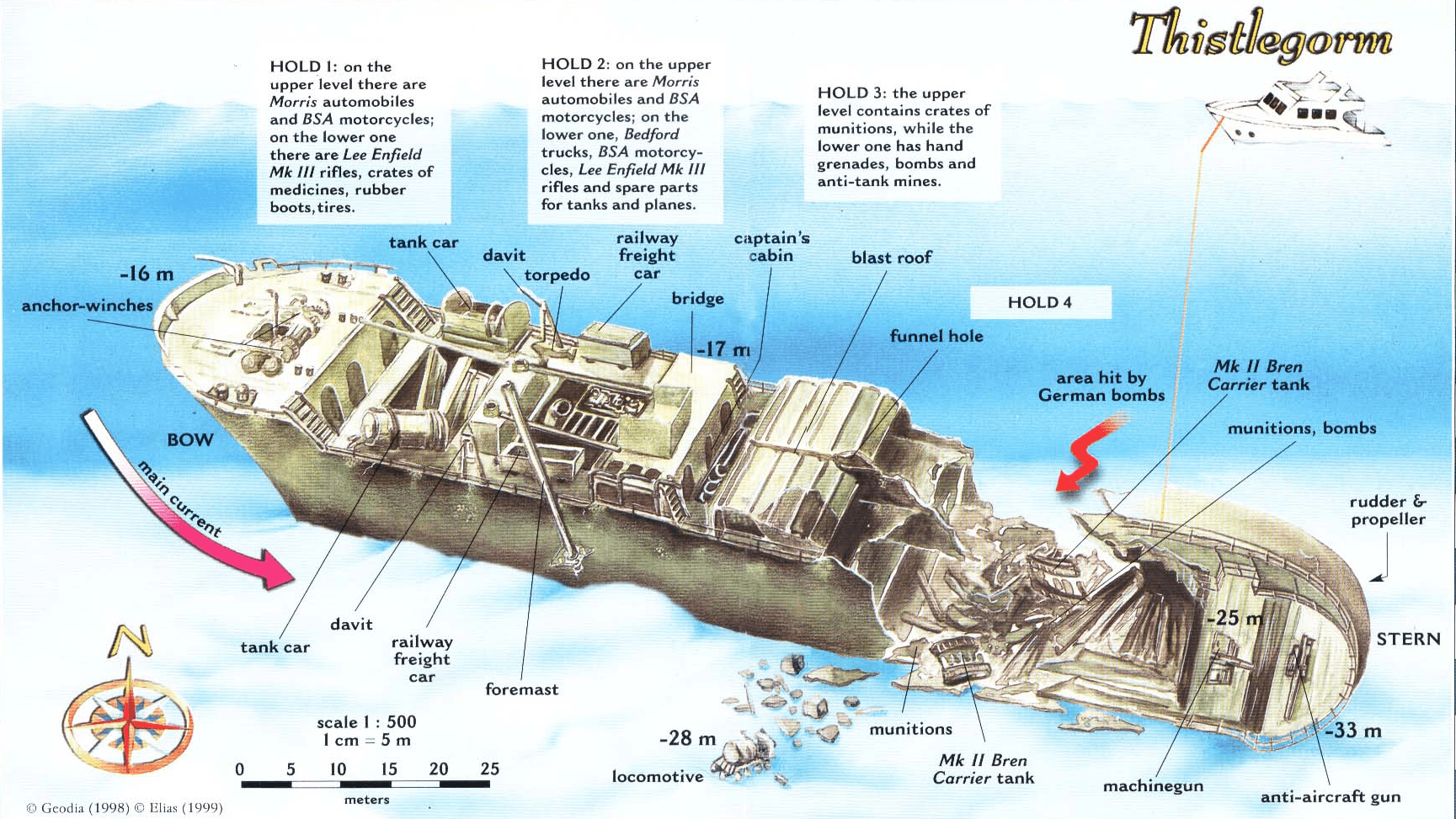
Thistlegorm is not just a wreck — it’s a real historical artifact. One of the most famous wreck sites in the Red Sea, where underwater you literally find yourself inside World War II. The ship is so big that on the first dive we focused on the outside, and on the second we explored the holds and inside spaces.
Short history
SS Thistlegorm was a British cargo ship built in 1940 at Joseph Thompson & Son shipyard in Sunderland, northern England. Formally it was privately owned, but partly funded by the British government and classified as an armed merchant ship.
On June 2, 1941, Thistlegorm left Glasgow on its last voyage to Egypt. On board was military cargo for British forces in North Africa: trucks, Universal Carrier armored vehicles, Norton and BSA motorcycles, small arms, ammunition, radio equipment, aircraft parts, and railway equipment. Two steam locomotives were carried on deck for Egyptian National Railways.
The rest of the cargo was meant for the Western Desert Force, which in September 1941 became part of the newly formed Eighth Army.
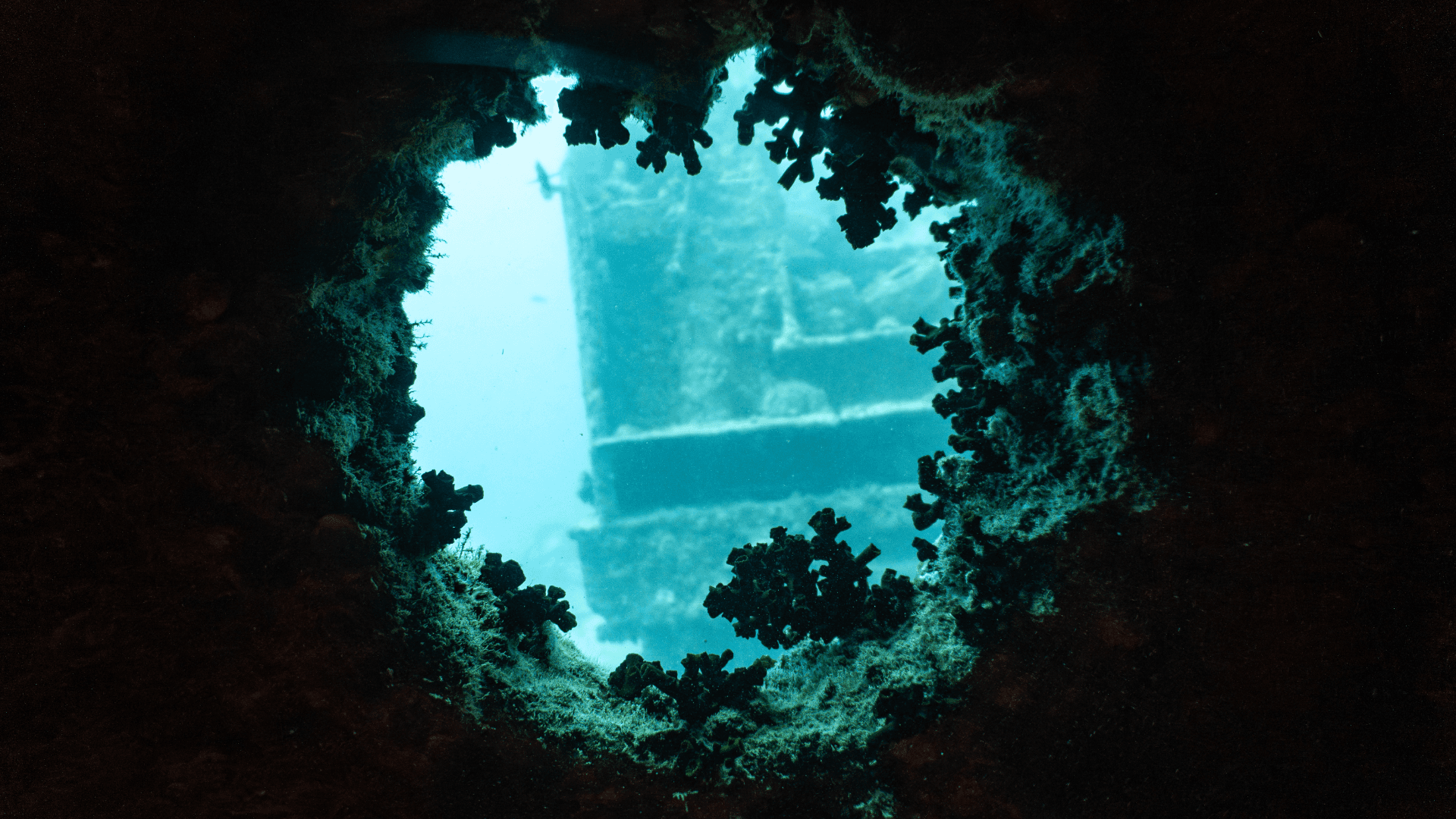
The crew, led by Captain William Ellis, was reinforced by a few military personnel to operate the anti-aircraft guns.
On the night of October 6, 1941, Thistlegorm was anchored in the Strait of Gubal, waiting to enter the Suez Canal. It was spotted by German Heinkel He 111 bombers. Two bombs hit near the ammunition holds. The explosion was powerful and almost instant: the ship broke apart and sank in less than a minute. Most of the crew survived, but several people died.
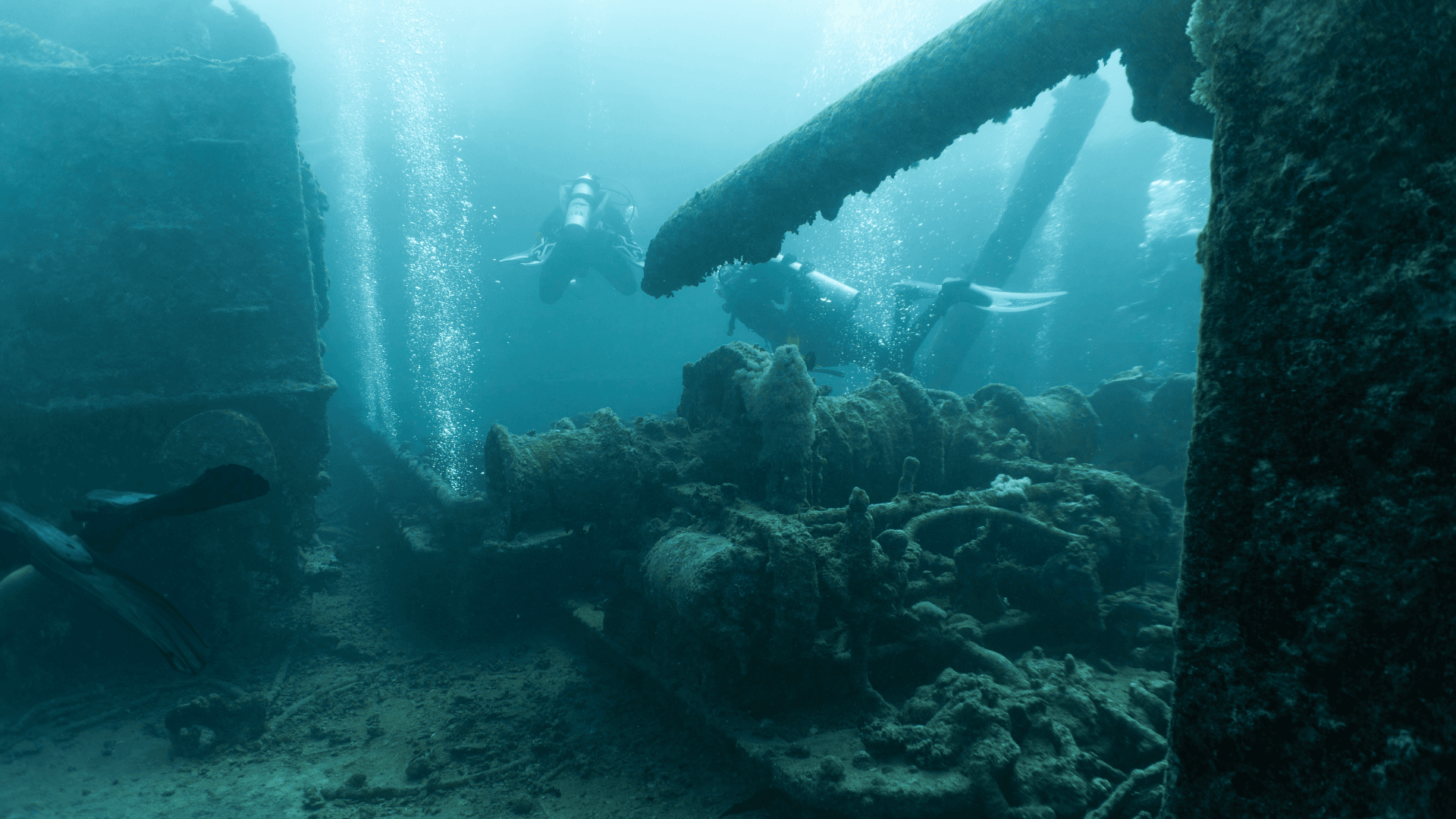
After the war, the wreck stayed forgotten for a long time until Jacques-Yves Cousteau discovered it in 1955 during an expedition. Later, in the 1990s, Thistlegorm became accessible for recreational diving and eventually turned into one of the most iconic dive sites of the Red Sea.
Before the dive we had a very serious briefing.
They repeated several times that strong currents are possible. You must jump in holding the descent line immediately. Descent and ascent strictly on the line — no “I’m kinda holding it.” Mistakes are not forgiven here.
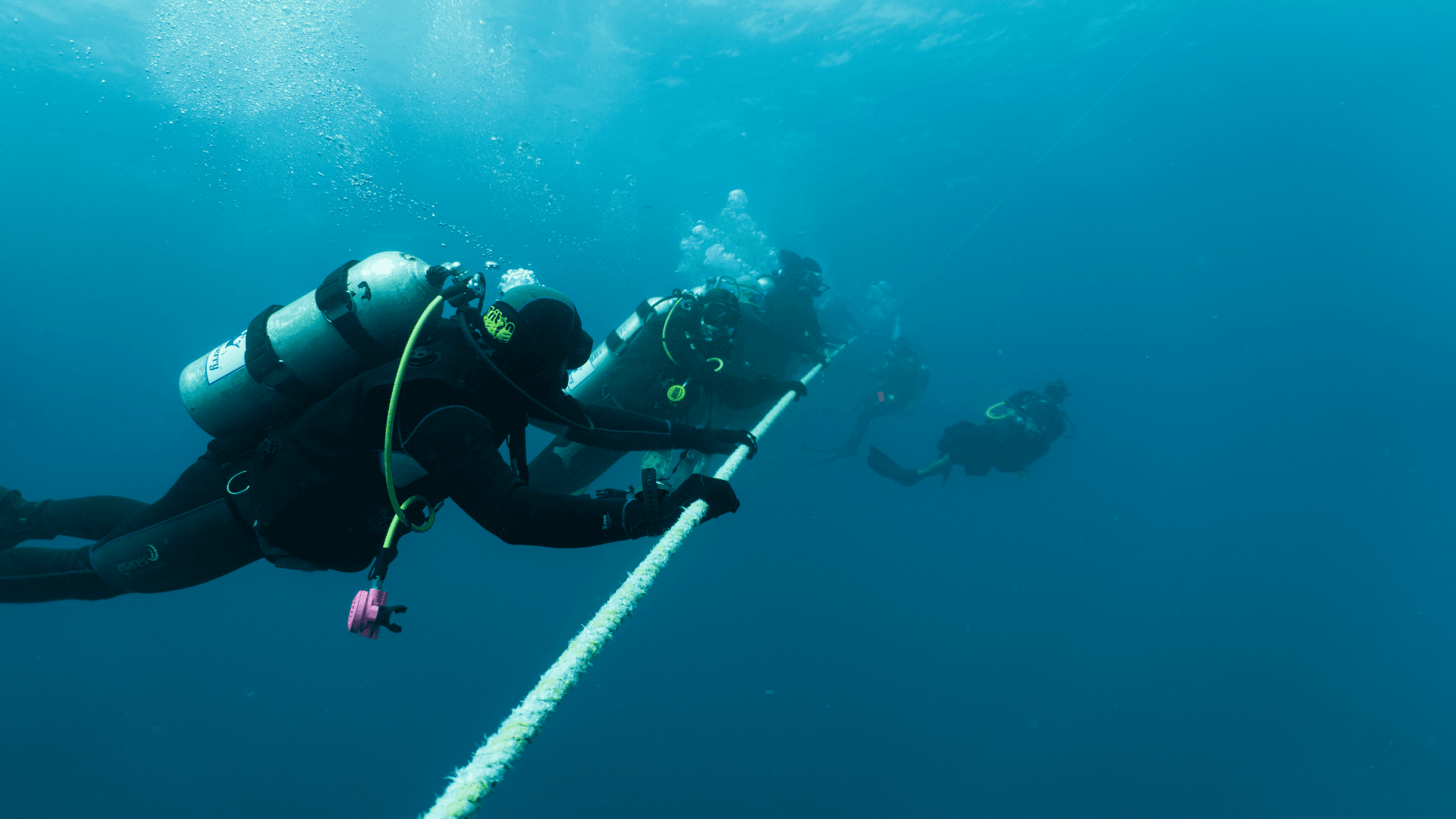
But the briefing was scarier than the dive.
Currents here change direction every few hours, and between the changes there is a short window — about 40–60 minutes — when the water is almost still. We started descending in the middle of such a pause.
Bottom depth is about 29 meters, so the site is accessible for Advanced Open Water and выше for a full visit.
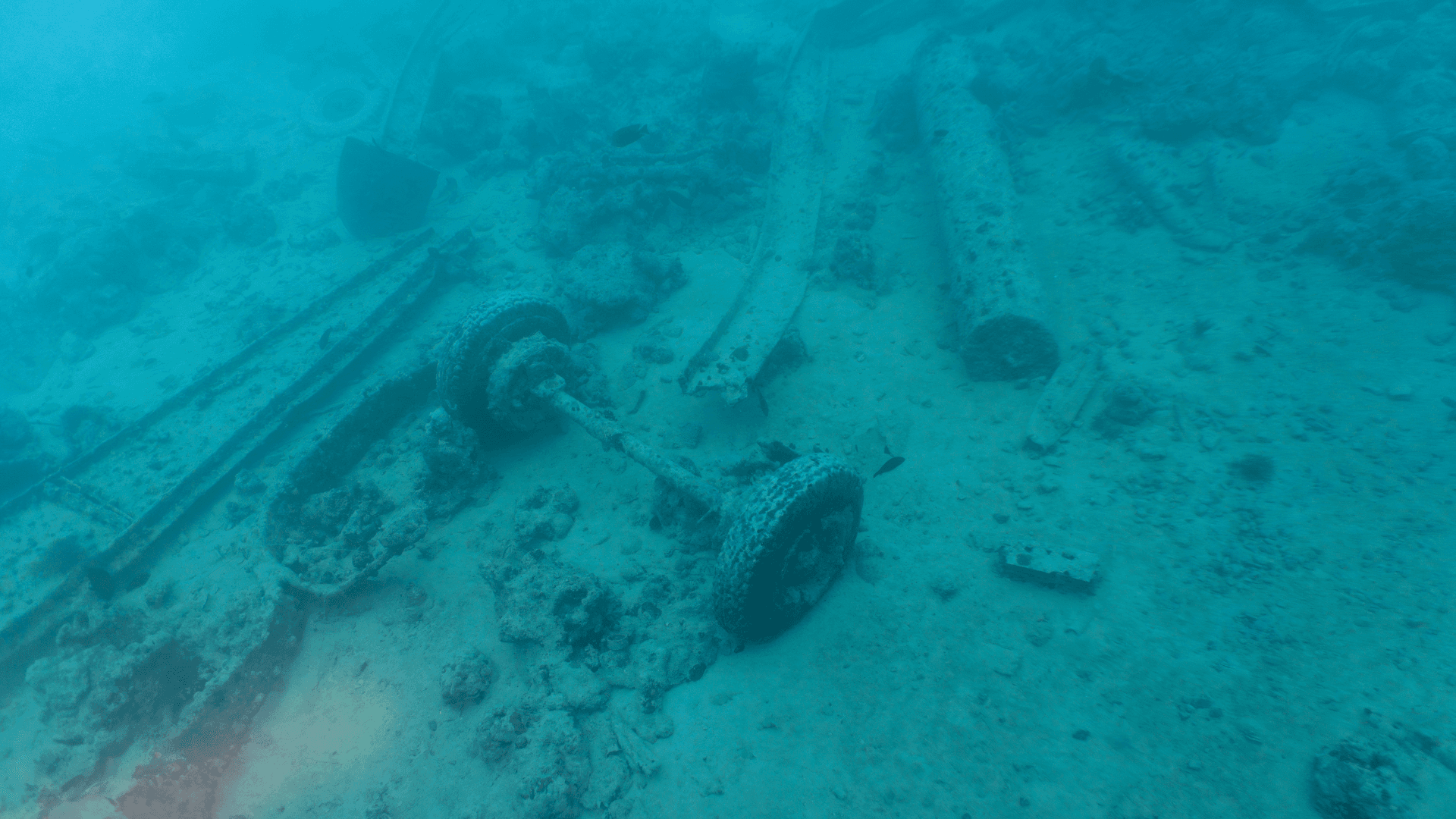
The ship’s size is shocking. When we reached the bottom, for a few seconds I literally stopped breathing — from excitement and scale. In such moments your brain refuses to believe you are really there.
I even made a simple mantra for myself: “You are in the club of professionals. Everything will be fine. You will not die.”
It helped me focus, calm down, and enjoy the dive. And as usual, I also helped the guide a bit — during penetration into the bridge, and during a big queue on the safety stop.
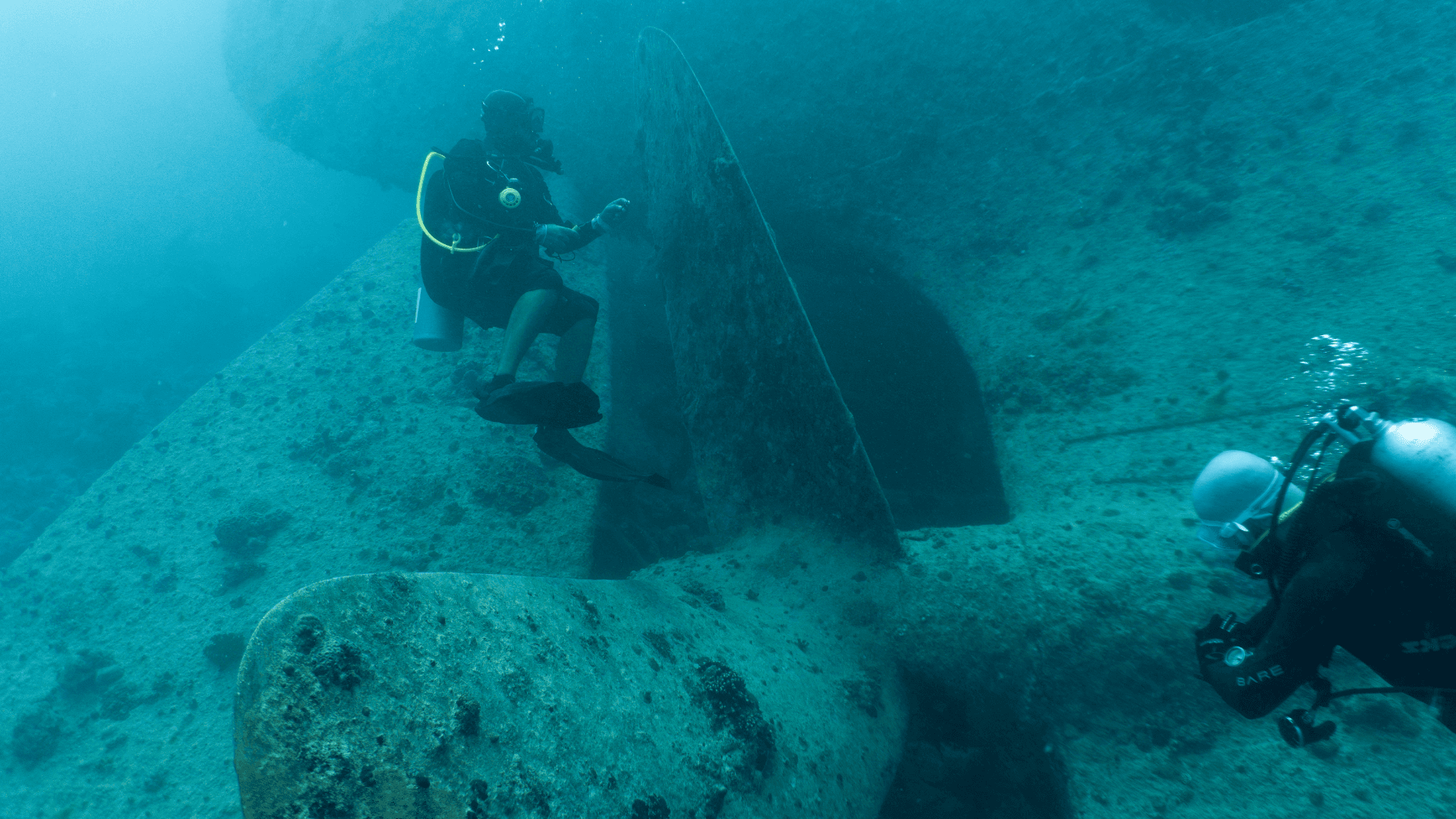
The Serbs accepted my “authority,” responded well to my signals when I coordinated them, and later thanked me for the help underwater. It’s always nice when people read your calmness and experience without extra words.
Result: 45 minutes underwater, max depth 30 m, minus 140 bar.
Dive 13 — SS Thistlegorm (Inside)
Thistlegorm lies at about 30–32 meters. The hull stands almost upright on the bottom; the bow is relatively intact, and the stern was thrown aside by the explosion. Even knowing this, the scale still hits hard — you don’t understand how big it is immediately.
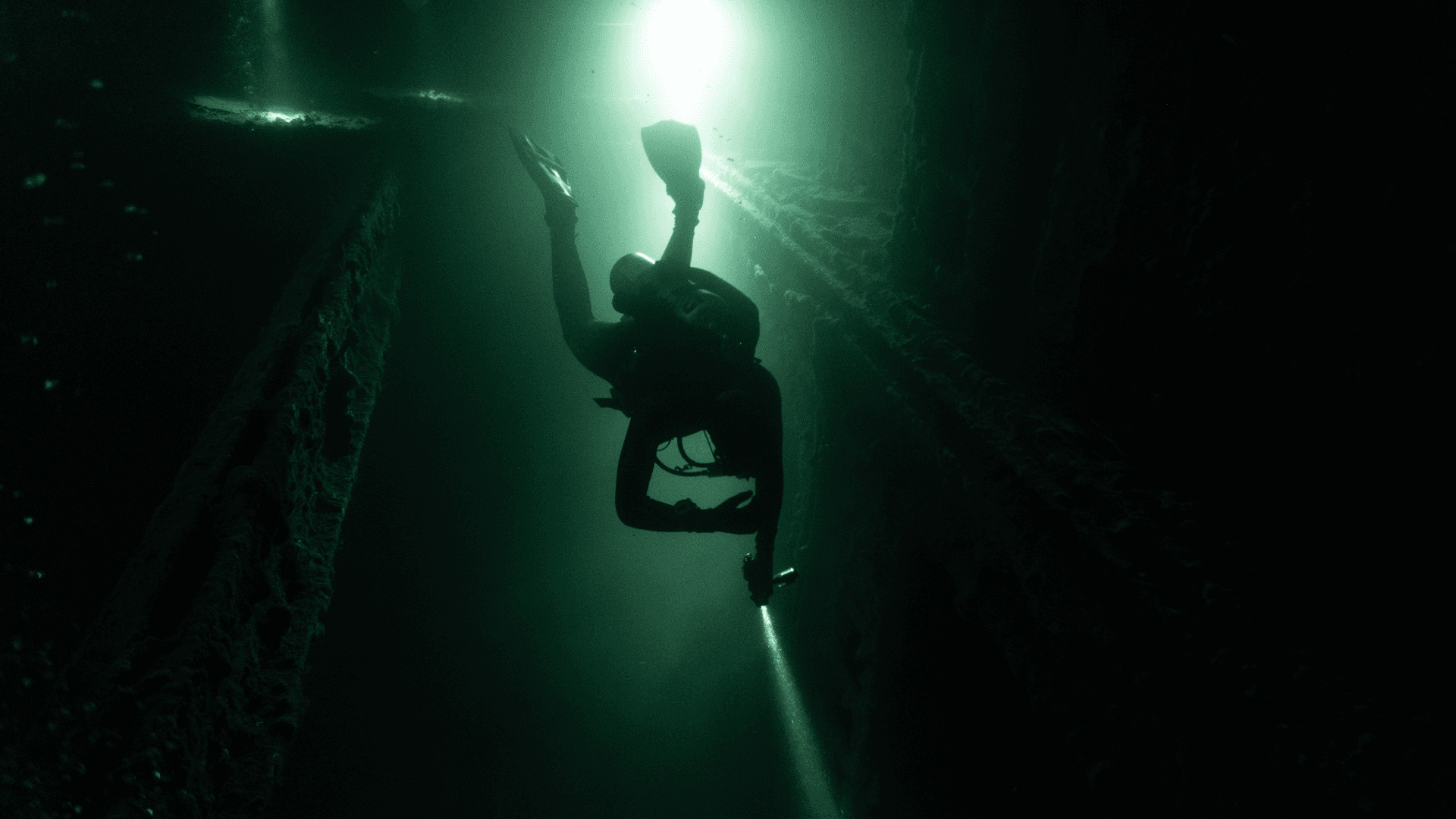
But the main thing about Thistlegorm is not the hull — it’s what is inside and around it. In the holds and on the deck, the cargo is still there: military trucks, Universal Carriers, BSA motorcycles, trailers, ammo crates, weapons, aircraft parts, boots, and personal вещи. It doesn’t feel like a usual wreck — it’s like a frozen WWII warehouse underwater. At some point you catch a strange feeling: like you didn’t dive, but fell into another era.
Depths are доступные: parts of the wreck start at 15–17 meters, max depth about 30. The ship is surprisingly well preserved, and much of the cargo stayed in place or nearby. This combination — scale, preservation, history — made it one of the most famous wreck dives in the world. Divers come here from everywhere, and Cousteau’s name adds weight. Not by accident, in 2007 the British newspaper The Times included Thistlegorm in the list of ten best wreck diving spots in the world.
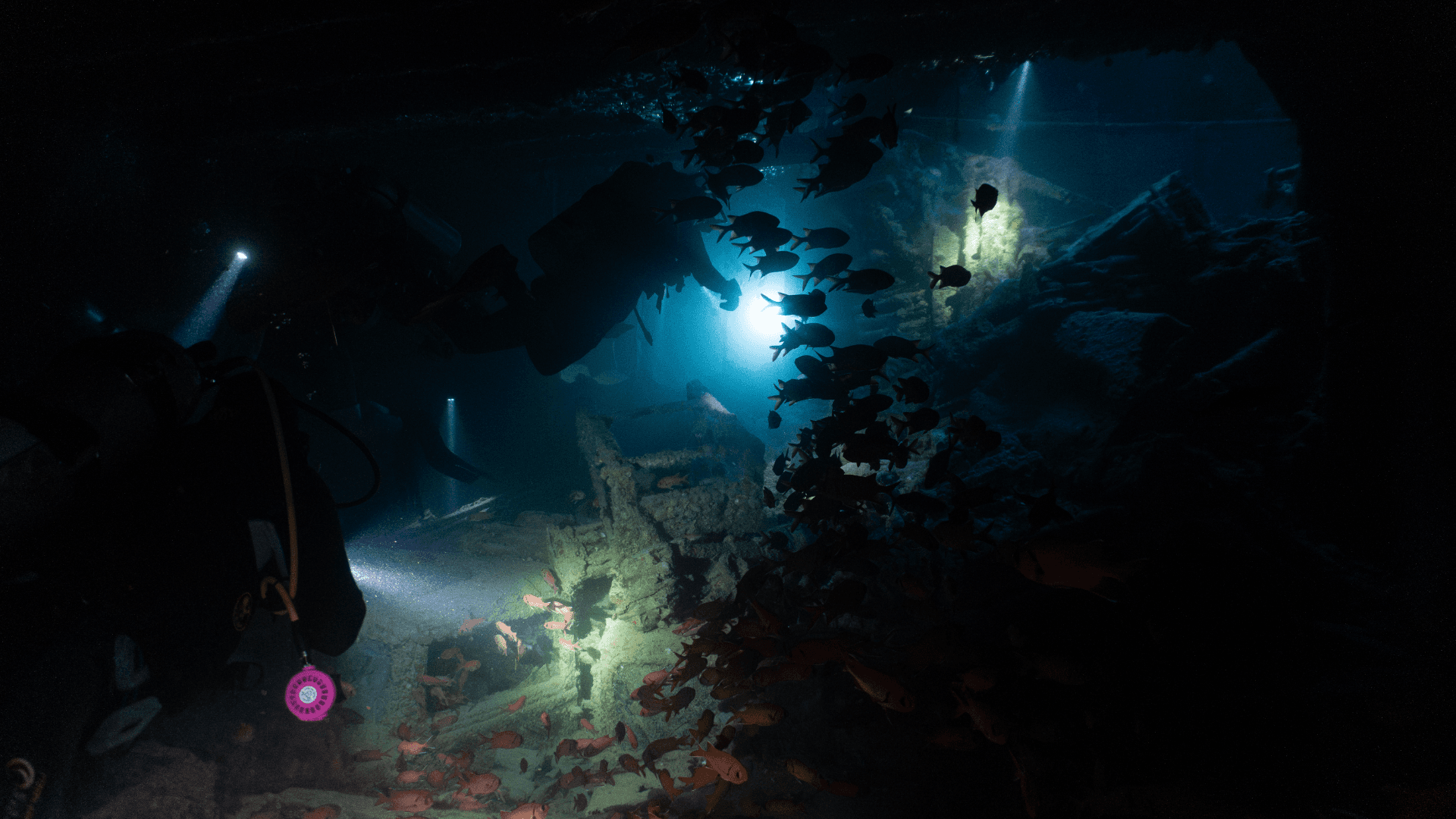
But Thistlegorm is not only about history. Life is everywhere вокруг the wreck. The metal became part of the reef and a home for marine animals. Schools of tuna and barracudas stay here, batfish and Napoleon wrasse pass by, morays and lionfish live in hideouts. Sometimes turtles and bigger predators appear. The contrast between rusty iron and a living reef makes the впечатление even stronger.
Thistlegorm is not a dive you can just “tick off.” Even with a few dives you can’t see it fully. Every time you find something new — another hold, another corner, another light. And every time you surface feeling like you only saw a small part.
The penetration dive was powerful. Really powerful.
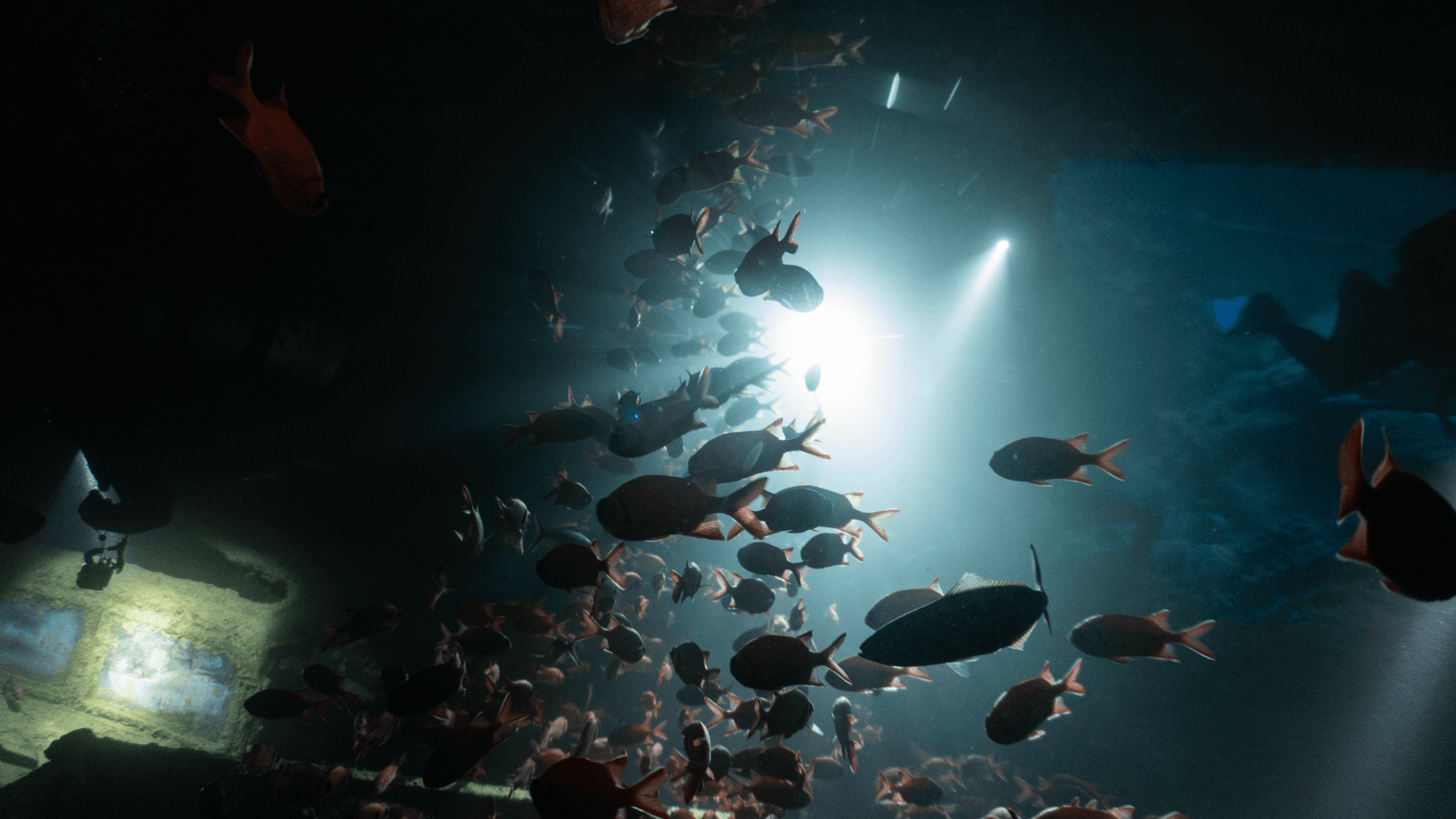
This is why all the previous 300 dives happened. So that in a moment like this you don’t panic, don’t fight yourself, but calmly look around and enjoy. Feel the adrenaline, but keep your head cold.
Inside, the post-apocalyptic feeling becomes stronger: rows of vehicles, metal structures, shadows, torch beams catching details in the dark. You literally swim through a frozen moment of history.
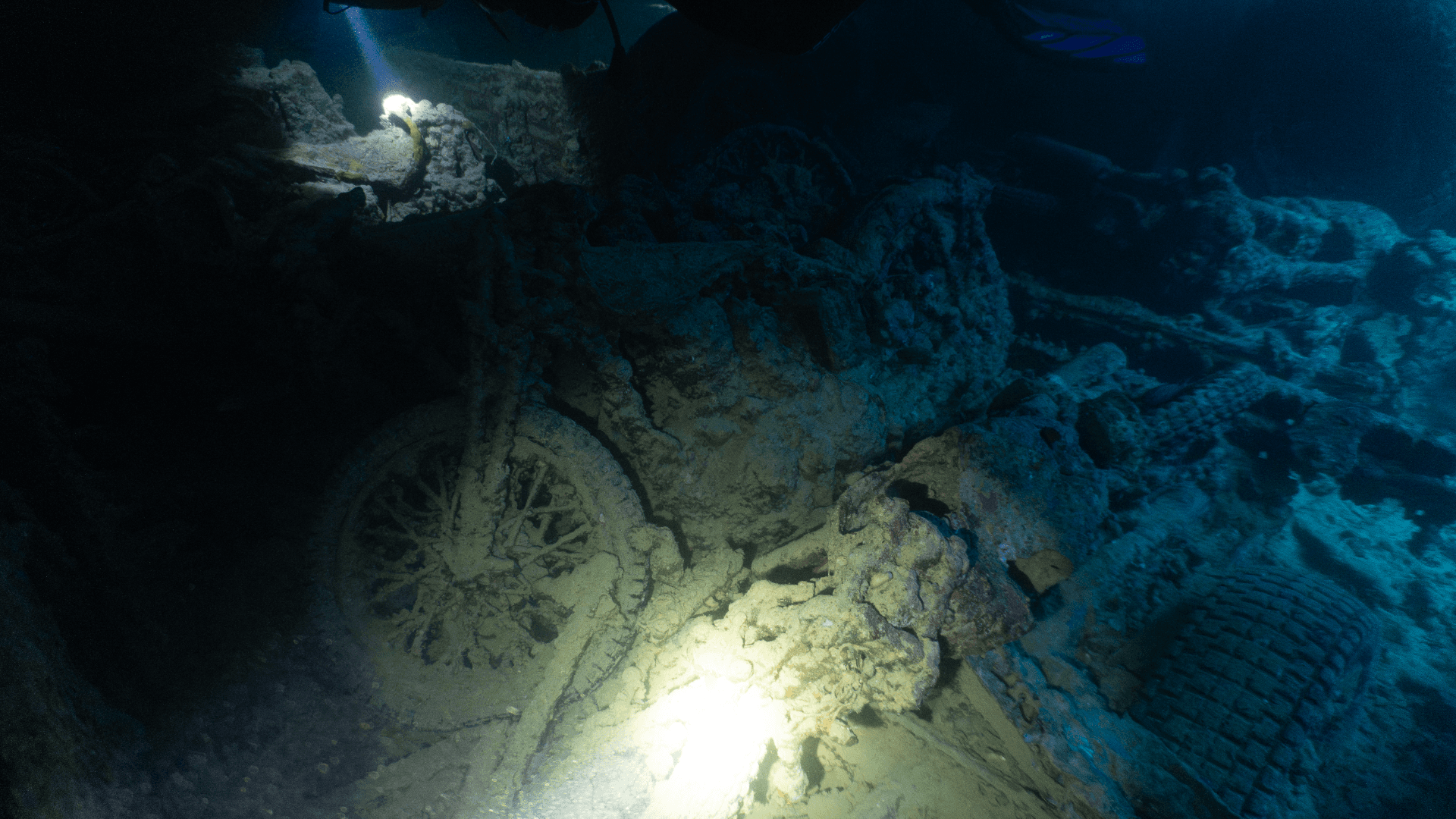
This is one of the most memorable dives I’ve ever had. I want to spend not one hour inside — slow, calm, exploring every corner and detail. But, yeah…
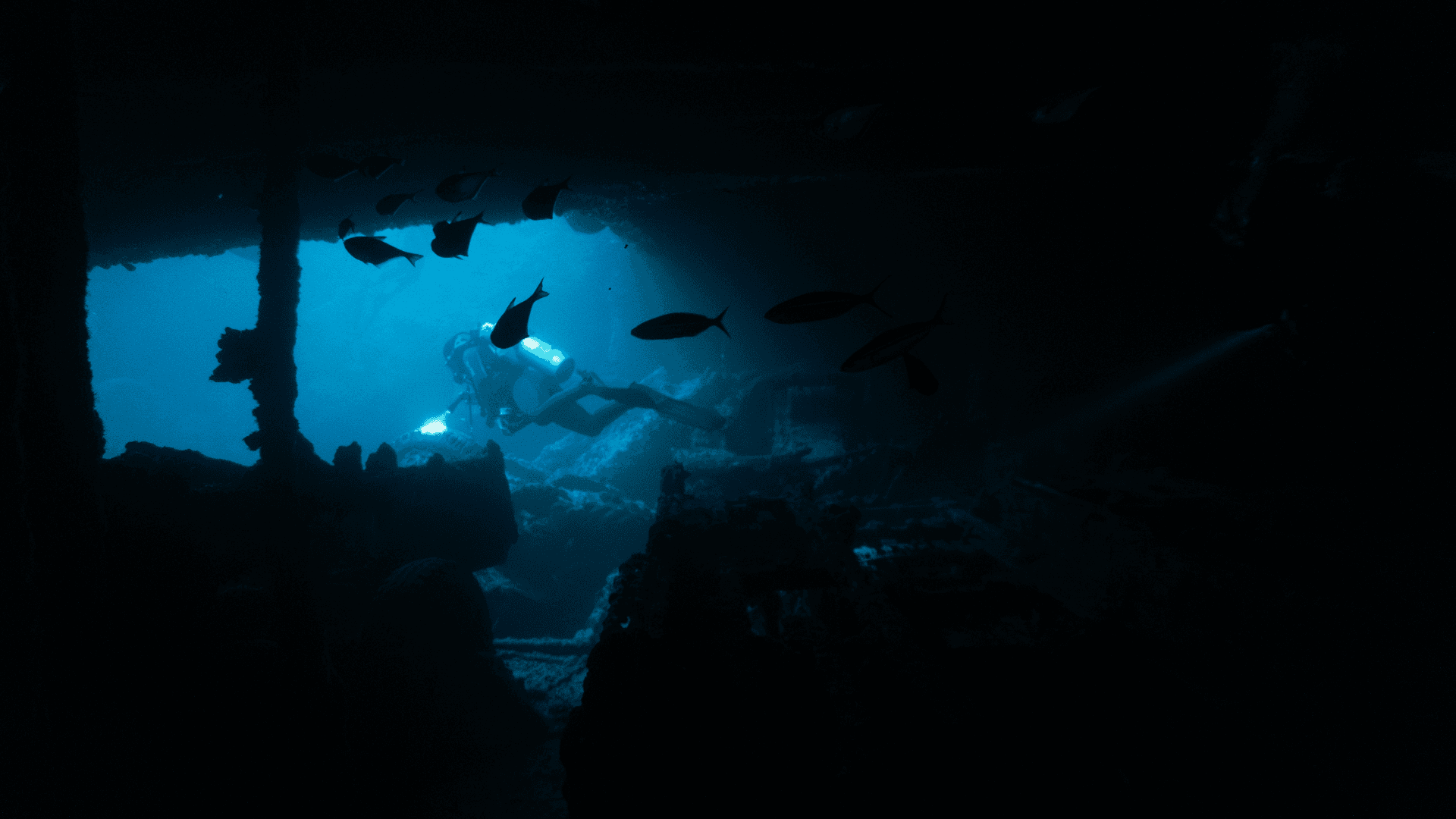
Later we discussed that crowds of divers, постоянный поток bubbles, water, and metal structures will sooner or later speed up разрушение. It’s inevitable. But it looks like Thistlegorm will stand here for a long time, letting divers look into its history.
Result: 49 minutes underwater, max depth 25 m, minus 150 bar.
Dive 14 — Small Gubal
We crossed the bay and moored near Gubal Island. Quickly we realized we had time for a night dive, so we didn’t overthink — geared up and went into the water.
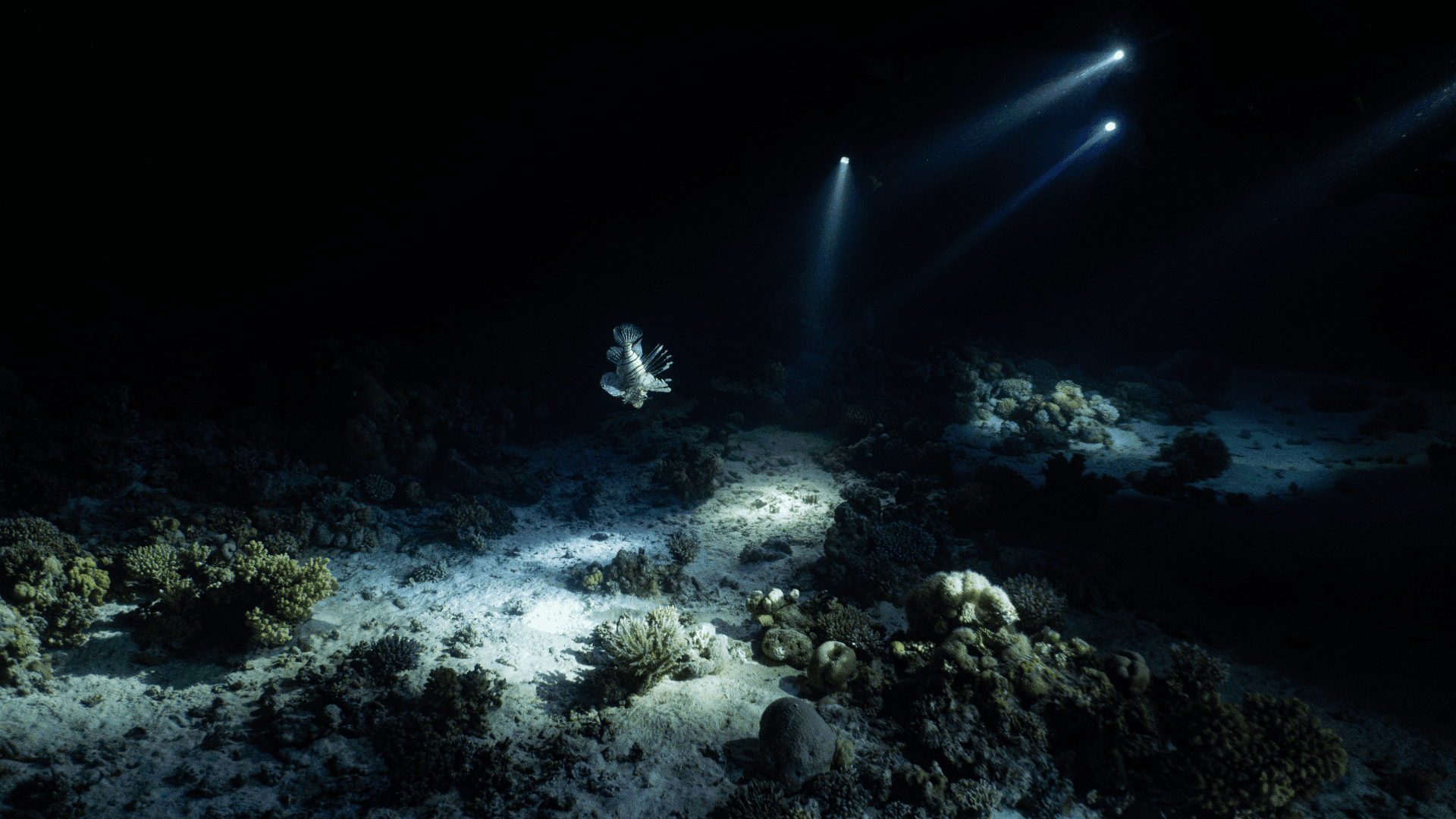
Gubal Island is a small uninhabited island in the northern Red Sea, in the Strait of Gubal near the entrance to the Gulf of Suez. This area is often included in liveaboard routes and day trips from Sharm El Sheikh.
The island is a low sandy-rocky mass surrounded by reefs, shallow plateaus, and areas with noticeable current. But the bay where we did the night dive was calm and shallow. It’s well protected from currents, so the water was clear, and even at night it was easy to ориентироваться by ship lights and other divers’ torches.
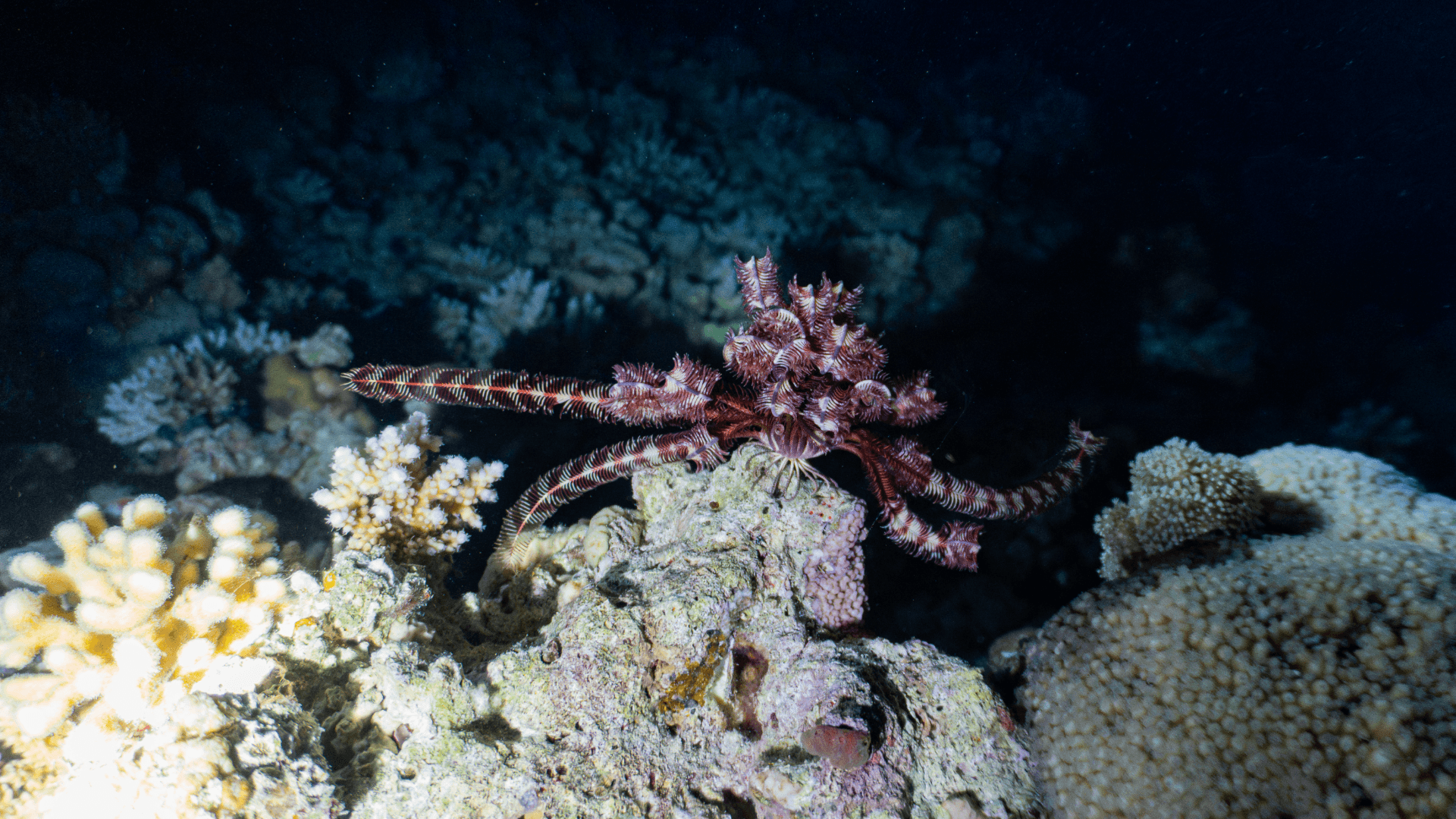
The dive was unexpectedly rich. In one dive we collected a whole “lionfish crew,” met a moray, several puffers, and a small ray.
A very pleasant bonus before sleep. Calm, beautiful diving without rushing — it helped me process emotions after Thistlegorm.
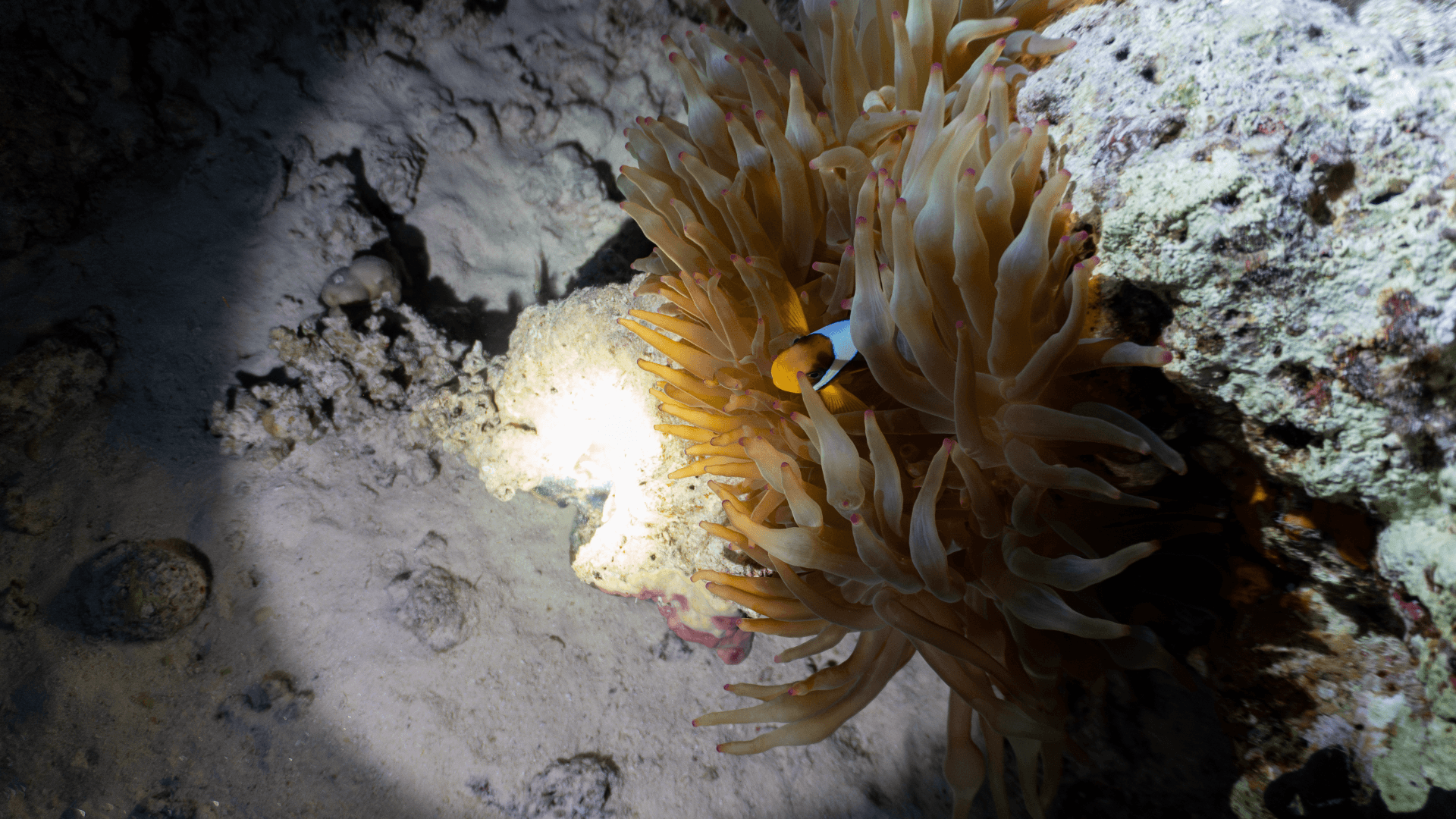
Result: 41 minutes underwater, max depth 16 m, minus 90 bar.
Day 6 — What do you mean “last day of diving”?!
The final day of the safari. Today: a few easy, calm dives before returning to Hurghada.
Dive 15 — The Barge
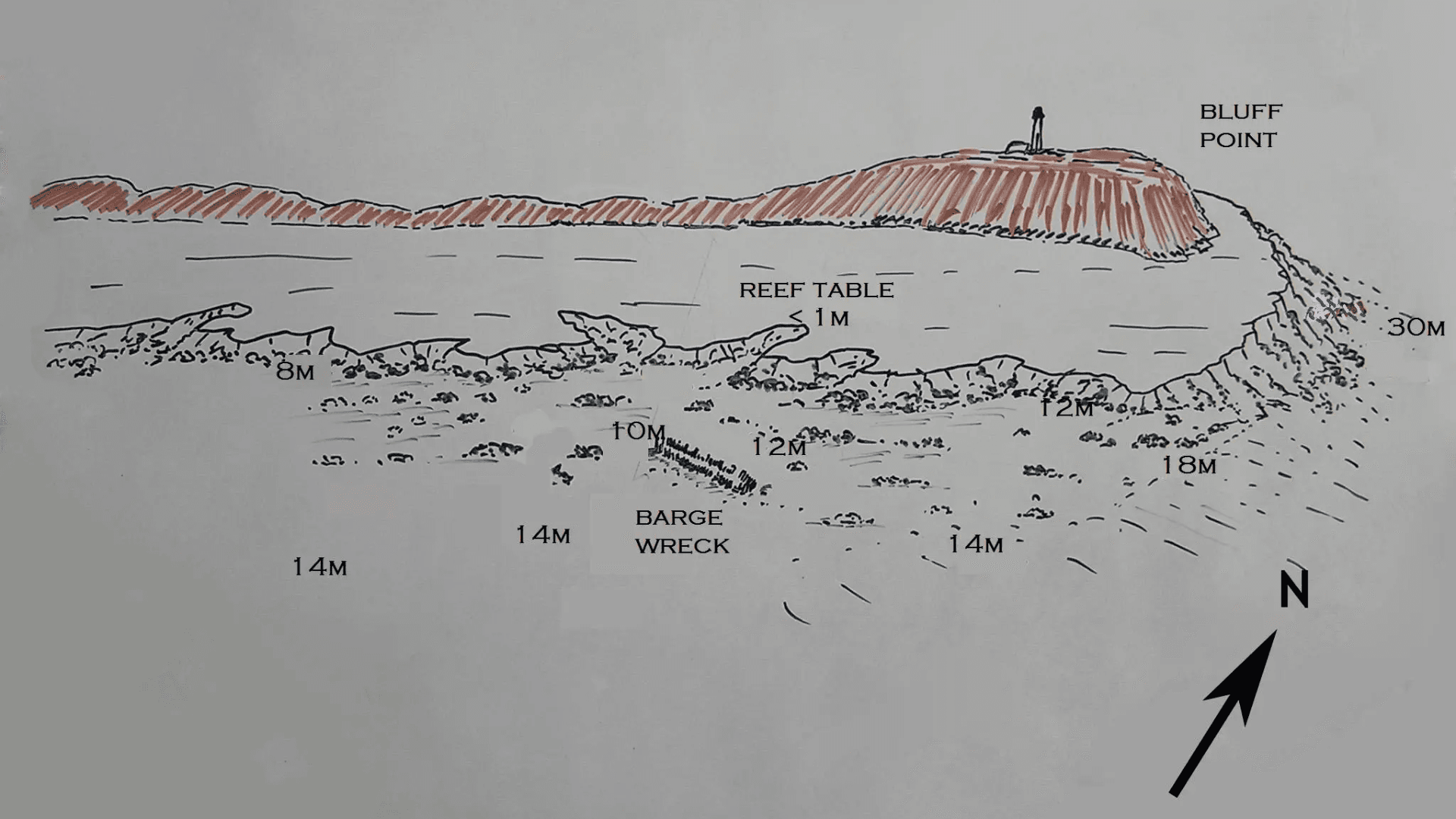
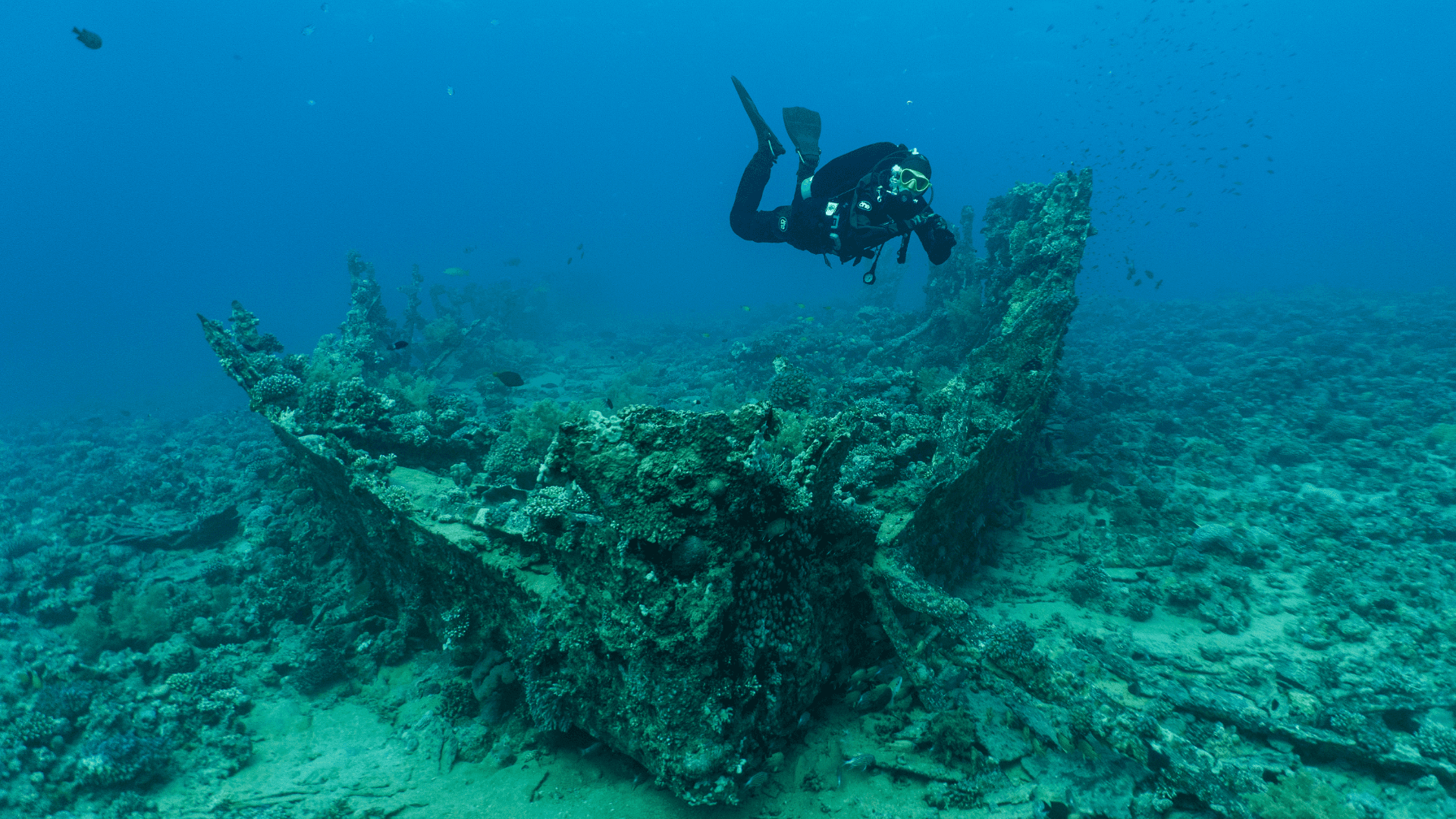
The Barge is a small wreck site near Gubal Island in the northern Red Sea. It’s a barge lying on sandy bottom not far from the island shore. The site is often used as a calm, shallow dive during liveaboards or day trips in the Strait of Gubal.
The barge sank relatively recently and has no military or historical importance. Over time it turned into an artificial reef with corals and reef life.
The relief is simple and easy to read. The hull lies upright and is not сильно destroyed, so the dive is спокойный. Depths are usually 10–18 meters — great for relaxed dives, check dives, and night dives.
Here you often see morays, scorpionfish, lionfish, schools of small reef fish, octopuses, and cuttlefish. On the sandy bottom nearby you may see rays.
Conditions at The Barge are usually calm: current weak or none, stable visibility. That’s why it’s often chosen as the first or final dive of the day, especially after more challenging wreck or wall dives.
For the sunrise dive we chose The Barge.
The plan was simple: swim to the reef edge, let the current carry us to the barge, then return on our own in shallow water. But something didn’t work.
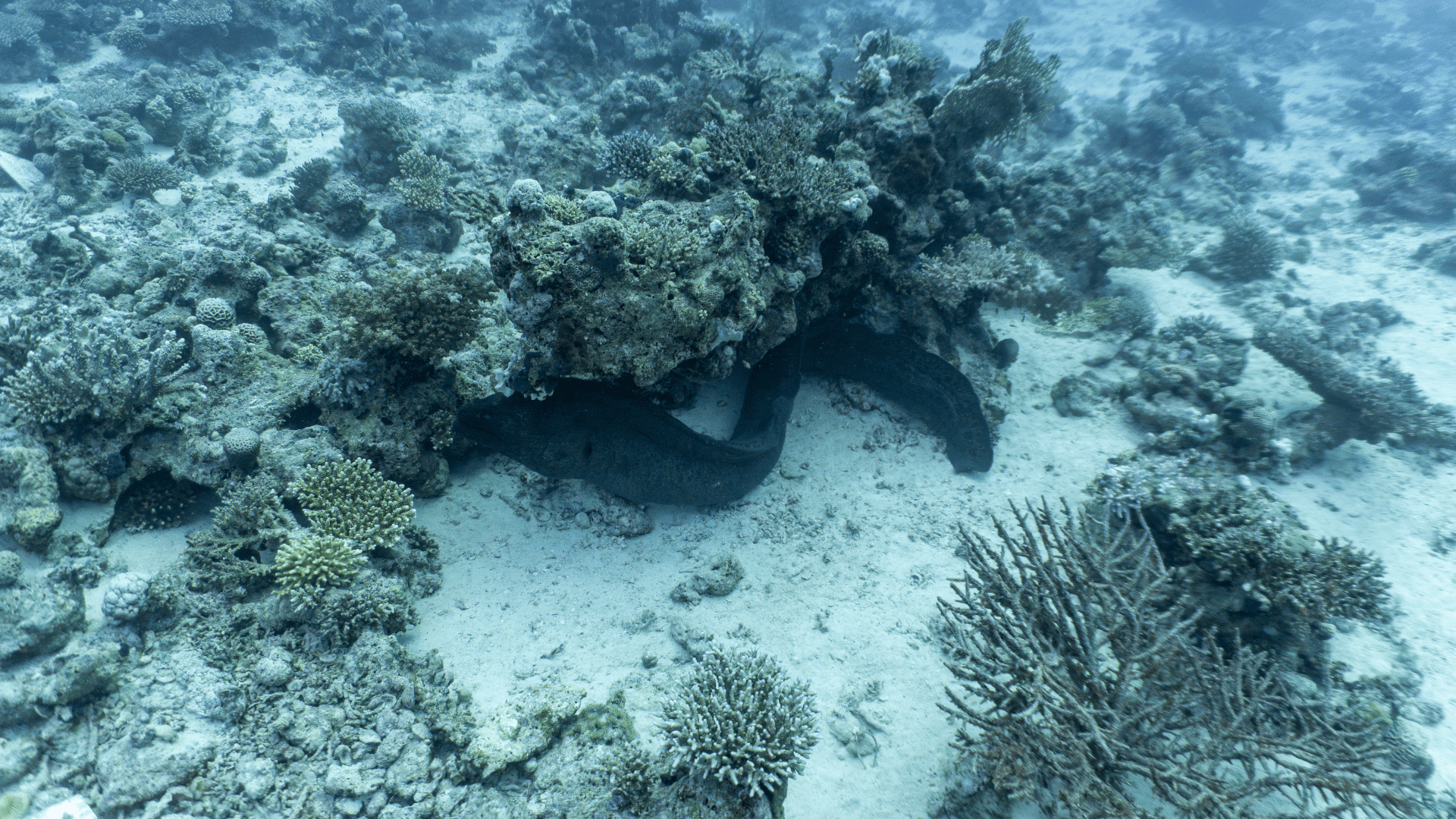
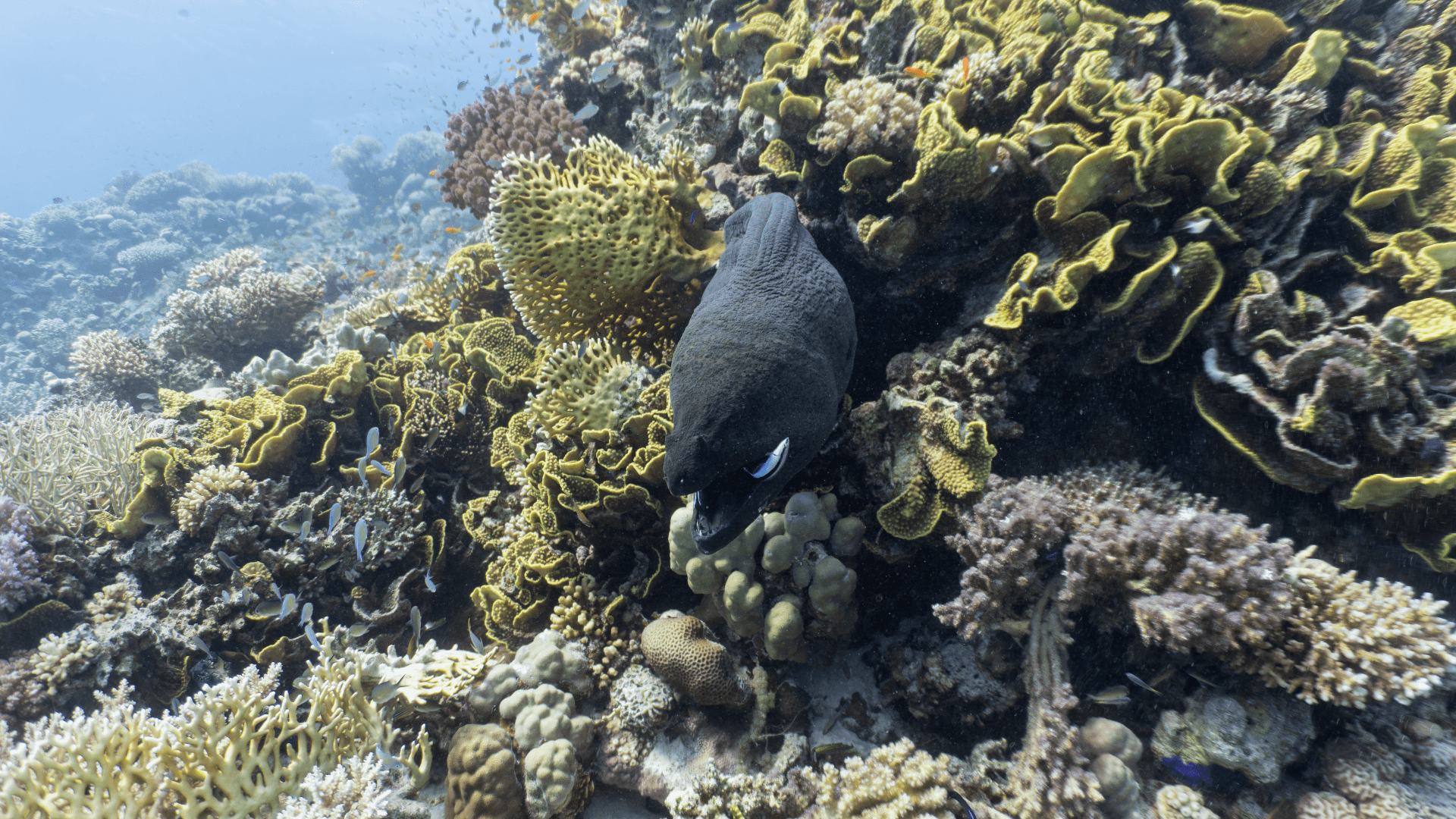
At the reef edge, the current was weak — and worse, against us. Not strong enough to change the plan completely, but annoying: finning took almost double effort. The first 15 minutes were tiring. The nice part: on the way we met a giant moray, maybe 3–4 meters long.
When we finally reached the barge, my mood improved. It lies beautifully on the bottom, fully covered with corals, and hundreds of fish круг around it. A calm, pleasant place where you can just hover and look around.
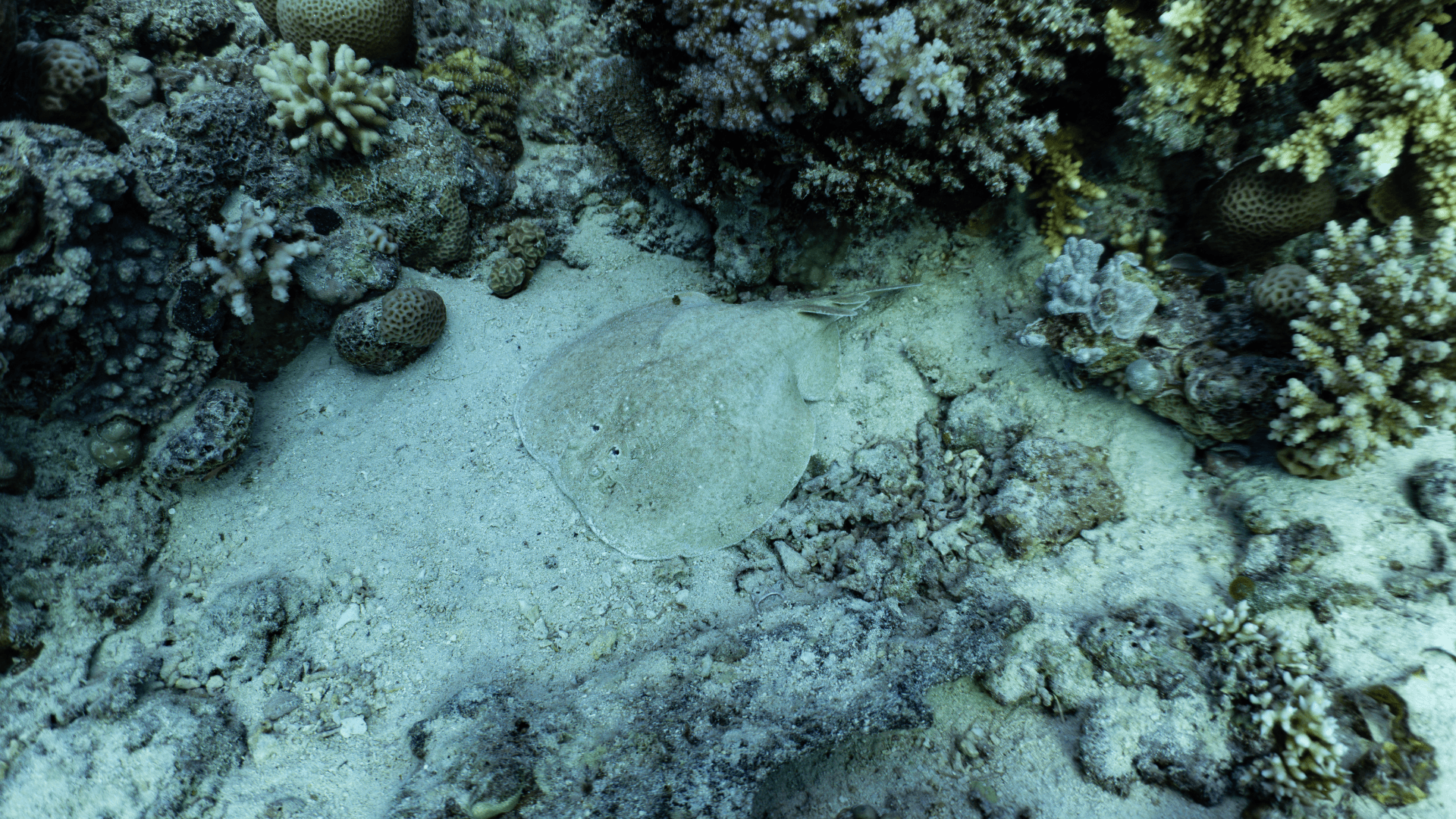
Nearby we met an Indo-Pacific electric ray — I had never seen one before. Then we went to a shallow reef area with colorful corals, fish, and soft morning light. A very good ending.
Result: 60 minutes underwater, max depth 25 m, minus 140 bar.
Dive 16 — Small Gubal Island
On this dive we went in the opposite direction from the barge, partly repeating the route from last night. Very calm, slow diving. A shallow site with tons of corals and fish. A nice contrast to yesterday, but I think I was already a bit tired of impressions. I didn’t think it was possible, but here we are.
Half of the dive I was in my own thoughts, sometimes stopping to take a few good shots. At one point I noticed fish лежали under corals as if they decided to nap on a couch. I feel you, fish.
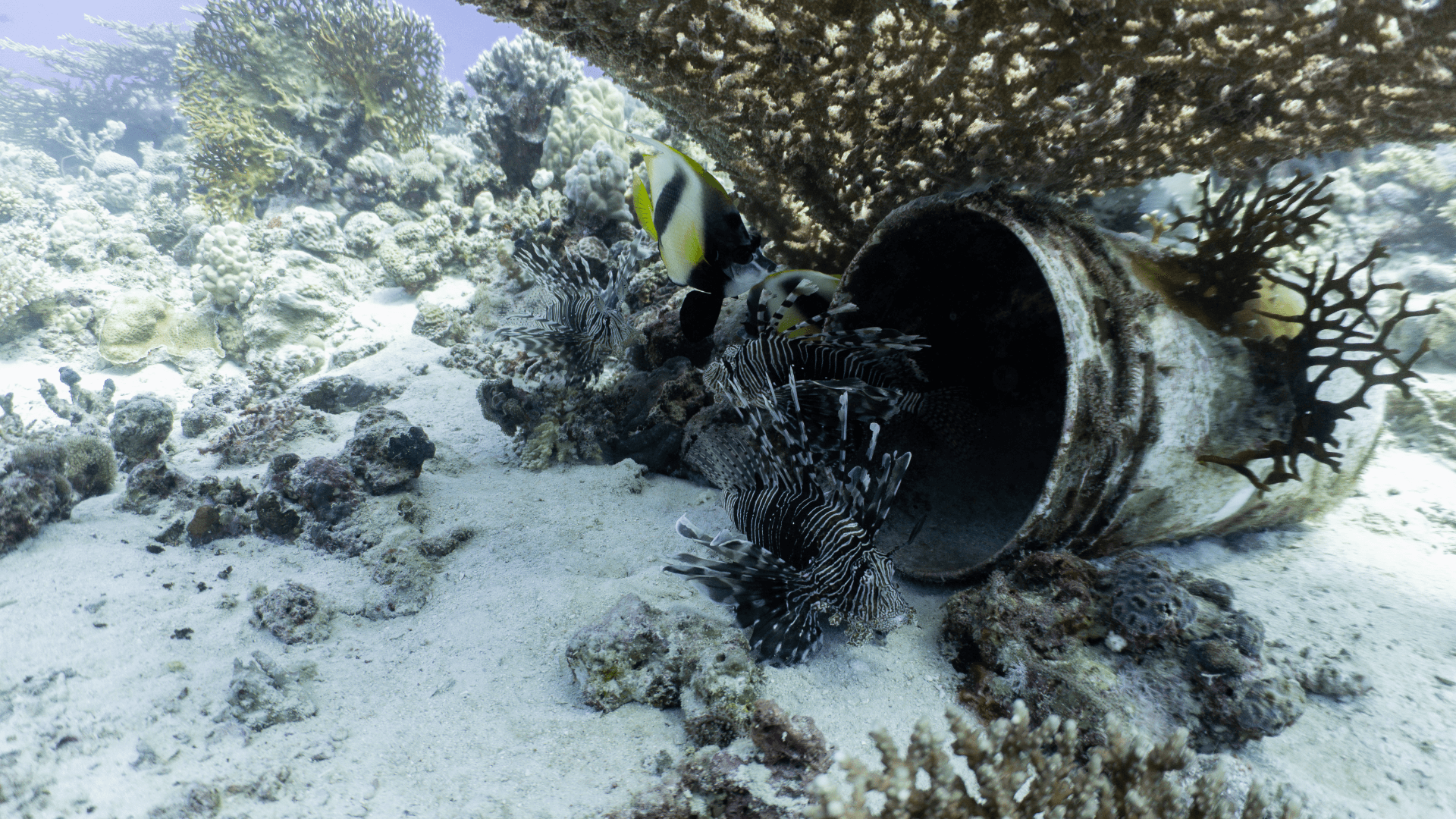
Interesting bits: we saw a few sea slugs. And I liked how four lionfish chose a sunken bucket as their home. In the shallow reef part we met a giant moray again — maybe the same one from dive 15. Looks like it just changed its resting place.
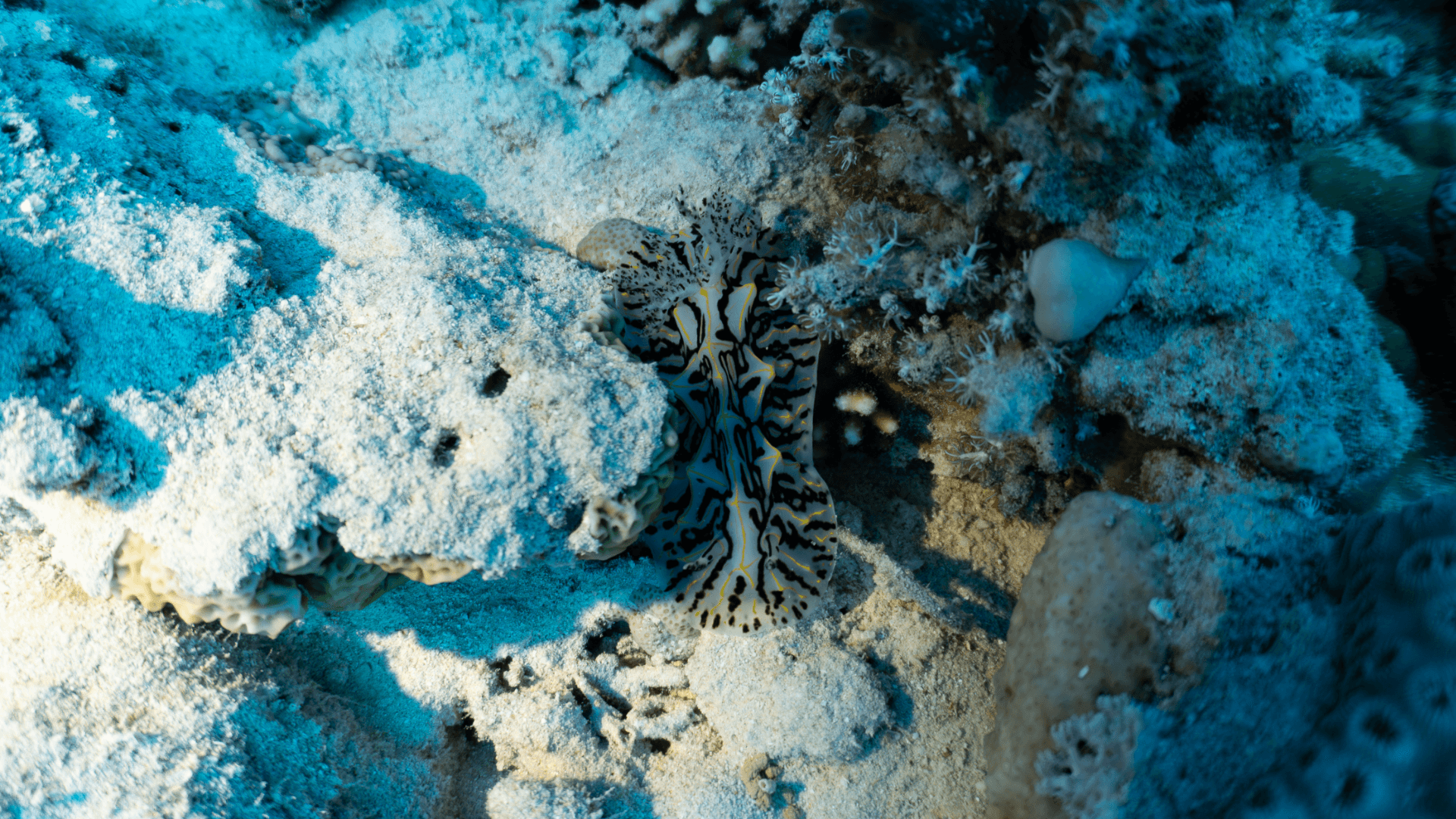
And I got cold again. Oh yes, that unbearable 27°C water 🙂
Result: 53 minutes underwater, max depth 20 m, minus 110 bar.
Dive 17 — Poseidon Garden
Poseidon Garden is one of the calmest and most visually rich parts of the Shaab El Erg reef system, located inside the lagoon. It’s a classic coral garden that is often выделяют as a separate sub-site.
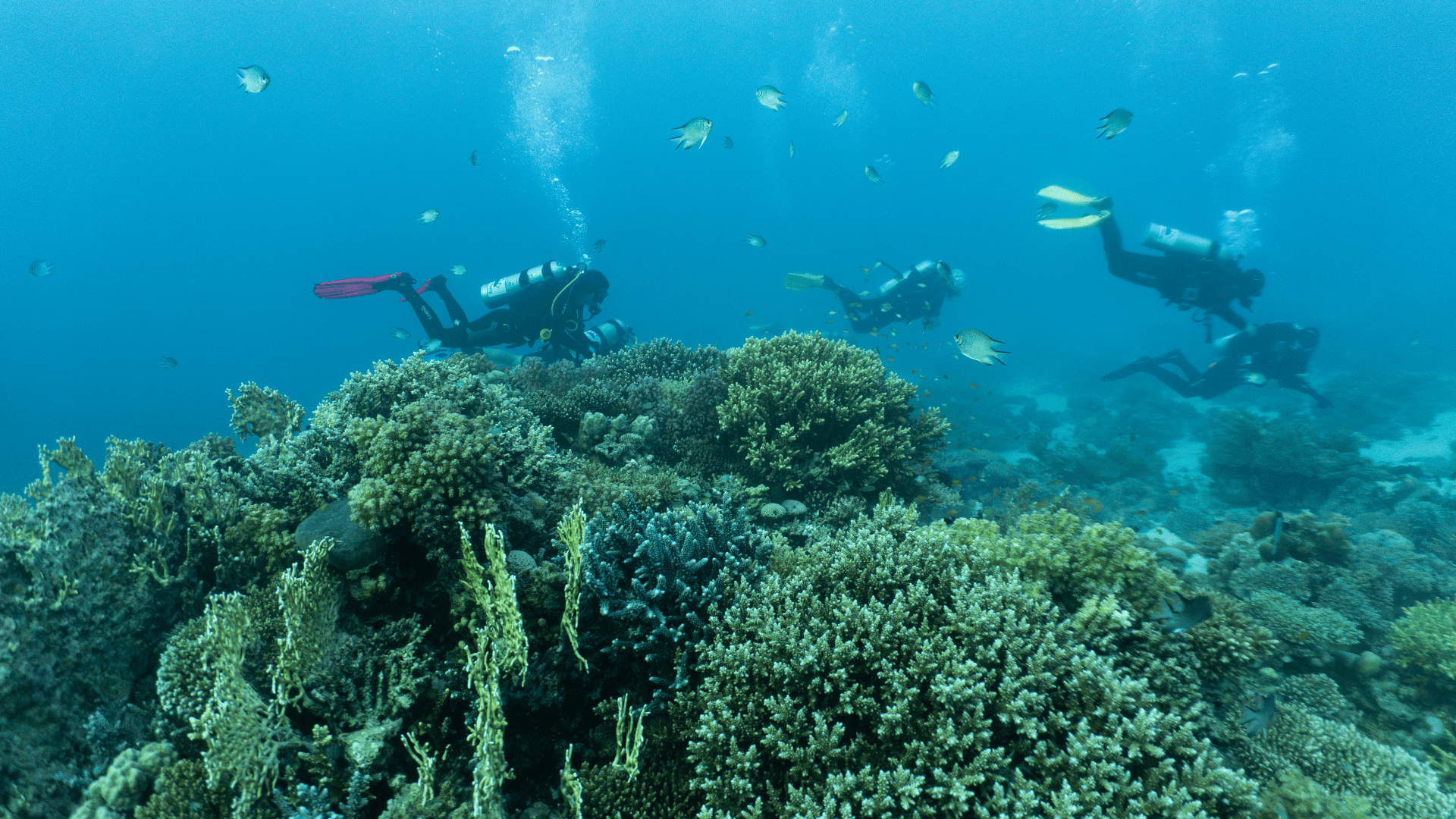
The relief is sandy bottom with coral blocks and pinnacles, densely covered with hard and soft corals. The structure is open and easy, without sharp drops or walls. Main depths are 6–14 meters, so it’s suitable for divers of any level.
Conditions are usually calm. The lagoon protects the area from strong currents and waves, so Poseidon Garden is often used for check dives, training, and relaxed scenic dives. For underwater photography it’s also great — lots of light and color.
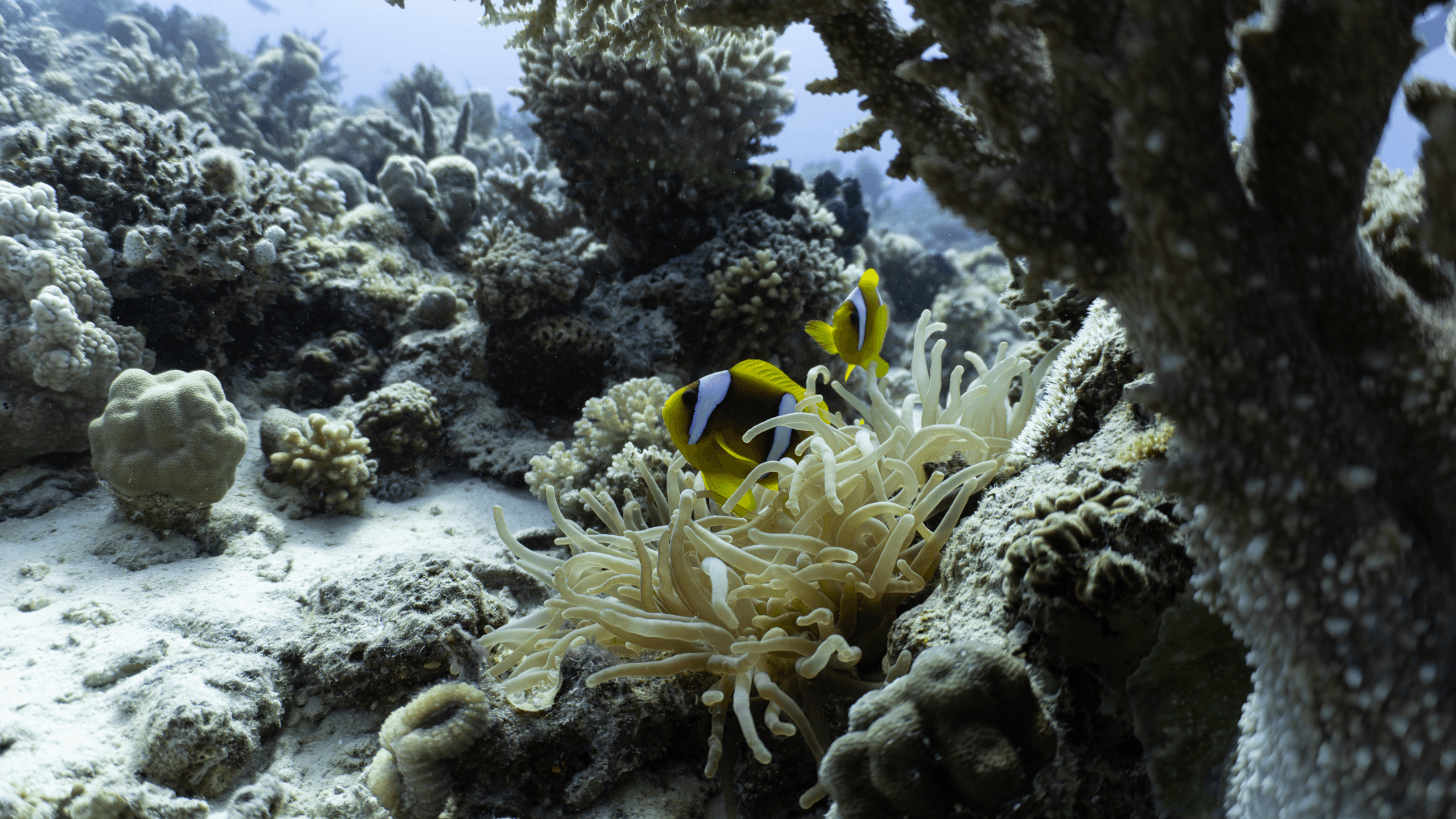
Marine life here is mostly reef and small: butterflyfish, surgeonfish, anthias, wrasse, lionfish, scorpionfish. Morays hide in corals, and on sand you can spot blue-spotted rays and garden eels. Strong light + dense coral gardens make it very photogenic.
Poseidon Garden is not about depth or adrenaline. It’s rarely a “main goal” of the day — more often it’s a calm part of a Shaab El Erg dive or a nice finish after more dynamic areas.
For the last two dives we returned to Shaab El Erg, where we dived on day 2. This time we were less lucky with light and water clarity, but these new conditions unexpectedly changed the site — it looked different.
I spent more time looking at corals themselves. The variety is crazy — feels like there are as many species as fish, maybe even more.
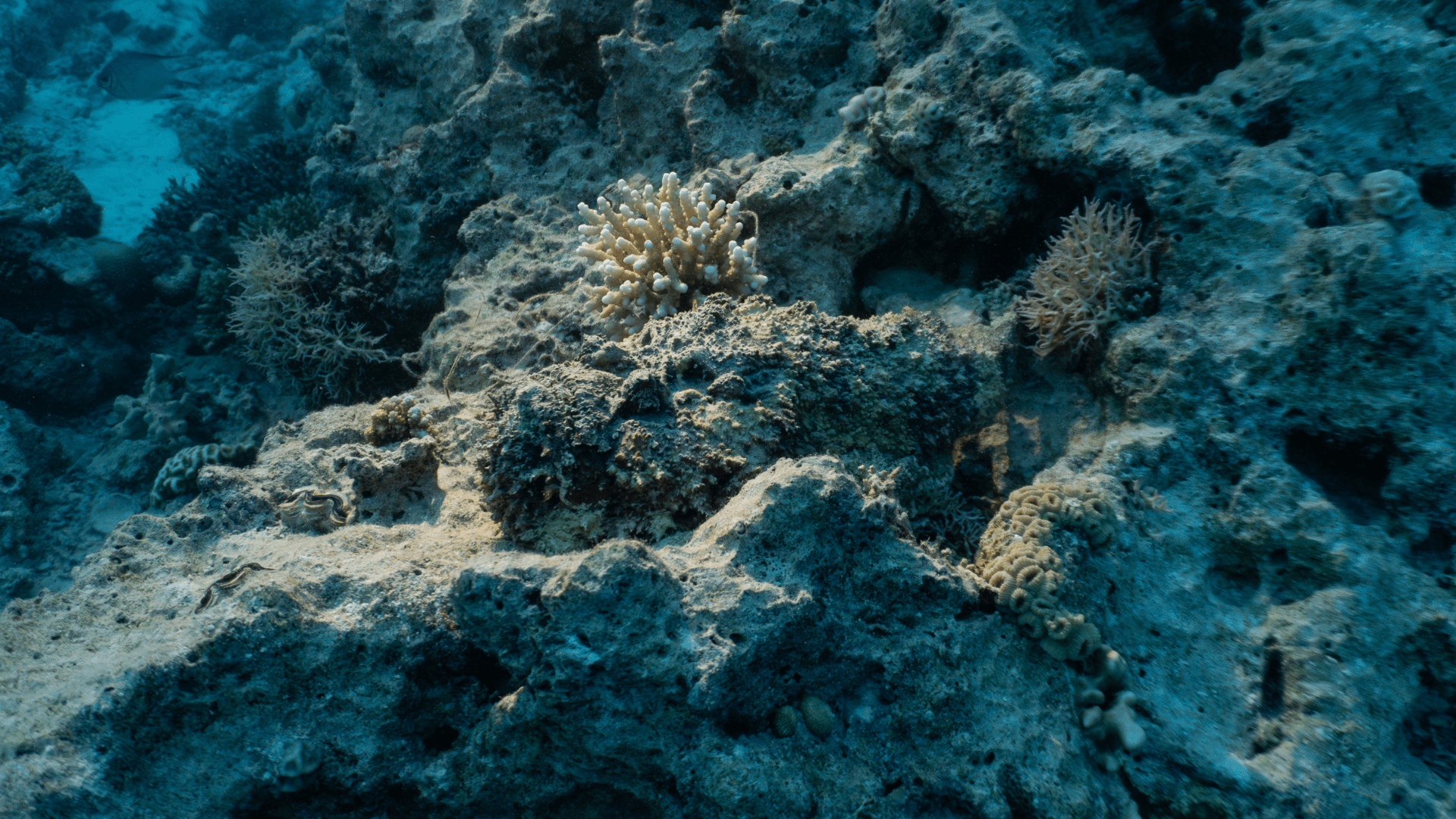
We met a huge stonefish. When I moved close to film it, I remembered a story the guide told on day 2: once he got scared when a stonefish suddenly moved toward him. So I decided to film it from a safer distance.
Envy moment: about 10 minutes after we finished, the second group returned. They were lucky — they swam with a pod of dolphins. Eh… it’s ok. I’ll swim with dolphins another time.
Result: 50 minutes underwater, max depth 16 m, minus 100 bar.
Dive 18 — Last dive (Night)
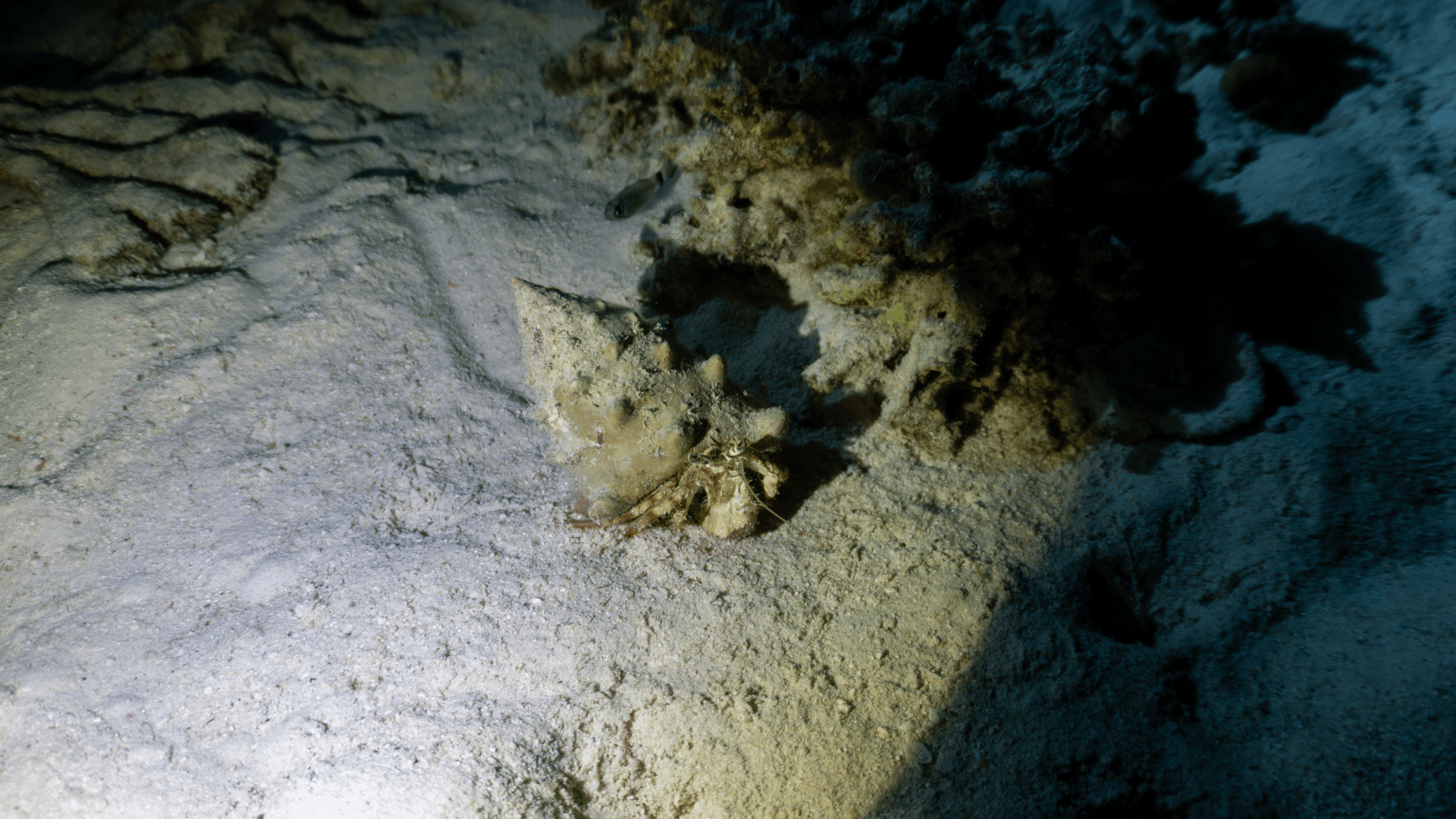
The night and last dive was very calm and relaxed. No rushing: we slowly swam through the lagoon, watched night creatures coming out of their shelters, blew some air rings, and with that feeling of completion we returned — straight to dinner.
That was the end of diving. Tomorrow we still have half a day on the boat: dry the gear, pack things, and get ready for the road to the airport.
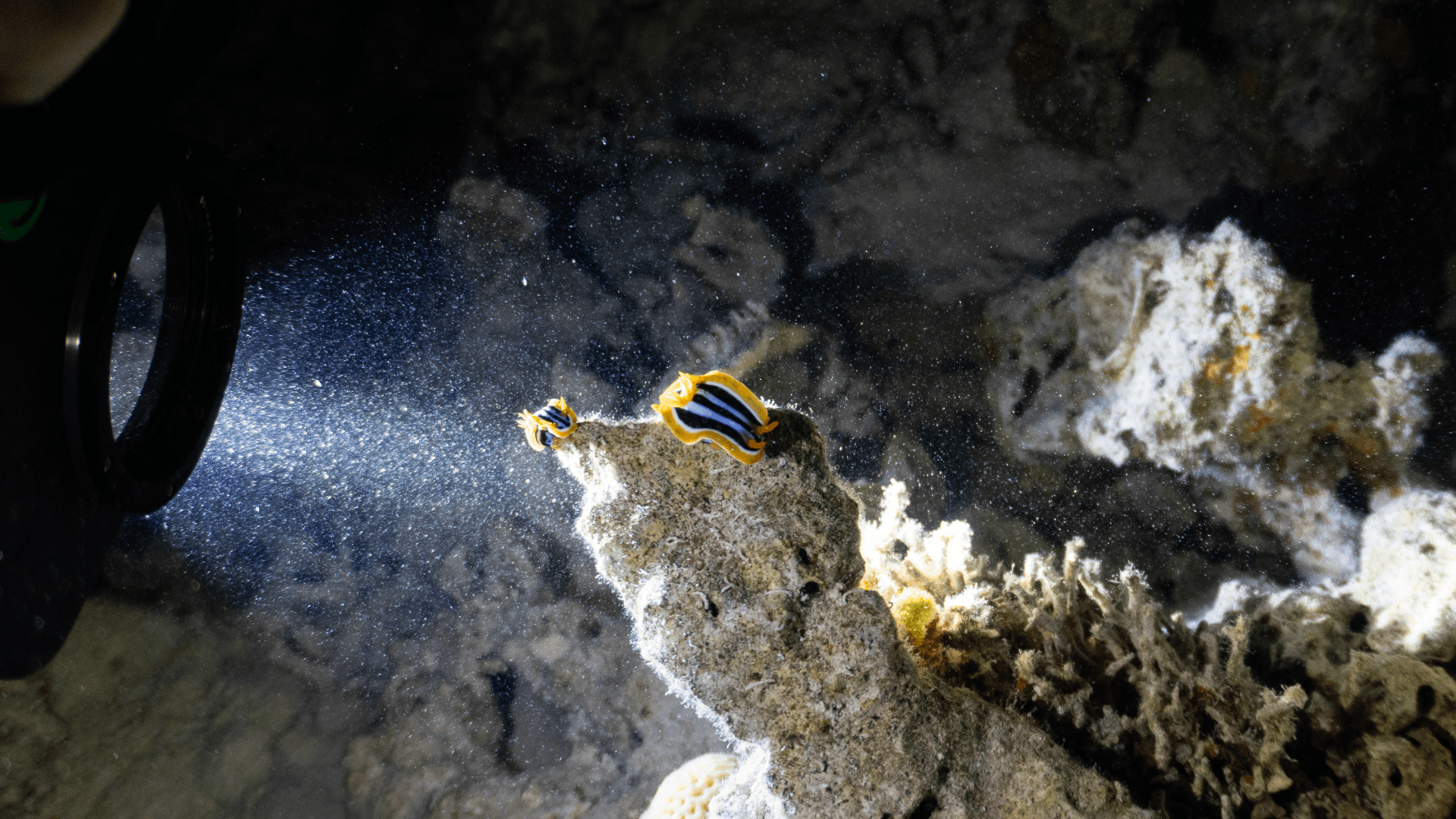
Result: 43 minutes underwater, max depth 12 m, minus 70 bar.
Funny facts
- They took our passports “for storage” on the first night and gave them back only after returning to Hurghada (and after we paid for everything :D).
- During the trip, two fins (different ones) were lost, one mask was lost, another mask’s glass broke. One torch flooded. And all of that happened to one instructor and his son.
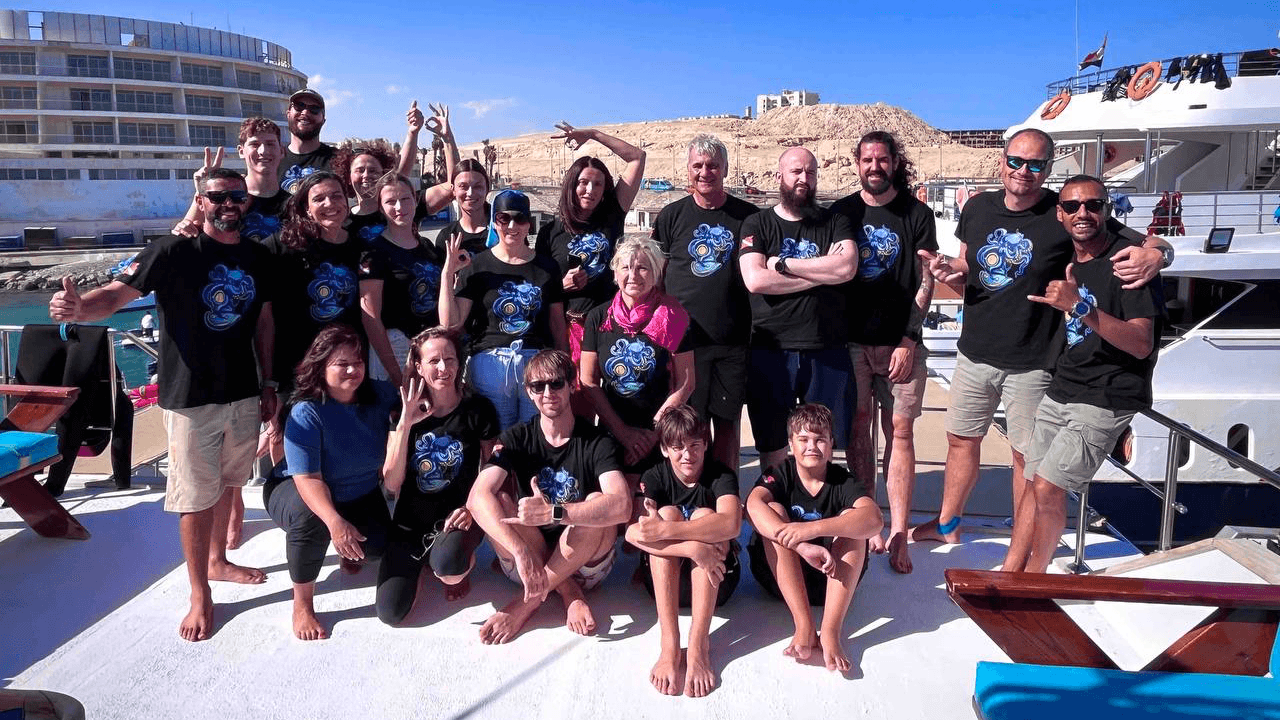
- Two out of 18 people dived in dry suits. Two dived in shorties. And 16 people used Nitrox (even though at the start only about half of the group had the certification).
- In one day I met sunrise and watched sunset sitting in the same place, looking in the same direction. And the sun rose and set exactly on the horizon every time.
Achievement
- Red Sea unlocked.
- 300 dives and 200 hours in open water reached.
- A hammerhead shark spotted.
- New record for “longest dive”: 75 minutes.
- 18 dives and 920 minutes underwater in 5 days.
- 2220 bar of Nitrox used.
- 400+ GB of фото and video.