Tag: Filter Feeders
Materials found: 5
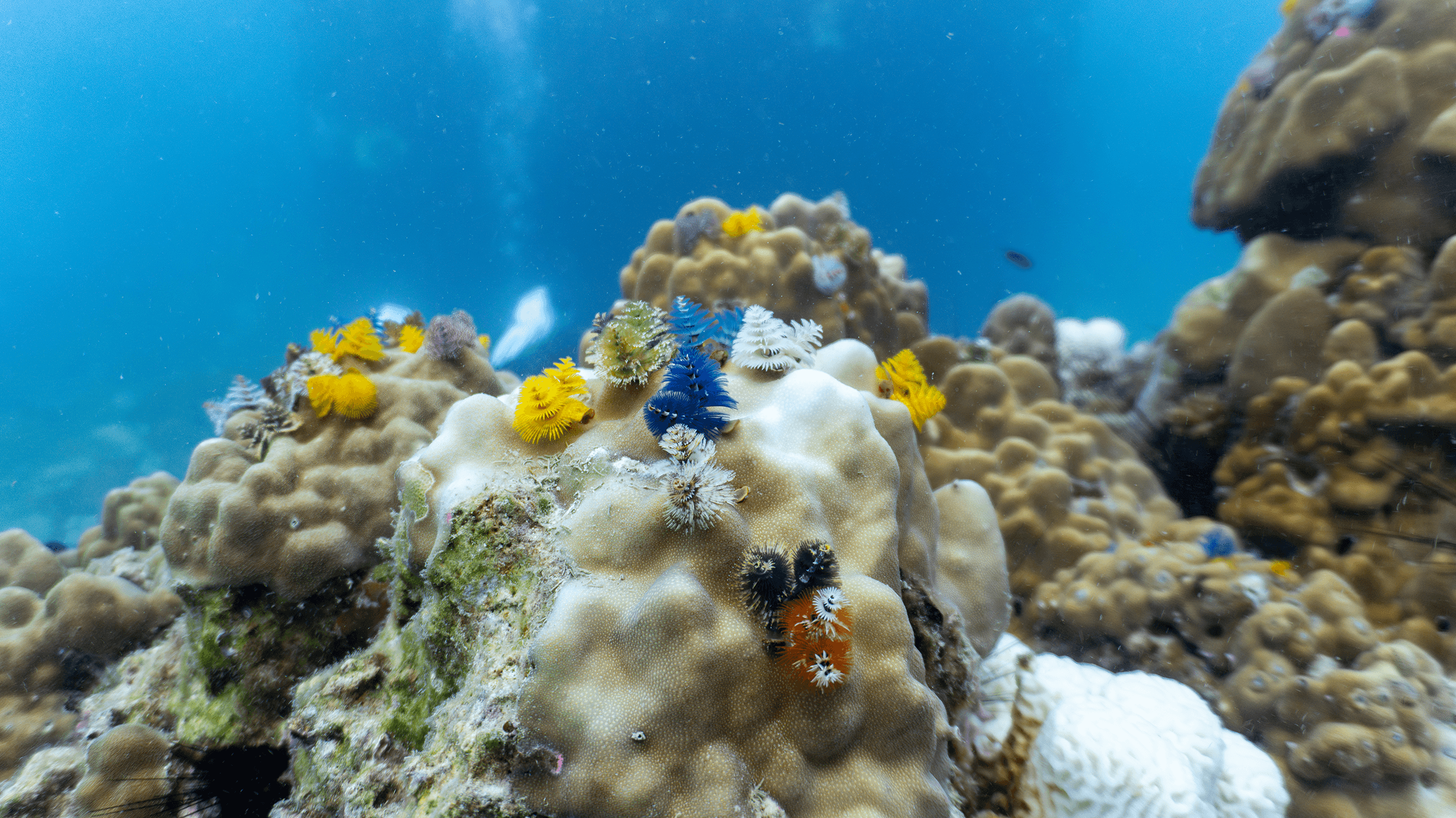
Christmas Tree Worm
The Christmas tree worm is a tube-dwelling polychaete worm (Serpulidae) living in close association with corals. Builds a calcareous tube in the skeleton/on the surface of the coral and extends two spiral "Christmas trees" (radioles) outward, which serve for respiration and food filtration; quickly retracts when threatened.
Spirobranchus giganteus
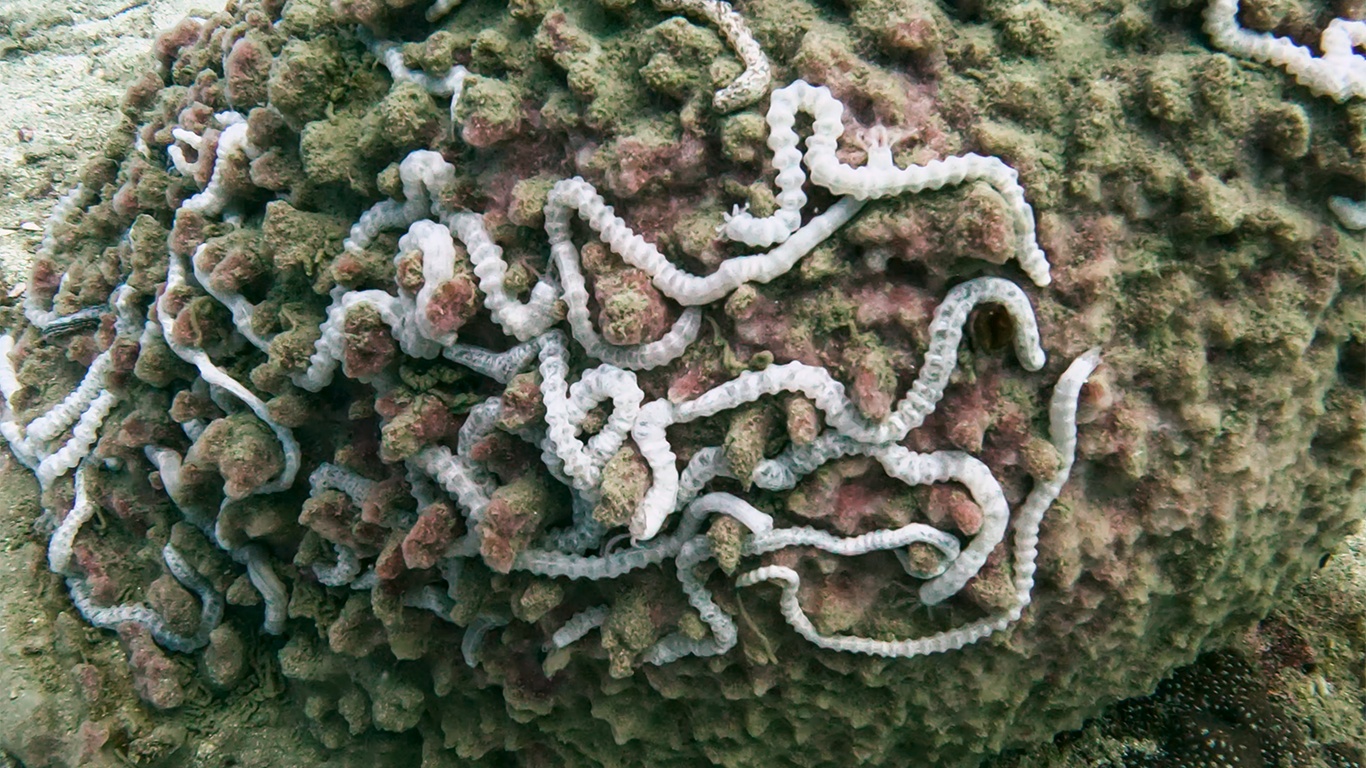
Lambert's Worm Sea Cucumber
A thin worm-like sea cucumber of whitish color, often forming dense aggregations on sponges and corals. Feeds on organic particles and detritus, collecting them from the substrate surface using tentacles.
Synaptula lamperti
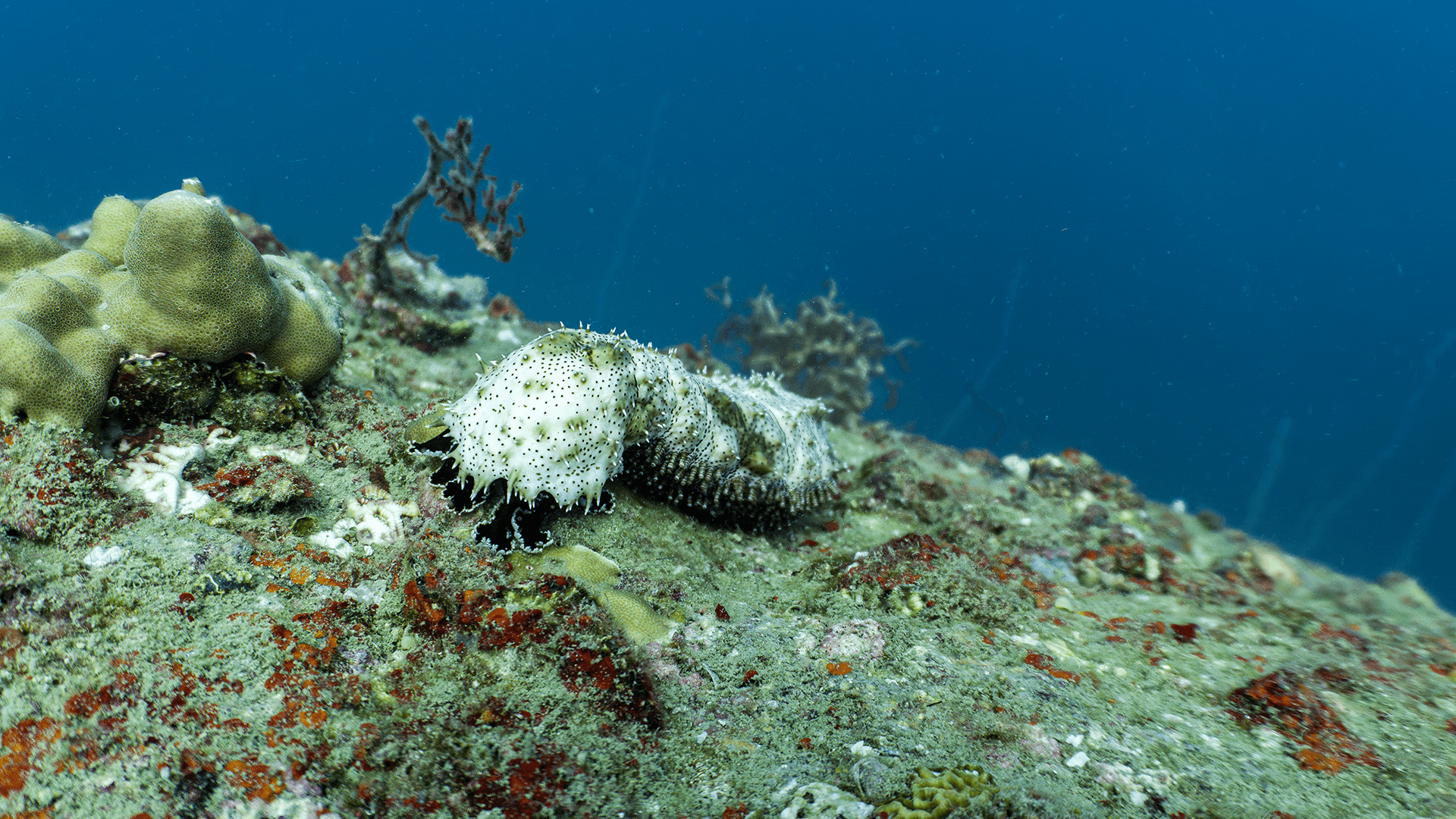
Marbled sea cucumber
The marbled sea cucumber (Pearsonothuria graeffei) is a bottom-dwelling holothurian of the tropical Indo-Pacific. The body is elongated and cylindrical, with light (creamy or greyish-brown) colour and many dark dots and patches forming a "marbled" pattern; low papillae are visible on the skin. It feeds by sifting the surface layer of sediment and extracting organic matter (detritus). Under strong stress it may release sticky threads (Cuvierian tubules) that contain toxic substances.
Pearsonothuria graeffei
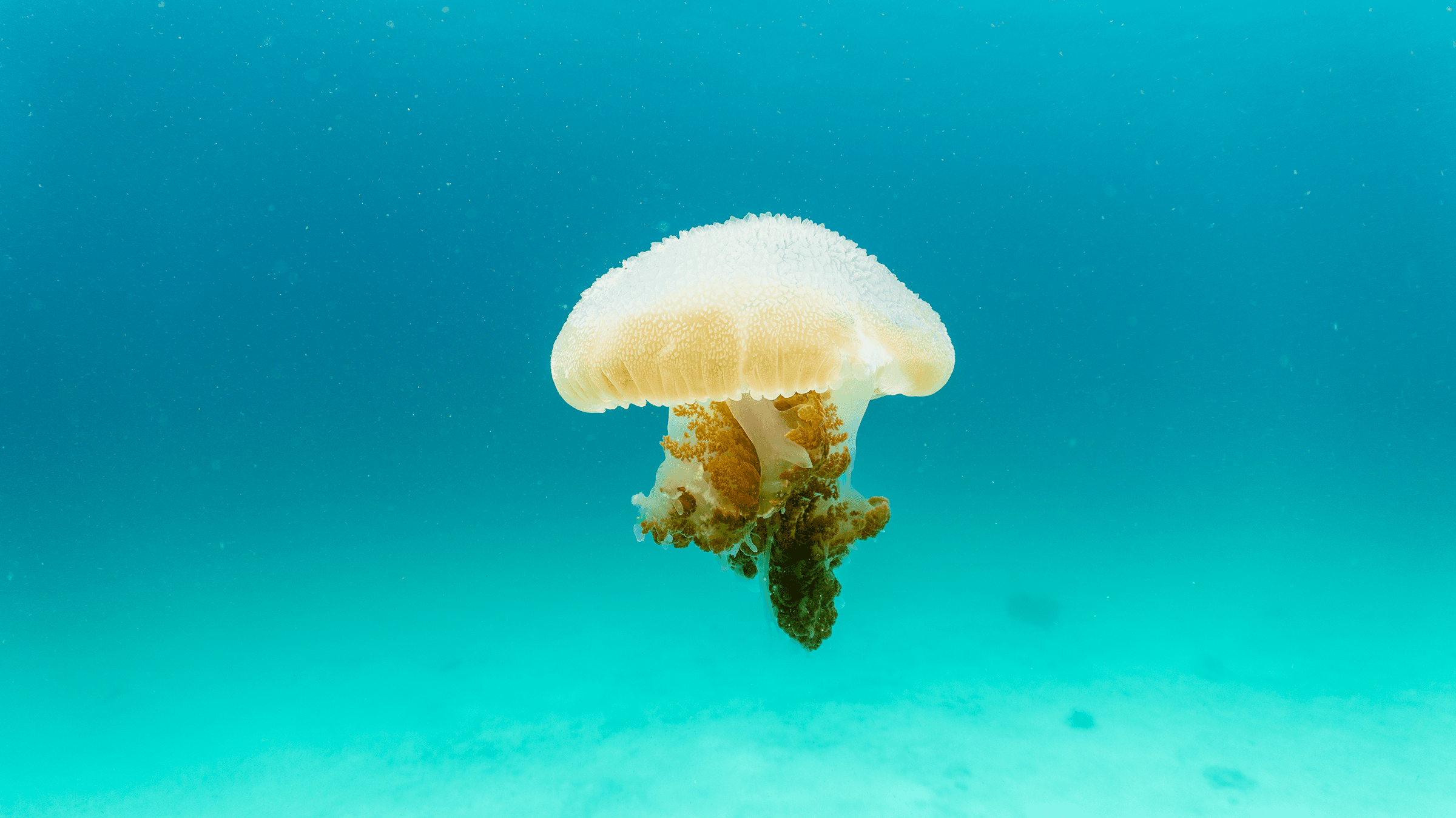
Mosaic jellyfish
The mosaic jellyfish (also known as jelly blubber or blue blubber jellyfish) is a rhizostome scyphozoan jellyfish common in coastal waters (shallow bays and estuaries). The bell is dome-shaped, usually 30–35 cm in diameter, and colour ranges from milky white and cream to bluish; the surface may be finely granular and the overall pattern looks "mosaic-like". There are no long marginal tentacles; instead, under the bell there are large oral arms and eight short, thick, fringed mouth arms. It feeds on plankton and small organic particles by filtering water; it sometimes forms large blooms.
Catostylus mosaicus
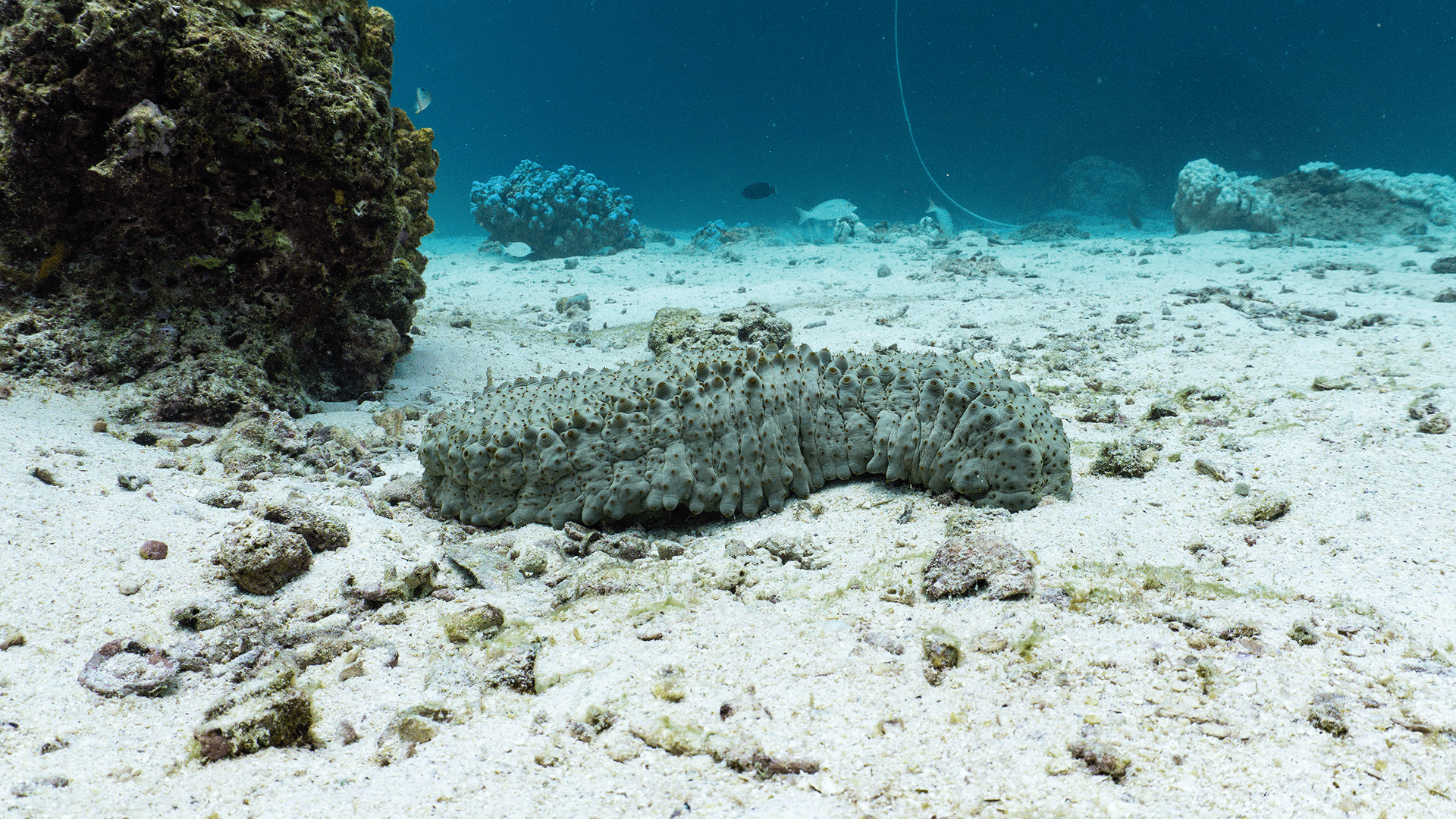
Pineapple sea cucumber
The pineapple sea cucumber is a very large holothurian of the family Stichopodidae, living on sandy areas and among coral reefs in the Indo-Pacific. It is notable for its size and firm, "armoured" body with many pointed star-shaped papillae in rows of 2–3. Coloration is usually warm grey-brown to reddish-orange with darker patches. It feeds on organic matter from the sediment by passing the surface layer of the bottom through its mouth.
Thelenota ananas