Pinecone soldierfish
Home/Marine Life/Pinecone soldierfish
- Name / Latin
- Pinecone soldierfish — Myripristis murdjan
- Brief description
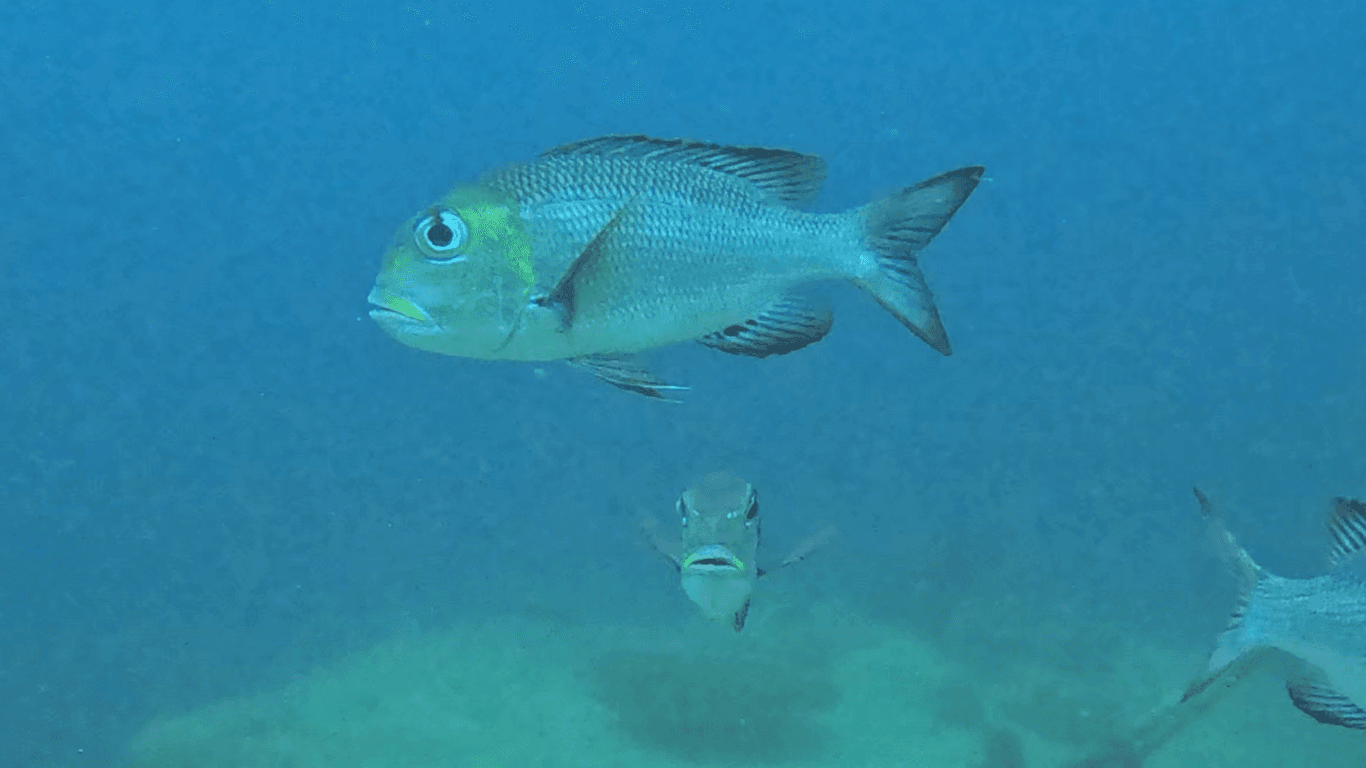
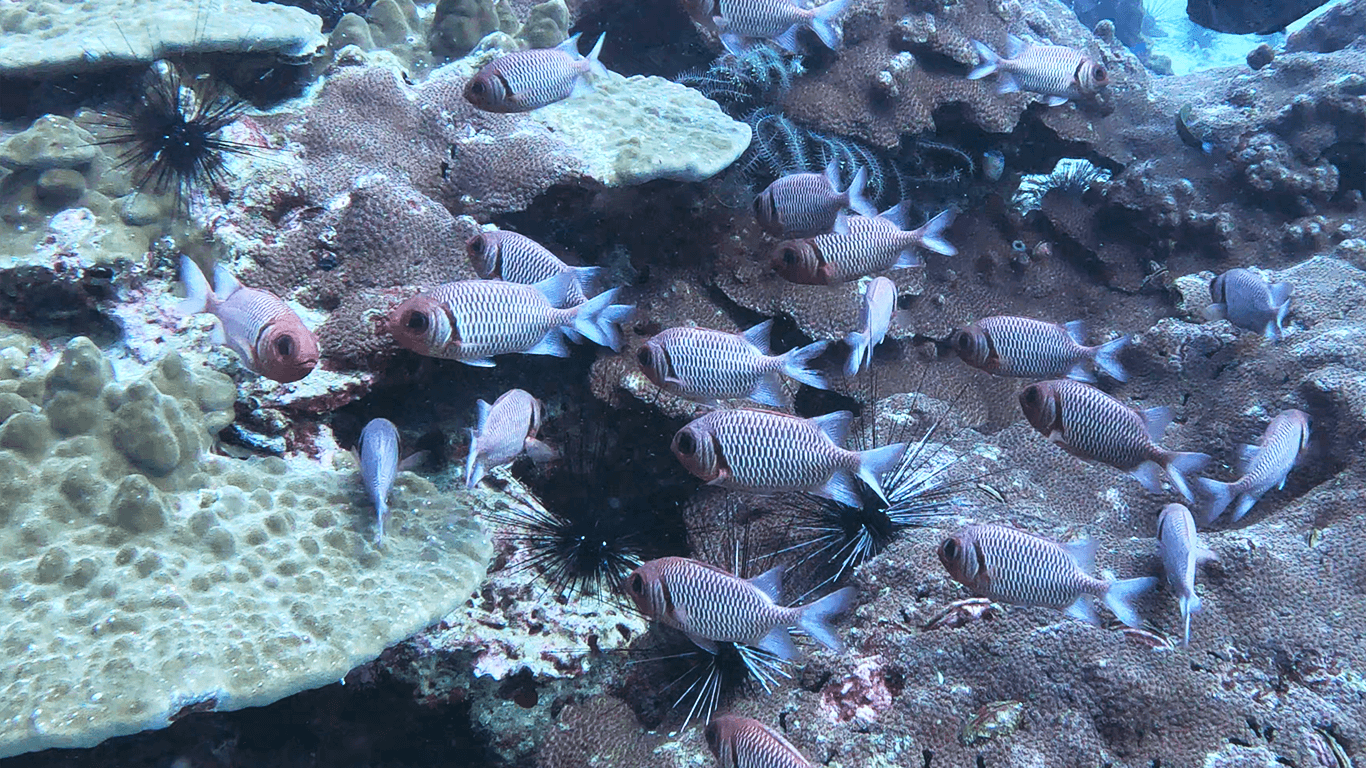
- A soldierfish with a silvery-pink body and large scales, red fins and a dark streak on the gill cover ending in a spot at the base of the pectoral fin. Large eyes; mostly active at night and found near reef shelters.
- Size:
- up to 60 cm
- Depth:
- 1–50 m
- Habitat:
- Indo-Pacific region
- Family:
- Holocentridae
- Type:
- Fish
- Activity:
- Nocturnal
- Conservation status:
- Least Concern (LC) — not threatened with extinction according to IUCN assessment (2015)
The blotcheye soldierfish (Myripristis murdjan), also known as the pinecone soldierfish, is a species of marine fish in the family Holocentridae, order Holocentriformes. They live in the tropical and subtropical waters of the Indian and Pacific Oceans.
The body is covered with ctenoid scales; body length is 2.4–2.5 times the body depth and head length is 2.8–3.2 times the body length. The eyes are large. The lower part of the first gill arch has 19 to 33 gill rakers and the upper half has 13. The space between the eyes is wide. The lower jaw projects slightly when the mouth is closed.
The dorsal fin has 11 spines and 13–15 soft rays; the anal fin has 4 spines and 11–15 soft rays. The lateral line has 27–29 scales.
The body and head are silvery-pink with reddish scale edges. The edge of the gill cover may be dark brown or black. A dark vertical band runs through the eye to its lower edge. The spiny part of the dorsal fin is red, like the other fins. The upper edges of the soft dorsal and all fins have a white tint. Sometimes the unpaired fins have black tips.
Maximum length of the blotcheye soldierfish is 60 cm; they are usually under 20 cm.
These fish live in coastal reef zones and are mainly active at night, hiding by day in crevices and under reef overhangs. They are found at depths of 1 to 50 m. They feed in the water column and on the bottom; their diet is mainly meroplankton, including crab and shrimp larvae, and polychaete worms.