Tag: Nocturnal
Materials found: 13
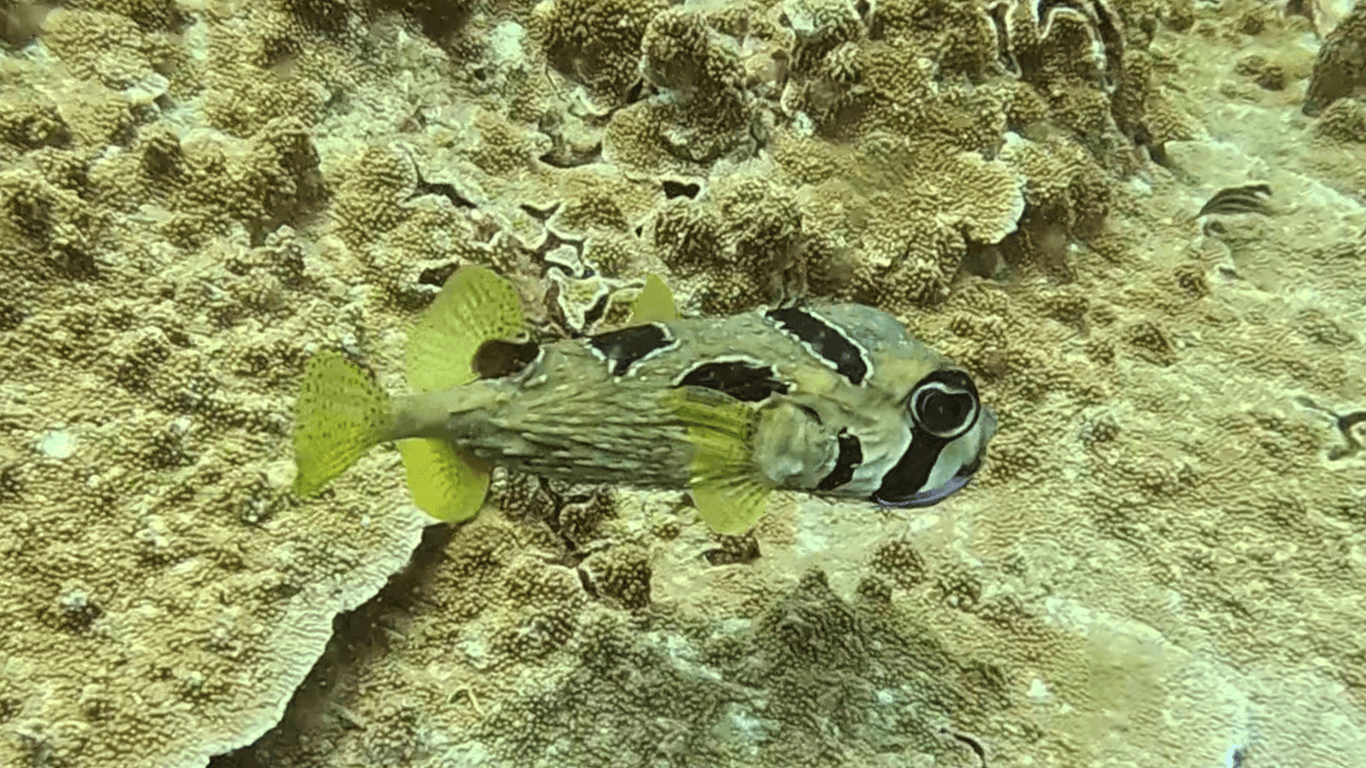
Black-blotched Porcupinefish
A large porcupinefish reaching up to 65 cm in length with short, immobile spines, sandy-brown coloration, and large dark spots. Can inflate when threatened. Contains tetrodotoxin.
Diodon liturosus
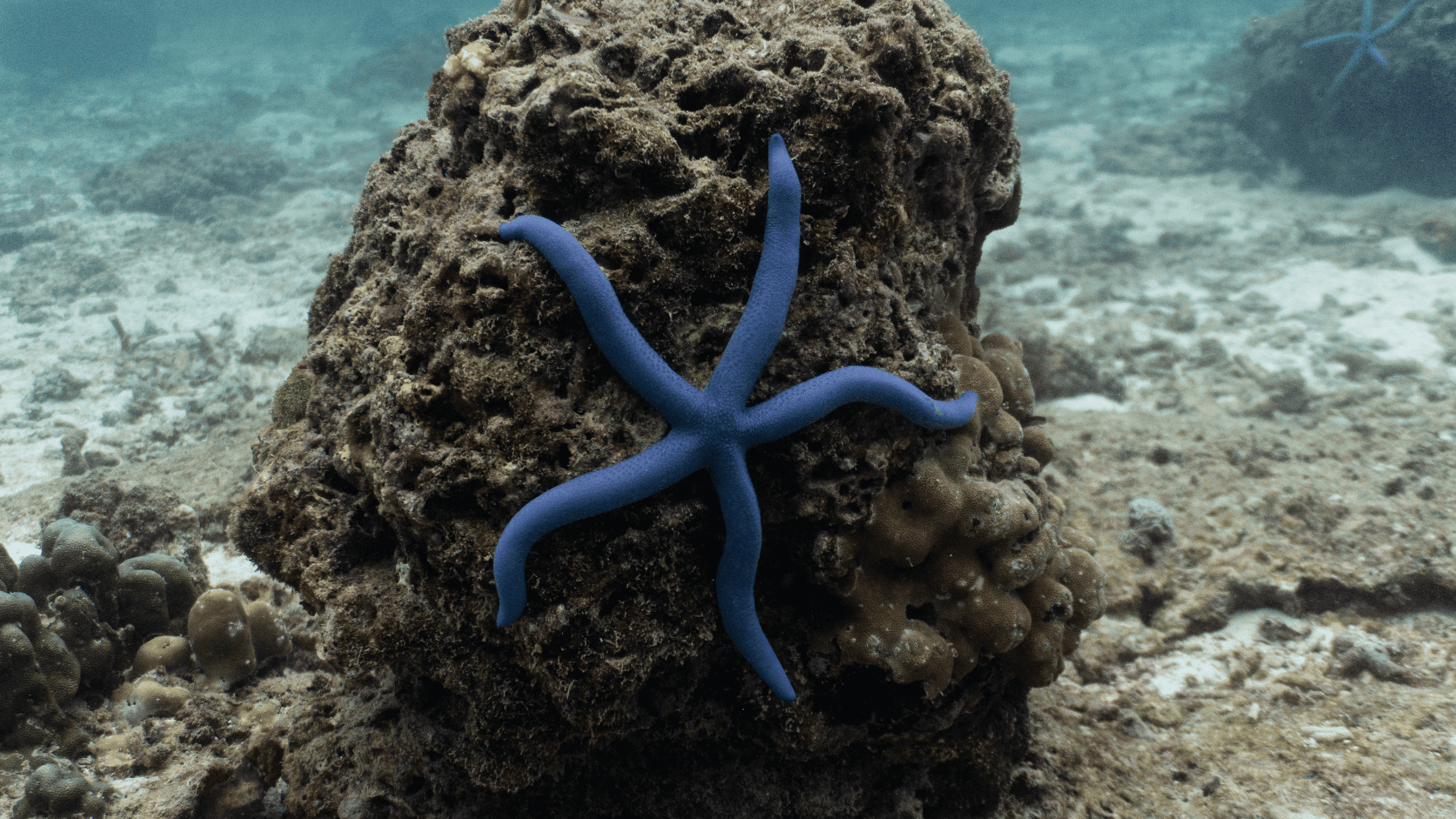
Blue Sea Star
A bright blue sea star, usually with five rays, up to 30 cm. Inhabits reefs, among coral debris, and on sandy bottoms of the tropical Indo-Pacific region.
Linckia laevigata
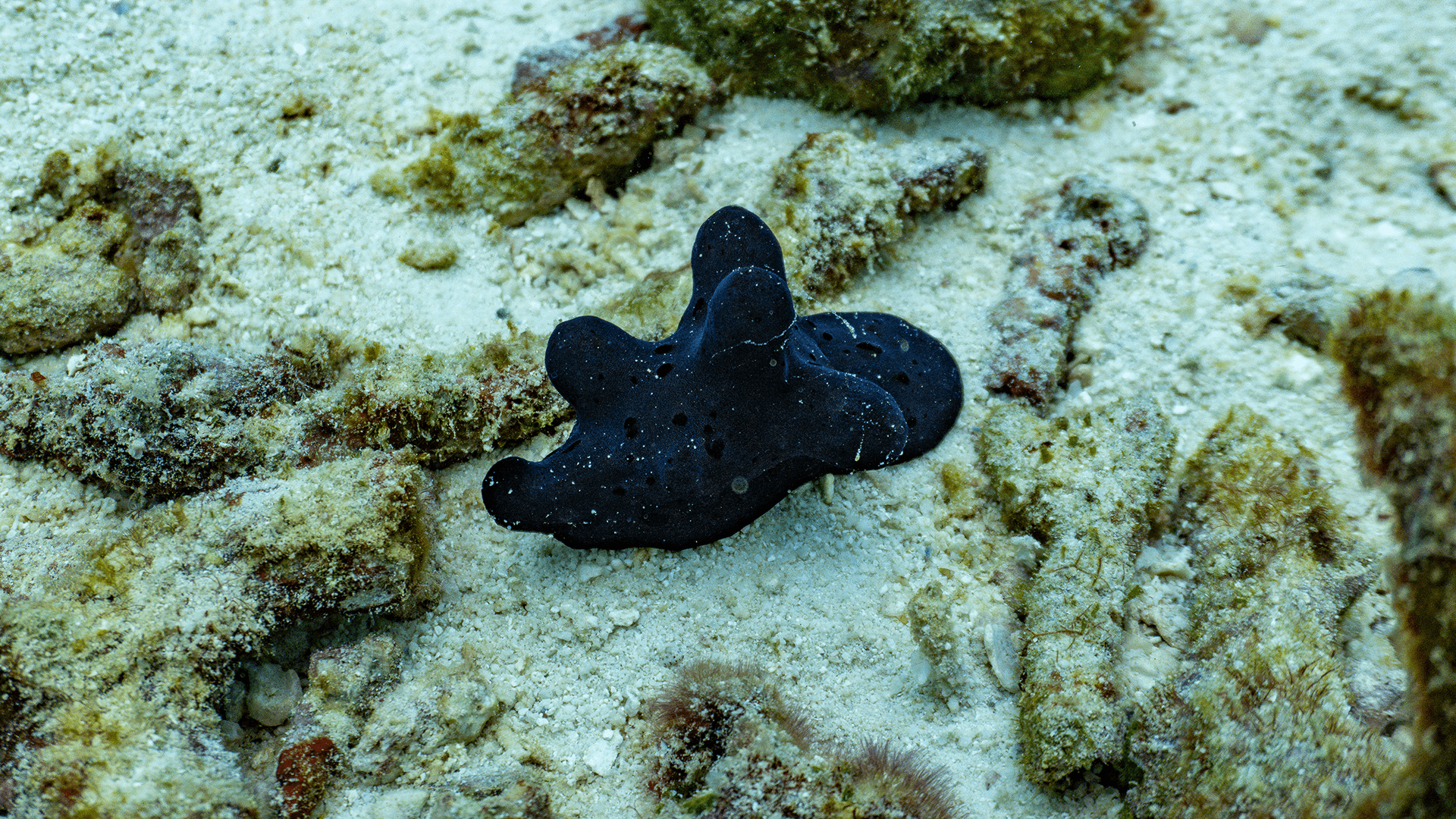
Hiby's Coriocella (Velvet Snail)
Hiby's coriocella (velvet snail) is a marine gastropod mollusk of the Velutinidae family. It has a shell, but it is hidden by mantle folds, so externally the animal resembles a sea slug and in nature often mimics a sponge.
Coriocella hibyae
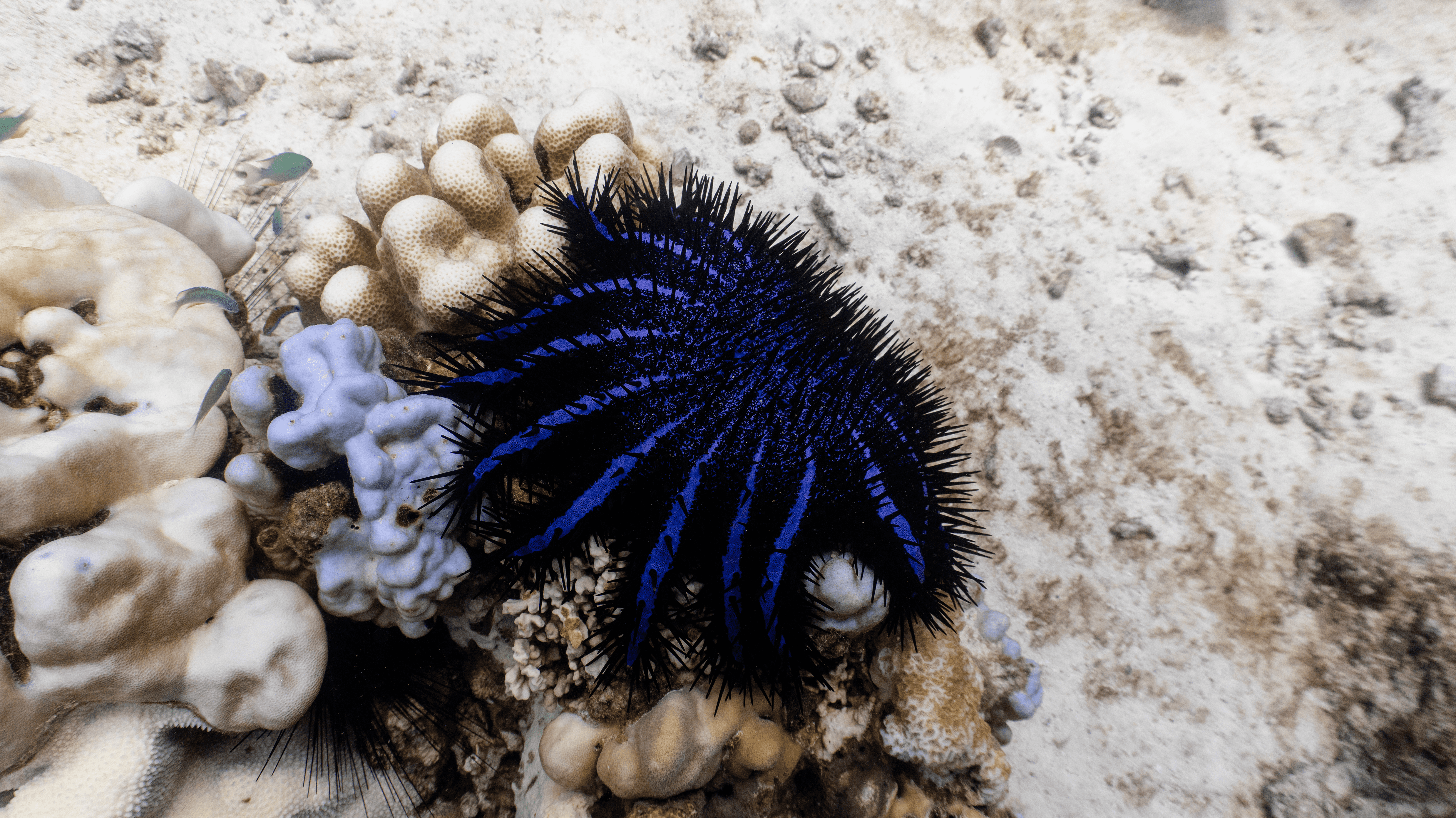
Crown-of-thorns Starfish
A large coral-eating sea star with numerous poisonous spines and 12–19 rays. Feeds on living corals and during population outbreaks can cause serious damage to reefs.
Acanthaster planci
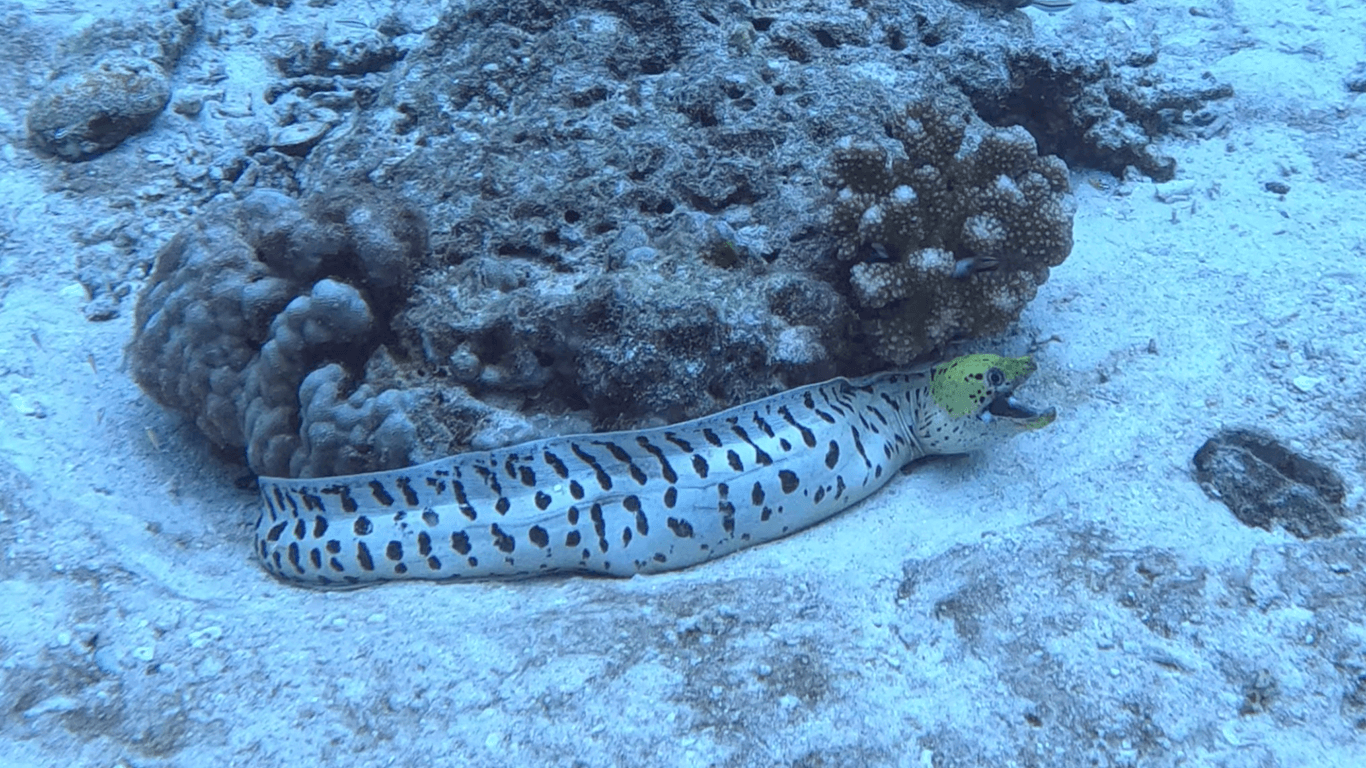
Fimbriated Moray
A medium-sized moray with a cream-white body covered with numerous dark spots and a characteristic yellowish-green head. Inhabits coral reefs and leads a predominantly nocturnal lifestyle, hunting fish and crustaceans.
Gymnothorax fimbriatus
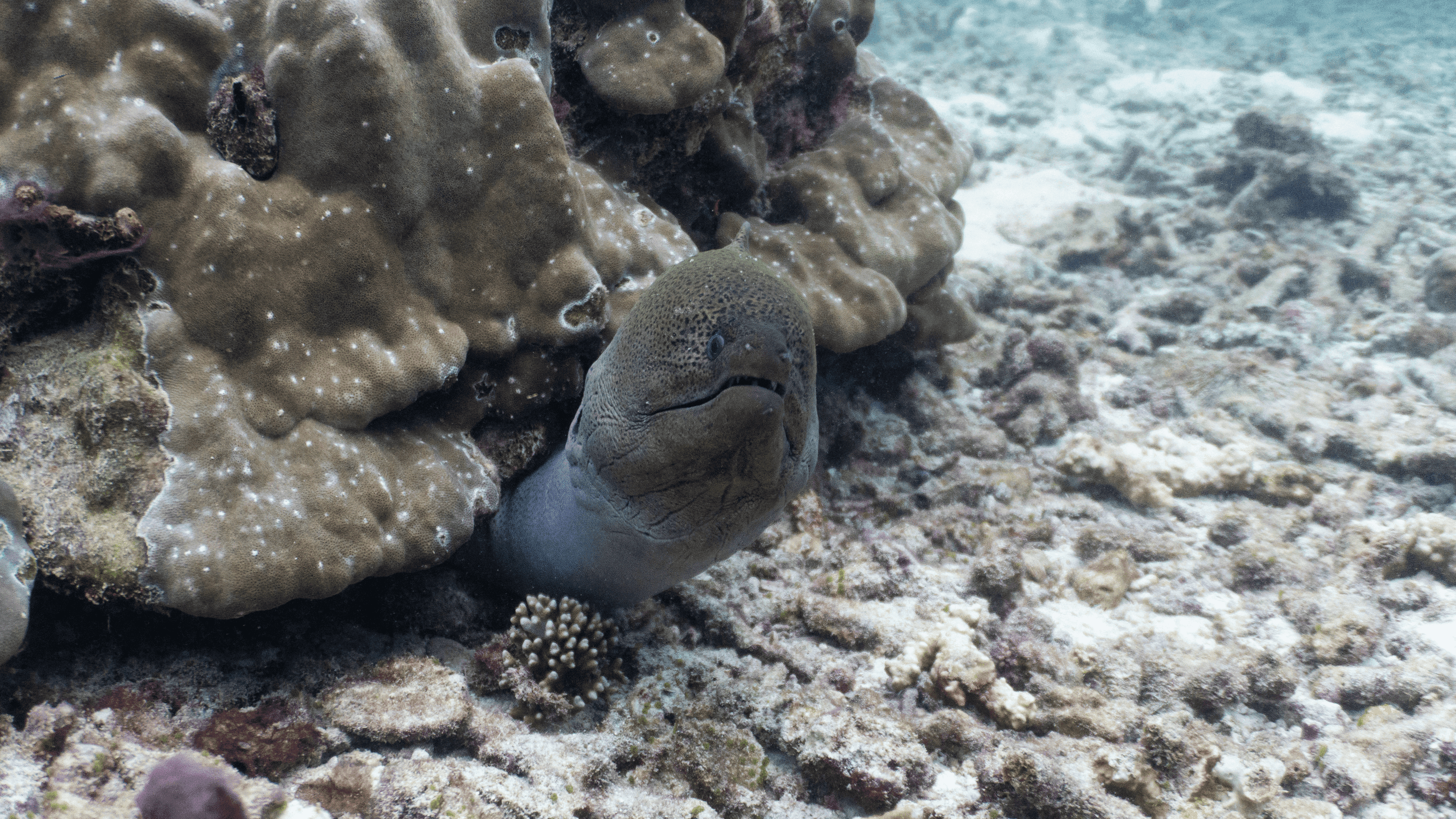
Giant Moray
The largest of the morays, reaching up to 3 m in length and weighing about 30 kg. Has yellow-brown coloration with large dark spots and inhabits coral reefs, leading a predominantly nocturnal lifestyle.
Gymnothorax javanicus
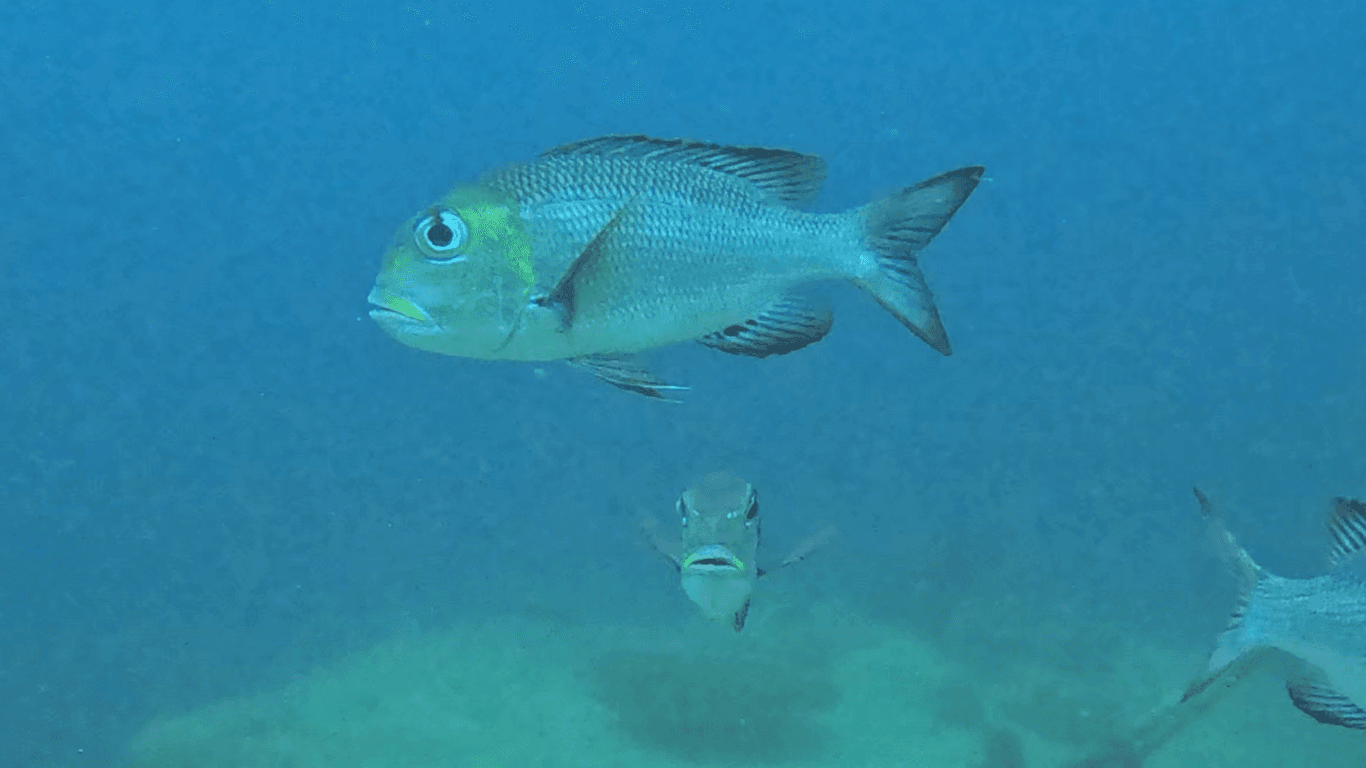
Humpnose Big-eye Bream
A large reef fish with a silvery-blue body, large eyes, and a characteristic yellowish spot behind the eye. Inhabits near coral reefs, found singly or in small groups, and is active predominantly at night.
Monotaxis grandoculis
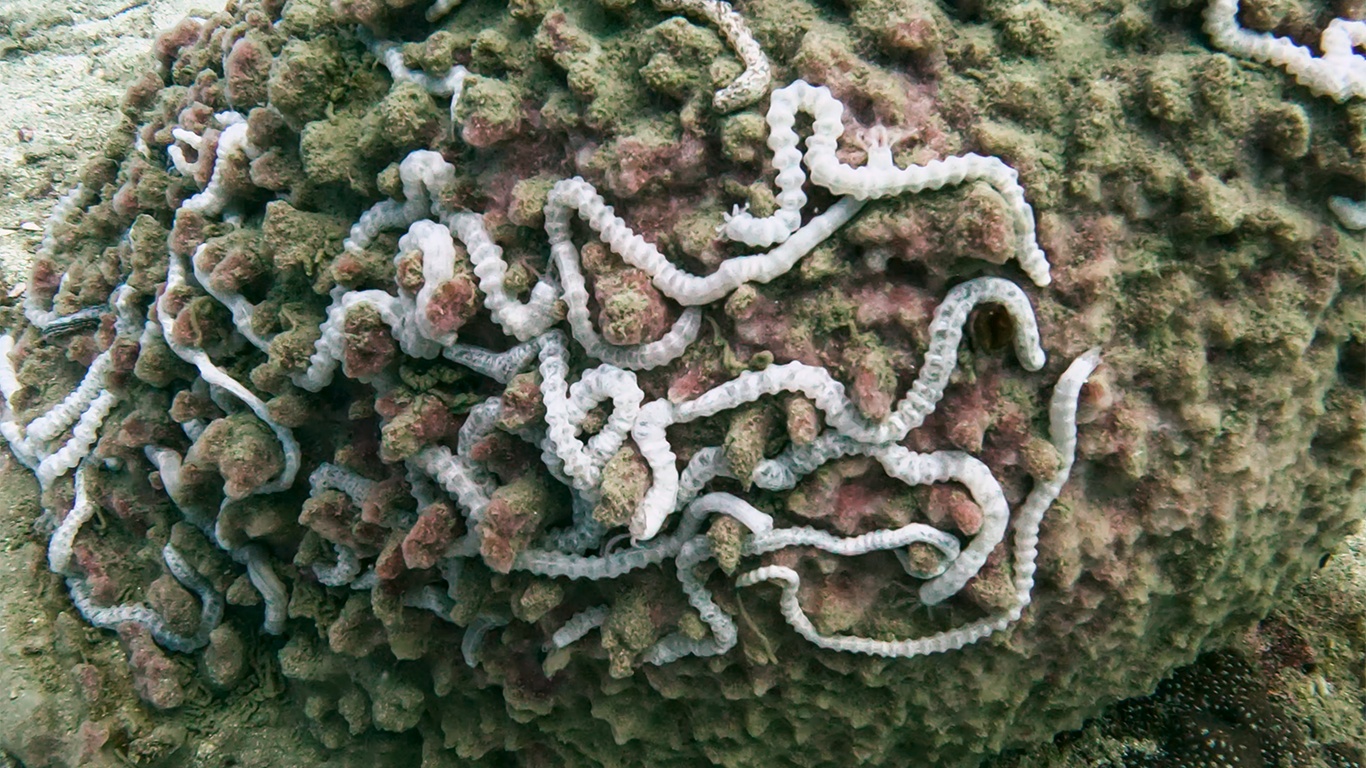
Lambert's Worm Sea Cucumber
A thin worm-like sea cucumber of whitish color, often forming dense aggregations on sponges and corals. Feeds on organic particles and detritus, collecting them from the substrate surface using tentacles.
Synaptula lamperti
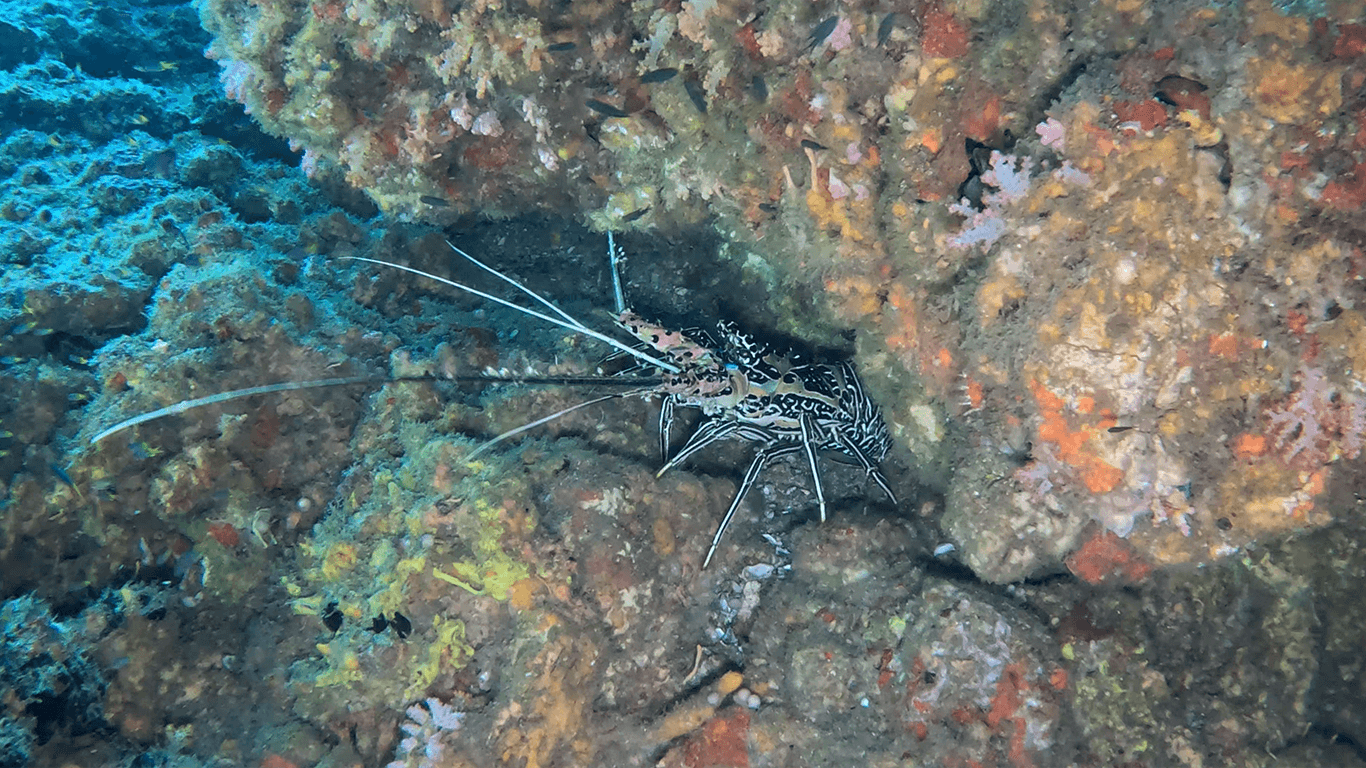
Painted spiny lobster
The painted spiny lobster (also known as the blue-spotted or multicoloured lobster) is a spiny lobster that lives on coral reefs in the Indo-Pacific. By day it hides in crevices and under reef overhangs and is mainly active at night. It grows to 40 cm in length but is usually seen at about 30 cm. Coloration is white, pink and black with horizontal bands and a net-like pattern; the legs are dark with white bands and the long antennae are often whitish.
Panulirus versicolor