Dusky parrotfish
Home/Marine Life/Dusky parrotfish
- Name / Latin
- Dusky parrotfish — Scarus niger
- Brief description
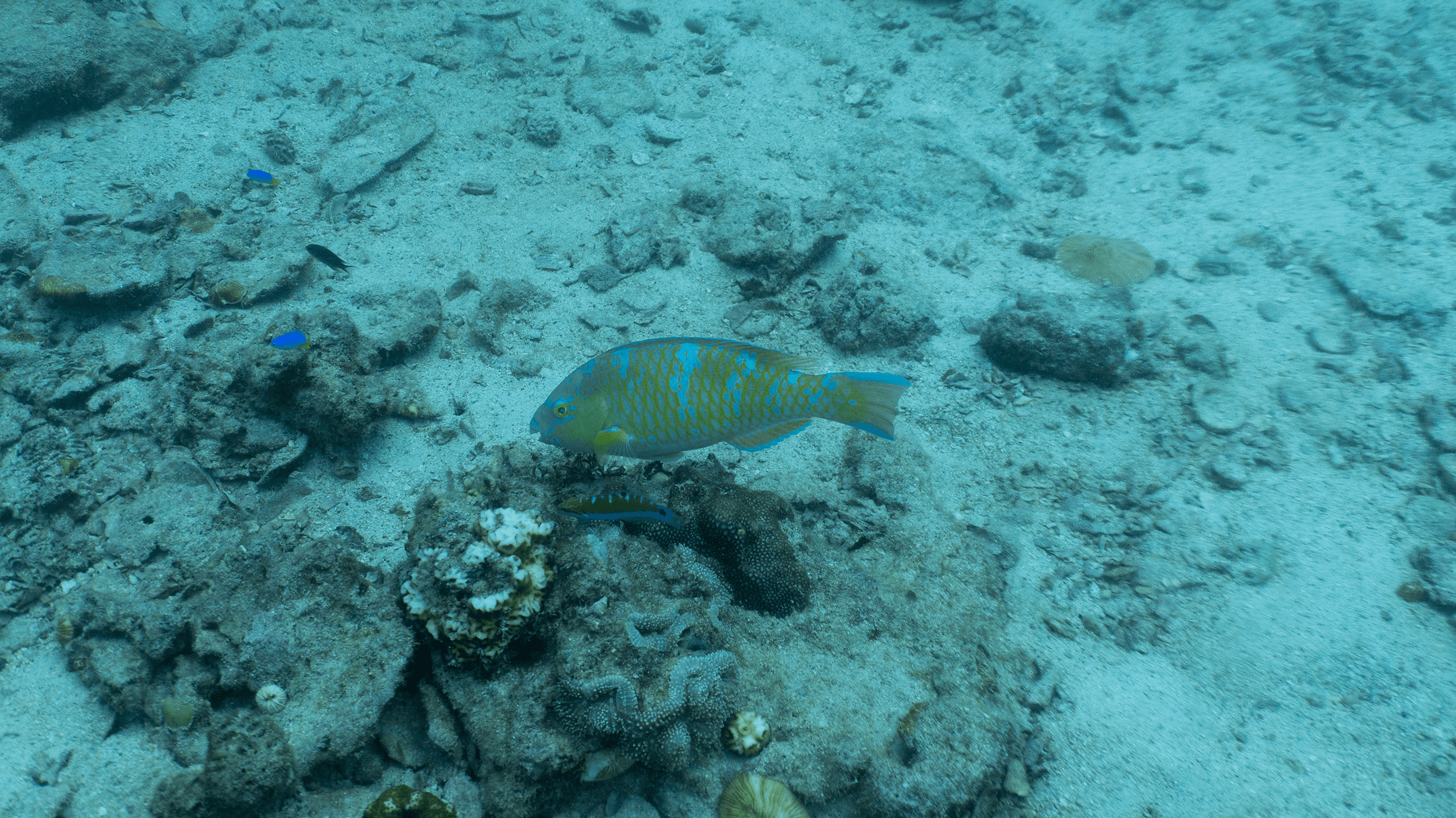
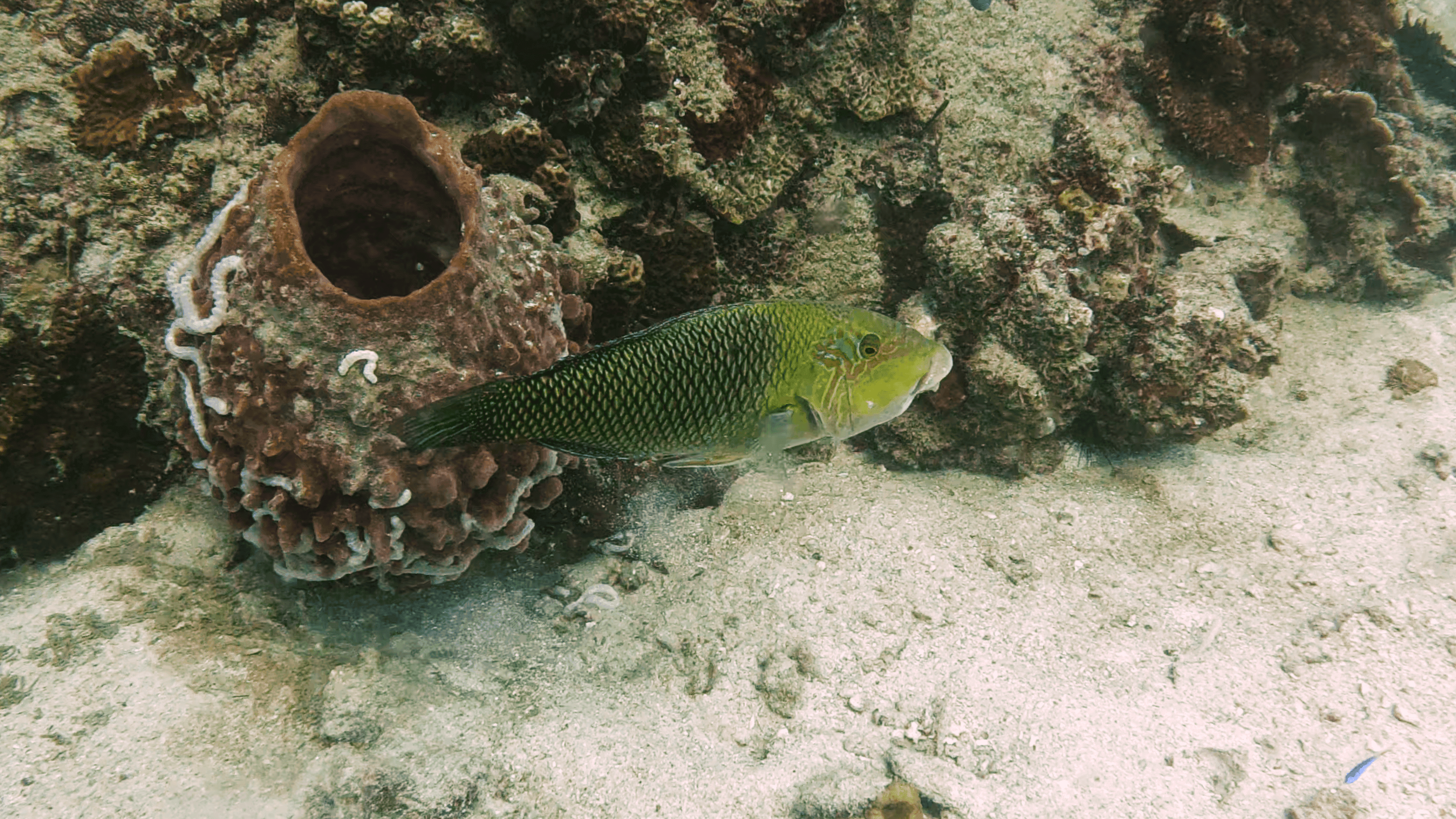
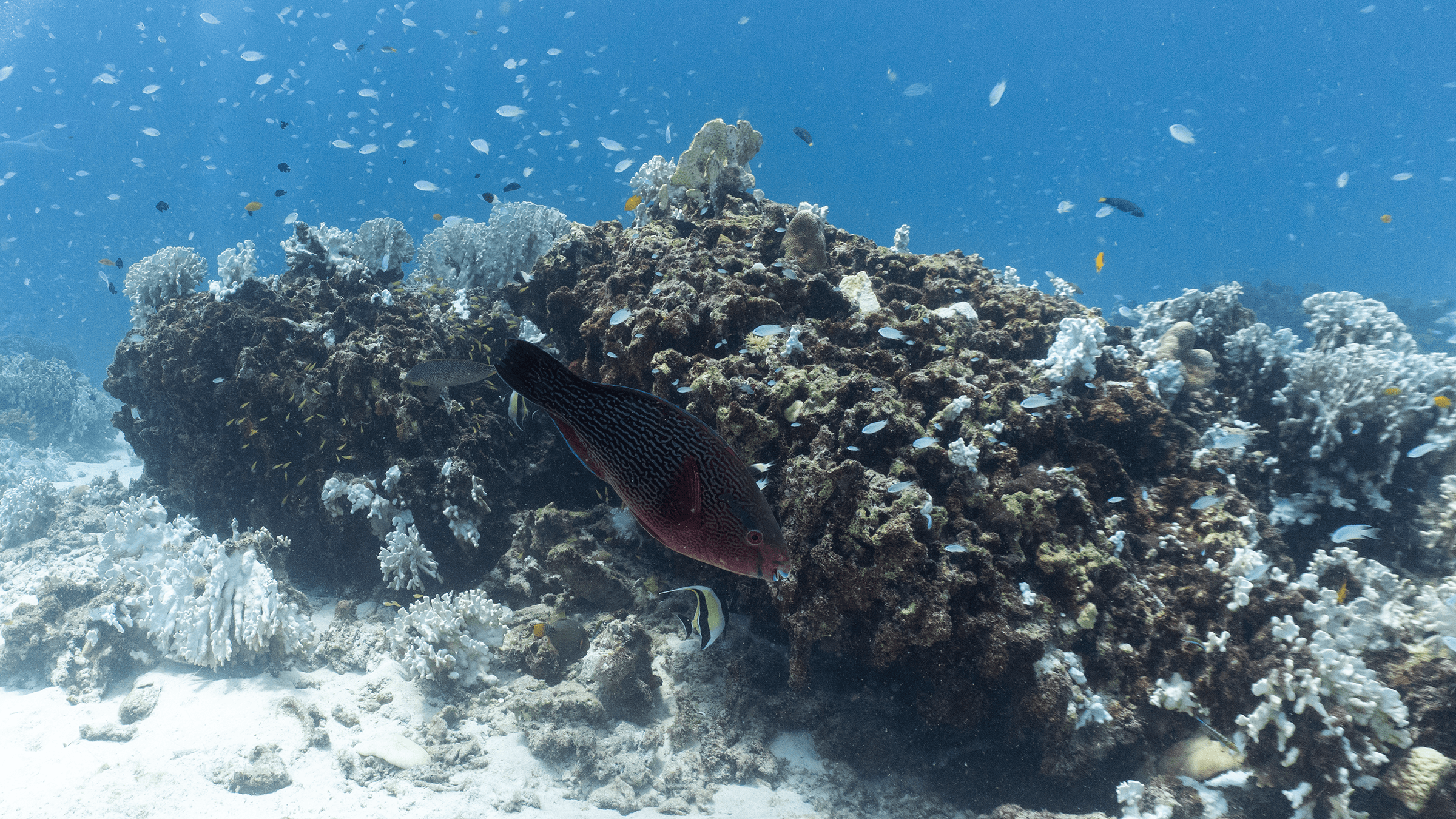
- The dusky parrotfish (Scarus niger) is a reef fish of the family Scaridae, found across the Indo-Pacific region including the Red Sea. It has a typical parrotfish "beak" of fused teeth used to scrape algae. Coloration varies greatly with age and sex and may include shades of blue, green, purple and almost black; it is often seen alone. It feeds mainly on benthic algae on hard substrate and dead coral, grazing actively on the reef by day.
- Size:
- up to 44 cm
- Depth:
- down to 25 m
- Habitat:
- Indian Ocean, Pacific Ocean, Red Sea, Andaman Sea
- Family:
- Scaridae
- Type:
- Fish
- Activity:
- Diurnal
- Conservation status:
- Least Concern (LC) — not threatened with extinction according to IUCN assessment
The dusky parrotfish (Scarus niger) is a species of marine fish in the parrotfish family.
It gets its name from its parrot-like head shape and dark coloration. It is known for its important role in coral reef ecosystems, as by feeding on coral and algae it helps keep the reef in balance.
Adults reach about 23–24 cm in length and weigh around 240 g. Maximum body length is about 40 cm.
The dusky parrotfish has an oblong body covered with large scales. Coloration varies with age and sex but often includes shades of blue, green, purple and black. Juveniles are duller; adult males are more brightly coloured.
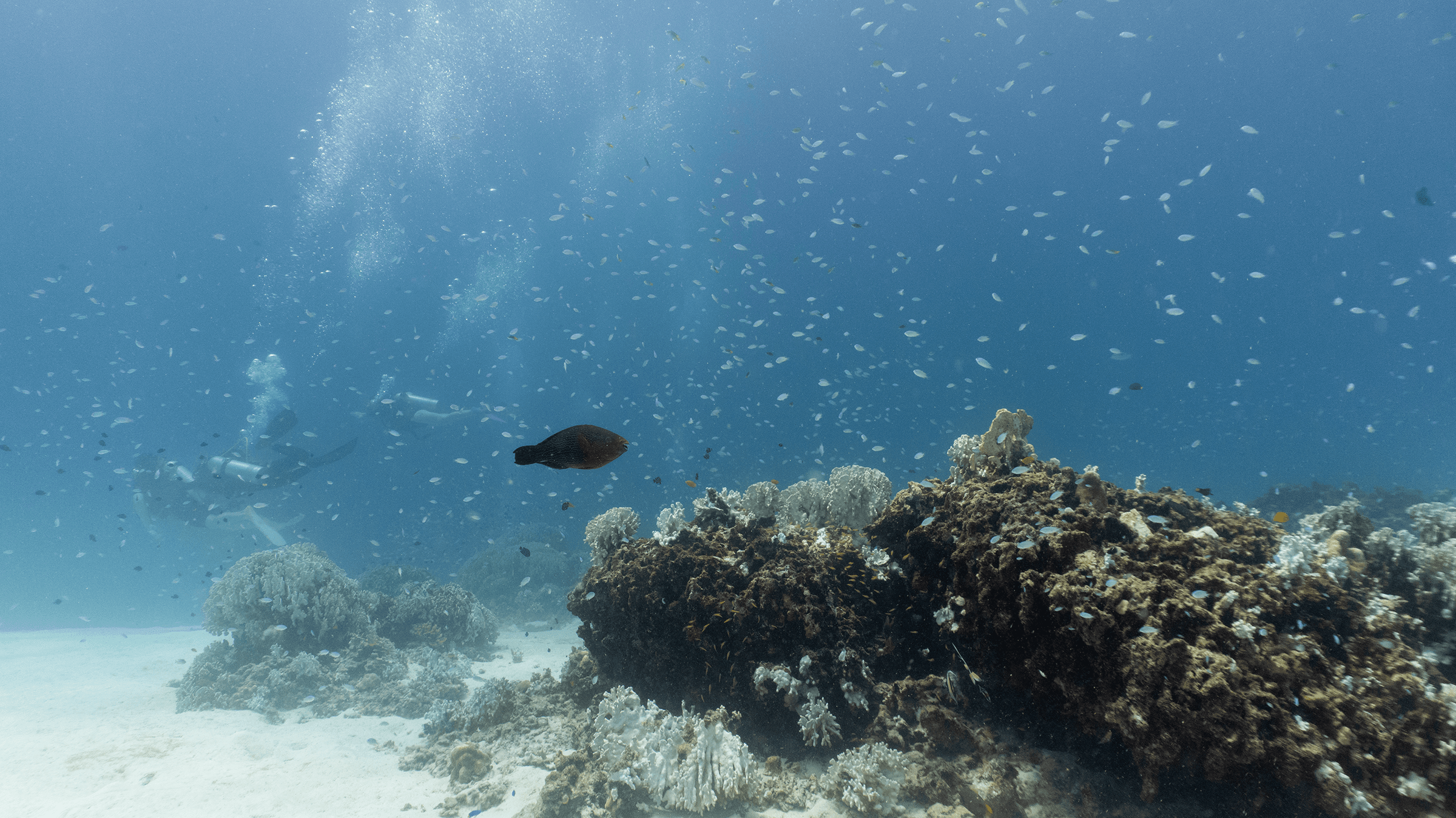
The dorsal fin has 9 spines and 10 soft rays, and the anal fin has 3 spines and 9 soft rays.
The dusky parrotfish lives in the Indo-Pacific from the Red Sea and East Africa to Hawaii and Polynesia. It prefers coral reefs at depths of 2 to 25 metres.
Individuals are often seen alone, but males may live in groups with several females. The dusky parrotfish is protogynous: the dominant female in a group can change into a male. During the spawning season males and females form pairs.
This fish feeds mainly on algae, which it scrapes from coral surfaces. In doing so it helps limit excessive algal growth and benefits reef health. While feeding it also swallows some coral, which is ground into sand in its stomach.