Live Sharksucker
Home/Marine Life/Live Sharksucker
- Name / Latin
- Live Sharksucker — Echeneis naucrates
- Brief description
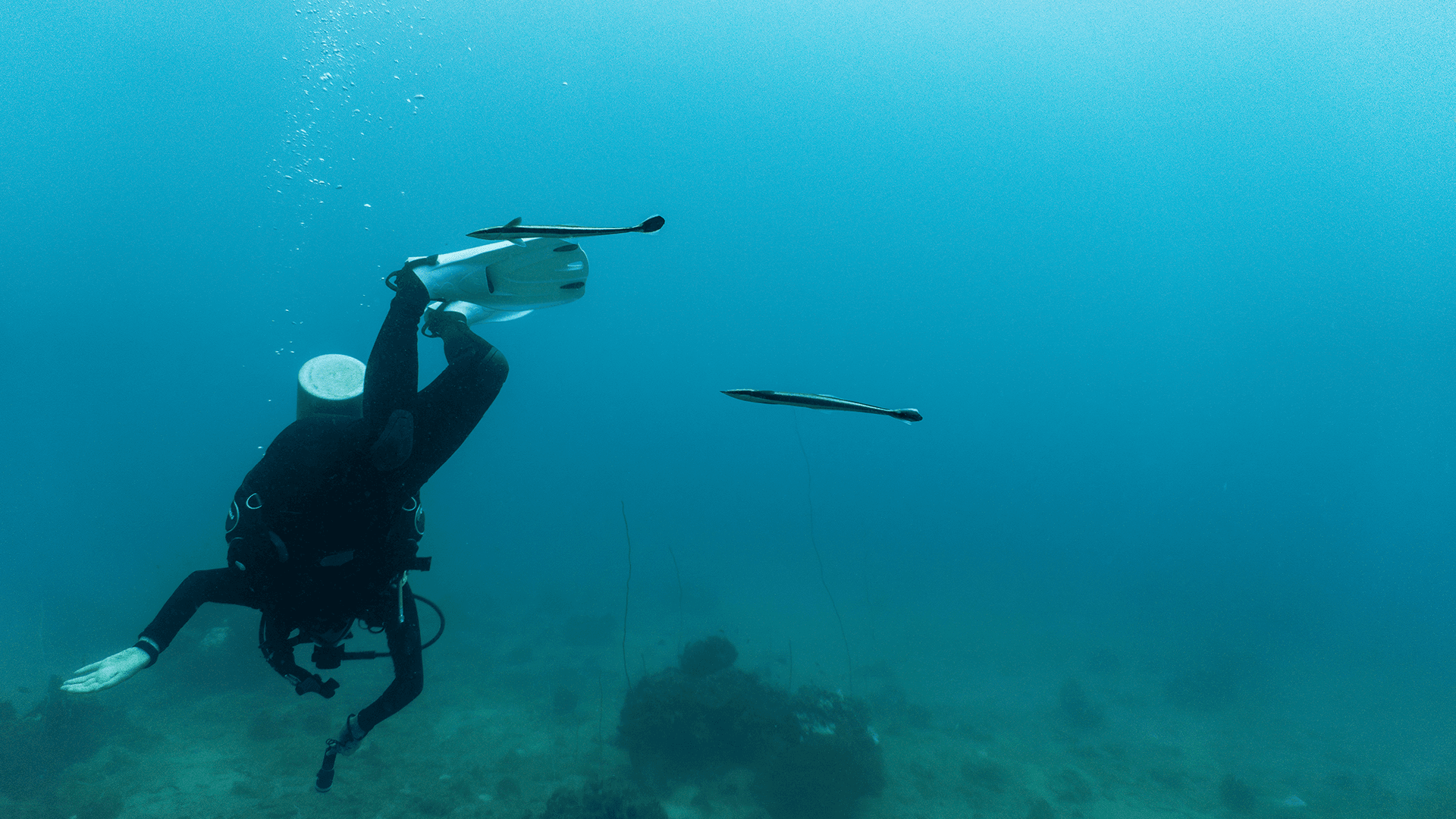
- An elongated fish with a characteristic sucker on the upper side of the head, allowing it to attach to sharks, rays, turtles, and large fish. Inhabits tropical and subtropical seas, feeding on food remains from the host and small invertebrates.
- Size:
- up to 110 cm
- Depth:
- 0–50 m
- Habitat:
- Atlantic Ocean, Indian Ocean, Pacific Ocean
- Family:
- Echeneidae
- Type:
- Fish
- Activity:
- diurnal
- Conservation status:
- Least Concern (LC) — not threatened with extinction according to IUCN assessment
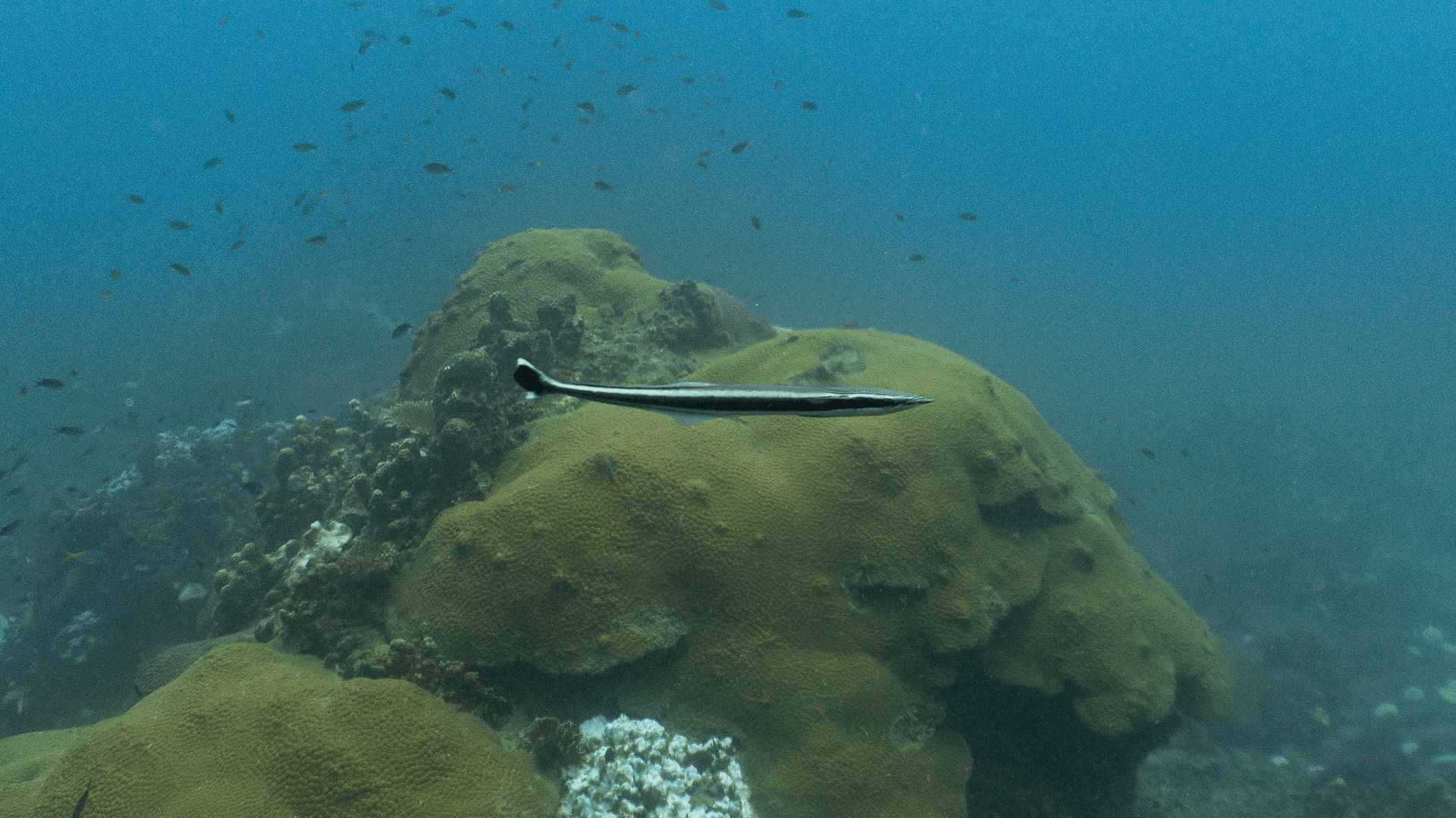
The live sharksucker, or striped remora (Echeneis naucrates), is a species of ray-finned fish from the remora genus of the remora family. This fish is widely distributed in warm tropical and subtropical waters of the World Ocean. Sometimes found in Primorsky Krai and the Black Sea, swimming there together with sharks and turtles.
The fish's body is flattened from above, the head and teeth are small. The anterior dorsal fin has transformed into a sucker located on the upper side of the head, and the remaining fins are located closer to the tail. There is no swim bladder, as in all fish of the remora family. The coloration is dark gray with a brown stripe running along the body, bordered by a white line.
The fish attaches to large marine animals, making long migrations with them, however, groups of free-swimming individuals are also found. Remoras attached to solitary host animals usually form mixed-sex pairs.
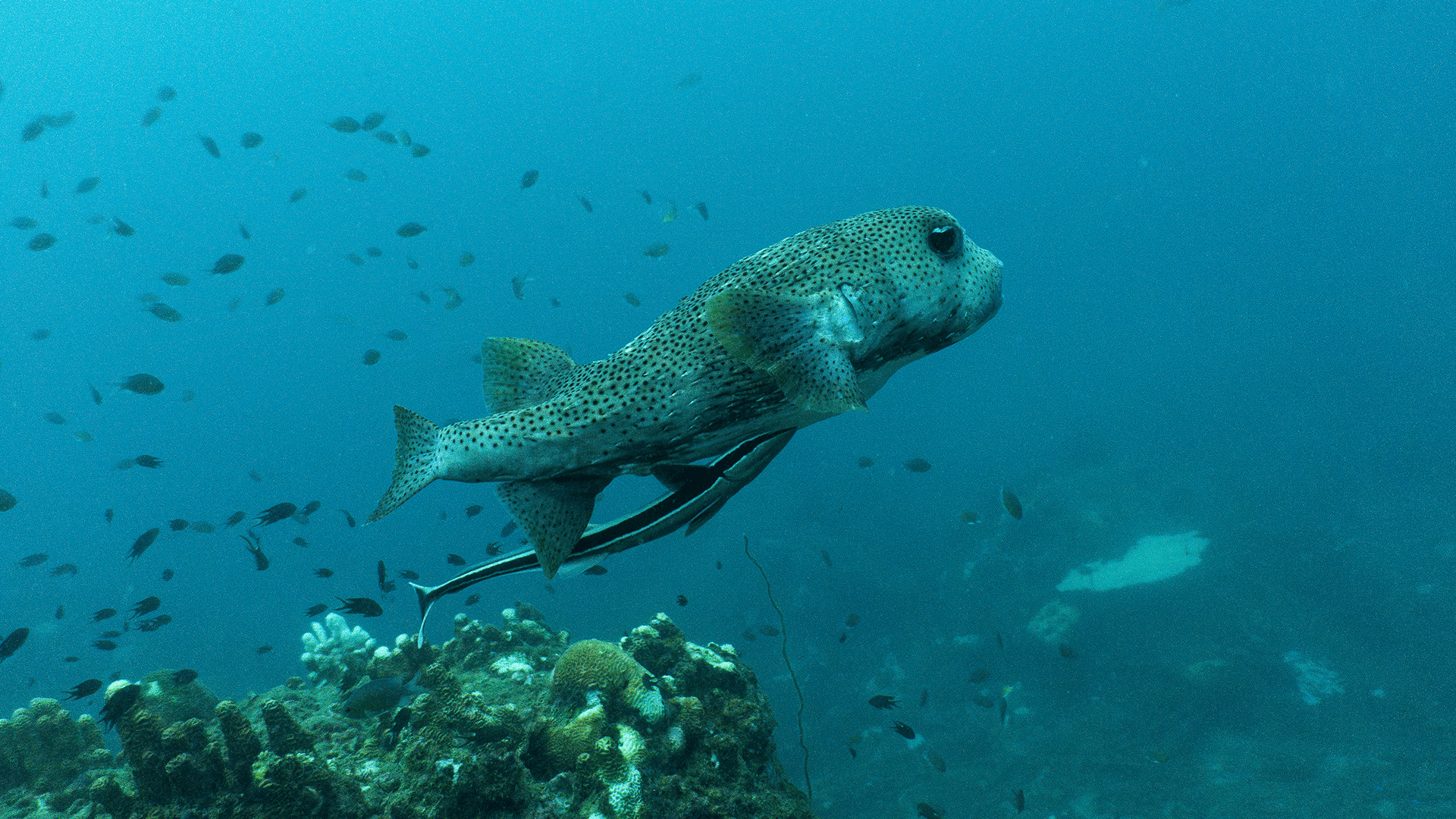
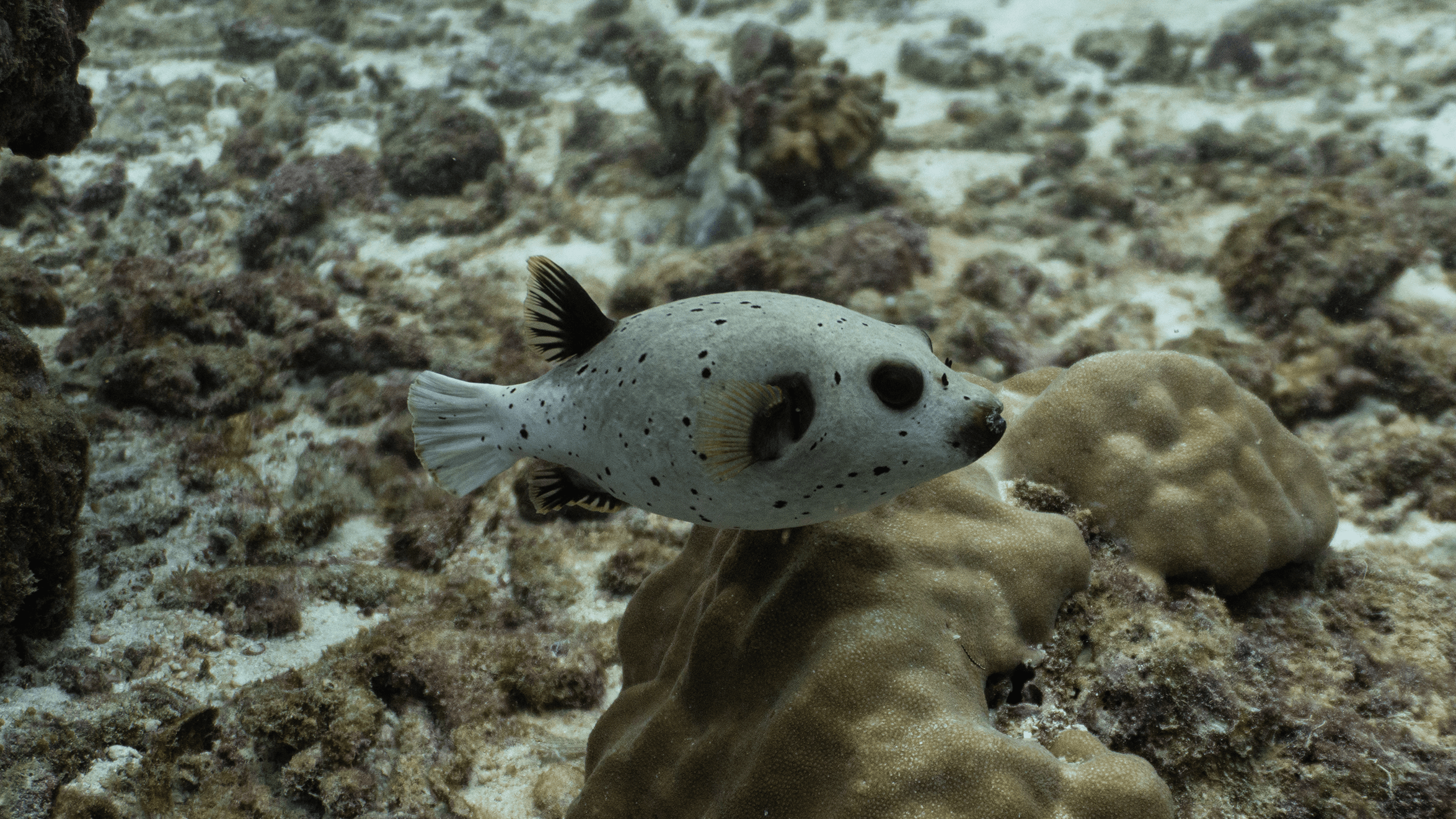
Juveniles first swim freely but begin to attach to moving objects when they reach a length of 40–80 millimeters. At this age, their "hosts" are often small fish such as boxfish and pufferfish.
The maximum length of the fish is 110 cm, and weight – up to 2.3 kg.
The live sharksucker feeds mainly on small fish such as sardines, herring, and small jacks. Squid, octopuses, shrimp, and crabs have also been found in stomachs. Juveniles feed on zooplankton and food remains from their "hosts."
The live sharksucker plays an important role in marine ecosystems, participating in food chains, cleaning the bodies of large animals from parasites, and contributing to the redistribution of nutrients in the water.