Humbug Damselfish
Home/Marine Life/Humbug Damselfish
- Name / Latin
- Humbug Damselfish — Dascyllus aruanus
- Brief description
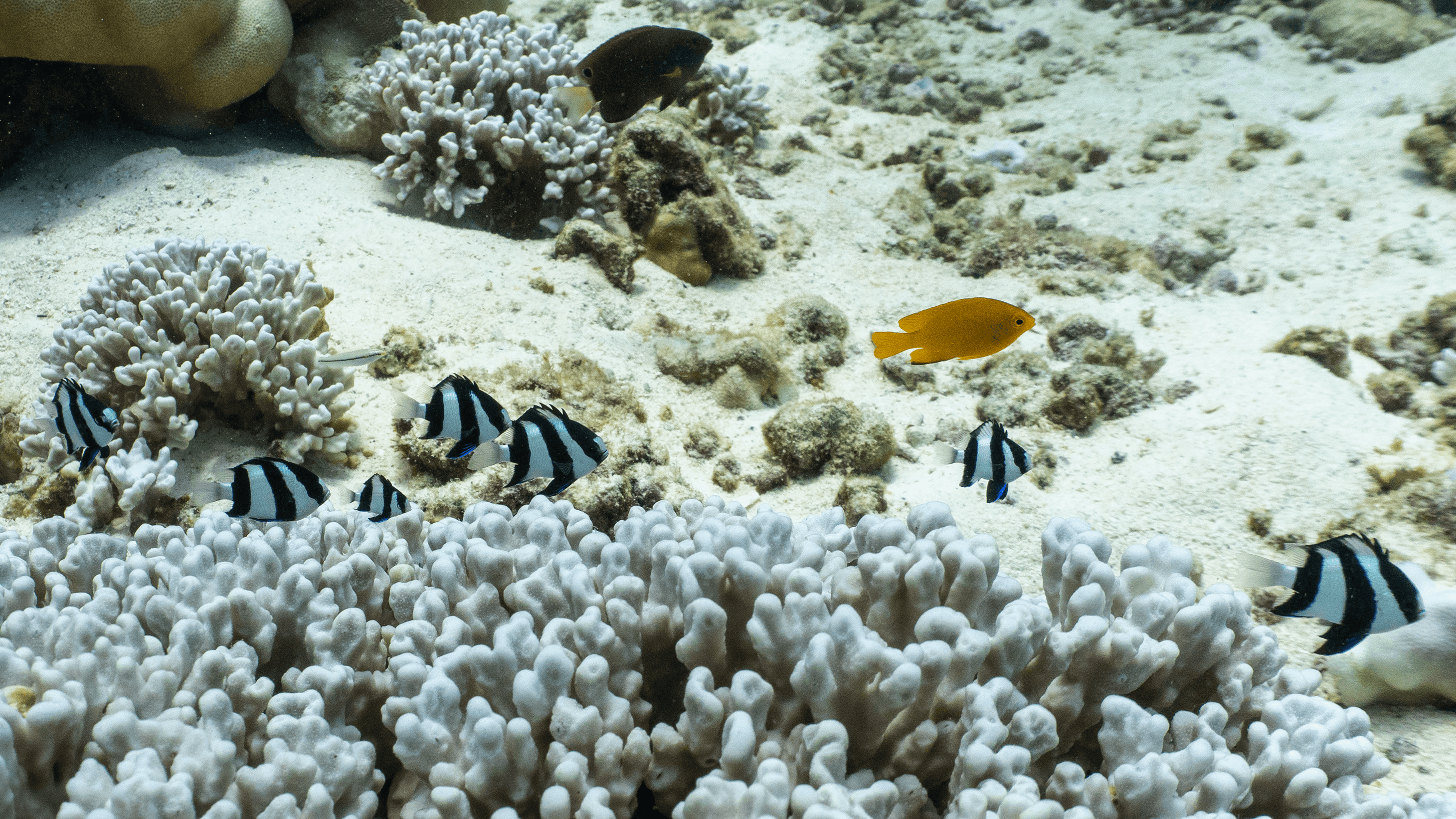
- A small reef fish with a white body and three wide black vertical stripes. Inhabits among branching corals, forming groups and actively defending its territory.
- Size:
- usually up to 8 cm
- Depth:
- 1–20 m
- Habitat:
- Red Sea, Indian Ocean, Western Pacific Ocean
- Family:
- Pomacentridae
- Type:
- Fish
- Activity:
- diurnal
- Conservation status:
- Least Concern (LC) — not threatened with extinction according to IUCN assessment
The humbug damselfish (Dascyllus aruanus), also known as the zebra damselfish, is a small fish belonging to the ray-finned perch-like fish of the Pomacentridae family. Usually, the size of this fish is up to 8 cm. Males are larger than females and more aggressive. Conflicts occur between adults if they are not a male-female pair.
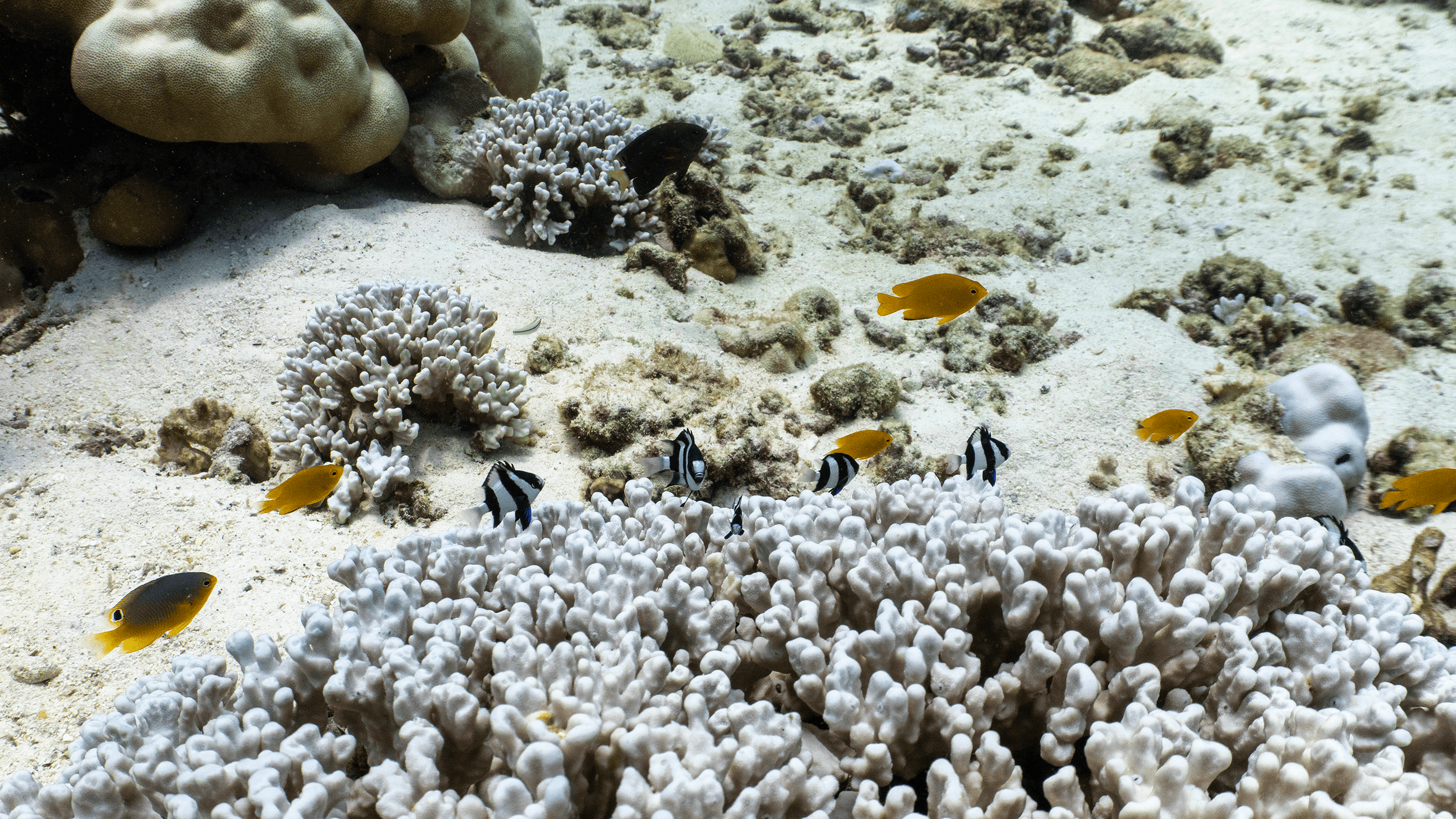
It has a characteristic appearance, distinguished by black-and-white coloration. The body is predominantly white with three vertical black stripes: one passes through the eye, another through the middle of the body, and another at the base of the tail. The tail is completely white, which is a distinctive feature. The fish's body is compressed laterally, giving it a somewhat oval shape.
Humbug damselfish inhabit tropical waters of the Indo-Pacific region and are found everywhere in the Red Sea. They usually inhabit depths from 1 to 20 meters. These fish prefer to stay near branching corals, which provide them with protection and shelter from predators.
The humbug damselfish reproduces through external fertilization. Males build a nest and invite the female to spawn, accompanying their actions with courtship and a "dance" over the nest. Females lay sticky eggs, which the male guards until the larvae hatch. During this time, the fish become very aggressive and drive away other fish from the nest. The larvae hatch 3-5 days after laying, usually at night, which increases the survival of fry and promotes their dispersal across the reef. The fry lead a pelagic lifestyle and feed on plankton.
The humbug damselfish mainly feeds on plankton and small invertebrates. They also consume algae and detritus, making them omnivorous. They often feed in small groups, taking advantage of the protection that their numbers provide.
Humbug damselfish pose no danger to divers. They are usually curious and may approach divers, but pose no threat. Their small size and peaceful nature make them harmless to humans.